Plot Explained Spoilers guaranteed!
Plot Explained

Browse by genre

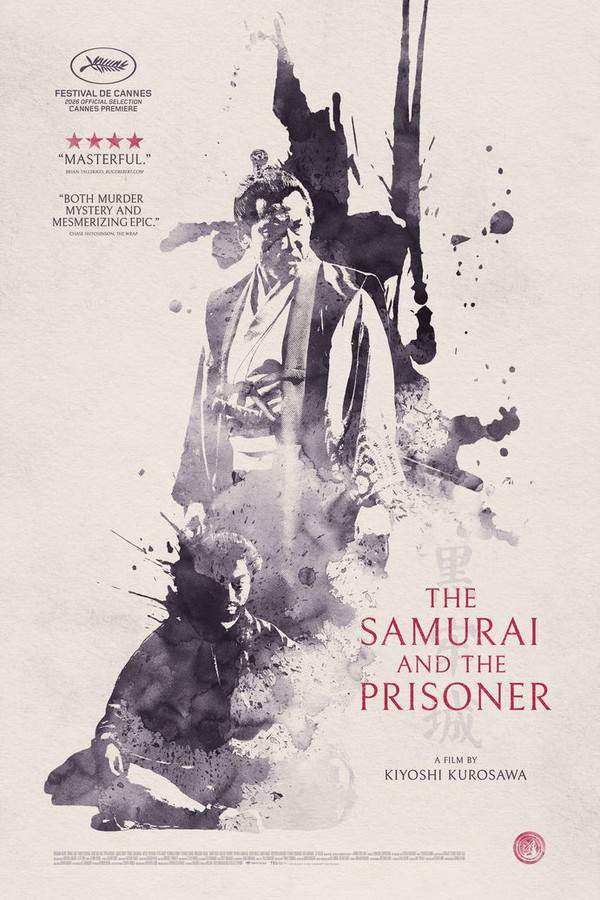
The Samurai and the Prisoner (2026) movie poster

Timeline

The Samurai and the Prisoner (2026) Timeline Explained – Every Event in Order

Release, runtime and language
2026 · 2 h 27 m · Japanese
Loading streaming availability…
Directed by
Kiyoshi Kurosawa
Starring
Masaki Suda, Tasuku Emoto, Masahiro Motoki, Munetaka Aoki, Yuriko Yoshitaka, Joe Odagiri

When Lord Murashige Araki rebels against the tyrannical Nobunaga Oda, he becomes trapped in his own castle. Isolated, he faces a series of inexplicable crimes that fracture the fragile order of his court, sowing fear throughout the fortress. As Oda’s forces close in and a traitor lurks among ranks, lord must uncover truth before domain collapses.

On this page (6)
  1. 1 Where to watch
  2. 2 Events in order (13)
  3. 3 Timeline questions answered
  4. 4 The book behind the movie
  5. 5 Movie threads
  6. 6 Every angle
Loading streaming availability…

13 events in order · contains spoilers

The Samurai and the Prisoner Timeline: Events in Chronological Order

Every key event of The Samurai and the Prisoner (2026) in order, scene by scene, with when and where it takes place. Use it to untangle flashbacks, time jumps and parallel storylines, to refresh your memory before the sequel or to find the exact scene you are thinking of.

  1. Siege of Arioka Castle begins

    In 1578, Murashige fortifies Arioka Castle and resists Oda Nobunaga's advance as Nobunaga lays siege. His loyal retainers await reinforcements from Mōri Terumoto, while Murashige debates the wisest course. The siege marks the start of a long, grim confrontation between the loyalists and Nobunaga's forces.

    When
    Winter 1578
    Where
    Arioka Castle, Settsu
  2. Kuroda Kanbei arrives as envoy

    Nobunaga sends Kuroda Kanbei as a cunning envoy to demand Murashige's surrender. Kanbei uses his wit to try to persuade the rebellious lord that the odds are unwinnable. Murashige refuses, and Kanbei is imprisoned in the fortress dungeon.

    When
    Winter 1578
    Where
    Arioka Castle, Settsu
  3. The fate of Jinen and the hostage saga

    Abe Jinen, a hostage in Arioka Castle, begs for death by sword, but Murashige chooses to imprison him instead. Later, Jinen is found dead with no arrow to account for his injuries, triggering a meticulous investigation. Murashige collects testimonies, and Kanbei reads an obscure poem in the documents, helping Murashige deduce the killer's identity and sparing him, only for the culprit to be sent into battle where he is killed.

    When
    Winter
    Where
    Arioka Castle, Settsu
  4. Spring ambush against Nagamasa's army

    Murashige executes a bold ambush against the invading army led by Ōtsu Nagamasa, aided by the Saika Clan and the Takatsuki Clan. The trap inflicts heavy losses on the attackers and demonstrates Murashige's tactical prowess. The ambush intensifies the pressure on the besieged castle.

    When
    Spring
    Where
    Near Arioka Castle, Settsu
  5. Hori Yatarō attack and the head swap

    A barely-clad swordsman named Hori Yatarō attacks Murashige's camp, killing Ichirōza before being slain himself. The heads of the fallen generals from the two allied clans are collected and swapped, sowing confusion among the villagers. The mystery of which commander was killed threatens to fracture the coalition.

    When
    Spring
    Where
    Arioka Castle environs, Settsu
  6. The Nagamasa head ruse is revealed

    Murashige, guided by Kanbei, discovers that Nagamasa's head was never taken—he was only unhelmeted for reconnaissance. Murashige then pieces together the killer's identity behind the earlier deaths and strengthens the resolve within his castle. The truth steadies some loyalties, though tensions linger.

    When
    Summer
    Where
    Arioka Castle, Settsu
  7. Tea urn plan and the disappearances

    To secure a possible surrender, Murashige sends Muhen as envoy carrying the tea urn Tora-saru as proof. Before departure, Muhen and swordsman Akioka Sironosuke vanish, and Muhen's lodgings reveal his murder, while the letter to Mitsuhide is left behind and the urn disappears. The missing items deepen the crisis and threaten any apparent truce.

    When
    Summer
    Where
    Arioka Castle, Settsu
  8. Notō's guilt and the killer's fate

    Zensuke reveals that Kanbei's son Shōjumaru has been killed by Oda's orders, exposing the high cost of loyalties. Murashige suspects Notō, a proud retainer, as the mastermind behind Muhen's death, and Notō is chased to the ramparts. Notō is shot as a lightning strike kills him while he lies injured.

    When
    Autumn
    Where
    Arioka Castle, Settsu
  9. Reclaiming Tora-saru and renouncing treasure

    Murashige recovers Tora-saru and proclaims that he will no longer use worldly treasures as tools of war. He redefines his leadership, choosing preservation and honor over material leverage. The castle's morale shifts as he commits to a different path.

    When
    Summer
    Where
    Arioka Castle, Settsu
  10. Autumn unravels Lady Chiyoho's plots

    In autumn, Murashige, with Kanbei's help, uncovers that his wife Lady Chiyoho masterminded multiple schemes to punish him and demonstrate divine punishment. She cites the Nagashima trauma as inspiration and aims to show that the meek can be punished and blessed alike. The revelation shakes the castle's moral balance.

    When
    Autumn
    Where
    Arioka Castle, Settsu
  11. Plan to seek Mōri support via Harima

    Kanbei advises Murashige to seek aid from Mōri in Harima via a sea route, a plan that would draw the castle away from its stronghold. Murashige senses Kanbei may have his own designs against him, creating a dangerous political fog. He weighs surrender, exile, and leadership as the castle's fate hangs in the balance.

    When
    Autumn
    Where
    Arioka Castle, Settsu
  12. Departure toward Harima and fading loyalties

    Murashige begins the journey toward Harima, leaving Arioka behind. Many vassals choose to return to the castle rather than follow, testing Murashige's loyalty and resolve. Only Sukesaburō and a small handful stay with him as the march continues.

    When
    Autumn
    Where
    From Arioka Castle toward Harima
  13. Epilogue: Nobunaga's fate and Murashige's tea master life

    The epilogue card notes Nobunaga captures Arioka Castle during Murashige's departure, and that Nobunaga himself dies three years later in the Honnō-ji Incident caused by Akechi Mitsuhide. Murashige survives and becomes a renowned tea master, living as a peaceful counterpoint to the wars he once fought.

    When
    Three years later
    Where
    Japan (epilogue context)

Last updated: August 28, 2026 at 07:33

Was this helpful?

Timeline questions answered

The Samurai and the Prisoner Timeline Explained: Your Questions Answered

When does it happen, and why in that order? The questions people ask about the chronology of The Samurai and the Prisoner (2026): time jumps, flashbacks, cause and effect between scenes and the correct order of events, each answered with spoilers.

Q1

Why did Lady Chiyoho orchestrate the misfortunes in Arioka Castle?

Lady Chiyoho, Murashige's wife, deliberately engineered a series of tragedies, including Jinen's death, the head-switching scheme, and Notō's downfall, to demonstrate that divine punishment could strike anyone, regardless of status. She was haunted by her traumatic experience during the Nagashima siege, where the Ikkō-ikki believed retreat led to damnation while charging into battle led to Paradise. Using that trauma as her driving force, she sought to teach her household a lesson about fate and divine will, showing that even the meek and the proud alike could be punished or blessed.

Foreshadowing: Her influence quietly shapes events throughout the siege, and her calm demeanor during each tragedy hints at her hidden authorship long before the autumn revelation.

  • lady chiyoho
  • divine punishment
  • nagashima
  • arioka castle
  • orchestration
  • plot
Q2

How did Abe Jinen die from an arrow with no arrow found on his body?

Jinen was discovered dead with what appeared to be an arrow wound, yet no arrow was present, creating an impossible-seeming murder. Kanbei Kuroda read an obscure poem hidden within the gathered testimonies, and the poem's symbolism pointed to the killer and the method. Through careful deduction, Murashige identified the culprit and spared his life, sending him into battle where he was ultimately killed, closing the case without ever publicly explaining the mechanism.

Foreshadowing: Jinen's devout Shinshū Buddhism and his plea for a sword death earlier established his moral profile, which became central to interpreting the evidence.

  • jinen
  • arrow
  • murder
  • poem
  • kanbei
  • deduction
  • hostage
Q3

Why did Kanbei advise Murashige to seek Mōri's aid via a sea route to Harima?

Kanbei proposed the sea route to Harima as a way for Murashige to escape the tightening siege and reach Mōri Terumoto's promised reinforcements. Murashige eventually realized that this advice was part of Kanbei's long-game strategy to orchestrate his downfall, since leaving Arioka would expose the domain to collapse. The plan cleverly used Murashige's desperation against him, trading one form of ruin (siege) for another (abandonment and disgrace).

Foreshadowing: Kanbei's calm deductions and his refusal to join the war council hinted that his loyalty lay elsewhere, even as he appeared to serve Murashige.

  • kanbei
  • harima
  • mōri
  • sea route
  • strategy
  • downfall
  • escape
Q4

Why did Murashige's retainers abandon him on the road to Harima?

As Murashige journeyed toward Harima, his entourage dwindled because each vassal chose to return to Arioka Castle rather than follow their lord into exile. The retainers pledged loyalty to the castle itself, which represented their honor, land, and families, rather than to Murashige as a person. This collective decision exposed the fragility of personal loyalty under feudal codes, where the stronghold outweighed the leader. Only Sukesaburō remained steadfast as Murashige's lone companion.

  • retainers
  • loyalty
  • arioka castle
  • sukesaburō
  • vassals
  • exile
Q5

Why did Murashige renounce using worldly treasures as tools of war?

After recovering the stolen tea urn Tora-saru, Murashige publicly proclaimed that he would no longer leverage valuable objects to negotiate surrenders or buy alliances. The loss and recovery of Tora-saru exposed how fragile such material leverage was, and how easily treasures could become targets for theft, murder, and political manipulation. By choosing to treasure such items for peace rather than war, Murashige redefined his leadership around restraint and cultural preservation rather than military survival.

Foreshadowing: The theft of Tora-saru, which triggered Muhen's murder, foreshadowed the danger of mixing sacred objects with wartime diplomacy.

  • tora-saru
  • tea urn
  • treasure
  • peace
  • war
  • renunciation
Q6

How did Murashige actually kill Ōtsu Nagamasa during the spring ambush?

During the spring ambush against Nagamasa's forces, the young commander was wearing his helmet and was only briefly unhelmeted for reconnaissance. Kanbei hinted that Nagamasa's head was never taken by either allied clan, meaning the celebrated trophy was a misattribution. Murashige then revealed that he himself had struck down Nagamasa, which resolved the dispute between the Saika and Takatsuki clans over who held the kill. The revelation ended the inter-clan tension that had escalated into the burning of the Christian church.

Foreshadowing: The head-switching plot and the rivalry between the two clans had been escalating, hinting that the truth about Nagamasa's killer was being deliberately concealed.

  • nagamasa
  • ambush
  • head swap
  • saika
  • takatsuki
  • murashige
  • helmet
Q7

Why was Notō struck by lightning on the ramparts of Arioka Castle?

Notō, a proud retainer, was identified as Muhen's killer after Kanbei's deduction traced the chain of guilt through the castle's documents and movements. When chased to the ramparts, Notō was shot and injured, but as he attempted to rise again in defiance, a lightning bolt struck him dead. His demise was interpreted as a form of divine punishment, fitting the broader theme Lady Chiyoho had orchestrated to show that fate strikes anyone, even those who resist.

Foreshadowing: Notō's pride and his refusal to bend to Murashige's accusations foreshadowed his defiant stand on the ramparts.

  • notō
  • lightning
  • ramparts
  • divine punishment
  • muhen's killer
Q8

Who killed Muhen and Akioka Sironosuke inside Arioka Castle?

Muhen, the Buddhist priest serving as Murashige's envoy, was found dead alongside the skilled swordsman Akioka Sironosuke before he could deliver the tea urn Tora-saru to Akechi Mitsuhide. Through Kanbei's deduction, Murashige traced the murders to Notō, a proud retainer whose pride had been wounded by the surrender negotiations. Notō's killing was part of the broader web of plots orchestrated by Lady Chiyoho to demonstrate that divine punishment could reach anyone, including those complicit in peace efforts.

Foreshadowing: The disappearance of the letter to Mitsuhide while the urn was stolen hinted at an insider with knowledge of the envoy's mission.

  • muhen
  • akioka sironosuke
  • tora-saru
  • notō
  • murder
  • envoy
Q9

Why were the heads of the fallen generals swapped after the spring ambush?

After the spring ambush, the heads of the young commanders from the Saika and Takatsuki clans were deliberately switched, with one commander's head replaced by that of the bare-chested swordsman Hori Yatarō. The swap was designed to inject fear and confusion into the villagers and to inflame tensions between the two allied clans over who had secured the more prestigious kill. Lady Chiyoho later admitted to orchestrating the switch as part of her campaign to prove that fate and divine will could destabilize any alliance.

Foreshadowing: The presence of a barely-clad stranger attacker, Hori Yatarō, who killed Ichirōza before being slain, planted the confusion that made the swap possible.

  • head swap
  • saika
  • takatsuki
  • hori yatarō
  • ichirōza
  • ambush
  • fear
Q10

Why did Murashige spare Jinen's killer instead of executing him?

After Kanbei's reading of the obscure poem identified Jinen's killer, Murashige chose clemency rather than execution, sending the culprit into battle instead. This unusual mercy reflected Murashige's reputation as a merciful lord and his belief that death in combat could serve as a form of redemption or fate-driven justice. The decision also allowed Murashige to maintain internal order without exposing the full mechanism of the murder, which depended on interpreting symbolic poetry rather than physical evidence.

  • jinen's killer
  • mercy
  • poem
  • battle
  • redemption
  • clemency
Q11

What happened to Murashige after the siege of Arioka Castle?

After Murashige departed for Harima, Nobunaga's forces captured Arioka Castle in his absence. Despite losing his domain, retainers, and wife, Murashige survived and eventually became a renowned tea master. His life took a divergent path from the violent feudal politics of his era, embodying the very peace and restraint he had proclaimed after recovering Tora-saru. The narration also notes that Nobunaga himself fell three years later in the Honnō-ji Incident led by Akechi Mitsuhide, closing the historical arc.

Foreshadowing: Murashige's renunciation of treasures as tools of war foreshadowed his later life devoted to tea culture and peaceful refinement.

  • epilogue
  • tea master
  • honnō-ji
  • akechi mitsuhide
  • nobunaga
  • arioka castle
Q12

Why did Abe Jinen plead to be killed by a sword instead of being crucified?

Abe Jinen, a devout Shinshū Buddhist kept as a hostage in Arioka Castle, pleaded for death by sword because his faith taught that such a death would grant him entry into Paradise, while crucifixion was reserved for lower spiritual outcomes. When his father, Abe Jūemon, defected to Nobunaga, customary punishment for hostages dictated crucifixion, but Murashige instead chose to imprison him. Jinen's theological urgency and Murashige's mercy set the moral tone for the siege's opening act.

  • jinen
  • shinshū
  • crucifixion
  • sword
  • paradise
  • hostage
  • buddhism
Q13

What is the Tora-saru tea urn and why was it important to the surrender negotiations?

Tora-saru is a highly valuable tea urn that Murashige entrusted to the Buddhist priest Muhen as proof of his willingness to surrender to Nobunaga through the liaison Akechi Mitsuhide. Its worth made it a credible gesture of sincerity in feudal diplomacy, where material objects carried enormous symbolic and economic weight. The theft of Tora-saru after Muhen's murder nearly collapsed the surrender talks, and its eventual recovery allowed Murashige to renounce using such treasures as leverage altogether.

  • tora-saru
  • tea urn
  • surrender
  • mitsuhide
  • muhen
  • diplomacy
Q14

Why did Araki Murashige rebel against Oda Nobunaga in 1578?

Murashige, the merciful lord of Settsu, rebelled against the brutal warlord Nobunaga in 1578 rather than continue submitting to his violent unification campaigns. The rebellion was a direct moral and political stand against Nobunaga's tyranny, with Murashige barricading himself inside Arioka Castle as Nobunaga laid siege. The decision set in motion a year-long confrontation that cost Murashige his domain, retainers, and wife, while ultimately redirecting his life toward tea culture and peace.

  • murashige
  • nobunaga
  • rebellion
  • 1578
  • arioka castle
  • settsu
  • tyranny

Movie threads

More Movies Like The Samurai and the Prisoner, by Mood & Story

Curated lists built around what makes The Samurai and the Prisoner tick: the same mood, the same kind of story or the same emotional payoff. Each list explains why these movies belong together.

Sealed castle murder mysteries like in The Samurai and the Prisoner

Deaths pile up in sealed places where the killer still walks among the living. If you liked The Samurai and the Prisoner, you'll love these locked-room style mysteries where danger closes in alongside the investigation. Expect layered whodunits set in confined, pressure-cooker worlds where every character could be the killer and escape is never really an option. Similar slow-burn detective stories with siege-like tension.

  • claustrophobic
  • slow burn deduction
  • tense
  • brooding
  • paranoia
  • sealed setting
  • Tone: tense, melancholic
  • Pacing: variable with rising pressure
Why these movies?

The story pattern: A small group is sealed inside a single location as unexplained deaths begin to accumulate. An investigator, official or reluctant, peels back layers of deception while outside pressure keeps mounting. Revelations redraw loyalty maps, and the closing chapters trade deduction for survival. The arc moves from order to suspicion to betrayal, often ending in a costly, melancholic resolution.

Why they belong together: These films share the sensation of being trapped with a killer, the rhythm of patient investigation punctuated by sudden danger, and a cast whose relationships twist under pressure. They favor long, brooding interiors over chases, and they reward viewers who can hold multiple suspects and motives at once.


Feudal war dramas with political betrayal like in The Samurai and the Prisoner

Loyalty fractures as ancient powers close in around crumbling courts and doomed lords. Looking for movies like The Samurai and the Prisoner? These historical dramas set in feudal courts and besieged castles deliver layered political intrigue, calculated betrayals, and bittersweet outcomes where honor and survival rarely coexist. Expect sword-era epics about doomed lords, religious conflict, and loyalty tested to breaking point.

  • feudal
  • siege
  • political intrigue
  • betrayal
  • bitter victory
  • court ritual
  • Tone: bittersweet, somber
  • Pacing: variable, contemplative beats with violent surges
Why these movies?

The story pattern: A ruler or noble holds a precarious position as outside forces close in. Inside the court, whispered plots, religious tensions, and divided loyalties erode trust from within. Violence alternates with ritual, prayer, and politics, building toward an ending where the protagonist may survive but at terrible cost. The story lingers on what is lost — lands, retainers, family, faith — even in victory.

Why they belong together: These films share a somber, melancholic register that treats power and loyalty as tragic forces rather than triumphant ones. They lean on slow contemplative scenes beside bursts of brutality, and their endings tend to be bittersweet rather than triumphant. Religious and cultural detail — ceremonies, hierarchy, ritual — grounds the political maneuvering in a tangible world.

Every angle

The Samurai and the Prisoner (2026) Explained: Plot, Timeline & Characters

Everything about The Samurai and the Prisoner in one place: what happens in the plot summary, the timeline in chronological order, the characters and meaning and a spoiler-free summary. What's After the Movie adds the cast, box office and post-credit scenes.

Coming soon on iOS and Android

The Plot Explained Movie Summary App

Plot summaries, endings explained and timelines on your phone. Catch up on any movie in minutes, save your favorites and never miss a twist again.

Be the first to know when we launch. Your email stays private, always.

Learn more about the app