Plot Explained Spoilers guaranteed!
Plot Explained

Browse by genre

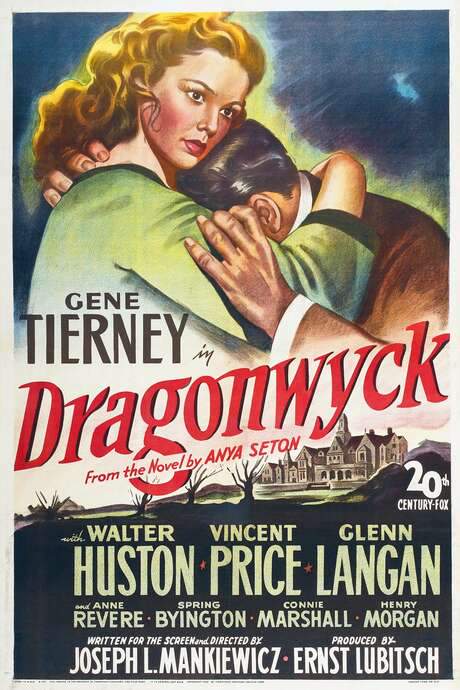
Dragonwyck (1946) movie poster

Plot Summary

Dragonwyck (1946) Plot Summary Explained

Release, runtime and language
1946 · 103 mins · English
JustWatch #5,909 23
Directed by
Joseph L. Mankiewicz
Starring
Jessica Tandy, Harry Morgan, Vincent Price, Trevor Bardette, Reinhold Schünzel, Spring Byington

Miranda Wells leaves New York City for remote Dragonwyck Manor, becoming governess to her wealthy cousin Nicholas’s daughter. The estate first seems a dream, but she soon sees Nicholas’s relations with tenant farmers and his volatile temperament. After his wife’s death their bond deepens, yet his instability casts a shadow over any hope of happiness.

On this page (7)
  1. 1 Where to watch
  2. 2 What happens: full plot
  3. 3 Plot questions answered
  4. 4 The book behind the movie
  5. 5 Movie threads
  6. 6 Movies like Dragonwyck
  7. 7 Every angle

Where to watch

Where to Watch Dragonwyck (1946)

Where can you watch Dragonwyck? Stream, rent or buy it in the US, including on YouTube TV, Fawesome and Mometu: current JustWatch availability with up-to-date prices.

Streaming availability powered by JustWatch

Full plot summary · contains spoilers

What Happens in Dragonwyck: Full Plot Summary

The whole story of Dragonwyck (1946) explained, from the opening scene to the final frame: every key event, every twist and what it all adds up to. Read it as a quick recap before the sequel, to check a scene you missed, or to finally understand what really happened.

In 1844 Greenwich, Connecticut, a young farm girl named Miranda Wells grows up under the watchful eyes of stern, low-church parents, dreaming of romance and a life beyond the fields. When their distant cousin, Nicholas Van Ryn, a wealthy patroon from Hudson, New York, sends word, Miranda’s mother seizes the chance to send her daughter to the grand Dragonwyck manor as a companion to Nicholas’s eight-year-old daughter, Katrine Van Ryn. What begins as a chapter of adventure and opportunity gradually reveals a far darker tapestry. Miranda discovers that Nicholas Van Ryn and his wife, Johanna Van Ryn, are not the image of domestic harmony they project; they are estranged from each other and from their child, trapped in a household where the past still seems to whisper in the walls. The servants speak of a cursed Van Ryn bloodline, and they claim that a haunting harpsichord, played by an ancestral ghost, signals misfortune whenever the family’s fortunes falter.

During a secret nighttime visit to the tenant farmers’ Kermesse with [Katrine Van Ryn], Miranda crosses paths with a principled Anti-Rent advocate, Dr. Jeff Turner. The encounter marks the beginning of a troubling clash between Miranda’s growing affection for the enigmatic doctor and the tightening grip of the patroon’s world. Miranda witnesses Klaas Bleecker, a stubborn farmer, being evicted by [Nicholas Van Ryn], a moment that reveals the harsh realities behind the ceremonial rent payments that underpin the Van Ryn estate. Soon after, Klaas is accused of murder, and the case becomes a maneuvering ground for power, loyalty, and fear. In a reciprocal exchange, Nicholas reluctantly agrees to Turner’s demand that the accused farmer receive a fair trial, but he makes Turner promise to attend to his ailing wife, Johanna Van Ryn. The doctor complies, hoping to maintain a fragile balance within a house already taut with secrets.

Johanna’s illness, diagnosed as a simple cold, takes a tragic turn when she dies suddenly after eating cake, an event that shocks the household and casts doubt on Nicholas’s control. Nicholas opens up to Miranda about the void left by Katrine’s birth—Johanna’s inability to bear more children—and confesses a complicated, troubling longing for Miranda herself. Although Miranda returns to Greenwich, their bond lingers, and when Nicholas arrives later to propose, she accepts. The wedding brings a fragile happiness, but it is quickly strained by philosophical and religious tensions as Miranda’s faith in God stands in contrast to the semi-feudal world of patroon landholding and tenancy that Nicholas clings to. The couple’s life together is overshadowed by grief when their infant son dies soon after baptism, a blow that shatters Nicholas and sends him into a deep retreat to the attic, where he spirals into despair and addiction.

Peggy O’Malley, Miranda’s devoted maid, grows increasingly fearful for Miranda’s safety and seeks help from [Dr. Jeff Turner]. Turner arrives to confront a man unraveling under his own demons: Nicholas experiences a dangerous psychotic episode punctuated by auditory hallucinations, and it becomes clear that Nicholas has fatally poisoned Johanna. The tension escalates as Nicholas hints at a plot against Miranda, prompting a confrontation that ends with Turner overpowering him. Peggy secretly ensures Miranda’s safety, guiding her away from immediate danger.

The danger surrounding Nicholas intensifies as he seizes a pistol and heads to the Kermesse grounds in a final bid to reassert old rites of tenancy and authority. Turner shows up with the tenant farmers, the mayor, and the sheriff to bring Nicholas into custody for his wife’s murder. When Nicholas reaches for his gun, he is fatally shot, his tragedy underscoring the fatal costs of clinging to a collapsing social order. After the confrontation, Turner escorts Miranda back to her family’s Greenwich farm. In a quiet, unresolved note, Turner—who had previously sought to court Miranda—asks for another chance to see her, and she agrees that they may meet again.

This tale strands romance, duty, and class conflict within a Gothic atmosphere—where ancestral whispers, a crumbling system of landholding, and a family’s private torments collide. It follows Miranda’s personal awakening against a backdrop of power struggles, contested loyalties, and the perilous lure of a life that promises glamour yet exacts a heavy price. The narrative renders a portrait of resilience as Miranda navigates danger, loss, and moral ambiguity, ultimately choosing to keep faith with a future that lies beyond Dragonwyck and its haunted history.
Last updated: October 09, 2025 at 11:22

Was this helpful?

Plot questions answered

Dragonwyck Plot Explained: Your Questions Answered

The questions people ask most about Dragonwyck (1946): what happens in the confusing scenes, why the characters do what they do, the twists, hidden details and what the ending means. Each answer contains spoilers.

Q1

Why did Nicholas Van Ryn poison his wife Johanna?

Nicholas poisoned Johanna because she was unable to bear him a son after giving birth to Katrine, and he had grown to despise her. He confesses to Miranda that Johanna's inability to produce an heir left him deeply dissatisfied, and he wanted her out of the way so he could pursue a new life with Miranda. The murder was calculated, Nicholas gave her poisoned cake while she was ill, exacerbating her condition until she died.

Foreshadowing: Earlier, servants whisper about the cursed Van Ryn bloodline and the harpsichord that plays whenever misfortune approaches the family.

  • nicholas van ryn
  • johanna
  • poison
  • murder
  • cake
  • arranged marriage
  • inheritance
Q2

What happened to Miranda and Nicholas's baby?

Miranda became pregnant after marrying Nicholas, and he was thrilled at the prospect of having a son. However, the infant died shortly after baptism, shattering Nicholas completely. This tragedy sent him into a deep psychological decline, he withdrew to the attic, fell into addiction, and experienced psychotic episodes with auditory hallucinations. The loss of the male heir symbolized the end of his patroon lineage.

Foreshadowing: Nicholas's earlier obsession with having a son to continue the Van Ryn name foreshadows his devastating reaction to the baby's death.

  • baby
  • infant death
  • baptism
  • nicholas breakdown
  • heir
  • tragedy
Q3

Why did Nicholas Van Ryn become unstable?

Nicholas's mental breakdown stemmed from multiple factors: the death of his infant son (which ended his hope for a male heir), guilt over poisoning his wife, and his inability to accept the declining patroon system. He retreated to the attic, became addicted to drugs, and suffered auditory hallucinations where he heard voices. His instability represented the collapse of both his family line and his authority as the old feudal order crumbled around him.

Foreshadowing: The servants had warned of a cursed Van Ryn bloodline, and Nicholas's violent temperament was established early in the story.

  • nicholas breakdown
  • mental illness
  • hallucinations
  • addiction
  • attic
  • guilt
Q4

What was the Anti-Rent movement in Dragonwyck?

The Anti-Rent movement was a real 19th-century political uprising in New York state where tenant farmers resisted the patroon system, a feudal landholding practice where wealthy landowners like the Van Ryns collected rents from farmers. In the film, Dr. Jeff Turner is an Anti-Rent activist who challenges Nicholas's authority. The movement represents the class conflict underlying the story, as the tenant farmers ultimately unite against Nicholas during the final confrontation.

Foreshadowing: When Miranda attends the Kermesse secretly, she witnesses the tension between the patroon's ceremonial authority and the farmers' growing resistance.

  • anti-rent
  • patroon
  • tenant farmers
  • klaas bleecker
  • class conflict
  • feudalism
Q5

Why did Nicholas go to the Kermesse at the end?

Nicholas went to the Kermesse grounds armed with a pistol because he was determined to reassert his patroonal authority by force. With his power crumbling, his wife dead, his son gone, and the tenants rebelling, he tried to restore the old rituals of tenancy and intimidate the farmers into submission. However, Dr. Turner had already arrived with the mayor, sheriff, and tenant farmers to arrest Nicholas for Johanna's murder, leading to the fatal confrontation.

Foreshadowing: The first Kermesse scene established it as a gathering where the tension between the patroon and tenants was most visible.

  • kermesse
  • confrontation
  • arrest
  • patroon authority
  • sheriff
  • tenant farmers
  • nicholas death
Q6

What was the significance of the haunted harpsichord in Dragonwyck?

The servants claimed the harpsichord in Dragonwyck Manor would play by itself whenever misfortune threatened the Van Ryn family, an ancestral ghost supposedly controlled it. This supernatural element reinforced the Gothic atmosphere and suggested the family was cursed. While the curse is never explicitly confirmed, it parallels the actual tragedies that unfold: Johanna's murder, the baby's death, and Nicholas's violent end.

Foreshadowing: The harpsichord plays early in the film, foreshadowing the chain of disasters that will befall the family.

  • harpsichord
  • curse
  • ghost
  • gothic
  • van ryn bloodline
  • superstition
  • haunting
Q7

Why was Klaas Bleecker accused of murder?

Klaas Bleecker was a stubborn tenant farmer who refused to participate in Nicholas's rent ceremony, defying patroonal authority. Nicholas evicted him as punishment, but Klaas was later accused of murder, likely as a political maneuver to crush the Anti-Rent movement. Dr. Turner demanded a fair trial for Klaas, using it as leverage to get Nicholas to allow proper medical care for the ailing Johanna, creating a tense exchange between class loyalty and justice.

Foreshadowing: The eviction scene first reveals the harsh realities behind the ceremonial rent payments that sustain the Van Ryn estate.

  • klaas bleecker
  • murder accusation
  • eviction
  • tenant farmers
  • anti-rent
  • trial
Q8

Why did Dr. Jeff Turner confront Nicholas at the end?

Dr. Turner came to Dragonwyck because Peggy O'Malley summoned him fearing for Miranda's safety. Upon arrival, Turner discovered Nicholas was experiencing a psychotic episode and realized he had poisoned Johanna, possibly planning to murder Miranda next. Turner overpowered Nicholas to protect Miranda, then coordinated with authorities to arrest Nicholas for murder. At the Kermesse, Turner arrived with the sheriff to formally take Nicholas into custody, leading to Nicholas's fatal attempt to resist arrest.

Foreshadowing: Turner was first introduced as an Anti-Rent activist who opposed Nicholas's aristocratic power, establishing his role as Nicholas's moral opposite.

  • dr jeff turner
  • nicholas confrontation
  • arrest
  • peggy omalley
  • rescue
  • murder revelation
Q9

Why did Miranda marry Nicholas despite knowing his darker side?

Miranda was drawn to Nicholas despite seeing his volatility because she had grown up dreaming of romance and a life beyond her humble farm. After experiencing Dragonwyck's glamour and becoming entangled in Nicholas's emotional intensity, she found it difficult to resist his proposal. Additionally, her time at the manor had created a bond with him, she returned to Greenwich but couldn't fully detach. When Nicholas arrived to propose, she accepted, hoping to transform him and find happiness, though the marriage ultimately brought tragedy.

Foreshadowing: Miranda's early dreams of romance and adventure, combined with her curiosity about the mysterious manor, set the stage for her fateful decision.

  • miranda
  • nicholas
  • marriage
  • attraction
  • hope
  • class mobility
  • decision
Q10

What caused Nicholas's psychotic episode at Dragonwyck?

Nicholas's psychotic episode was triggered by the combined stress of his son's death, guilt over murdering his wife, and substance abuse. After retreating to the attic, he descended into addiction and began experiencing auditory hallucinations, hearing voices that drove him further into madness. When Dr. Turner arrived to help, Nicholas was completely unraveled, making him dangerous and unpredictable, which forced Turner to subdue him to protect Miranda.

Foreshadowing: Nicholas's volatile temperament and the family's cursed bloodline were established early, building toward this mental collapse.

  • psychotic episode
  • hallucinations
  • attic
  • addiction
  • drugs
  • mental breakdown
  • nicholas
Q11

What happened to Dragonwyck after Nicholas's death?

The film ends with Nicholas's death at the Kermesse, which marks the violent end of the patroon system's tyranny over the tenant farmers. The Van Ryn estate's old feudal order collapses with Nicholas, who tried to maintain his authority through force. Miranda escapes the dangerous situation and returns to Greenwich with Dr. Turner, leaving Dragonwyck and its haunted history behind. The ending hints at a new beginning for Miranda, though the cost of Nicholas's downfall remains bittersweet.

Foreshadowing: The tension between the declining patroon system and the rising Anti-Rent movement ran throughout the film, culminating in this final confrontation.

  • dragonwyck estate
  • patroon system
  • ending
  • closure
  • new beginning
  • miranda future
Q12

How was Johanna's poisoning discovered?

Johanna's death initially appeared to be from acute gastritis following a simple cold, and the household accepted it as natural causes. However, when Nicholas spiraled into his psychotic episode, Dr. Turner began piecing together the truth. Recognizing the symptoms and Nicholas's behavior, Turner deduced that Nicholas had poisoned Johanna, likely through the cake she ate, after she fell ill. This revelation came during the crisis when Turner realized Nicholas might also be plotting to harm Miranda.

Foreshadowing: Johanna's sudden death after eating cake was suspicious, especially given Nicholas's earlier complaints about her inability to bear him a son.

  • johanna death
  • poisoning discovery
  • cake
  • dr turner investigation
  • revelation
  • nicholas guilt

Movie threads

More Movies Like Dragonwyck, by Mood & Story

Curated lists built around what makes Dragonwyck tick: the same mood, the same kind of story or the same emotional payoff. Each list explains why these movies belong together.

Gothic manor stories like Dragonwyck

Sinister estates where decadent families hide dark curses and psychological decay. Explore movies like Dragonwyck featuring sprawling, cursed estates and families burdened by dark secrets. If you enjoyed the oppressive atmosphere of Dragonwyck Manor, you'll find similar tales of psychological decay and gothic romance in these selections.

  • gothic
  • oppressive
  • atmospheric
  • claustrophobic
  • melancholic
  • somber
  • Tone: dark, oppressive, melancholic
  • Pacing: steady, atmospheric build
Why these movies?

The story pattern: The narrative typically follows a protagonist, often an outsider or newcomer, entering a wealthy family's secluded domain. They are initially seduced by the grandeur but soon discover hidden cruelties, a family curse, or a tyrannical patriarch. The story unfolds as a slow unveiling of secrets, leading to a confrontation that shatters the estate's fragile world.

Why they belong together: These films are grouped by their central setting—the gothic manor—and the thematic focus on inherited sin, psychological oppression, and the clash between old-world brutality and modern morality. They share a dark, atmospheric tone and a steady pace that builds a deep sense of claustrophobic dread.

Stories of moral awakening like Dragonwyck

Protagonists lose their innocence in a dark world, surviving with scars and hard-won wisdom. Find movies similar to Dragonwyck where a character's idealism is shattered by a dark reality. If you liked Miranda's journey from innocence to experience in Dragonwyck, these films feature protagonists who survive with bittersweet wisdom.

  • somber
  • anxious
  • melancholic
  • thought-provoking
  • emotional
  • tragic
  • Tone: dark, bittersweet, heavy
  • Pacing: steady, character-driven
Why these movies?

The story pattern: The narrative arc is defined by the protagonist's moral and emotional education. They begin in a state of relative innocence, drawn into a complex and often dark situation. Through a series of revelations and tragedies, their worldview is fundamentally challenged. The story ends not with a clean victory, but with their survival and a newfound, somber understanding of the world.

Why they belong together: These films share a core character arc of disillusionment and maturation. They are united by a heavy emotional weight and a bittersweet ending tone, where survival comes at the cost of innocence. The pacing is often steady, allowing the character's internal transformation to unfold believably.

If you liked this

Movies Like Dragonwyck

Similar movies to Dragonwyck: the same genre, themes or kind of story. Each one comes with its own plot summary, timeline and ending explained.

Browse all movie summaries

Every angle

Dragonwyck (1946) Explained: Plot, Timeline & Characters

Everything about Dragonwyck in one place: what happens in the plot summary, the timeline in chronological order, the characters and meaning and a spoiler-free summary. What's After the Movie adds the cast, box office and post-credit scenes.

Coming soon on iOS and Android

The Plot Explained Movie Summary App

Plot summaries, endings explained and timelines on your phone. Catch up on any movie in minutes, save your favorites and never miss a twist again.

Be the first to know when we launch. Your email stays private, always.

Learn more about the app