Year: 1974
Runtime: 92 min
Language: English
Director: Brian De Palma
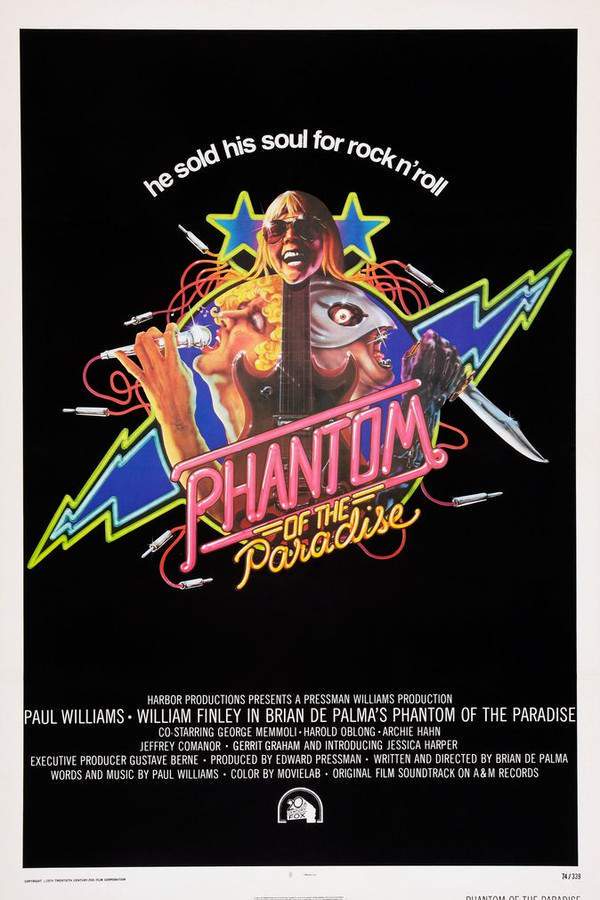
A struggling songwriter’s music is stolen by a powerful and ruthless producer, setting off a darkly comedic and twisted story of artistic betrayal and revenge. After a disfiguring accident, the victim resurfaces as the mysterious Phantom, determined to exact vengeance on his oppressor and free a captivating singer from his control. He engages in a dangerous game of cat and mouse, blurring the lines between justice and obsession in this unique and theatrical tale.
Warning: spoilers below!
Haven’t seen Phantom of the Paradise yet? This summary contains major spoilers. Bookmark the page, watch the movie, and come back for the full breakdown. If you're ready, scroll on and relive the story!
Read the complete plot breakdown of Phantom of the Paradise (1974), including all key story events, major twists, and the ending explained in detail. Discover what really happened—and what it all means.
Winslow Leach, portrayed by William Finley, is an aspiring songwriter and composer who catches the attention of the nefarious record producer, Swan, played by Paul Williams, during a performance as a backing artist for the nostalgia band The Juicy Fruits, who Swan manages. Swan is captivated by Winslow’s music, believing it to be the ideal fit for the grand opening of his imminent concert venue, “The Paradise.” However, betrayal looms as Swan sends his loyal accomplice, Arnold Philbin, depicted by George Memmoli, to steal Winslow’s composition and claim it for himself. When Winslow arrives at Death Records, Swan’s label, he is summarily dismissed.
Driven by a desire for the truth, Winslow clandestinely enters Swan’s luxurious estate, “The Swanage,” where he discovers several women rehearsing his music for auditions. Among them is Phoenix, played by Jessica Harper, an aspiring singer who captures Winslow’s heart. Unfortunately, Winslow soon learns of Swan’s plans to showcase his music without crediting him. After another failed attempt to confront Swan, Winslow is framed for drug offenses and sentenced to life in prison as a result of Swan’s manipulation.
Following a grim six months in Sing Sing Prison, where he endures the experimental extraction of his teeth—replaced with shiny metal—Winslow learns that The Juicy Fruits have released a chart-topping hit of his song, leading him to a desperate escape. He manages to break into Death Records, wreaking havoc, and subsequently infiltrates Swan’s factory, where a disastrous accident in the record press leaves his face severely mutilated and his vocal cords destroyed. Believed to be dead after plunging into the East River, Winslow adopts a new identity, the Phantom of the Paradise, donning a striking black leather outfit, long cape, and an owl-like mask to conceal his scars as he sets out for revenge against Swan and his cohorts.
In a dramatic sequence filled with music, Winslow plants a bomb during a performance by The Beach Bums, formerly The Juicy Fruits. Recognizing the Phantom from security footage, Swan offers Winslow a chance to produce his music on his own terms, leading to auditions where the Phantom selects Phoenix as the lead singer. However, Swan’s treacherous nature soon reveals itself as he exploits Winslow’s trust, replacing Phoenix with the flamboyant glam-rock star, Beef, played by Gerrit Graham, during the show.
After enduring isolation and manipulation, Winslow’s frustrations boil over, resulting in a violent confrontation with Swan’s bodyguards. As chaos ensues during Beef’s performance of a twisted glam-rock version of Winslow’s music, the Phantom strikes, shocking the audience. Swan, realizing the potential of Phoenix’s talent, attempts to seduce her and make her a star, despite her growing connection to the Phantom.
In a heart-wrenching climax, the Phantom reveals his true identity to Phoenix, urging her to leave the corrupt environment Swan has created. Yet, heartbroken by her skepticism, he retreats to confront Swan. In a fit of rage, after witnessing Swan’s betrayal of both him and Phoenix, the Phantom succumbs to despair, stabbing himself. Ultimately, due to an unbreakable contract with the devil, he survives, only to see Swan fully reveal his monstrous form in front of a live audience.
As the wedding between Swan and Phoenix unfolds, the Phantom leaps into action during a dramatic showdown, disrupting the ceremony to save Phoenix from Swan’s grasp. In a harrowing finale, with the crowd driven to madness, both the Phantom and Swan face their fates, leaving only a powerful, emotional connection between Winslow and Phoenix amid the chaos. The story culminates with her finally recognizing him as the gentle soul she once met, sharing their last moments as the audience watches, torn between horror and exhilaration. The closing credits pay homage to the cast, showcasing the talented individuals behind the intense performances.
Last Updated: October 27, 2024 at 23:22
Discover curated groups of movies connected by mood, themes, and story style. Browse collections built around emotion, atmosphere, and narrative focus to easily find films that match what you feel like watching right now.
Movies where music, melodrama, and the macabre collide in a flamboyant spectacle.If you liked the glam-rock satire and gothic horror of Phantom of the Paradise, explore these movies. This list features similar films where music, melodrama, and the macabre merge, offering stories of obsessive artistry and flamboyant spectacle in the vein of Phantom of the Paradise.
Stories in this thread often revolve around artists, outcasts, or monsters whose fates are tied to grand performances or creative endeavors. The narrative is driven by obsession, revenge, or a Faustian bargain, unfolding in a heightened, theatrical reality where the stakes feel both personal and epic.
Movies are grouped here for their shared blend of musical or operatic structure with dark, gothic, or horror themes. They share a flamboyant visual style, a melodramatic tone that balances dark comedy with genuine tragedy, and a focus on the destructive nature of artistic ambition.
Stories of talent sold for fame, leading to a dark spiral of vengeance and loss.Fans of Phantom of the Paradise's themes of artistic exploitation and deals with the devil will find similar stories here. Discover movies about creators whose talent is stolen, leading to a dark journey of revenge and moral collapse, capturing the same sense of bitter triumph as Phantom of the Paradise.
The pattern follows a talented individual whose work is co-opted or stolen by a corrupting force. A central deal or betrayal sets them on a path of physical or psychological disfigurement, leading to an obsessive quest for revenge that often blurs the line between justice and self-destruction, culminating in a bittersweet or tragic resolution.
These movies are united by the core theme of a Faustian bargain, specifically within artistic circles like the music or entertainment industry. They share a dark tone, high emotional intensity from themes of betrayal and mutilation, and a focus on the destruction of innocence and the high price of ambition.
Don't stop at just watching — explore Phantom of the Paradise in full detail. From the complete plot summary and scene-by-scene timeline to character breakdowns, thematic analysis, and a deep dive into the ending — every page helps you truly understand what Phantom of the Paradise is all about. Plus, discover what's next after the movie.
Track the full timeline of Phantom of the Paradise with every major event arranged chronologically. Perfect for decoding non-linear storytelling, flashbacks, or parallel narratives with a clear scene-by-scene breakdown.
Discover the characters, locations, and core themes that shape Phantom of the Paradise. Get insights into symbolic elements, setting significance, and deeper narrative meaning — ideal for thematic analysis and movie breakdowns.
Get a quick, spoiler-free overview of Phantom of the Paradise that covers the main plot points and key details without revealing any major twists or spoilers. Perfect for those who want to know what to expect before diving in.
Visit What's After the Movie to explore more about Phantom of the Paradise: box office results, cast and crew info, production details, post-credit scenes, and external links — all in one place for movie fans and researchers.
Discover movies like Phantom of the Paradise that share similar genres, themes, and storytelling elements. Whether you’re drawn to the atmosphere, character arcs, or plot structure, these curated recommendations will help you explore more films you’ll love.
Phantom of the Paradise (1974) Scene-by-Scene Movie Timeline
Phantom of the Paradise (1974) Movie Characters, Themes & Settings
Phantom of the Paradise (1974) Spoiler-Free Summary & Key Flow
Movies Like Phantom of the Paradise – Similar Titles You’ll Enjoy
The Phantom of Liberty (re-release) (2002) Spoiler-Packed Plot Recap
The Phantom of the Opera (2004) Story Summary & Characters
Phantom (2015) Detailed Story Recap
Phantom of the Megaplex (2000) Complete Plot Breakdown
Phantom Mary (2019) Full Summary & Key Details
The Phantom of the Opera (1000) Full Summary & Key Details
The Phantom of the Opera (1983) Plot Summary & Ending Explained
Phantom of Death (1988) Plot Summary & Ending Explained
Phantom of the Ritz (1988) Complete Plot Breakdown
The Phantom of the Opera (1989) Film Overview & Timeline
The Phantom of the Opera (1991) Full Summary & Key Details
The Phantom of the Opera (1962) Ending Explained & Film Insights
The Phantom of the Operetta (1955) Plot Summary & Ending Explained
Phantom Killer (1942) Ending Explained & Film Insights
The Phantom of the Opera (1925) Full Summary & Key Details