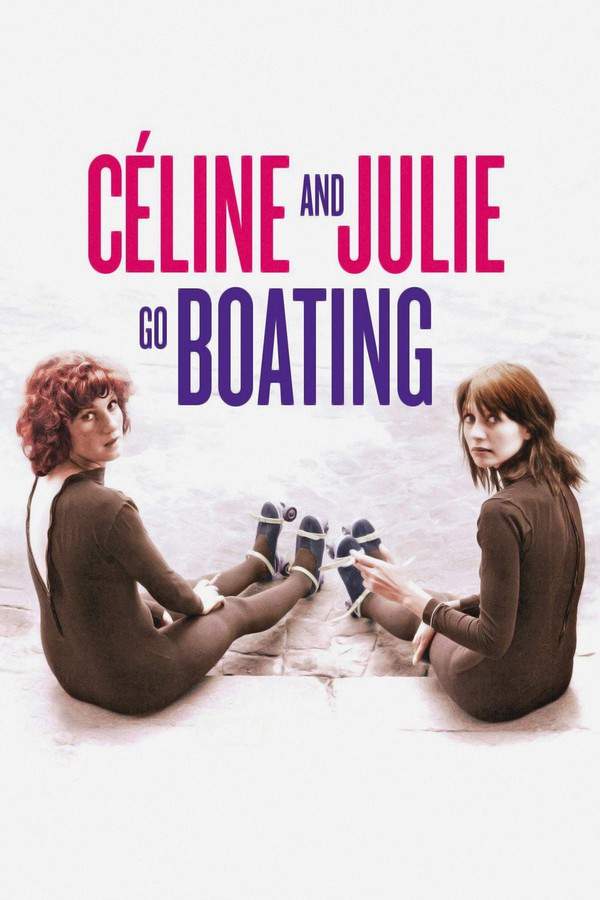
Celine and Julie Go Boating (1974)

Celine and Julie Go Boating (1974)

Year: 2012

Runtime: 3 h 13 m

Language: French

Director: Jacques Rivette

ComedyDramaFantasyMystery

A reserved librarian, Julie, unexpectedly connects with the alluring Celine, who introduces her to a world beyond the ordinary. Through playful games and enchanting illusions, the two women embark on a surreal journey, exploring their desires and challenging societal norms. Their experiences blur the boundaries between dreams and reality, leading to a whimsical and thought-provoking adventure.

Where to Watch Celine and Julie Go Boating (1974)?

Find where to stream, rent, or buy Celine and Julie Go Boating (1974) (2012) in the US with current JustWatch availability, up-to-date pricing, and platform listings for subscription, rental, and digital purchase options.

Streaming availability powered by JustWatch

Warning: spoilers below!

Haven’t seen Celine and Julie Go Boating (1974) yet? This summary contains major spoilers. Bookmark the page, watch the movie, and come back for the full breakdown. If you're ready, scroll on and relive the story!

Celine and Julie Go Boating (1974) (2012) – Full Plot Summary & Ending Explained

Read the complete plot breakdown of Celine and Julie Go Boating (1974) (2012), including all key story events, major twists, and the ending explained in detail. Discover what really happened, and what it all means.

The film opens with Julie, a character depicted by the talented Juliet Berto, seated on a park bench engrossed in a fascinating book filled with magic spells. As she is lost in her reading, she notices a mysterious woman named Céline, played by the remarkable Bulle Ogier, who ambles by, dropping various items in her path, reminiscent of Lewis Carroll’s White Rabbit. Intrigued, Julie begins to collect Céline’s belongings and embarks on a whimsical adventure across Paris, at times racing up the enchanting streets, such as the iconic Montmartre, to keep up with Céline’s tram.

As their paths intertwine through the picturesque Parisian scenery, the relationship between Julie and Céline deepens. After a series of escapades that momentarily separate them, Céline makes a decision to move in with Julie. This development leads to amusing instances of identity swapping; for instance, Céline poses as Julie to charm the latter’s childhood sweetheart, while Julie takes on Céline’s role during a cabaret audition.

In the latter half of the narrative, the focus shifts to their visits to an enigmatic location: 7 bis, rue du Nadir-aux-Pommes, a mansion shrouded in mystery, nestled within private, tranquil grounds of Paris. Initially appearing to be uninhabited and forgotten, this house becomes significant as Céline uncovers her past connection as a nanny for a complicated family—comprising two envious sisters, a widowed father, and a frail child. A curious and repetitive cycle ensues: whenever either woman steps inside the mansion, they vanish only to reappear later, bewildered, having lost all memory of their time spent in the house. Each time they return via taxi, they discover a peculiar candy lodged in their mouths—an item that appears to hold great significance. This candy soon becomes a key, propelling them back into an alternate reality filled with whimsical twists and turns, echoing elements of both Lewis Carroll’s fantastical world and Marcel Proust’s madeleine.

As the story unfolds, the women grapple with unraveling the central enigma of the mansion, which harbors a dark secret: amidst a web of jealousy surrounding the widower’s affections, the tragic murder of a young child casts a shadow. The narrative unfolds like a meticulously rehearsed stage play, rich with repeated phrases that the duo soon learns to navigate with humor and familiarity. With each taste of the candy, they glean more insights into the day’s happenings. Instead of remaining passive recipients of the story, they realize their potential to interact with the unfolding narrative, actively shaping its direction.

So, as the plot unspools with its mechanical precision, Julie and Céline seize the reins of the story, transforming it into an interactive experience. They inject new dialogue and weave diverse actions into the fabric of the events within the house. In an extraordinary act of creativity, they shift the narrative’s conclusion, ultimately saving the young girl who had met a grim fate. As both dimensions of reality converge, the duo, after liberating the girl from her fate within this House of Fiction, find themselves transported back to Julie’s apartment, where they are unexpectedly joined by Madlyn, the young girl, now safe and sound in 1970s Paris.

To unwind from their exhilarating adventure, Céline, Julie, and Madlyn take a serene rowboat ride on a calm river, gliding peacefully along the water. However, an uncanny feeling lingers in the air as they fall silent upon witnessing another boat passing swiftly by. This vessel carries figures from the house of another time, a haunting reminder that the alternate reality has trailed them back home. Yet, Céline, Julie, and Madlyn perceive these apparitions as mere antiquated props, suspended in time.

The film closes with a poignant image of Céline, who, lulled into a dreamy state on a park bench, glimpses Julie rushing by as she drops her magic book in her typical White Rabbit fashion. Picking it up, Céline is compelled to chase after Julie, thus weaving together their extraordinary fates in a delightful blend of reality and fantasy.
Last updated: December 31, 2024 at 18:09

Was this helpful?

Celine and Julie Go Boating (1974) (2012) Plot Questions Answered – Summary FAQ

Explore frequently asked questions about Celine and Julie Go Boating (1974) (2012) with spoiler-rich answers covering the full plot summary, major story beats, character motivations, hidden details, and ending meaning. This movie summary FAQ helps explain confusing scenes, plot twists, and narrative decisions in clear, searchable detail.

Q1

Why do Celine and Julie lose their memory after entering the house?

A.

When either woman enters the mansion at 7 bis, rue du Nadir-aux-Pommes, they become trapped in the house's narrative loop and emerge hours later with complete memory loss. This mechanism appears to be part of the house's supernatural hold, whatever story plays out inside seems to erase their conscious memories upon exit, leaving only a candy in their mouths as a tangible reminder. The memory loss keeps them trapped as passive observers within the recurring tragedy until they discover the candy can restore their recollection of previous cycles.

Celine's earlier role as a nanny at the mansion hints at her unresolved connection to this place before the memory loss begins.

memory lossmansiontime loopCelineJuliecandy
Q2

How does the candy allow Celine and Julie to return to the mansion's story?

A.

The candy found in their mouths after leaving the house serves as a portal between their reality and the mansion's alternate dimension. When they taste the candy, it triggers a return to the house's narrative, but this time with full knowledge of what has happened before. The candy essentially functions as a key, once consumed, it transports them back into the story's repeating cycle, allowing them to remember previous iterations and eventually intervene in the events unfolding around them.

The candy first appears mysteriously in their mouths after each visit, establishing it as significant before its true purpose is revealed.

candyportalalternate realitytime travelmansionmemory
Q3

What happened to the young girl in the mansion?

A.

The mansion conceals a dark secret: within its story, a young girl named Madlyn was murdered. The tragic event was orchestrated by the jealous dynamics of the household, a widowed father, two envious sisters competing for his attention, and a fragile child caught in the middle. The murder appears to be the central tragedy that the house's narrative continuously replays, trapping the characters in an endless loop of jealousy, resentment, and violence.

Celine's cryptic references to her past work as a nanny for a complicated family with a sick child foreshadow the darkness awaiting inside the mansion.

Madlynmurdermansiontragedychildjealousysisters
Q4

How do Celine and Julie gain control of the house's story?

A.

After multiple cycles of experiencing the mansion's tragedy with restored memory through the candy, Celine and Julie begin to recognize patterns and anticipate dialogue. Rather than remaining passive witnesses, they start improvising, adding jokes, changing their lines, and interacting with the house's characters in unexpected ways. Their growing familiarity and willingness to deviate from the established script gradually gives them agency, transforming them from trapped participants into active collaborators who can reshape the narrative itself.

Their early identity-swapping adventures with each other's lives demonstrate their willingness to play with roles and blur boundaries, foreshadowing their later manipulation of the house's characters.

controlnarrativeimprovisationmansionstoryagencyCelineJulie
Q5

Why do Celine and Julie swap identities with each other?

A.

After Celine moves in with Julie, they engage in playful identity exchanges that blur the boundaries between them. Celine poses as Julie to meet the latter's childhood sweetheart, while Julie auditioned as a replacement for Celine at a cabaret. These exchanges represent their deepening bond and experimentation with different aspects of themselves. The identity swapping also foreshadows their later ability to manipulate and rewrite the mansion's narrative, as they already demonstrate comfort with fluid identities and adopting each other's roles.

Their casual swapping of identities establishes early that boundaries between self and other are flexible in this film.

identity swapCelineJuliecabaretchildhood sweetheartplay
Q6

What is the significance of the White Rabbit imagery?

A.

The White Rabbit reference establishes the film's fairy-tale logic from the first scene. Celine drops items in her path as she walks through Paris, just as the White Rabbit in Lewis Carroll's Alice in Wonderland drops his watch and gloves. Julie, like Alice, follows curious and whimsical leads into unknown worlds. This Carroll motif continues throughout their adventure, particularly in the mansion where reality bends and logic shifts, drawing direct parallels to the dreamlike, logic-defying world of Wonderland.

The very first scene establishes Celine as a White Rabbit figure, setting up the entire film's surreal, pursuit-driven narrative.

white rabbitLewis CarrollAlice in WonderlandParissymbolismCelineJulie
Q7

How do Celine and Julie save the murdered girl?

A.

By gaining control of the narrative through repeated viewings and memory restoration via the candy, Celine and Julie are finally able to alter the fatal outcome. In their final intervention within the mansion's story, they actively prevent the circumstances that lead to the girl's murder. Their modifications to the script and dialogue change the sequence of events, successfully saving Madlyn from her tragic fate. This act of narrative rescue brings her into their reality, as she appears in Julie's apartment after their transformation of the story's ending.

Their growing confidence in improvising within the house's story builds toward this decisive moment of narrative alteration.

saveMadlynrescuemansionendingnarrativeCelineJulie
Q8

What does the ending boat scene mean?

A.

In the final scenes, Celine, Julie, and Madlyn enjoy a peaceful rowboat ride until they spot another boat approaching with figures from the mansion's past, people locked in time. The women perceive these apparitions as antiquated props, suggesting they have fully returned to their reality. Yet the haunting images imply the mansion's alternate reality may still linger at the edges of their world. This ambiguous moment reinforces the film's exploration of boundaries between dreams and waking, fiction and reality, leaving open whether they have truly escaped or if the cycle continues in some form.

The entire film's exploration of fluid boundaries between reality and fiction铺垫s this ambiguous convergence at the river.

boatendingapparitionsrealitymansionriverambiguity
Q9

Why does the film end with Celine chasing Julie?

A.

The film concludes with Celine dozing on a park bench, the same spot where Julie first noticed her, only to see Julie rush by dropping a magic book, exactly as Celine did at the film's opening. Celine picks up the book and chases after Julie, mirroring their first meeting. This circular ending suggests the entire adventure may have been one iteration of an endless cycle, or that their connection is destined to repeat. The reversal of roles (now Celine is the follower) reinforces the film's themes of eternal return and the permeable boundaries between their worlds.

The opening scene's parallel structure, someone dropping items while another follows, foreshadows this cyclical reversal at the end.

endingcyclechaseparkCelineJulierepetitionwhite rabbit
Q10

What is the House of Fiction that Celine and Julie enter?

A.

The mansion at 7 bis, rue du Nadir-aux-Pommes operates as a "House of Fiction", a self-contained narrative that replays like a theatrical production. Its characters are trapped in an eternal performance of jealousy, resentment, and ultimately murder. Celine and Julie initially watch this story as passive audience members who lose their memory upon exiting. The mansion functions as a metaphor for the stories we create and become trapped in, and the film explores how one can gain agency within such narratives through awareness, repetition, and creative intervention.

The meta-fictional quality of repeated dialogue and theatrical staging establishes early that this house is a story made tangible.

house of fictionmansionnarrativestorymetafictiontrappedtheatrical
Q11

How do the Proustian madeleine references connect to the story?

A.

The summary explicitly references Marcel Proust's madeleine, a pastry that triggers involuntary memory in his novel. This connection suggests the candy functions similarly: tasting it unlocks hidden memories of previous cycles within the mansion. Just as Proust's madeleine bridges past and present through sensory experience, the candy's taste bridges the women's conscious minds and the house's alternate reality. This literary allusion reinforces the film's meditation on memory, time, and how the past persists within present experience.

The candy first appears as a mysterious object with no explanation, hinting at its eventual role as a trigger for hidden memory.

madeleineProustmemorycandyinvoluntary memorypasttaste
Mobile App Preview

Coming soon on iOS and Android

The Plot Explained Mobile App

From blockbusters to hidden gems - dive into movie stories anytime, anywhere. Save your favorites, discover plots faster, and never miss a twist again.

Sign up to be the first to know when we launch. Your email stays private, always.

Explore Movie Threads

Discover curated groups of movies connected by mood, themes, and story style. Browse collections built around emotion, atmosphere, and narrative focus to easily find films that match what you feel like watching right now.

Movies where women rewrite reality like Celine and Julie Go Boating (1974)

Stories where characters use imagination and friendship to reshape their world.If you enjoyed the playful, reality-bending friendship in Celine and Julie Go Boating, you'll like these movies. They feature imaginative women who use fantasy and collaboration to challenge the mundane, offering a similar blend of whimsical adventure and light emotional weight.

playfulimaginativewhimsicalcollaborativeescapistmagicalcurious

Narrative Summary

The narrative pattern centers on female protagonists who find empowerment and escape not through confrontation, but through creative collaboration. Their bond becomes a catalyst for altering reality, leading to stories that blend the everyday with the fantastical in a non-threatening, often humorous way.

Why These Movies?

Movies in this thread share a core focus on the transformative power of female friendship and imaginative play. They possess a whimsical tone, light emotional weight, and a sense that reality is malleable, creating a uniquely charming and liberating viewing experience.

Surreal urban fantasy movies like Celine and Julie Go Boating (1974)

Dreamlike adventures where ordinary city life hides magical, mysterious layers.Find movies similar to Celine and Julie Go Boating that explore magical mysteries hidden within city life. These stories feature dreamlike adventures, enigmatic plots, and a sense that fantasy is just around the corner, offering a comparable blend of comedy, drama, and surreal discovery.

dreamlikesurrealenigmaticmagicalcuriousmysteriousurban fantasy

Narrative Summary

The narrative unfolds as a puzzle or a game discovered within an urban environment. Characters stumble upon a hidden narrative—a repeating story, a magical location, or an enigmatic event—that they must navigate, often leading to a metafictional commentary on storytelling and perception.

Why These Movies?

This thread groups movies that share a dreamlike, surreal quality and a specific narrative structure: an urban adventure that reveals a story-within-a-story. They combine mystery and fantasy with a playful, sometimes complex, approach to how reality and fiction intertwine.

Unlock the Full Story of Celine and Julie Go Boating (1974)

Don't stop at just watching - explore Celine and Julie Go Boating (1974) in full detail. From the complete plot summary and scene-by-scene timeline to character breakdowns, thematic analysis, and a deep dive into the ending - every page helps you truly understand what Celine and Julie Go Boating (1974) is all about. Plus, discover what's next after the movie.

Celine and Julie Go Boating (1974) Timeline

Track the full timeline of Celine and Julie Go Boating (1974) with every major event arranged chronologically. Perfect for decoding non-linear storytelling, flashbacks, or parallel narratives with a clear scene-by-scene breakdown.

Celine and Julie Go Boating (1974) Timeline

Characters, Settings & Themes in Celine and Julie Go Boating (1974)

Discover the characters, locations, and core themes that shape Celine and Julie Go Boating (1974). Get insights into symbolic elements, setting significance, and deeper narrative meaning - ideal for thematic analysis and movie breakdowns.

Characters, Settings & Themes in Celine and Julie Go Boating (1974)

Celine and Julie Go Boating (1974) Spoiler-Free Summary

Get a quick, spoiler-free overview of Celine and Julie Go Boating (1974) that covers the main plot points and key details without revealing any major twists or spoilers. Perfect for those who want to know what to expect before diving in.

Celine and Julie Go Boating (1974) Spoiler-Free Summary

More About Celine and Julie Go Boating (1974)

Visit What's After the Movie to explore more about Celine and Julie Go Boating (1974): box office results, cast and crew info, production details, post-credit scenes, and external links - all in one place for movie fans and researchers.

More About Celine and Julie Go Boating (1974)