Plot Explained Spoilers guaranteed!
Plot Explained

Browse by genre

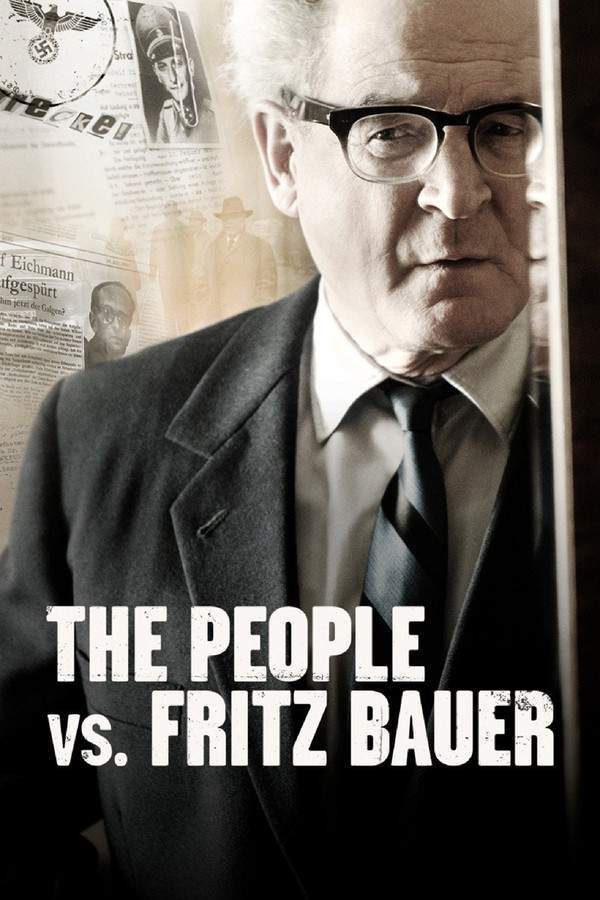
The People vs. Fritz Bauer (2016) movie poster

Plot Summary

The People vs. Fritz Bauer (2016) Plot Summary Explained

Release, runtime and language
2016 · 105 min · German
Directed by
Lars Kraume

In 1957 Germany, Attorney General Fritz Bauer receives crucial information about the location of Adolf Eichmann, a high-ranking Nazi official. He embarks on a tense and complex mission to bring Eichmann to justice, facing significant obstacles rooted in the nation’s reluctance to confront its past. Bauer must carefully balance his legal obligations, his personal beliefs, and potential repercussions as he strives for a just trial, navigating a landscape of deep-seated denial and risking accusations of treason.

On this page (5)
  1. 1 Where to watch
  2. 2 What happens: full plot
  3. 3 Plot questions answered
  4. 4 Movie threads
  5. 5 Every angle

Where to watch

Where to Watch The People vs. Fritz Bauer (2016)

Where can you watch The People vs. Fritz Bauer? Stream, rent or buy it in the US, including on Kanopy, Tubi TV and Amazon Video: current JustWatch availability with up-to-date prices.

Streaming availability powered by JustWatch

Full plot summary · contains spoilers

What Happens in The People vs. Fritz Bauer: Full Plot Summary

The whole story of The People vs. Fritz Bauer (2016) explained, from the opening scene to the final frame: every key event, every twist and what it all adds up to. Read it as a quick recap before the sequel, to check a scene you missed, or to finally understand what really happened.

Bauer's driver discovers his boss unconscious in the bathtub and promptly takes him to the hospital. As Bauer recuperates, police officers, influenced by political motives, jump to conclusions and suspect a suicide attempt. This situation brings joy to his adversaries, particularly Attorney General Kreidler and Paul Gebhardt of the Federal Criminal Police Office (BKA), who believe they have gained the upper hand.

During his recovery, Bauer notices a crucial file has vanished from his office. Concerned about the prosecution of Nazi criminals, he summons the prosecutors but finds them lacking in progress. The young prosecutor, Karl Angermann, reminds Bauer that he had requested this file to prepare a statement, making Bauer realize he can trust Angermann. Inviting him to his home over the weekend, Bauer considers his authority to be like that in "enemy territory" as he plots to bring Adolf Eichmann from Argentina to face justice in Germany. However, recognizing the limitations of the BKA and Interpol regarding political crimes, Bauer contemplates enlisting the help of the Israeli intelligence service, Mossad.

When Bauer receives a letter confirming that Eichmann resides in Argentina under an alias, he forwards this information to the Mossad and discusses it further while in Israel. The Mossad chief, Isser Harel, has already investigated this lead but insists they must have a second piece of evidence before proceeding with Eichmann's abduction.

While navigating these complexities, Angermann seeks Bauer's guidance on sentencing in a homosexual trial. After Bauer references a similar case, Angermann pushes for an unexpectedly light sentence, which gets him noticed by Victoria, a friend of the defendant. However, it’s revealed that Victoria is transgender, complicating Angermann's emotions further, especially when compromising photographs of their interactions surface, leading to blackmail from the BKA.

As Bauer investigates former Nazi Schneider, who now works in human resources at Daimler-Benz with connections to South America, he pressures Schneider for Eichmann’s code name in Argentina. This information is relayed to the Mossad, which successfully retrieves Eichmann and transports him to Israel. Nonetheless, Bauer's request for Eichmann's extradition is denied by the federal government under Konrad Adenauer, who fears a potential upheaval due to Eichmann's testimony exposing the presence of former Nazis within the German government.

Meanwhile, Angermann refuses to succumb to the threats posed by the compromising photos and bravely confesses to violating § 175. Just as Bauer considers abandoning his pursuit, he immerses himself back into the investigation of Nazi crimes, setting the stage for the landmark Frankfurt Auschwitz trials.

Last updated: November 08, 2024 at 03:13

Was this helpful?

Plot questions answered

The People vs. Fritz Bauer Plot Explained: Your Questions Answered

The questions people ask most about The People vs. Fritz Bauer (2016): what happens in the confusing scenes, why the characters do what they do, the twists, hidden details and what the ending means. Each answer contains spoilers.

Q1

Why was Fritz Bauer suspected of attempting suicide?

The police suspected suicide because Bauer's driver found him unconscious in his bathtub. His political adversaries, particularly Attorney General Kreidler and BKA chief Paul Gebhardt, used this incident to suggest Bauer was unstable, hoping to undermine his credibility and stop his investigation into Nazi criminals.

  • fritz bauer
  • suicide attempt
  • police investigation
  • political opposition
Q2

Why did Fritz Bauer need to work with Mossad instead of German authorities?

Bauer recognized that both the BKA and Interpol had significant limitations when dealing with political crimes. Since Eichmann was hiding in Argentina under an alias and the German government showed little willingness to pursue Nazi war criminals, Bauer determined that the Israeli intelligence service Mossad had the capability and motivation to locate and capture him.

  • mossad
  • israel
  • adolf eichmann
  • argentina
  • intelligence
  • bka
Q3

What was the missing file from Fritz Bauer's office?

The missing file contained crucial information regarding the prosecution of Nazi criminals. Its disappearance during Bauer's hospitalization worried him deeply, as it represented the evidentiary foundation needed to pursue cases against war criminals. Bauer realized the file's absence could severely hinder ongoing efforts to bring Nazi perpetrators to justice.

  • missing file
  • nazi criminals
  • prosecution
  • evidence
Q4

Why did Germany refuse to extradite Adolf Eichmann?

Federal Chancellor Konrad Adenauer denied Bauer's extradition request because Eichmann's testimony would expose the extent of former Nazis embedded within the German government itself. The Adenauer administration feared that exposing these connections would cause significant political upheaval and embarrassment for the ruling coalition.

  • extradition
  • konrad adenauer
  • government
  • eichmann testimony
  • cover-up
Q5

Why was Karl Angermann being blackmailed by the BKA?

The BKA obtained compromising photographs showing Angermann meeting with Victoria, who was revealed to be transgender. Using these images, they attempted to blackmail Angermann into cooperating with their political agenda against Bauer. Rather than succumb to the pressure, Angermann courageously confessed to violating Section 175, the law criminalizing homosexuality.

  • karl angermann
  • blackmail
  • bka
  • victoria
  • section 175
  • transgender
Q6

What information did Bauer obtain from the Daimler-Benz employee?

Bauer investigated former Nazi Schneider, who worked in human resources at Daimler-Benz and had connections to South America. Under pressure from Bauer, Schneider revealed Eichmann's code name in Argentina. This critical piece of information was relayed to Mossad, enabling them to successfully locate and abduct Eichmann.

  • schneider
  • daimler-benz
  • argentina
  • eichmann code name
  • south america
Q7

Why did Mossad require a second piece of evidence before capturing Eichmann?

Mossad chief Isser Harel explained that they needed confirmation beyond the initial letter linking Eichmann to Argentina before proceeding with the abduction. This caution reflected the extreme sensitivity of the operation and the need for absolute certainty before taking action that would have major international implications.

  • isser harel
  • mossad
  • evidence
  • eichmann abduction
  • verification
Q8

Why did Fritz Bauer pursue the Frankfurt Auschwitz trials after Eichmann's capture?

After the German government denied Eichmann's extradition and Bauer considered abandoning his pursuit, he redirected his efforts toward other Nazi war criminals. This decision led to the landmark Frankfurt Auschwitz trials, which became a significant milestone in holding perpetrators accountable for crimes committed at the concentration camp.

  • frankfurt auschwitz trials
  • justice
  • nuremberg
  • concentration camp
  • accountability
Q9

Why did Fritz Bauer trust Karl Angermann with his plan?

Bauer invited Angermann to his home after observing the young prosecutor's diligence and competence in preparing statements for Nazi prosecution cases. Recognizing that the established prosecutors lacked progress, Bauer saw in Angermann someone he could trust with his secret strategy to bring Eichmann to justice, treating his own authority as being in "enemy territory" within the German system.

  • karl angermann
  • trust
  • strategy
  • eichmann plan
  • young prosecutor
Q10

Who was Victoria and why was her identity significant?

Victoria was a friend of the defendant in the homosexual trial that Angermann was handling. Her friendship with Angermann became politically significant when she was revealed to be transgender. This discovery complicated Angermann's emotions and was exploited by the BKA as leverage for blackmail, highlighting the vulnerabilities faced by those challenging the status quo.

  • victoria
  • transgender
  • angermann
  • blackmail
  • homosexuality trial
Q11

What happened to Adolf Eichmann after his capture?

Mossad successfully abducted Eichmann from Argentina and transported him to Israel. Although Bauer had sought to bring Eichmann to Germany for trial, the German government refused extradition. Eichmann was ultimately tried in Israel in 1961, where he was convicted of war crimes and executed in 1962.

  • adolf eichmann
  • capture
  • argentina
  • israel trial
  • execution
Q12

What motivated Fritz Bauer to pursue Nazi criminals despite opposition?

Bauer's determination stemmed from his commitment to ensuring Nazi war criminals faced justice, recognizing that Germany's reluctance to confront its past allowed perpetrators to escape accountability. Operating in what he described as "enemy territory" within his own government, Bauer worked to expose and prosecute those responsible for Holocaust crimes, viewing it as both a legal and moral obligation.

  • fritz bauer
  • motivation
  • justice
  • nazy criminals
  • holocaus
  • accountability

Movie threads

More Movies Like The People vs. Fritz Bauer, by Mood & Story

Curated lists built around what makes The People vs. Fritz Bauer tick: the same mood, the same kind of story or the same emotional payoff. Each list explains why these movies belong together.

Movies about fighting systemic injustice like The People vs. Fritz Bauer

Stories of individuals risking everything to challenge a corrupt or hostile establishment. If you liked The People vs. Fritz Bauer, explore other movies where determined individuals take on powerful, corrupt systems. These films often share a tense, somber mood and focus on the heavy emotional weight of challenging the establishment, featuring stories of moral courage in political, legal, or corporate settings.

  • determined
  • tense
  • somber
  • paranoid
  • grim
  • anxious
  • Tone: tense, determined, somber
  • Pacing: steady, methodical
Why these movies?

The story pattern: These narratives typically follow a methodical investigation or moral quest where the protagonist uncovers truths a system wants buried. Obstacles are bureaucratic, political, and personal, creating a sense of claustrophobia and paranoia. The arc is less about a simple victory and more about the costly, often bittersweet, pursuit of justice against overwhelming odds.

Why they belong together: Movies in this thread are grouped by their shared focus on a lone fighter archetype, a tense and somber atmosphere, and themes of institutional resistance. They deliver a similar viewing experience of high-stakes tension and emotional heaviness, appealing to viewers who appreciate stories of steadfast moral conviction.

Historical thrillers about confronting the past like The People vs. Fritz Bauer

Tense period dramas where characters grapple with a nation's dark history. Find movies similar to The People vs. Fritz Bauer that are tense historical thrillers dealing with a nation's unresolved trauma. These films combine a steady investigative pace with a heavy emotional weight, focusing on characters forced to confront dark chapters of history amidst denial and resistance.

  • somber
  • tense
  • grim
  • anxious
  • historical
  • moral conflict
  • Tone: grim, tense, somber
  • Pacing: steady, investigative
Why these movies?

The story pattern: The plot often centers on a quest for justice or truth that acts as a catalyst, forcing a confrontation with a painful historical legacy. The narrative builds tension not just from the central mystery, but from the societal pressure to forget. This creates a pervasive atmosphere of denial, where protagonists operate in a morally ambiguous landscape shaped by past crimes.

Why they belong together: These films are connected by their setting in the shadow of historical atrocities, their blend of thriller pacing with dramatic weight, and their exploration of themes like collective guilt and moral reckoning. They offer a similar vibe of grim resolve and anxious tension rooted in a specific, weighty historical context.

Every angle

The People vs. Fritz Bauer (2016) Explained: Plot, Timeline & Characters

Everything about The People vs. Fritz Bauer in one place: what happens in the plot summary, the timeline in chronological order, the characters and meaning and a spoiler-free summary. What's After the Movie adds the cast, box office and post-credit scenes.

Coming soon on iOS and Android

The Plot Explained Movie Summary App

Plot summaries, endings explained and timelines on your phone. Catch up on any movie in minutes, save your favorites and never miss a twist again.

Be the first to know when we launch. Your email stays private, always.

Learn more about the app