Plot Explained Spoilers guaranteed!
Plot Explained

Browse by genre

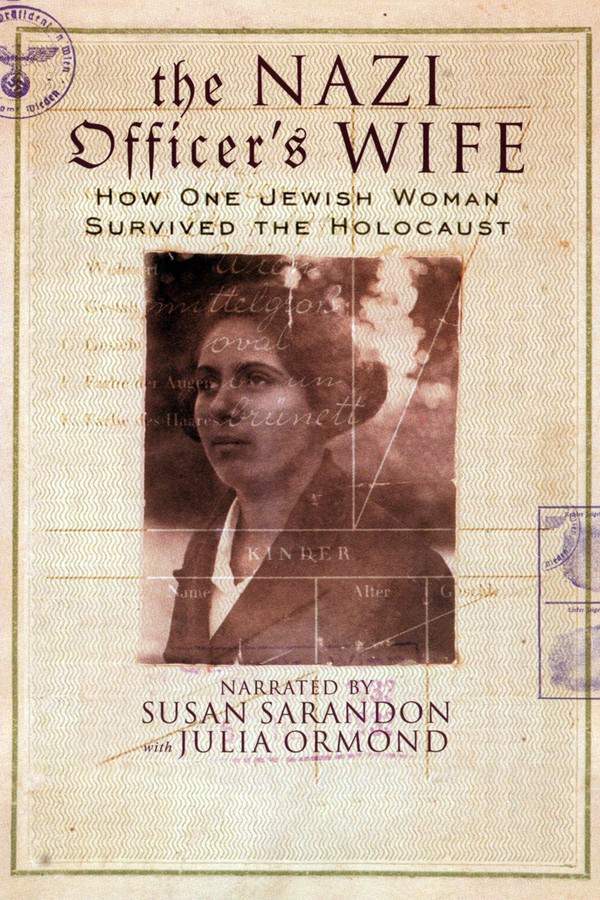
The Nazi Officer's Wife (2003) movie poster

Plot Summary

The Nazi Officer's Wife (2003) Plot Summary Explained

Release, runtime and language
2003 · 90 min · English
Loading streaming availability…
Directed by
Liz Garbus

This historical documentary tells the remarkable true story of Edith Hahn, who survived the Nazi regime by assuming a false identity. Forced into hiding, she married a high-ranking Nazi officer while secretly maintaining her Jewish heritage. The film explores her incredible resourcefulness and courage as she navigated dangerous situations and concealed her true background, offering a powerful testament to human resilience and the will to survive against overwhelming adversity.

On this page (6)
  1. 1 Where to watch
  2. 2 What happens: full plot
  3. 3 Plot questions answered
  4. 4 Movie threads
  5. 5 Movies like The Nazi Officer's Wife
  6. 6 Every angle
Loading streaming availability…

Full plot summary · contains spoilers

What Happens in The Nazi Officer's Wife: Full Plot Summary

The whole story of The Nazi Officer's Wife (2003) explained, from the opening scene to the final frame: every key event, every twist and what it all adds up to. Read it as a quick recap before the sequel, to check a scene you missed, or to finally understand what really happened.

Filmmaker Liz Garbus, known for The Farm: Angola, USA, expertly chronicles the remarkable journey of Edith Hahn in The Nazi Officer's Wife. Through a compelling mix of archival newsreel footage, personal photographs, and candid interviews with Hahn, her daughter Angela, and several acquaintances, the documentary is narrated by Susan Sarandon and features the voice of Julia Ormond, who eloquently reads excerpts from Hahn's autobiography.

The film takes us on a journey back to Hahn's youth, revealing her experiences growing up in Vienna during the ominous rise of the Nazis. We witness her education, the profound loss of her father, and a college romance with a half-Jewish intellectual, all set against the backdrop of a perilous time. As the Nazi party gained power, Hahn’s sisters escaped to Palestine, believing them safe, while Hahn remained convinced she could weather the storm in Vienna.

The narrative swiftly escalates as we learn that Hahn, a diligent law student, was thrust into a slave labor camp. By the time she returned home, the grave news of her mother’s deportation to a concentration camp in Poland darkened her reality. With the inevitable threat of deportation looming over her, Hahn made the daring choice to remove the yellow star from her clothing and vanish into the shadows.

With help from unexpected allies, including two notable figures within the Nazi regime, she adopted a new identity as a young Aryan woman, bravely fleeing Vienna to Munich—the very heart of the Third Reich. There, she secured a job as a nurse's aide for the Red Cross.

It is in Munich that she encountered a charming and articulate Nazi, Werner Vetter, who initiated a conversation during a visit to a museum. Against her instincts, a romance blossomed between them, ultimately leading to an improbable marriage and a child. The facade Hahn maintained throughout this time was intricate, carefully concealing her true identity from all except her husband. She suppressed her own vibrant personality, instead succumbing to the role of a submissive Aryan housewife in a world fraught with danger.

> "It was a matter of life and death, and I had to become someone entirely different."

This poignant documentary paints a vivid picture of resilience and survival amidst unimaginable adversity, telling a story that is both deeply personal and historically significant.

Last updated: November 04, 2024 at 00:40

Was this helpful?

Plot questions answered

The Nazi Officer's Wife Plot Explained: Your Questions Answered

The questions people ask most about The Nazi Officer's Wife (2003): what happens in the confusing scenes, why the characters do what they do, the twists, hidden details and what the ending means. Each answer contains spoilers.

Q1

Why did Edith Hahn stay in Vienna when her sisters fled to Palestine?

Edith remained in Vienna because she believed she could weather the storm and navigate the dangers of her homeland. She was convinced she could survive by using her wits and resourcefulness, underestimating how quickly the situation would deteriorate. Her sisters managed to escape to Palestine believing they would be safe, but Edith chose to stay, ultimately leading to her capture and the series of desperate measures she had to take to survive.

  • edith hahn
  • vienna
  • sisters
  • palestine
  • escape
Q2

How did Edith Hahn obtain a false Aryan identity while living in Nazi Germany?

Edith received help from unexpected allies within the Nazi regime itself. These individuals, whose motivations are not fully explained in the documentary, provided her with the documents and support needed to assume a new identity as a young Aryan woman. This assistance was crucial in enabling her to flee Vienna for Munich, the heart of the Third Reich, where she could potentially blend in with the enemy population.

  • false identity
  • aryan
  • munich
  • documents
  • hiding
Q3

Why did Edith Hahn marry Nazi officer Werner Vetter despite being Jewish?

Edith's marriage to Werner Vetter was born from an extremely complicated situation. When she met him at a museum in Munich, she was already living under a false Aryan identity and working at the Red Cross. Despite her instincts telling her to avoid such a dangerous connection, a romance developed between them. Marrying Werner actually provided her with a powerful layer of protection, being married to a high-ranking Nazi made it far less likely that anyone would question her background or discover her true identity.

  • werner vetter
  • marriage
  • protection
  • romance
  • munich
Q4

What happened to Edith Hahn's mother after she returned from the labor camp?

After Edith returned home from the slave labor camp, she received devastating news: her mother had been deported to a concentration camp in Poland. This tragic event fully solidified Edith's understanding of her own precarious situation and the fate that awaited Jewish people in Nazi-occupied territories. The loss of her mother was a pivotal moment that convinced Edith she had to take desperate action to avoid the same deportation.

  • mother
  • deportation
  • poland
  • concentration camp
  • labor camp
Q5

How did Edith conceal her Jewish identity from her husband Werner Vetter throughout their marriage?

Edith maintained an elaborate facade throughout her marriage, carefully concealing her true Jewish identity from Werner and everyone around her. She suppressed her vibrant personality and adapted to the role of a submissive Aryan housewife, living in constant fear that a single mistake could lead to her discovery and death. Her dual existence created enormous internal conflict, as she had to pretend to be someone entirely different from who she truly was while living in the very heart of the Nazi regime.

  • concealment
  • identity
  • husband
  • marriage
  • lies
  • survival
Q6

Why did Edith suppress her personality while living as Werner's wife?

Edith had to suppress her authentic self because living as a Jewish person in Nazi Germany required complete transformation. She described it as becoming someone entirely different, a matter of life and death. To maintain her false Aryan identity, she had to adopt the demeanor of a submissive German housewife, hiding any traits or behaviors that might make her stand out or raise suspicion. This psychological toll was immense, as she lived in constant fear that her true personality might reveal her secret.

  • personality
  • survival
  • identity
  • suppression
  • psychological toll
Q7

How did Edith secure a job at the Red Cross while living under a false identity in Munich?

With her newly acquired Aryan identity documents, Edith was able to obtain a position as a nurse's aide for the Red Cross in Munich. This job served a dual purpose: it provided her with a legitimate means of living and earning money, and it also gave her a respected role that further reinforced her cover as an ordinary German citizen. Working for the Red Cross also provided her with a degree of protection and access to resources that might help her survive.

  • red cross
  • nurse
  • job
  • munich
  • employment
Q8

When did Edith's daughter Angela learn about her true Jewish heritage?

The documentary features interviews with Edith's daughter Angela, suggesting that at some point Angela learned about her mother's true Jewish background and the extraordinary circumstances of her birth. The film explores this revelation and its impact on Angela, showing how Edith's secret, which she kept throughout her marriage to Werner, eventually came to light and affected her daughter.

  • angela
  • daughter
  • truth
  • heritage
  • revelation
Q9

Why did Edith remove the yellow star and go into hiding instead of being deported?

Facing the imminent threat of deportation to a concentration camp, Edith made the daring choice to remove the yellow star from her clothing and vanish into the shadows. This act was incredibly risky because being caught without the required identification would result in immediate arrest and likely death. However, she calculated that living underground with a false identity gave her a better chance of survival than awaiting deportation, which was effectively a death sentence.

  • yellow star
  • hiding
  • deportation
  • underground
  • survival
Q10

Why would people within the Nazi regime help a Jewish woman survive?

The documentary notes that Edith received help from unexpected allies within the Nazi regime, though their specific motivations are not fully explored. These individuals chose to risk their own positions and lives to assist her. Their reasons remain one of the more mysterious elements of her story, though it demonstrates that not everyone within the Nazi apparatus was complicit in the persecution of Jews, and some chose to act with compassion despite the extreme danger.

  • allies
  • help
  • Nazis
  • rescue
  • compassion

Movie threads

More Movies Like The Nazi Officer's Wife, by Mood & Story

Curated lists built around what makes The Nazi Officer's Wife tick: the same mood, the same kind of story or the same emotional payoff. Each list explains why these movies belong together.

Movies about survival under false identities like The Nazi Officer's Wife

Stories of living a high-stakes lie to survive oppressive regimes. If you were gripped by the high-wire act of survival in The Nazi Officer's Wife, this list features movies about characters living undercover in dangerous regimes. Discover similar stories of courage, deception, and resilience where one wrong move could mean discovery and death.

  • tense
  • anxious
  • claustrophobic
  • high-stakes
  • psychological
  • deceptive
  • Tone: tense, anxious, morally complex
  • Pacing: steady, methodical
Why these movies?

The story pattern: Movies in this thread typically follow a protagonist who must shed their true self and convincingly inhabit a fabricated persona to evade persecution. The narrative is driven by close calls, the burden of secrecy, and the psychological toll of the double life, often culminating in a survival that is both a victory and a trauma.

Why they belong together: These films are grouped together because they share a core premise of high-stakes deception for survival. They create a specific, claustrophobic tension focused on performance and paranoia, delivering a powerful and often harrowing viewing experience centered on human endurance.


Gripping historical documentaries like The Nazi Officer's Wife

Powerful real-life accounts of resilience against overwhelming historical adversity. For viewers seeking more powerful real-life stories like The Nazi Officer's Wife, this section features documentaries about individual survival during dark historical periods. Find similar films that use personal testimony to explore themes of human resilience, courage, and the will to live.

  • gripping
  • somber
  • historical
  • resilient
  • emotional
  • sobering
  • Tone: tense, heavy, ultimately hopeful
  • Pacing: steady, chronological
Why these movies?

The story pattern: These documentaries often follow a straightforward chronological structure, using a survivor's first-person account as the narrative backbone. The journey moves from normalcy into danger, through a series of trials, and towards a conclusion that emphasizes the legacy of survival, often blending profound sadness with a hard-won sense of hope.

Why they belong together: These documentaries are grouped by their format and focus: they are non-fiction films that prioritize personal, emotional narratives over broad historical overviews. They share a heavy emotional weight, a steady pacing that builds empathy, and a tone that balances stark realism with testament to the human spirit.

If you liked this

Movies Like The Nazi Officer's Wife

Similar movies to The Nazi Officer's Wife: the same genre, themes or kind of story. Each one comes with its own plot summary, timeline and ending explained.

Browse all movie summaries

Every angle

The Nazi Officer's Wife (2003) Explained: Plot, Timeline & Characters

Everything about The Nazi Officer's Wife in one place: what happens in the plot summary, the timeline in chronological order, the characters and meaning and a spoiler-free summary. What's After the Movie adds the cast, box office and post-credit scenes.

Coming soon on iOS and Android

The Plot Explained Movie Summary App

Plot summaries, endings explained and timelines on your phone. Catch up on any movie in minutes, save your favorites and never miss a twist again.

Be the first to know when we launch. Your email stays private, always.

Learn more about the app