Plot Explained Spoilers guaranteed!
Plot Explained

Browse by genre

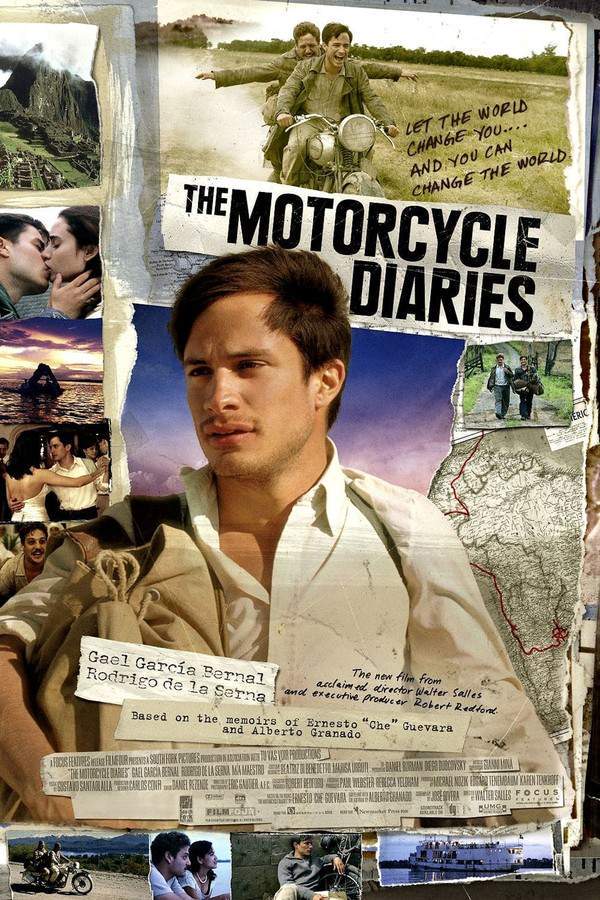
The Motorcycle Diaries (2004) movie poster

Plot Summary

The Motorcycle Diaries (2004) Plot Summary Explained

Release, runtime and language
2004 · 126 min · Spanish
Loading streaming availability…
Directed by
Walter Salles
Starring
Gael García Bernal, Rodrigo De la Serna

In 1952, Ernesto Guevara and Alberto Granado set off on a motorcycle trip across South America. Their journey from Brazil to Peru exposes them to the harsh realities faced by the region's marginalized populations, revealing widespread poverty and social injustice. Witnessing the struggles of the poor and the exploitation of the wealthy profoundly impacts Ernesto, particularly after a deeply moving encounter at a leper colony, shaping his future political views and commitment to fighting for social change.

On this page (6)
  1. 1 Where to watch
  2. 2 What happens: full plot
  3. 3 Plot questions answered
  4. 4 The book behind the movie
  5. 5 Movie threads
  6. 6 Every angle
Loading streaming availability…

Full plot summary · contains spoilers

What Happens in The Motorcycle Diaries: Full Plot Summary

The whole story of The Motorcycle Diaries (2004) explained, from the opening scene to the final frame: every key event, every twist and what it all adds up to. Read it as a quick recap before the sequel, to check a scene you missed, or to finally understand what really happened.

In 1952, just a semester away from earning his medical degree, Ernesto "Fuser" Guevara sets off on an adventurous journey with his older companion Alberto Granado, a biochemist, as they leave Buenos Aires for an extensive trek across South America. Although they have a noble goal of working in a leper colony in Peru, what initially drives them is the thrill of exploration and joy. Over the course of four and a half months, they plan to traverse more than 14,000 kilometers (8,700 miles), all the while Granado's intentions include charming as many women as he can along the way. Their adventure kicks off with Granado's unreliable motorcycle, affectionately named La Poderosa, which means "The Mighty One."

Their ambitious itinerary leads them north over the Andes, down the Chilean coast, through the scorching Atacama Desert, and into the lush Peruvian Amazon, aiming to reach Venezuela in time to celebrate Granado's 30th birthday on April 2nd. However, due to mechanical failures with La Poderosa, they frequently find themselves walking and traveling at a much slower pace, delaying their arrival in Caracas until July.

As the journey unfolds, both Guevara and Granado gain profound insights into the stark realities faced by the indigenous population, revealing the painful discrepancies between the affluent "haves," which they represent, and the oppressed "have-nots." A poignant episode in Chile exposes them to a destitute couple cast out due to their communist ideals. In a revealing moment, they confide in the couple that they are not in search of work either, which leads them to visit the Chuquicamata copper mine, where Guevara's indignation boils over at the mistreatment of the workers.

The transformative experience continues at the breathtaking Machu Picchu in Peru, where Guevara reflects on how a once-thriving indigenous civilization capable of such magnificent achievements was ultimately eradicated by the very forces contributing to the urban decay of polluted Lima.

In another striking episode, they dedicate three weeks at the San Pablo leper colony in Peru. Here, Guevara profoundly observes the societal divide: medical staff live on the north side of a river, untouched by the lepers confined to the southern shore. In a brave act of solidarity, Guevara defies the head nun's directive to wear rubber gloves, opting instead to shake hands with the leper patients, challenging the misconceptions surrounding leprosy.

As the film approaches its climax, Guevara's awakening thoughts culminate in a heartfelt birthday toast—his inaugural political speech—where he passionately advocates for the unification of South America, emphasizing the need for solidarity among the Mestizo populace. The journey fundamentally alters Guevara's worldview, instilling seeds of revolutionary thought that would lead him down the path of Marxist activism.

In a symbolic night passage, despite the danger and his struggle with asthma, Guevara swims across the river, opting to spend the night in a leper hut rather than the doctors' quarters. The poignant journey culminates at an airport, where Granado admits that his birthday is actually on August 8th and that their supposed goal was merely a motivator for the trip. Guevara, having been aware of this all along, shares a knowing glance. The film concludes with the special appearance of the real Alberto Granado, now 82 years old, showcasing photographs from their journey and briefly mentioning Che Guevara's eventual assassination by the CIA in Bolivia in 1967.
Last updated: November 16, 2024 at 11:23

Was this helpful?

Plot questions answered

The Motorcycle Diaries Plot Explained: Your Questions Answered

The questions people ask most about The Motorcycle Diaries (2004): what happens in the confusing scenes, why the characters do what they do, the twists, hidden details and what the ending means. Each answer contains spoilers.

Q1

Why did Ernesto Guevara's political views change during the trip

Ernesto's transformation began gradually through direct exposure to the exploitation and poverty affecting indigenous communities across South America. Witnessing the mistreated workers at the Chuquicamata copper mine, seeing the destitute couple ostracized for their communist beliefs, and experiencing the harsh realities of the leper colony all fueled his growing indignation. These experiences planted the seeds of revolutionary thought that would define his later life as Che Guevara.

Foreshadowing: Early scenes show Ernesto as a privileged medical student more interested in adventure than politics, establishing the baseline for his transformation.

  • Ernesto Guevara
  • political awakening
  • revolution
  • social injustice
  • south america
Q2

What happened at the San Pablo leper colony in Peru

Ernesto and Alberto spent three weeks at the San Pablo leper colony, where they witnessed the stark divide between patients and medical staff separated by a river. The head nun instructed Ernesto to wear rubber gloves when interacting with patients, but he deliberately chose to shake hands with them instead, defying the protocol. This act of solidarity symbolized his rejection of the societal fear and prejudice surrounding leprosy.

  • leper colony
  • san pablo
  • peru
  • solidarity
  • compassion
Q3

Why did Ernesto shake hands with leper patients against the nun's orders

Ernesto's decision to shake hands with leper patients was a conscious act of rebellion against the discriminatory mindset that treated lepers as untouchables. By physically connecting with the patients without gloves, he demonstrated that compassion and human dignity transcend fear of contamination. This moment marked a turning point in his moral development, showing his willingness to challenge societal norms to stand in solidarity with the marginalized.

Foreshadowing: Earlier encounters with social injustice had already begun to erode Ernesto's privileged perspective.

  • leprosy
  • stigma
  • discrimination
  • human dignity
  • compassion
Q4

What did Ernesto realize at Machu Picchu

At Machu Picchu, Ernesto reflected on the fall of a sophisticated indigenous civilization capable of building magnificent structures, while contemporary indigenous populations lived in oppression. He connected this historical erasure to the urban decay he would later witness in Lima, realizing that the same colonial forces that destroyed the Inca empire now exploited modern South Americans. This realization deepened his understanding of systemic injustice and historical continuity of oppression.

  • machu picchu
  • inca
  • indigenous
  • colonization
  • history
Q5

What was the significance of Alberto Granado's birthday lie

At the airport near the end of their journey, Alberto revealed that his birthday was actually August 8th, not April 2nd as he had claimed. The April date had been a motivational target to keep them moving toward their goal. Ernesto admitted he had known all along, suggesting their friendship transcended deception. The revelation served as a metaphor for how the journey itself became more important than its original purpose, with the friendship and transformation it sparked being the true destination.

Foreshadowing: The film establishes early on that reaching the leper colony by April 2nd was a driving motivation despite constant delays.

  • birthday
  • airport
  • revelation
  • friendship
  • motivation
Q6

Why did Ernesto swim across the river to stay with leper patients

In a symbolic nighttime act, Ernesto swam across the river separating the medical staff quarters from the patients' area to spend the night in a leper's hut. Despite his asthma making the swim dangerous, he chose solidarity with the marginalized over personal comfort. This act represented the culmination of his transformation from a privileged tourist into someone who actively rejects the societal structures that separate the haves from the have-nots.

Foreshadowing: His earlier decision to shake hands with lepers foreshadowed this deeper commitment to standing with the oppressed.

  • river
  • asthma
  • symbolism
  • solidarity
  • night
Q7

What did Ernesto witness at the Chuquicamata copper mine

At the Chuquicamata copper mine in Chile, Ernesto witnessed firsthand the brutal exploitation of workers in deplorable conditions. The sight of workers being mistreated and living in poverty while the mine generated wealth for corporations ignited his anger and deepened his understanding of class exploitation. This encounter was a pivotal moment that crystallized his growing awareness of economic inequality and labor injustice across South America.

Foreshadowing: The destitute couple in Chile had already begun to expose Ernesto to the consequences of political persecution and poverty.

  • chuquicamata
  • copper mine
  • exploitation
  • workers
  • labor
Q8

What was La Poderosa and why did it matter

La Poderosa was Alberto Granado's nickname for his old, unreliable motorcycle that carried them across South America. The name means "The Mighty One" in Spanish, a humorous irony given its constant breakdowns. The motorcycle's frequent mechanical failures forced Ernesto and Alberto to walk long stretches, slowing their journey significantly and delaying their arrival in Caracas until July instead of April. Despite its unreliability, La Poderosa became both a practical means of transport and a symbol of their adventurous spirit.

  • la poderosa
  • motorcycle
  • breakdown
  • journey
  • adventure
Q9

Why was this motorcycle journey important for Che Guevara's future

The 1952 journey across South America was the formative experience that transformed Ernesto Guevara into Che Guevara, the revolutionary icon. The trip exposed him to the harsh realities of poverty, exploitation, and social injustice that he had never witnessed from his privileged background. The people he met and the experiences he had planted the seeds of Marxist activism that would define his later life. The film ends with the real Alberto Granado revealing that Ernesto was assassinated by the CIA in Bolivia in 1967, completing the circle from the idealistic medical student to revolutionary martyr.

Foreshadowing: Ernesto's first political speech during Granado's birthday celebration showed his transformation from adventure-seeker to advocate for unity.

  • che guevara
  • revolution
  • future
  • transformation
  • assassination
Q10

What was the significance of the destitute couple in Chile

In Chile, Ernesto and Alberto encountered a couple who had been cast out from their community due to their communist beliefs. This encounter exposed Ernesto to the persecution faced by those with radical political views and made him reflect on his own privilege. The couple's situation demonstrated how political dissent was punished in South America, deepening Ernesto's understanding of oppression beyond economic factors and adding another layer to his growing political consciousness.

  • chile
  • communist
  • persecution
  • poverty
  • exile

Movie threads

More Movies Like The Motorcycle Diaries, by Mood & Story

Curated lists built around what makes The Motorcycle Diaries tick: the same mood, the same kind of story or the same emotional payoff. Each list explains why these movies belong together.

Transformative Road Trip Movies like The Motorcycle Diaries

Journeys where travel unveils social injustice and sparks personal transformation. Explore movies like The Motorcycle Diaries that use a journey as a vehicle for political and personal awakening. These films combine the adventure of travel with a growing awareness of social injustice, leading to a transformative character arc. If you enjoyed the blend of road trip and social commentary, you'll find similar stories here.

  • transformative
  • awakening
  • social consciousness
  • road trip
  • reflective
  • hopeful
  • Tone: hopeful, reflective, bittersweet
  • Pacing: steady, linear progression
Why these movies?

The story pattern: Narratives in this thread follow a linear, journey-based structure where characters leave their familiar world and encounter different communities and social conditions. The central conflict is often internal—a shift in perspective—as the protagonist's eyes are opened to systemic issues, leading to a new sense of identity and commitment.

Why they belong together: Movies are grouped here for their shared focus on travel as a means of education and radicalization. They balance the hopeful tone of self-discovery with the melancholic weight of societal observation, creating a bittersweet but inspiring viewing experience centered on growth through exposure.

Bittersweet Biographical Films similar to The Motorcycle Diaries

True stories of figures shaped by empathy into a life of purpose and sacrifice. Find biographical movies similar to The Motorcycle Diaries that focus on the formative experiences of historical figures. These films capture the moment idealism is born, often with a bittersweet feel due to the audience's knowledge of the future. If you liked the origin story of a revolutionary spirit, explore these character-driven dramas.

  • biographical
  • idealistic
  • conviction
  • bittersweet
  • formative
  • reflective
  • Tone: bittersweet, hopeful, melancholic
  • Pacing: steady, reflective
Why these movies?

The story pattern: These narratives are character studies that trace the origins of a famous figure's beliefs. They focus on a specific, formative period rather than a full life story, highlighting key emotional and intellectual turning points. The drama comes from internal conflict and moral awakening, rather than external action.

Why they belong together: These films are connected by their focus on the genesis of idealism, a reflective and steady pacing, and a deeply bittersweet emotional core. They share a medium emotional weight, balancing the hope of change with the sobering realities of the world and the future sacrifices to come.

Every angle

The Motorcycle Diaries (2004) Explained: Plot, Timeline & Characters

Everything about The Motorcycle Diaries in one place: what happens in the plot summary, the timeline in chronological order, the characters and meaning and a spoiler-free summary. What's After the Movie adds the cast, box office and post-credit scenes.

Coming soon on iOS and Android

The Plot Explained Movie Summary App

Plot summaries, endings explained and timelines on your phone. Catch up on any movie in minutes, save your favorites and never miss a twist again.

Be the first to know when we launch. Your email stays private, always.

Learn more about the app