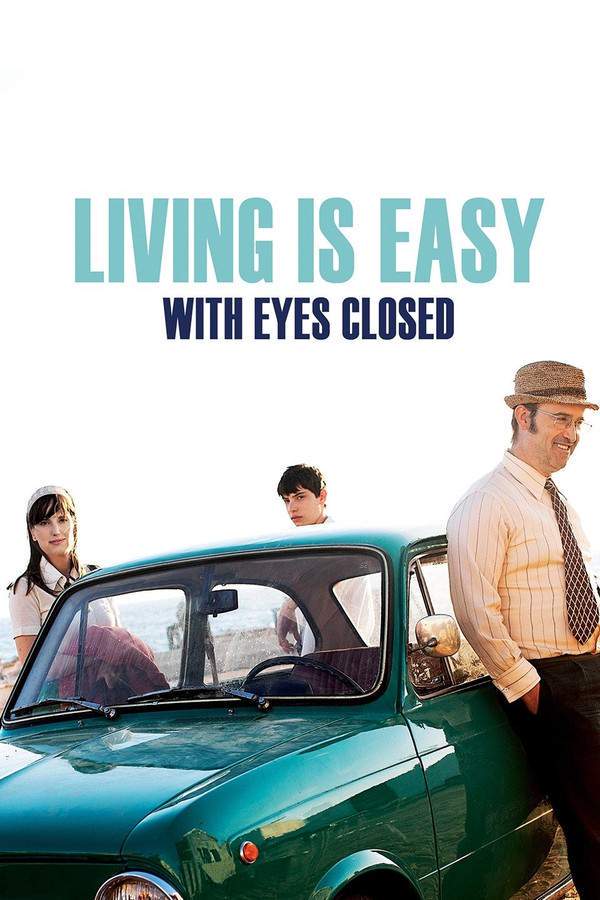
In 1966, Spanish teacher Antonio's life takes an unexpected turn when he becomes involved with a group of people influenced by John Lennon's Free Cinema. He finds himself assisting two individuals struggling to find their place, and through his involvement with them, Antonio confronts his own identity and embarks on a journey of self-discovery. The film explores themes of connection, authenticity, and the transformative power of human relationships against the backdrop of the counterculture movement.
Find where to stream, rent, or buy Living Is Easy with Eyes Closed (2014) in the US with current JustWatch availability, up-to-date pricing, and platform listings for subscription, rental, and digital purchase options.
Warning: spoilers below!
Haven’t seen Living Is Easy with Eyes Closed yet? This summary contains major spoilers. Bookmark the page, watch the movie, and come back for the full breakdown. If you're ready, scroll on and relive the story!
Read the complete plot breakdown of Living Is Easy with Eyes Closed (2014), including all key story events, major twists, and the ending explained in detail. Discover what really happened, and what it all means.
In 1966, John Lennon finds himself grappling with a profound existential crisis, contemplating the possibility of leaving the iconic Beatles behind for good. In search of new beginnings, he ventures to Almeria, a picturesque town in southern Spain, to shoot Richard Lester’s anti-war black comedy, How I Won the War.
Amid this backdrop, we meet Antonio, a devoted English schoolteacher and fervent fan of the Liverpool quartet. Inspired by his love for the Beatles, he embarks on a road trip from Albacete to Almería with a singular aim: to meet Lennon himself. Notably, he cleverly utilizes the Beatles’ lyrics as a unique way to teach English, yet his journey carries an unusual twist.
During this adventure, Antonio encounters Belén, a young woman escaping the suffocating restrictions imposed by her family and societal norms in Spain. At just 20, she is fleeing from a troubled past, bringing an enigmatic aura to their journey. Along the way, they also meet Juanjo, a rebellious 16-year-old who has run away from home to escape the oppressive grip of his conservative and unyielding father.
With no clear destination in mind, the trio joins forces as they make their way to Almería. Upon their arrival, Juanjo decides to part ways, choosing a solitary walk down the beach. Meanwhile, Antonio persuades Belén to take a break in his room while he seeks a job for Juanjo at a local café.
When Antonio returns, he finds Belén having a moment of vulnerability, leading him to question her wellbeing and discover her pregnancy, prompting a compassionate offer to cover her expenses for the night. Later, while enjoying dinner at the café, they encounter a boisterous local farmer who bullies Juanjo, mocking his appearance. This harrowing moment is disrupted by Café owner Ramón, who shares his own poignant story of love and sacrifice regarding his handicapped son, Bruno.
The story progresses as Juanjo receives his accommodation in the back of the café while Antonio and Belén make their way to their respective rooms. In the early light of dawn, they attempt to access the film set, but the tough Guardia Civil deny them entry without proper invitations. However, through cunning and determination, the trio finds a way to secure their place on set, where Lennon surprises Antonio with his warmth and generosity, even sharing untitled lyrics to Strawberry Fields Forever and offering them marijuana cookies.
Their adventure takes another turn when they encounter the farmer once again—this time, with Antonio advocating for Juanjo’s dignity and urging the young people not to be intimidated or deprived of their aspirations. Upon returning to the café, a tense confrontation awaits as Juanjo’s father is there, leading to Juanjo convincing Belén and his dad to bring her along to Madrid. He believes that she deserves a chance to live on her own terms while he helps her land a job in hairdressing.
As they drive away from Almería, passing the unyielding farmer’s tomato field, Antonio joyfully sings, > “Help!” embodying the spirit of freedom and camaraderie that defines their unforgettable journey together.
Last updated: November 16, 2024 at 15:58
Explore frequently asked questions about Living Is Easy with Eyes Closed (2014) with spoiler-rich answers covering the full plot summary, major story beats, character motivations, hidden details, and ending meaning. This movie summary FAQ helps explain confusing scenes, plot twists, and narrative decisions in clear, searchable detail.
Antonio is an English schoolteacher and devoted Beatles fan who uses the band's lyrics as a unique teaching method. His obsession with Lennon stems from deep admiration for the band's music, and he sees meeting Lennon as a life-changing opportunity. This journey also represents his own quest for meaning and escape from his mundane life in Albacete.
Belen is a 20-year-old woman fleeing the suffocating restrictions imposed by her family and Spanish societal norms. She carries an enigmatic aura and is escaping a troubled past. Her escape represents the broader theme of seeking freedom and personal identity within the oppressive atmosphere of 1960s Spain.
Juanjo is a rebellious 16-year-old who has run away from home to escape the oppressive grip of his conservative and unyielding father. His decision reflects his desire for autonomy and his resistance to the restrictive values imposed by his family. This theme of generational conflict runs throughout the film.
The trio attempts to access the film set in the early morning but is denied entry by the Guardia Civil without proper invitations. Through cunning and determination, they eventually find a way onto the set, where Lennon unexpectedly greets them with warmth and generosity.
In 1966, John Lennon is grappling with a profound existential crisis and contemplating leaving the Beatles. He travels to Almería in southern Spain to shoot Richard Lester's anti-war black comedy "How I Won the War" as a way to seek new beginnings away from the band's fame.
The film establishes Lennon's existential crisis early, explaining his willingness to meet strangers.
After Juanjo's father arrives at the café in Almería, Juanjo convinces him to bring Belén with them to Madrid. Juanjo believes she deserves a chance to live on her own terms and offers to help her find a job in hairdressing. This act demonstrates Juanjo's growth and his commitment to helping others escape their circumstances, just as he escaped his own.
When Antonio returns to his room and finds Belén in a moment of vulnerability, he discovers she is pregnant. Moved by compassion, Antonio offers to cover her expenses for the night. This act reveals Antonio's caring nature and establishes a bond of trust between them.
During the confrontation at the café when a local farmer bullies Juanjo, the café owner Ramón steps in and shares a poignant story about his handicapped son Bruno. This moment highlights themes of love, sacrifice, and paternal devotion, serving as a emotional turning point that connects the characters through shared experiences of parental love.
As the group drives away from Almería, passing the unyielding farmer's tomato field, Antonio joyfully sings "Help!" - a Beatles song. This moment embodies the spirit of freedom, camaraderie, and self-discovery that defines their journey. The song choice reflects both Antonio's lifelong devotion to the Beatles and the universal theme of seeking help and connection.
When the trio arrives in Almería, Juanjo decides to part ways temporarily, choosing to walk alone down the beach. This moment reflects his need for introspection and his personal journey of self-discovery. The solitary walk represents his internal struggle between seeking connection and maintaining independence.
Discover curated groups of movies connected by mood, themes, and story style. Browse collections built around emotion, atmosphere, and narrative focus to easily find films that match what you feel like watching right now.
Journeys where the destination is a new understanding of oneself.If you liked the journey of self-discovery in Living Is Easy with Eyes Closed, you'll enjoy these films. This collection features movies where a road trip leads to personal change, blending hopeful encounters with a bittersweet feel, similar to stories of escape and found connection.
The narrative typically follows a linear path, structured around the physical journey. Characters meet along the way, forming temporary but impactful bonds that challenge their perspectives. The central conflict is often internal, as protagonists grapple with their identity and past, with the road providing a space for reflection and growth that culminates in a poignant, life-altering realization.
These movies are grouped together because they share a specific emotional recipe: the freedom and optimism of a journey, combined with the melancholic acceptance that all journeys must end. They balance warm, humanistic connections with a steady, reflective pace, creating a uniquely bittersweet and hopeful vibe.
Stories where unlikely connections heal old wounds and create new bonds.For viewers who enjoyed the heartfelt connections in Living Is Easy with Eyes Closed, this section highlights similar movies. These films focus on characters forming deep, unexpected bonds that act as a catalyst for personal growth, all within a warm, hopeful, and reflective atmosphere.
The plot often revolves around a central figure who, sometimes reluctantly, becomes the catalyst for bringing a group of isolated individuals together. Through shared experiences and gentle confrontations, each character confronts their personal struggles. The narrative arc is less about major external events and more about the subtle, steady development of trust and affection within the group, leading to a strengthened sense of self for all involved.
These films are united by their core focus on the 'found family' trope and their consistently warm, humanistic tone. They share a medium intensity and steady pacing that allows character relationships to blossom naturally, resulting in a viewing experience that is both emotionally engaging and deeply comforting.
Don't stop at just watching - explore Living Is Easy with Eyes Closed in full detail. From the complete plot summary and scene-by-scene timeline to character breakdowns, thematic analysis, and a deep dive into the ending - every page helps you truly understand what Living Is Easy with Eyes Closed is all about. Plus, discover what's next after the movie.
Track the full timeline of Living Is Easy with Eyes Closed with every major event arranged chronologically. Perfect for decoding non-linear storytelling, flashbacks, or parallel narratives with a clear scene-by-scene breakdown.
Discover the characters, locations, and core themes that shape Living Is Easy with Eyes Closed. Get insights into symbolic elements, setting significance, and deeper narrative meaning - ideal for thematic analysis and movie breakdowns.