Year: 2009
Runtime: 120 min
Language: English
Director: Ang Lee
Budget: $30M
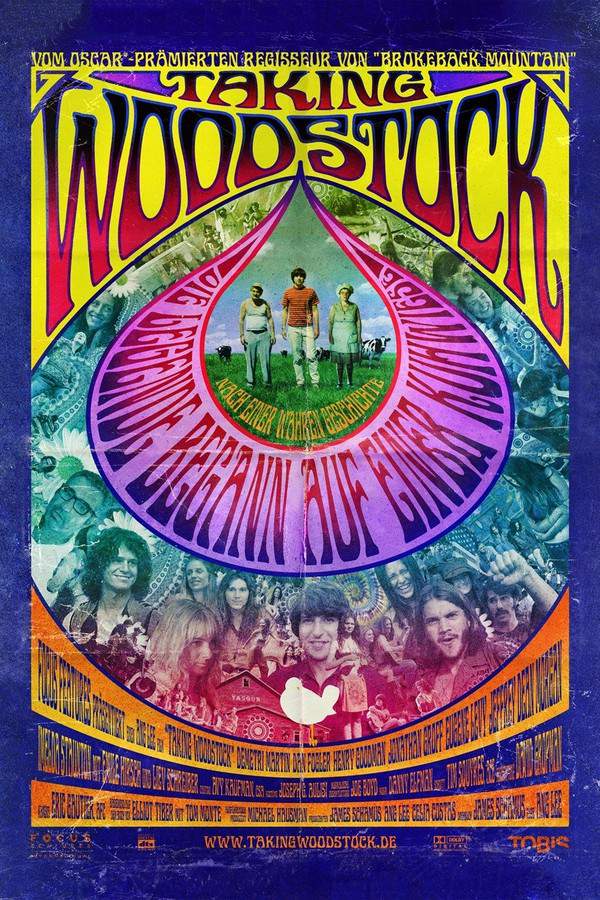
During the summer of 1969, Elliot returns home to the Catskills, where his parents run a struggling motel. Feeling stifled and yearning for something more, Elliot finds himself unexpectedly involved when a local farmer proposes hosting a music festival on his land. As the Woodstock festival rapidly grows, Elliot sees a chance to help his family and discover his own purpose amidst the vibrant atmosphere of music, art, and counterculture.
Warning: spoilers below!
Haven’t seen Taking Woodstock yet? This summary contains major spoilers. Bookmark the page, watch the movie, and come back for the full breakdown. If you're ready, scroll on and relive the story!
Read the complete plot breakdown of Taking Woodstock (2009), including all key story events, major twists, and the ending explained in detail. Discover what really happened—and what it all means.
Taking place in 1969, this film draws inspiration from the true story of Elliot Tiber, a hopeful interior designer from Greenwich Village. His parents, Jake and Sonia, own the dilapidated El Monaco Resort situated in the quaint town of Bethel, New York. Amid financial difficulties, they face the possibility of losing their establishment, particularly as a hippie theater group called The Earthlight Players struggles to meet their rental obligations. In an emotional plea, Elliot urges a local bank to refrain from foreclosing on their mortgage, while his mother launches into a heartfelt monologue about her tribulations as a Russian refugee. The family has until the summer ends to remedy their situation.
In a bid to turn fortunes around, Elliot devises a plan to organize a small music festival. He manages to secure a permit for just one dollar from the town’s chamber of commerce, an organization he also leads as president. When he catches wind that the Woodstock Festival organizers are encountering obstacles at their initial location, he promptly offers them his permit along with the accommodations at the motel. Michael Lang, one of the organizers, gratefully accepts the offer. Additionally, local farmer Max Yasgur provides nearby land for the event. Initially agreeing on a fee of $5,000, they later renegotiate it to $75,000 upon recognizing the scale of attendance, a decision that is met with some reluctance.
While Elliot finds common ground with Yasgur regarding the motel fees — especially after Sonia’s initial resistance subsides following an upfront cash payment — they both encounter significant local pushback. The diner refuses to serve Elliot, local inspectors target his motel for violations, and some youths disfigure the property with hateful graffiti. Yet, as the festival approaches, tension gives way to an influx of peace, love, and commerce, enriching the Tiber family in the process.
An unexpected addition to their team, a cross-dressing Korean War veteran named Betty von Vilma, is hired to maintain security during the festival. Meanwhile, Elliot faces his own struggles, particularly concerns about concealing his homosexuality from his family, while he develops feelings for one of the festival organizers residing at the motel.
As the rock concert unfolds, Elliot, alongside his father and Vilma, hears the distant sound of music. His father, revitalized by the newfound energy in Bethel, encourages Elliot to attend the concert. Riding on the back of a compassionate state trooper’s motorcycle through the buzzing traffic, he finally arrives at the event. There, he meets a free-spirited couple who invite him for an LSD experience in their VW Bus. Initially uneasy, Elliot eventually succumbs to the psychedelic atmosphere, emerging under the mystical glow of the festival after sundown.
Returning home, he shares breakfast with his parents and suggests the idea of replacing him now that financial burdens are lifted, but his mother finds it too painful to entertain such a notion. Following another festival day filled with joy, during which his friend Billy, a Vietnam veteran, begins to heal from his trauma, Elliot discovers his parents in a fit of laughter after consuming Vilma’s hash brownies. The previously strained family dynamic transforms into one filled with love and joy.
However, the next morning reveals a secret; Sonia discloses that she has secretly hoarded $97,000 beneath the floorboards. Displeased that his mother hid such a substantial sum while he exerted effort to alleviate their struggles, Elliot resolves to head to California. As he packs his things, he states heartfelt goodbyes to his father, who supports his decision to pursue independence. In a final visit to the festival’s site, Elliot reflects on the muddy aftermath of the concert, where Lang rides by on horseback, and they share a moment of gratitude for the event’s success, with Lang hinting at his ambitious future project—hosting a free concert in San Francisco featuring The Rolling Stones.
Last Updated: November 03, 2024 at 14:11
Discover curated groups of movies connected by mood, themes, and story style. Browse collections built around emotion, atmosphere, and narrative focus to easily find films that match what you feel like watching right now.
Stories where a major event brings a community and its people together for personal growth.If you liked the way Taking Woodstock used a festival to spark personal change, explore these movies. This list features stories where large community gatherings, concerts, or events become backdrops for self-discovery and connection, capturing a similar hopeful and nostalgic vibe.
This narrative pattern follows individuals or a community as they prepare for and experience a significant event. The event itself acts as a pressure cooker, accelerating personal transformations, resolving conflicts, and forging new bonds. The journey typically ends with a bittersweet but hopeful sense of change, where characters are forever altered by their shared experience.
These films are grouped together because they share a core belief in the power of collective experience. They have a steady, building pace that leads to a cathartic event, a hopeful tone despite challenges, and a medium emotional weight focused on themes of self-discovery and community.
Character-driven stories of personal awakening set against a defining cultural moment.For viewers who enjoyed the 1960s setting and Elliot's personal journey in Taking Woodstock, this list highlights similar movies. These films feature protagonists finding themselves amidst the turmoil or vibrancy of a particular time period, blending nostalgic atmosphere with heartfelt, character-focused drama.
The narrative follows a protagonist feeling stifled by their current life who finds an escape or new perspective through the cultural forces of their time. Their awakening is tied to the era's music, art, or social movements, leading to a climax of personal liberation. The ending is typically bittersweet, acknowledging the growth achieved but also the loss or change required to move forward.
These movies share a focus on a specific historical atmosphere as a character in itself. They combine a straightforward, character-driven plot with a medium emotional weight, resulting in a bittersweet ending feel. The pacing is steady, allowing for immersion in the era and the protagonist's gradual transformation.
Don't stop at just watching — explore Taking Woodstock in full detail. From the complete plot summary and scene-by-scene timeline to character breakdowns, thematic analysis, and a deep dive into the ending — every page helps you truly understand what Taking Woodstock is all about. Plus, discover what's next after the movie.
Track the full timeline of Taking Woodstock with every major event arranged chronologically. Perfect for decoding non-linear storytelling, flashbacks, or parallel narratives with a clear scene-by-scene breakdown.
Discover the characters, locations, and core themes that shape Taking Woodstock. Get insights into symbolic elements, setting significance, and deeper narrative meaning — ideal for thematic analysis and movie breakdowns.
Get a quick, spoiler-free overview of Taking Woodstock that covers the main plot points and key details without revealing any major twists or spoilers. Perfect for those who want to know what to expect before diving in.
Visit What's After the Movie to explore more about Taking Woodstock: box office results, cast and crew info, production details, post-credit scenes, and external links — all in one place for movie fans and researchers.
Discover movies like Taking Woodstock that share similar genres, themes, and storytelling elements. Whether you’re drawn to the atmosphere, character arcs, or plot structure, these curated recommendations will help you explore more films you’ll love.
Taking Woodstock (2009) Scene-by-Scene Movie Timeline
Taking Woodstock (2009) Movie Characters, Themes & Settings
Taking Woodstock (2009) Spoiler-Free Summary & Key Flow
Movies Like Taking Woodstock – Similar Titles You’ll Enjoy
Woodstock: Three Days that Defined a Generation (2019) Ending Explained & Film Insights
Wanderlust (2012) Ending Explained & Film Insights
Woodstock 99: Peace Love and Rage (2021) Complete Plot Breakdown
Not Fade Away (2012) Story Summary & Characters
The Wood (1999) Movie Recap & Themes
Peace, Love, & Misunderstanding (2012) Ending Explained & Film Insights
Woodstock (1970) Ending Explained & Film Insights
Take Me Home Tonight (2011) Full Movie Breakdown
A Good Old Fashioned Orgy (2011) Complete Plot Breakdown
Always Woodstock (2014) Detailed Story Recap
The Stöned Age (1994) Plot Summary & Ending Explained
Wild Romance (2006) Ending Explained & Film Insights
Like It Is (1968) Spoiler-Packed Plot Recap
Taking Off (1971) Full Movie Breakdown
Hipsters (2008) Movie Recap & Themes