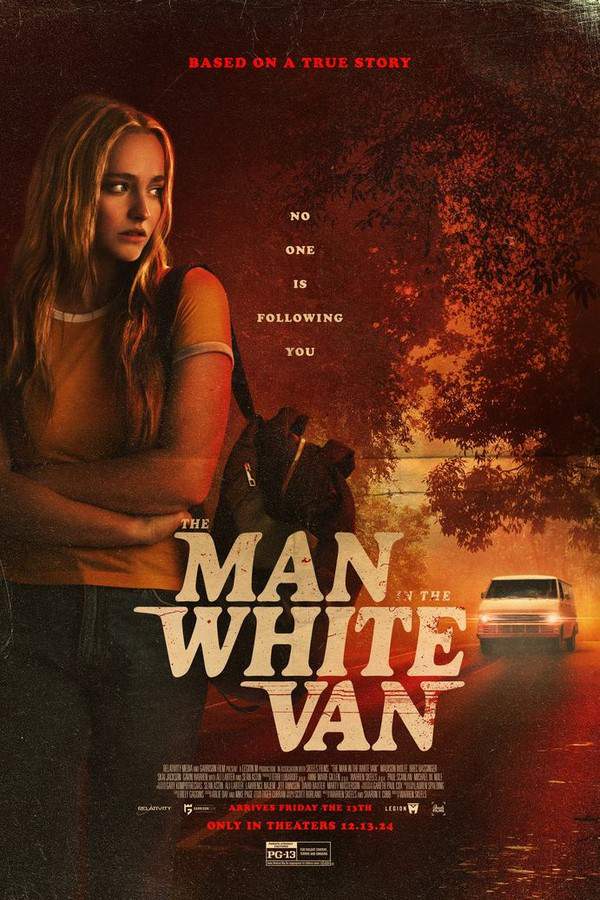
In sunlit Florida of the mid-1970s, Annie Williams Madison Wolfe is a teenage horseback rider who spends long days exploring the countryside with her loyal horse Rebel and slipping into the quiet rhythms of nature. She lives with her older sister Margaret Brec Bassinger, her younger brother Daniel Gavin Warren, and their parents, creating a small, closely watched world where freedom and danger feel almost tethered to the same air. Annie’s days are filled with riding, gentle adventures, and a growing confidence in familiar trails, yet she never quite shakes the sense that something unseen is watching from the edges of the woods.
A creeping unease takes root when a white van begins to appear in places Annie frequents—while she’s in the saddle, on her way home, or tucked away in the woods. The van seems to follow her, observant and intimate in a way that makes her shiver. Her parents dismiss her fears as paranoia, and even Margaret and their friends doubt the sense of danger. Yet Annie’s best friend Patty Skai Jackson believes her, offering quiet support as the ominous presence lingers. Alongside Annie’s present-day fear, flashback sequences reveal earlier victims—young women abducted by the same or a similar “man in the white van”—hinting at a dangerous pattern that went largely unnoticed at the time. The story uses these echoes to deepen the tension, showing how unchecked danger can hide in plain sight while Annie’s world grows increasingly claustrophobic.
As the fear intensifies, the fear becomes real on Halloween night when the stalking reaches its terrifying apex: Annie is abducted. She finds herself in the back of the white van, where she awakens and must summon every ounce of resolve to fight back. She opens the van door and makes a daring leap, landing in front of her own home just as the danger closes in. She bangs on the front door, and her sister Margaret pulls her inside with minutes to spare as the man advances toward the house. The intruder breaks in; Annie and Margaret sprint through a window, hit the ground, and scramble to reach the waiting vehicle—only to jump back into the van and try to escape once more. In a tense reversal, Annie uses quick thinking and bold action, backing the van into a bush to impede the attacker before speeding away and striking him as he lies on the ground.
A police officer arrives soon after, thanks in large part to Patty’s quick thinking and support, but the man who stalked Annie remains unseen and uncaptured. The family faces a fragile, aching sense of relief, and life appears to drift back toward a fragile normalcy. A key detail marks the aftermath: Annie’s horse Rebel disappears, leaving a void in her outdoor world and underscoring how life can be disrupted even when danger seems to have passed.
One month later, the family gathers for a meal, pretending to resume ordinary days while the undercurrent of fear still hums beneath the surface. The film’s looming dread is reinforced by the mid-credits sting: a family on a camping trip spots a white van parked nearby, a chilling reminder that the predator may still be at large and that safety can vanish in an instant. The closing images linger with a quiet, unsettled unease, inviting viewers to consider the enduring threat that lies just beyond the edge of everyday life.
Overall, the film crafts a taut, character-driven thriller that grounds its suspense in a Florida setting of the 1970s while emphasizing the resilience of a girl determined to outpace a recurring nightmare. The pacing blends intimate moments with escalating danger, making Annie’s attempt to reclaim her sense of safety feel earned, personal, and deeply human.