Plot Explained Spoilers guaranteed!
Plot Explained

Browse by genre

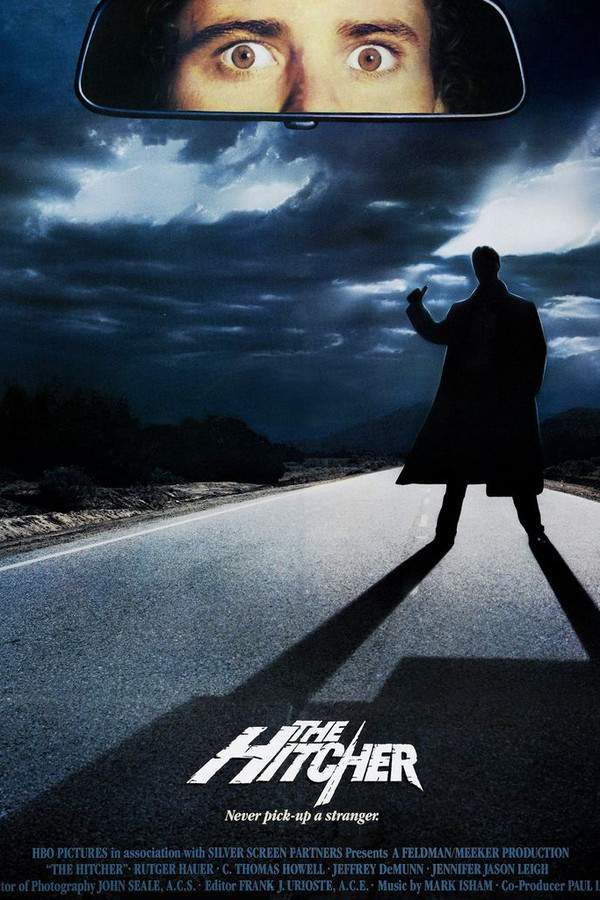
The Hitcher (1986) movie poster

Plot Summary

The Hitcher (1986) Plot Summary Explained

Release, runtime and language
1986 · 97 min · English
JustWatch #24,605 6
Directed by
Robert Harmon
Starring
Gene Davis, Billy Green Bush, Rutger Hauer, Jennifer Jason Leigh, Jeffrey DeMunn, Armin Shimerman

A mysterious hitchhiker, known only as Lilith, travels across the United States, relying on rides from strangers as she pursues a hidden goal. Her journey is fraught with danger, and the urgency of her mission suggests a confrontation is inevitable. As she encounters various people, her true purpose remains elusive, creating suspense and anticipation for those who cross her path.

On this page (6)
  1. 1 Where to watch
  2. 2 What happens: full plot
  3. 3 Plot questions answered
  4. 4 Movie threads
  5. 5 Movies like The Hitcher
  6. 6 Every angle

Where to watch

Where to Watch The Hitcher (1986)

Where can you watch The Hitcher? Stream, rent or buy it in the US, including on YouTube Free: current JustWatch availability with up-to-date prices.

Streaming availability powered by JustWatch

Full plot summary · contains spoilers

What Happens in The Hitcher: Full Plot Summary

The whole story of The Hitcher (1986) explained, from the opening scene to the final frame: every key event, every twist and what it all adds up to. Read it as a quick recap before the sequel, to check a scene you missed, or to finally understand what really happened.

Jim Halsey, portrayed by C. Thomas Howell, embarks on a frantic journey as a young car delivery driver, transporting a vehicle from Chicago to the sun-soaked streets of San Diego. Along the way, he makes a fateful decision to pick up a hitchhiker named John Ryder, played by the intense Rutger Hauer. At first, Ryder seems like a quiet, enigmatic man, but the atmosphere quickly grows tense when Jim passes a car stranded on the side of the road. In a chilling moment, Ryder's demeanor takes a sinister turn as he chillingly claims responsibility for the brutal murder and mutilation of the stranded car’s driver, and ominously warns that Jim will be next.

With a cold precision, Ryder pulls out a switchblade, taunting Jim with the intention of inflicting the same gruesome fate. In a split second of survival instinct, Jim realizes Ryder hasn't buckled his seatbelt, and with a swift maneuver, he knocks Ryder out of the car. Sighing in relief, Jim resumes his journey, but his sense of safety is short-lived. Horrified, he witnesses Ryder hitching a ride with a family in a station wagon. Desperate to save them, Jim attempts to signal for help, but in his panic, he nearly wrecks his own vehicle. When he finally reaches them, he finds the family horrifically mutilated at the hands of Ryder.

As the narrative spirals into a relentless chase, Jim becomes the target of Ryder's menacing pursuit. It becomes clear that Ryder, intrigued by Jim's earlier act of defiance, has chosen him as worthy prey for his next kill. The chase takes a dramatic turn when Jim finds himself at an abandoned gas station where Ryder, in a fit of destruction, crashes into the gas pumps before igniting a fire that engulfs the station. Narrowly escaping the inferno, Jim takes refuge in a diner, where he meets the alluring waitress Nash, portrayed by Jennifer Jason Leigh. As he tries to call the police, a mundane moment of enjoying a burger turns grotesque when Jim discovers a severed finger in his fries, realizing Ryder is still nearby.

In a shocking twist, instead of receiving help, Jim is arrested by the police, framed by Ryder who has sneakily dropped Jim's wallet at a murder scene. After a harrowing time in jail, Jim awakens to a nightmarish quietness, escaping to find the bodies of murdered officers, leading him to panic and commandeer a gun. Stumbling upon another payphone, he desperately takes two unsuspecting officers hostage, hoping they will believe his plea about Ryder. Just when he thinks he's making progress, Ryder's shadow looms once again, resulting in the brutal murder of the officers he'd held captive.

The plot thickens as Jim and Nash embark on a heart-pounding escape, but their luck runs out when they find themselves cornered by the police, who, furious about the earlier fatalities, believe Jim to be a menace. Amid this chaos, Nash's bravery shines through as she points a gun at the officers, and together, they flee. They manage to evade the police with sheer ingenuity, but Ryder’s relentless pursuit continues, culminating in a deadly showdown at a roadside motel where he kidnaps Nash, threatening her life to draw Jim out.

Desperate to save the woman he has come to care for, Jim confronts Ryder, who chillingly demands that Jim take his own life to spare Nash's. But Jim, standing firm, refuses, setting off a sequence of events that lead to a tragic outcome as Ryder outmaneuvers him, ultimately leading to Nash's demise. A whirlwind of police becomes involved, though none can seem to identify the malicious Ryder, who appears to exist beyond their grasp.

In a climax filled with tension, Jim manages to confront Ryder one last time during a transport gone awry. Seizing the chaos to his advantage, Jim finds himself in a heart-stopping battle. As seemingly all hope is lost, Jim executes a daring maneuver to eliminate Ryder once and for all. In a final confrontation that tests his limits of fear and bravery, Jim fires upon Ryder, ensuring that his tormentor cannot resurrect. Alone in the deserted landscape, with the sun setting in the distance, he ignites a cigarette, a somber reminder of the harrowing ordeal he has faced, now left to contemplate the shadows of his past.
Last updated: January 18, 2025 at 14:36

Was this helpful?

Plot questions answered

The Hitcher Plot Explained: Your Questions Answered

The questions people ask most about The Hitcher (1986): what happens in the confusing scenes, why the characters do what they do, the twists, hidden details and what the ending means. Each answer contains spoilers.

Q1

Why does John Ryder fixate on Jim as his target?

Ryder becomes obsessed with Jim after their initial encounter on the highway. When Jim unexpectedly knocks Ryder out of the moving car by unbuckling his seatbelt, Ryder sees this act of defiance as something different from his usual prey. He tells Jim that most people simply stop and let him kill them, but Jim actually fought back. This uniqueness intrigues Ryder, who then actively pursues Jim across the country, treating him as worthy prey for his twisted game.

  • john ryder
  • obsession
  • cat and mouse
  • serial killer motivation
  • hitchhiker
Q2

How does Ryder manage to frame Jim for the murders?

Ryder frames Jim by planting his wallet at the scene of one of his murders. After the family is killed, Ryder sneaks into the crime scene and drops Jim's wallet among the bodies. When police investigate, they find Jim's identification, leading them to believe he is the perpetrator rather than the victim. This clever plant puts Jim in the impossible position of trying to prove his innocence while being hunted by both the real killer and law enforcement.

  • frame
  • police
  • wallet
  • evidence
  • arrest
  • mistaken identity
Q3

Why does Ryder demand that Jim kill himself at the motel?

At the motel climax, Ryder forces Jim to choose between shooting himself or watching Nash die. This demand stems from Ryder's twisted psychological game - he wants Jim to prove his worth by being willing to kill his own self rather than submit passively. It's not simply about murder but about breaking someone mentally by making them choose ultimate surrender through self-destruction. When Jim refuses, Ryder uses the opportunity to kill Nash anyway, demonstrating his cruelty and that his demands were never made in good faith.

  • suicide demand
  • motel standoff
  • nash
  • psychological torture
  • mind games
Q4

How does Ryder survive being shot and appear to resurrect?

In the final confrontation, Jim shoots Ryder multiple times and leaves him for dead. However, Ryder unexpectedly rises from the ground, appearing to resurrect. This moment is deliberately ambiguous - it could represent Ryder's legendary status as an almost supernatural evil force, or it could simply mean Jim's earlier shots weren't fatal enough to stop a determined killer. The movie leaves this ambiguous, maintaining Ryder's mythic quality as an unstoppable force of pure malevolence.

  • resurrection
  • final battle
  • supernatural
  • death
  • highway showdown
Q5

What does Ryder mean by placing pennies over Jim's eyes at the diner?

When Ryder corners Jim at the diner, he places pennies over Jim's eyes in a chilling scene. This is an ancient funeral ritual from various cultures, particularly associated with Greek mythology where coins were placed over the eyes of the dead to pay the ferryman for passage to the underworld. By doing this to Jim while he's still alive, Ryder is psychologically tormenting him - treating him as already dead and demonstrating his god-like power over life and death. It underscores Ryder's theatrical, ritualistic approach to killing.

Foreshadowing: Earlier scenes established Ryder as someone who treats murder as a twisted art form rather than simply a crime.

  • pennies
  • eyes
  • funeral ritual
  • mythology
  • psychological terror
  • diner scene
Q6

Why does Nash die if Jim refuses to shoot Ryder?

Jim refuses to shoot himself when Ryder demands it at the motel, hoping this act of defiance will save Nash. However, Ryder kills Nash anyway, revealing that his demands were never made in good faith. The demand was purely psychological torture - he wanted to force Jim into an impossible choice and then shatter his hope regardless. Ryder's cruelty knows no bargain; he kills Nash to maximize Jim's emotional devastation, proving that nothing Jim could have done would have saved her.

  • nash death
  • betrayal
  • motel
  • emotional trauma
  • refused demand
Q7

How does Ryder always manage to locate Jim throughout the movie?

Ryder demonstrates an almost supernatural ability to track Jim down no matter where he goes. Whether Jim is at an abandoned gas station, a roadside diner, or a motel, Ryder appears seemingly out of nowhere. The movie never fully explains this - it could be Ryder's obsessive dedication to his prey, his knowledge of the highways and back roads, or it could intentionally maintain an air of mythological evil that transcends normal human tracking abilities. This unexplained factor adds to Ryder's terrifying presence as an unstoppable force.

  • tracking
  • pursuit
  • impossible to escape
  • serial killer
  • location
Q8

What causes the gas station explosion during the chase?

At an abandoned gas station, Jim confronts Ryder hoping to end the pursuit. Instead, Ryder goes into a destructive rampage, systematically smashing the gas pumps with his car before deliberately igniting the leaking fuel. The resulting explosion creates a massive fireball that nearly kills Jim. This scene demonstrates Ryder's complete disregard for property, life, or his own safety - he's willing to destroy everything around him just to maintain his twisted game with Jim.

  • explosion
  • fire
  • gas station
  • chase
  • destruction
Q9

Why do the police arrest Jim instead of believing his story about Ryder?

When Jim finally reaches a phone to call for help, the police don't believe his story for several reasons. First, Ryder has already framed him by planting Jim's wallet at a murder scene. Second, Jim is visibly panicked and distraught, making him seem unreliable. Third, Jim has no evidence or witnesses to support his claim that a serial killer is hunting him. The police see a man with a bloody history connected to his wallet, a story about a phantom killer, and a severed finger in his food - all of which make Jim appear either guilty or mentally unstable.

  • arrest
  • police
  • misunderstanding
  • framed
  • credibility
Q10

What makes Jim realize he needs to eject Ryder from his car?

When Ryder pulls out a switchblade and taunts Jim about killing him the same way he killed the stranded driver, Jim notices a critical detail: Ryder hasn't buckled his seatbelt. This gives Jim the split-second opportunity to unbuckle his own belt, grab Ryder's arm, and shove the violent hitchhiker out of the moving vehicle. The moment showcases Jim's survival instincts kicking in - he recognizes that waiting for Ryder to attack would be fatal, so he acts decisively while he still has the element of surprise.

  • seatbelt
  • self-defense
  • switchblade
  • escape
  • highway
Q11

Why does Ryder murder the family Jim tries to warn?

After Jim ejects Ryder from his car, he spots Ryder hitchhiking with a family traveling in a station wagon. Jim desperately tries to warn them, nearly crashing his own vehicle in the process. When he finally catches up to them, he discovers Ryder has brutally murdered the entire family. This isn't personal against them - it's Ryder's way of demonstrating his power to Jim, proving that anyone who helps Jim or gets in Ryder's way will be eliminated. It's a message that Jim cannot escape and cannot save anyone.

  • family
  • station wagon
  • murder
  • warning
  • innocent victims
Q12

Why does Nash side with Jim despite knowing he's being hunted?

Nash, the waitress Jim meets at the diner, chooses to help him escape from police despite knowing he's being framed as a killer. After Jim is arrested, Nash somehow locates him during the transport chaos and helps him break free. Her motivation appears to be genuine belief in Jim's innocence after witnessing the severed finger incident and observing his terrified, desperate behavior. Nash represents the one person who sees through Ryder's manipulation and chooses to help, making her death at Ryder's hands even more tragic.

  • nash
  • waitress
  • alliance
  • help
  • escape
  • trust
Q13

Why does Jim take police officers hostage at the payphone?

After escaping from jail following the massacre of officers, Jim takes two police officers hostage at a payphone because he's desperate to contact the police captain directly. Jim believes that if he can just explain his situation to someone in authority, they will believe him about Ryder. However, this desperate act backfires catastrophically - Ryder arrives on the scene, kills both officers, and escapes, leaving Jim even more incriminated and traumatized. The hostage situation demonstrates how completely Ryder has manipulated events to keep Jim trapped.

  • hostage
  • payphone
  • police
  • desperation
  • escalation
Q14

How does Jim manage to kill Ryder in the final confrontation?

In the climactic showdown, Jim steals a gun from the police captain and chases down the transport bus carrying Ryder. During the violent struggle, Jim shoots Ryder multiple times and appears to kill him. When Ryder mysteriously rises again, Jim fights him hand-to-hand before delivering the final fatal shot. The ending shows Jim alone in the desert, lighting a cigarette - a somber moment suggesting victory came at the cost of his innocence and peace of mind. He has survived but is forever changed by the ordeal.

  • final fight
  • transport bus
  • victory
  • survival
  • ending

Movie threads

More Movies Like The Hitcher, by Mood & Story

Curated lists built around what makes The Hitcher tick: the same mood, the same kind of story or the same emotional payoff. Each list explains why these movies belong together.

Movies with highway terror like The Hitcher

Road trip nightmares where the journey itself becomes a fight for survival. If you liked the desolate-road horror of The Hitcher, this thread features similar movies where the highway is a stage for survival horror. Discover other films that capture the feeling of being hunted, framed, and pushed to the brink on a journey with no safe exit.

  • anxious
  • desperate
  • paranoid
  • oppressive
  • exhausting
  • horrific
  • Tone: dark, tense, paranoid
  • Pacing: fast, relentless
Why these movies?

The story pattern: The narrative typically follows a protagonist on a trip whose ordinary journey is violently interrupted by a malevolent force, often a seemingly unstoppable pursuer. The story unfolds as a linear chase, moving from one roadside confrontation to the next, with the goal shifting from reaching a destination to simply staying alive.

Why they belong together: These films are grouped by their shared core setting—the open road—and the specific brand of terror it evokes: isolation, vulnerability, and the psychological torment of being hunted in a seemingly endless space. They deliver a consistent, oppressive atmosphere of dread.

Movies about psychological torment like The Hitcher

Stories where the villain's main weapon is psychological devastation. For viewers who appreciated the psychological cruelty in The Hitcher, this thread collects films where the villain's goal is mental destruction. Find similar stories of sadistic mind games, being framed, and the heavy emotional weight of survival at a great cost.

  • dread-filled
  • oppressive
  • horrific
  • desperate
  • anxious
  • psychopath
  • Tone: dark, horrific, desperate
  • Pacing: fast, tense
Why these movies?

The story pattern: The narrative pattern involves a cunning antagonist who toys with their prey, setting elaborate traps, framing them for crimes, and killing allies to maximize feelings of helplessness and despair. The protagonist's arc is one of surviving not only bodily harm but also intense psychological torture, often ending with profound trauma.

Why they belong together: This thread groups movies based on a shared focus on psychological warfare as a central theme. The similarity lies in the villain's methodology and the resulting heavy emotional weight and bittersweet or bleak endings for the survivors, who are forever changed by their ordeal.

If you liked this

Movies Like The Hitcher

Similar movies to The Hitcher: the same genre, themes or kind of story. Each one comes with its own plot summary, timeline and ending explained.

Browse all movie summaries

Every angle

The Hitcher (1986) Explained: Plot, Timeline & Characters

Everything about The Hitcher in one place: what happens in the plot summary, the timeline in chronological order, the characters and meaning and a spoiler-free summary. What's After the Movie adds the cast, box office and post-credit scenes.

Coming soon on iOS and Android

The Plot Explained Movie Summary App

Plot summaries, endings explained and timelines on your phone. Catch up on any movie in minutes, save your favorites and never miss a twist again.

Be the first to know when we launch. Your email stays private, always.

Learn more about the app