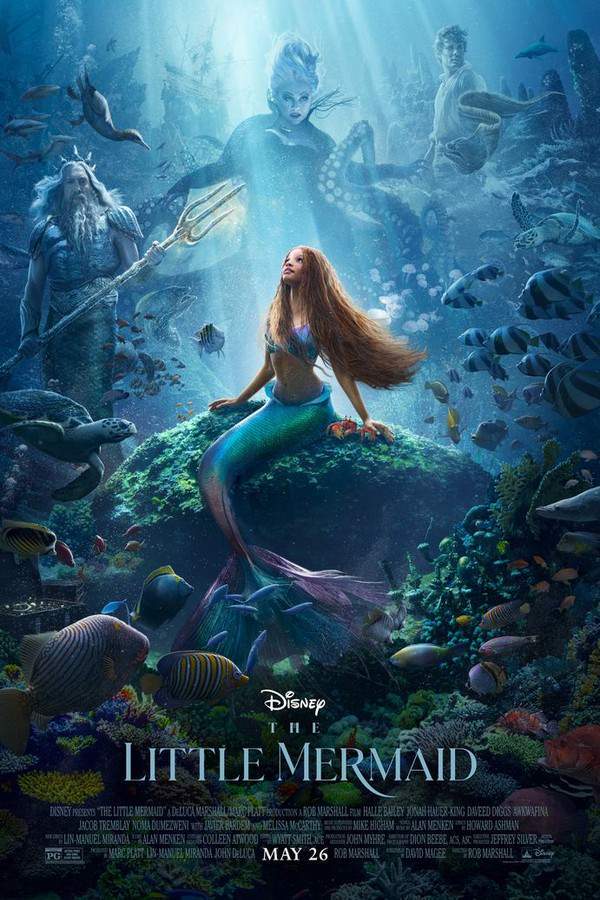
The climax of the film brings the conflict between the surface world and the ocean to a head, forcing King Triton to confront the consequences of his strict parenting. When Ariel breaks the necklace containing her voice, she inadvertently triggers a chain reaction that leads Triton to sacrifice himself to save her, taking her place as Ursula’s prisoner. This act of fatherly love strips him of his power and trident, allowing Ursula to grow into a monstrous giant who threatens both land and sea. In a significant departure from the animated classic, Ariel takes agency in the final battle; she is the one who impales Ursula with a ship's bowsprit, ending the witch's reign and restoring her father to his throne.
With Ursula defeated, the resolution centers on acceptance and the bridging of two worlds. Triton, having witnessed Ariel’s bravery and Eric’s genuine love for his daughter—rooted in their shared experiences rather than just a magical voice—realizes that his oppressive rules only drove her away. He chooses to grant her deepest wish, transforming her into a human permanently. This decision is pivotal because it signifies that Ariel's desire to be human was never solely about a romantic interest; it was about satisfying her curiosity and finding a life where she could make her own choices. Her marriage to Prince Eric is not just a personal happy ending, but a diplomatic one, uniting a fearful human kingdom with the merpeople. The film concludes with the understanding that while the two worlds have historically been divided by fear and misunderstanding, Ariel and Eric serve as the bridge, paving the way for a future where knowledge and cooperation replace prejudice.
Last updated: March 30, 2026 at 18:54