Plot Explained Spoilers guaranteed!
Plot Explained

Browse by genre

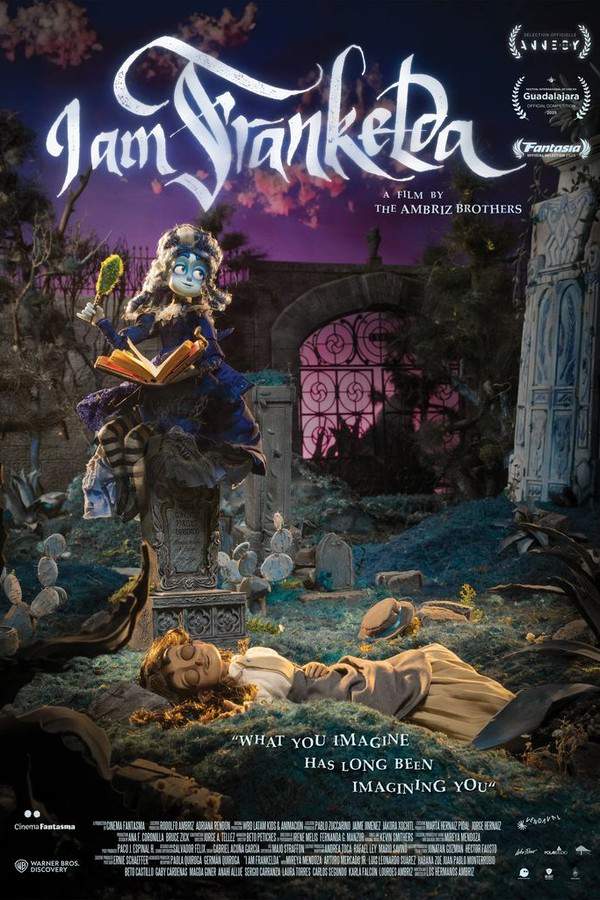
I Am Frankelda (2026) movie poster

Plot Summary

I Am Frankelda (2026) Plot Summary & Ending Explained

Release, runtime and language
2026 · 1 h 54 m · Spanish
Echo score 66
Loading streaming availability…
Starring
Juan Pablo Monterrubio, Mark Lewis, Carlos Segundo, Jesse Conde, Gaby Cárdenas, Arturo Ambriz

Frankelda, a determined 19th‑century Mexican writer, plunges into the depths of her own mind, confronting the nightmarish creatures she has conjured on the page. With the reluctant aid of a tormented prince, she races to mend the rift between fiction and reality before the boundaries collapse forever.

On this page (8)
  1. 1 Where to watch
  2. 2 What happens: full plot
  3. 3 How it worked in I Am Frankelda
  4. 4 Plot questions answered
  5. 5 Dreams & reality explained
  6. 6 How it ends
  7. 7 Movie threads
  8. 8 Every angle
Loading streaming availability…

Full plot summary · contains spoilers

What Happens in I Am Frankelda: Full Plot Summary

The whole story of I Am Frankelda (2026) explained, from the opening scene to the final frame: every key event, every twist and what it all adds up to. Read it as a quick recap before the sequel, to check a scene you missed, or to finally understand what really happened.

In 1866, in Monte de Video, Mexico, Francisca Imelda is an aspiring horror writer who pours energy into stories about fantastic creatures and a realm called the Topus Terrenus. After her mother’s death and despite her strict grandmother’s disapproval, she keeps writing, letting her imagination walk a fine line between fiction and something far more real. Unbeknownst to her, the worlds she imagines are not only vivid in her mind but truly alive in a parallel dimension, where one of her characters, Prince Herneval, begins to sense humans by following Francisca’s narrative. In this magical realm, the Topus Terrenus and its inhabitants live on human fear, and Herneval is forbidden by his parents from ever returning to the human world. To shore up his home, the royal adviser and “nightmare-teller,” Procustes Mark Lewis, visits the castle to address the kingdom’s creeping decline.

Years pass, and an 18-year-old Francisca struggles to publish her work. She decides to try again under the pseudonym Frankelda Mireya Mendoza, hoping a new name will unlock the door to readers. In the Topus Terrenus, Herneval resolves to replace Procustes with Francisca as the new nightmare-teller, and he crosses into the human world to persuade her to join him. With Herneval’s powers, Francisca can separate her own consciousness and travel to the royal castle, a journey that blurs the line between dream and waking life.

But Procustes is not easily sidelined. He summons the clan leaders of the Topus Terrenus and works to dismiss Francisca’s stories as mere amateur fantasies. As she lingers in the human realm longer than expected, Procustes tries to imitate her voice and style, testing whether he can replicate the magic. He waits for Herneval to seek permission to use her narratives, hoping to manipulate Francisca into thinking she’s being guided when, in truth, she is being duped.

When Francisca discovers the theft, she is devastated and threatens to abandon the Topus Terrenus forever. Procustes seizes this moment to strike: he captures Francisca and, with the support of the clan leaders, engineers a coup against the monarchs. Meanwhile, Herneval travels back to the human world to find Francisca, only to realize she never returned. Suspecting she has been taken, he heads back to rescue her and offers a heartfelt apology for his role in the trap.

Francisca proposes a daring plan to defeat Procustes by drawing him into a nightmare of her own creation. At the castle, she steps into the dreamscape, but Procustes presses his advantage and overpowers her. Sensing that their plan is unraveling, Herneval attempts to wake her but is fatally wounded by a hypnotized guard. With his last strength, he dives into the nightmare to help Francisca contain Procustes, who then transforms into a house within the dream, threatening to trap them both inside forever. In a final surge, Herneval’s consciousness merges with Francisca’s book, and the two are left stranded together within the nightmare.

Thanks to Ceimut, the loyal guardian of the Topus Terrenus, the clan leaders are exiled, and Herneval’s parents honor the couple’s sacrifice by turning Francisca’s stories into nightmares that are shared across the realm. In the dream, Francisca and Herneval reunite, and she vows to keep writing. Then she awakens in the human world, inspired by her incredible journey. With renewed purpose, she writes a new book titled I am Frankelda, which is finally published, fulfilling her lifelong dream and marking the moment when her imagination becomes a lasting legacy. Carlos Segundo plays Ceimut, the steadfast guardian who helps set things right, while Arturo Mercado Jr. brings to life the seasoned prince whose destiny becomes entwined with hers.

Last updated: June 12, 2026 at 08:45

Was this helpful?

trap · contains spoilers

How It Worked in I Am Frankelda

How the trap in I Am Frankelda really worked, step by step: what each move looked like at the time, what was actually going on and how one step made the next possible.

Trap 5 steps

Luring Procustes into a Realm Frankelda Controls

Frankelda's counterattack works by making Procustes enter the one realm she can shape completely: her own consciousness. Herneval's staged betrayal and the secret replacement of Procustes's Harpspider script with Frankelda's story draw the usurper into a mindscape where she is waiting, and there he is put to sleep and contained.

1Looked like something else at the timeHerneval feignsbetraying Frankelda2Procustes'sHarpspider script issecretly replaced3Looked like something else at the timeProcustes dives intothe preparedconsciousness4Frankelda shapes therealm and Procustesis put to sleep5Procustes iscontained
WhoLeads to3Distracts from1Looked like something else
Read the 5 steps as text
  1. 1

    Herneval feigns betraying Frankelda

    Herneval · Frankelda

    What it looked like: Procustes is given the appearance that Herneval has turned against Frankelda and that she is helpless in a nightmare.

    Herneval pretends to betray Frankelda and places her in a nightmare state, setting the bait for Procustes.

  2. 2

    Procustes's Harpspider script is secretly replaced

    Herneval · Frankelda · Francisca

    Herneval secretly replaces Procustes's script on the Harpspider with a story Frankelda authored, a plan that also depends on Francisca's hand and the Harpspider's transmission.

  3. 3

    Procustes dives into the prepared consciousness

    Procustes · Frankelda

    What it looked like: Procustes believes he is entering to take control, not to be trapped.

    Procustes dives into Frankelda's consciousness expecting control and instead finds her waiting for him.

  4. 4

    Frankelda shapes the realm and Procustes is put to sleep

    Frankelda · Young Prince Herneval · Procustes

    Inside the mindscape, the one realm Frankelda can shape completely, Herneval appears as the child linked to Francisca's earliest recognition that her tales were real and helps put Procustes to sleep.

  5. 5

    Procustes is contained

    Procustes

    The usurper is contained within the mindscape, though his vow to return prevents the victory from being permanent.

Plot questions answered

I Am Frankelda Plot Explained: Your Questions Answered

The questions people ask most about I Am Frankelda (2026): what happens in the confusing scenes, why the characters do what they do, the twists, hidden details and what the ending means. Each answer contains spoilers.

Q1

Why does Francisca's grandmother disapprove of her writing?

Her grandmother represents the traditional expectations placed on women in 1866 Mexico. Writing horror fiction about monsters and dark realms was considered inappropriate for a young woman, especially after her mother's death when she might have been expected to focus on more 'practical' pursuits rather than creative writing.

Foreshadowing: The grandmother's disapproval is established early in 1866, setting up Francisca's struggle between societal expectations and her artistic passion.

  • grandmother
  • disapproval
  • writing
  • 1866
  • traditional expectations
Q2

Why does Francisca start writing under the name Frankelda?

Francisca adopts the pseudonym Frankelda after years of failed publishing attempts. She hopes that a new name will give her work a fresh start and attract publishers who might dismiss her previous submissions due to prejudice against a female writer in 19th-century Mexico.

Foreshadowing: The pseudonym becomes her bridge between worlds, as Herneval specifically seeks out 'Frankelda' when crossing into the human realm.

  • frankelda
  • pseudonym
  • publishing
  • writing career
Q3

How does Francisca's writing create a real parallel world?

The story establishes that Francisca's creative output doesn't just stay in her imagination, it literally manifests in a parallel dimension called the Topus Terrenus. The realm and its inhabitants exist because she writes about them, and they are sustained by the fear her horror stories generate.

Foreshadowing: Prince Herneval first senses humans by reading Francisca's narrative, establishing that her written words directly connect to their reality.

  • topus terrenus
  • parallel world
  • imagination
  • creation
  • fiction
Q4

Why does Prince Herneval seek out Francisca to become nightmare-teller?

Procustes warns that the Topus Terrenus is declining because it lacks fresh fear to sustain itself. Herneval sees Francisca's talent for creating terrifying creatures and narratives as the solution, her stories could regenerate the realm's power and replace the aging Procustes.

Foreshadowing: Herneval's decision to recruit Francisca stems directly from Procustes's warning about the kingdom's declining fear economy.

  • herneval
  • nightmare-teller
  • procustes
  • fear economy
  • topus terrenus
Q5

What is Procustes trying to accomplish throughout the story?

Procustes seeks to maintain his position as royal advisor and nightmare-teller. He undermines Francisca by dismissing her work as amateur, steals her nightmares to plagiarize them, and ultimately engineers a coup against the monarchs when he sees an opportunity to seize total power.

Foreshadowing: Early on, Procustes attempts to imitate Francisca's voice and style, revealing his intent to steal rather than create.

  • procustes
  • coup
  • manipulation
  • nightmare theft
  • power
Q6

Why does Procustes steal Francisca's nightmare stories?

Procustes steals Francisca's nightmares because he cannot create original fear powerful enough to sustain the Topus Terrenus. By stealing her work, he hopes to replicate her creative magic and prove he doesn't need her, or anyone, to maintain the realm's survival.

Foreshadowing: The theft is revealed after Francisca discovers her created nightmares have been replicated, triggering her threat to abandon the realm forever.

  • nightmare theft
  • plagiarism
  • procustes
  • creative power
Q7

How does Procustes manage to capture Francisca?

Procustes exploits Francisca's emotional devastation after discovering her work was stolen. When she threatens to leave the Topus Terrenus forever, he uses the chaos and distraction to coordinate with the clan leaders, staging a coup and capturing her while her guard is down.

Foreshadowing: The manufactured nightmare earlier was designed to extend Francisca's stay, setting up this moment of betrayal.

  • capture
  • coup
  • procustes
  • clan leaders
  • trap
Q8

What happens to Prince Herneval during the final battle?

Herneval is fatally wounded by a hypnotized guard while trying to wake Francisca from the nightmare. Rather than dying outright, his consciousness merges with her book, allowing him to exist within the nightmare realm alongside Francisca rather than dying in the human world.

Foreshadowing: Herneval's earlier sacrifice attempt to apologize for trapping Francisca foreshadows his willingness to risk everything.

  • herneval
  • death
  • sacrifice
  • consciousness
  • nightmare realm
Q9

Why do Francisca and Herneval end up trapped together in the nightmare?

After Herneval merges his consciousness with Francisca's book during the final battle, both become trapped inside Procustes's transformed house-nightmare. This is the culmination of Procustes's ultimate attack, he becomes the structure that entraps them both.

Foreshadowing: The warning about Procustes's house-like transformation hints earlier in the nightmare sequence.

  • trap
  • nightmare
  • house
  • procustes
  • merged consciousness
Q10

How does Ceimut help restore order after the battle?

Ceimut, the loyal guardian of the Topus Terrenus, intervenes by exiling the clan leaders who supported Procustes's coup. He then convinces Herneval's parents to honor the couple's sacrifice by preserving Francisca's stories as nightmares shared across the realm, effectively making her legacy eternal.

Foreshadowing: Ceimut appears earlier as a steady presence, and his loyalty proves crucial in the aftermath.

  • ceimut
  • guardian
  • exile
  • restoration
  • legacy
Q11

Why does Francisca wake up in the human world alone if Herneval is trapped?

When Francisca wakes up in the human world, Herneval remains trapped in the nightmare realm because his consciousness merged with her book rather than his physical body. The realm's magic allows him to exist there, but the boundary between worlds prevents him from returning with her.

Foreshadowing: The merge happens specifically so Herneval can help contain Procustes inside the nightmare, requiring him to stay.

  • awakening
  • trapped
  • separation
  • worlds
  • consciousness
Q12

What is the significance of the final book titled 'I Am Frankelda'?

The published book 'I Am Frankelda' represents Francisca's full embrace of her creative identity. By publishing under the pseudonym that started as a practical attempt to get published, she transforms it into a statement of artistic selfhood, she is no longer hiding behind a pen name.

Foreshadowing: Francisca vows to keep writing in the final scene, and the book's publication fulfills her lifelong dream.

  • i am frankelda
  • book
  • publication
  • identity
  • legacy

3 realities · 5 crossings · contains spoilers

I Am Frankelda Reality Map: Dreams & Worlds Explained

Francisca's horror writing manifests and sustains a parallel realm, the Topus Terrenus, whose inhabitants feed on human fear. Her consciousness travels between the human world, that realm, and a nightmare mindscape of her own shaping, while souls take refuge in written objects and stories transmitted from the realm resurrect the dead in the human world.

Top levelRealLevel 11Level 1Level 22Level 2Real worldHuman World (Monte de Video, 1866)The physical world of 1866 Monte de Video, Mexico, where FranciscaImelda writes her horror stories.Francisca Imelda / FrankeldaFIFantasy worldTopus TerrenusA parallel dimension that exists because Francisca writes about it,whose inhabitants live on human fear.Prince HernevalPHProcustesPMindscapeFrankelda's MindscapeA nightmare dreamscape within Francisca's consciousness, described asthe one realm she can shape completely.Francisca Imelda / FrankeldaFIPrince HernevalPHProcustesP
Who
Read the realities and crossings as text
  • Real world

    Human World (Monte de Video, 1866)

    The physical world of 1866 Monte de Video, Mexico, where Francisca Imelda writes her horror stories.

  • Fantasy world

    Topus Terrenus

    A parallel dimension that exists because Francisca writes about it, whose inhabitants live on human fear.

  • Mindscape

    Frankelda's Mindscape

    A nightmare dreamscape within Francisca's consciousness, described as the one realm she can shape completely.

How the realities connect

  • Affects: Human World (Monte de Video, 1866) → Topus Terrenus, Writing manifests the realm

    Francisca's creative output literally manifests in the parallel dimension: the Topus Terrenus and its inhabitants exist because she writes about them and are sustained by the fear her stories generate.

  • Way in: Topus Terrenus → Human World (Monte de Video, 1866), Herneval crosses over

    Prince Herneval defies his parents' ban and crosses from the Topus Terrenus into the human world to persuade Francisca to become the new nightmare-teller.

  • Way in: Human World (Monte de Video, 1866) → Topus Terrenus, Consciousness travel to the castle

    With Herneval's powers, Francisca separates her own consciousness and travels to the royal castle, a crossing the story describes as blurring the line between dream and waking life.

  • Way in: Topus Terrenus → Frankelda's Mindscape, Dying Herneval dives in

    Fatally wounded, Herneval uses his last strength to dive into the nightmare to help Francisca contain Procustes.

  • Affects: Topus Terrenus → Human World (Monte de Video, 1866), Harpspider transmission resurrects

    When the rulers play Frankelda's stories on the Harpspider as a memorial, the transmitted words resurrect Herneval in the human world as a living book, and Frankelda rises from the inkpot to draw herself across his pages.

    When: After Procustes is contained and the spell over Topus Terrenus breaks

Ending explained

What Happens at the End of I Am Frankelda?

How I Am Frankelda (2026) ends, in short: the final scene, the last twist and what it means for the characters. The full ending explained, with every spoiler, lives on its own page.

Read the full ending explained

Frankelda’s counterattack takes place simultaneously in her mind, in Topus Terrenus, and in the human world where Francisca writes. Her plan is to make Procustes enter the one realm she can shape completely. Herneval pretends to betray her, places her in a nightmare state, and secretly replaces Procustes’s script on the Harpspider with a story Frankelda authored. Procustes dives into her consciousness expecting control and instead finds her waiting. The trap nearly fails when Frankelda loses focus and their physical bodies begin convulsing. Before Herneval can stabilize the plan, Mythelitas—one of the soldiers placed under Procustes’s spell—stabs the prince. Herneval’s body dies, but through a final kiss he moves his soul into Frankelda’s book; Frankelda sends her spirit into the inkpot Francisca uses. Within the mindscape, Herneval appears as the child linked to Francisca’s earliest recognition that her tales were real, and he helps put Procustes to sleep. The usurper is contained, though his vow to return prevents the victory from being permanent. Back in Topus Terrenus, the spell breaks, Ficturo and Veritena are freed, and Mythelitas asks to be executed for killing the prince. The rulers refuse and instead order him to find the exiled clan leaders as a path of repair. When they play Frankelda’s stories on the Harpspider as a memorial, the words resurrect Herneval in the human world as a living book. Frankelda rises from the inkpot and begins drawing herself across his pages. Francisca understands and resumes writing. The last return to the hilltop changes a site associated with grief into the place where their unfinished existence continues.

Procustes’s defeat follows the movie’s argument that stories die when a gatekeeper treats them as property and survive when creation passes between people. He has not simply written poor nightmares; he has deliberately starved the realm of fear, blamed the royal family for the decline, stolen authority over Frankelda’s imagination, and planned to tear down the boundary separating monsters from human life. Frankelda cannot beat that system by becoming a more benevolent solitary ruler. Her plan requires her own script, Herneval’s performance, Francisca’s hand, the Harpspider’s transmission, and eventually the king and queen’s act of remembrance. Even death does not turn Herneval or Frankelda into self-sustaining immortals. They remain present only while someone keeps writing and reading them, a dependency the ending presents as connection rather than weakness. Mythelitas’s fate carries the same principle into justice: execution would freeze him forever as the man who struck the fatal blow while enchanted, whereas the mission to recover the clans makes him contribute to rebuilding the world he helped fracture. The hilltop is hopeful because grief has become material for another story, not because loss was reversed without cost.

I Am Frankelda ending explained in full

Movie threads

More Movies Like I Am Frankelda, by Mood & Story

Curated lists built around what makes I Am Frankelda tick: the same mood, the same kind of story or the same emotional payoff. Each list explains why these movies belong together.

Movies about creators facing their work like I Am Frankelda

Where the line between imagination and reality dangerously blurs. Explore movies like I Am Frankelda where artists, writers, and creators must confront the living, often dangerous, manifestations of their own imagination. If you liked the blend of creative wonder and high stakes, you'll find similar stories here.

  • creative
  • fantastical
  • tense
  • melancholic
  • adventurous
  • gothic
  • Tone: whimsical, tense, melancholic
  • Pacing: steady, deliberate
Why these movies?

The story pattern: The narrative follows a creative protagonist who discovers their artistic or intellectual creations have taken on a life of their own, often escaping their control. The journey involves navigating a new, fantastical reality they inadvertently built, confronting personal demons, and ultimately trying to restore balance, often at a great personal cost.

Why they belong together: These movies are grouped by their shared core premise of a creator interacting with their sentient work. They blend wonder with tension, exploring themes of responsibility, ambition, and the blurred line between fiction and reality, all within a fantastical or gothic framework.

Bittersweet gothic fantasy movies like I Am Frankelda

Hopeful journeys through melancholic worlds that end with a cost. Discover movies similar to I Am Frankelda, featuring gothic fantasy quests with a bittersweet tone. If you liked its mix of creative adventure and emotional sacrifice, this collection of melancholic yet hopeful stories is for you.

  • melancholic
  • hopeful
  • gothic
  • adventurous
  • fantastical
  • bittersweet
  • Tone: melancholic, hopeful, whimsical
  • Pacing: steady, character-driven
Why these movies?

The story pattern: The narrative is a quest through a darkly fantastical or gothic world, driven by a hopeful protagonist. The journey is filled with wonder and creative obstacles, but is underpinned by themes of grief, sacrifice, and betrayal. The resolution achieves the primary goal but leaves the characters forever changed by a poignant loss.

Why they belong together: These films share a unique tonal blend of gothic aesthetics, fantastical adventure, and a core emotional throughline of melancholy and sacrifice. The pacing is steady, the intensity is medium, and they consistently deliver endings that are both victorious and emotionally costly.

Every angle

I Am Frankelda (2026) Explained: Plot, Ending, Timeline & Characters

Everything about I Am Frankelda in one place: what happens in the plot summary, the timeline in chronological order, the characters and meaning, the ending explained and a spoiler-free summary. What's After the Movie adds the cast, box office and post-credit scenes.

Coming soon on iOS and Android

The Plot Explained Movie Summary App

Plot summaries, endings explained and timelines on your phone. Catch up on any movie in minutes, save your favorites and never miss a twist again.

Be the first to know when we launch. Your email stays private, always.

Learn more about the app