Plot Explained Spoilers guaranteed!
Plot Explained

Browse by genre

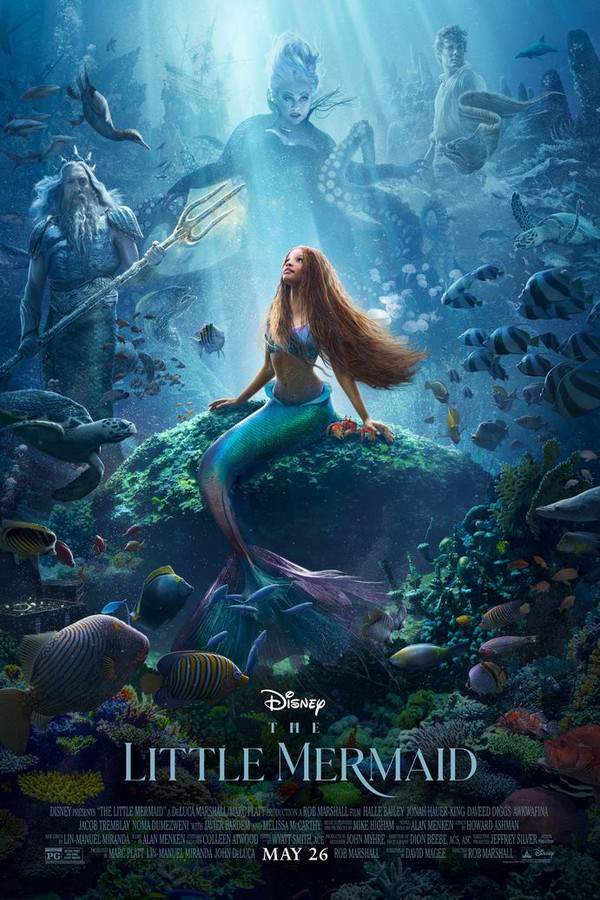
The Little Mermaid (2018) movie poster

Plot Summary

The Little Mermaid (2018) Plot Summary & Ending Explained

Release, runtime and language
2018 · 98 mins · English
Echo score 38
Loading streaming availability…
Directed by
Chris Bouchard, Blake Harris
Starring
Shirley MacLaine, Jared Sandler, Gina Gershon, William Moseley, Loreto Peralta, William Forsythe

A young reporter, Cam Harrison, is sent to a small town in Mississippi to investigate claims of a mermaid. While there, his younger sister encounters the mysterious creature, leading to an unexpected and intriguing story that blends local folklore with a remarkable discovery.

On this page (7)
  1. 1 Where to watch
  2. 2 What happens: full plot
  3. 3 Plot questions answered
  4. 4 How it ends
  5. 5 Movie threads
  6. 6 Movies like The Little Mermaid
  7. 7 Every angle
Loading streaming availability…

Full plot summary · contains spoilers

What Happens in The Little Mermaid: Full Plot Summary

The whole story of The Little Mermaid (2018) explained, from the opening scene to the final frame: every key event, every twist and what it all adds up to. Read it as a quick recap before the sequel, to check a scene you missed, or to finally understand what really happened.

Eloise, a grandmother portrayed by Shirley MacLaine, engages her two granddaughters in a captivating rendition of The Little Mermaid. In her version, a mermaid princess is deceived by a wizard who not only steals her soul but also forces her into a life far removed from her ocean home, enslaved to the wizard for eternity. When the girls express their disbelief in the story's authenticity, Eloise begins recounting a true tale of a girl she once knew who encountered a mermaid.

Enter Cam, a young reporter played by William Moseley, who finds himself in a challenging situation. He is responsible for taking care of his niece, Elle, portrayed by Loreto Peralta, who suffers from an undiagnosed condition without a cure. One day, as Elle plays outdoors, she starts coughing, and Cam swiftly carries her inside before heading off to work. At the office, his boss assigns him the task of investigating Locke, a man from a circus who claims to possess mermaid healing water. Driven by the hope that this water could cure his niece, Cam embarks on his investigation.

When Cam and Elle arrive at the circus in Mississippi, they are greeted by the sight of a mermaid trapped in a glass tank. Determined to uncover the truth, Cam interviews several individuals who have used Locke's mermaid water, only to find that none have experienced any healing from their ailments. After concluding that the supposed healing water is simply an elaborate scam to deceive those who wish to believe, Cam starts to suspect that the mermaid might be part of the ruse as well.

However, during a walk in the woods, the duo encounters the mermaid once again, who introduces herself as Elizabeth, played by Poppy Drayton, and explains that she can walk on land during low tide. Back at the circus, Cam discovers that Locke holds a vial containing Elizabeth's soul, which prevents her from escaping. Suddenly, Elizabeth is forced to leave them. Cam, undeterred, sneaks back into the circus and overhears a conversation between Locke and his henchman, Sid, played by Tom Nowicki. Following the entrancing sound of Elizabeth's singing, he attempts to find her, but is discovered by Locke and Sid, leading to a hasty exit.

Things take a turn for the worse when Locke kidnaps Elle, revealing his nefarious plan to use her, as she possesses the heart of a mermaid, for his scams. With impending danger looming, Cam is helped by Thora, a mystical fortune teller played by Shanna Collins, and Ulysses, a skilled fighter from the circus played by Chris Yong. Together, they set out to rescue Elle, reclaim Elizabeth's soul, and free her from her glass confines. Locke, who is revealed to possess magical abilities, pursues them relentlessly.

In a thrilling escape, Thora and Ulysses share their own tragic stories of how they were tricked by Locke into becoming part of his circus. Arriving at the ocean, they confront and defeat Locke and Sid, ultimately allowing Elizabeth to regain her soul. With her newfound freedom, Elizabeth performs a healing on Elle, revealing that all she needs to feel better is a swim, as she shares mermaid blood. In a bittersweet farewell, Cam and Elizabeth share a kiss before she dives into the sea, never to be seen again.

Feeling compelled to tell the truth, Cam submits his story claiming the mermaid's existence and exposing the wrongdoings of Locke's fraudulent schemes, though he wonders whether anyone will actually believe him. As Eloise concludes her tale, she suddenly begins to cough, and with a surprising revelation, states that it is time for a swim. The astonished granddaughters follow her outside, witnessing their grandmother transform into a mermaid, thus leaving them in awe of the wondrous truth.

Last updated: September 18, 2026 at 08:59

Was this helpful?

Plot questions answered

The Little Mermaid Plot Explained: Your Questions Answered

The questions people ask most about The Little Mermaid (2018): what happens in the confusing scenes, why the characters do what they do, the twists, hidden details and what the ending means. Each answer contains spoilers.

Q1

Why does Eloise transform into a mermaid at the end?

Eloise transforms into a mermaid because she is actually Elle all grown up, telling her own childhood story to her granddaughters through the framing device. Because Elle always carried the heart of a mermaid, her true nature finally reawakens and she returns to the sea right in front of her astonished family.

Foreshadowing: The opening fairy tale Eloise tells about an enslaved mermaid princess subtly mirrors her own hidden identity as a girl born with the heart of a mermaid.

  • eloise
  • elle
  • mermaid transformation
  • grandmother
  • mermaid heart
  • childhood illness
Q2

Why does Locke kidnap Elle?

Locke kidnaps Elle after discovering she was born with the heart of a mermaid, a rare trait he can exploit for his fraudulent healing business. Since his captive mermaid Elizabeth is becoming harder to control, Elle gives him a fresh and convincing new tool for his circus scams.

Foreshadowing: Cam's discovery that Locke's healing water does not actually cure anyone is what drives Locke to seek a more convincing source of real mermaid power.

  • locke
  • kidnapping
  • elle
  • mermaid heart
  • circus
  • scam
Q3

How does Locke keep Elizabeth trapped at the circus?

Locke keeps Elizabeth captive by holding her soul inside a small vial he stole from her using dark magic. As long as her soul remains in that vial, Elizabeth cannot leave the circus, transform, or resist his commands, no matter how powerful she otherwise is.

Foreshadowing: Cam's first encounter with the mermaid behind glass is later revealed to be more than a simple display, hinting at the deeper magical bondage holding her in place.

  • elizabeth
  • soul
  • vial
  • locke
  • dark magic
  • circus trap
Q4

How does swimming in the ocean cure Elle?

Elizabeth heals Elle by revealing that all she truly needs is a swim in the ocean. Because Elle carries the heart of a mermaid, the sea's magical properties, soothed through Elizabeth's shared mermaid blood, restore her in a way no conventional medicine ever could.

Foreshadowing: Elle's coughing fits and Cam's frustration with doctors foreshadow that her condition is tied to something beyond ordinary sickness.

  • elle
  • ocean
  • healing
  • mermaid blood
  • swimming
  • illness
Q5

What does "heart of a mermaid" mean?

The "heart of a mermaid" is a literal biological trait that Elle was born with, marking her as part human and part mermaid. This hidden nature is why conventional medicine cannot cure her, why Locke wants to exploit her, and why the ocean can finally restore her where doctors cannot.

Foreshadowing: The very first scene of Elle coughing in the yard already hints that her condition is tied to something supernatural rather than a normal childhood illness.

  • mermaid heart
  • elle
  • hidden nature
  • healing
  • part mermaid
Q6

Why does Cam publish a mermaid story he knows no one will believe?

Cam submits his report on Elizabeth and Locke's fraud because he feels a moral duty to expose the truth about the circus's scams. Even though he expects editors and readers to dismiss a story about a real mermaid, he believes honesty about what he witnessed matters more than protecting his professional credibility.

Foreshadowing: Cam's earlier habit of documenting his niece's condition shows he has always valued recording the truth, no matter how strange.

  • cam
  • truth
  • journalism
  • mermaid
  • exposé
  • elizabeth
Q7

How does Locke have magical powers?

Locke wields dark magic that allows him to steal souls, trap them inside vials, and magically pursue his enemies during the final chase. These abilities come from the same forbidden magic he originally used to capture Elizabeth, making him far more dangerous than an ordinary circus con artist.

Foreshadowing: Locke's calm control over Elizabeth and the superstitious rumors surrounding his circus quietly hint that his power goes beyond simple trickery.

  • locke
  • dark magic
  • soul
  • circus
  • villain powers
Q8

Who are Thora and Ulysses?

Thora and Ulysses are two members of Locke's circus who quietly resent him and join Cam's mission to rescue Elle. Like Elizabeth, they were tricked into serving Locke and see Cam's quest as their best opportunity to finally break free from the circus themselves.

Foreshadowing: Thora's hints about having her own tragic past and Ulysses's quiet defiance during Cam's earlier investigation foreshadow that not everyone in the circus is loyal to Locke.

  • thora
  • ulysses
  • circus
  • locke
  • allies
  • escape
Q9

Why does Cam initially think the mermaid is part of Locke's scam?

Cam suspects Elizabeth is fake after interviewing several people who bought Locke's healing water and saw no improvement in their conditions. Because the water is clearly fraudulent, he reasons that the mermaid in the glass tank must also be an elaborate prop designed to sell the illusion.

Foreshadowing: Cam's journalistic skepticism mirrors what the audience feels, but his eventual encounter with Elizabeth in the woods becomes the first crack in his disbelief.

  • cam
  • scam
  • mermaid
  • locke
  • healing water
  • investigation
Q10

How can Elizabeth walk on land during low tide?

Elizabeth explains that she can move on land when the tide is low because the moon's gravitational pull temporarily grants her human-like mobility. This time-sensitive ability is why she must abruptly leave Cam and Elle in the woods and why she cannot stay with them for long.

Foreshadowing: Elizabeth's sudden disappearance mid-conversation in the woods is later explained by this limited window of mobility.

  • elizabeth
  • low tide
  • walking on land
  • mermaid
  • moon
Q11

What happens to Elizabeth after she swims away?

After healing Elle and regaining her soul, Elizabeth shares a farewell kiss with Cam and dives into the ocean, never to be seen again. She chooses to return to her life beneath the sea as a free mermaid, leaving Cam with only the memory of their brief encounter.

Foreshadowing: Elizabeth's repeated mentions of the sea as her true home foreshadow that she cannot stay in the human world even after she is freed.

  • elizabeth
  • farewell
  • ocean
  • freedom
  • cam
Q12

Why does the movie open with Eloise telling a fairy tale?

Eloise opens the film with her own darker version of The Little Mermaid to frame her real story inside a familiar tale. This nested structure builds suspense and lets the audience slowly realize that her promised "true" version is even more magical than the original fairy tale.

Foreshadowing: The enslaved mermaid princess in Eloise's opening story is a quiet echo of Elizabeth's real captivity under Locke.

  • eloise
  • fairy tale
  • frame story
  • little mermaid
  • narrator

Ending explained

What Happens at the End of The Little Mermaid?

How The Little Mermaid (2018) ends, in short: the final scene, the last twist and what it means for the characters. The full ending explained, with every spoiler, lives on its own page.

Read the full ending explained

The climax of the film brings the conflict between the surface world and the ocean to a head, forcing King Triton to confront the consequences of his strict parenting. When Ariel breaks the necklace containing her voice, she inadvertently triggers a chain reaction that leads Triton to sacrifice himself to save her, taking her place as Ursula’s prisoner. This act of fatherly love strips him of his power and trident, allowing Ursula to grow into a monstrous giant who threatens both land and sea. In a significant departure from the animated classic, Ariel takes agency in the final battle; she is the one who impales Ursula with a ship's bowsprit, ending the witch's reign and restoring her father to his throne.

With Ursula defeated, the resolution centers on acceptance and the bridging of two worlds. Triton, having witnessed Ariel’s bravery and Eric’s genuine love for his daughter—rooted in their shared experiences rather than just a magical voice—realizes that his oppressive rules only drove her away. He chooses to grant her deepest wish, transforming her into a human permanently. This decision is pivotal because it signifies that Ariel's desire to be human was never solely about a romantic interest; it was about satisfying her curiosity and finding a life where she could make her own choices. Her marriage to Prince Eric is not just a personal happy ending, but a diplomatic one, uniting a fearful human kingdom with the merpeople. The film concludes with the understanding that while the two worlds have historically been divided by fear and misunderstanding, Ariel and Eric serve as the bridge, paving the way for a future where knowledge and cooperation replace prejudice.

The Little Mermaid ending explained in full

Movie threads

More Movies Like The Little Mermaid, by Mood & Story

Curated lists built around what makes The Little Mermaid tick: the same mood, the same kind of story or the same emotional payoff. Each list explains why these movies belong together.

Bittersweet fairy tale retellings like The Little Mermaid

Modern fairy tales where magical wonder meets the quiet ache of growing up. Movies like The Little Mermaid that blend modern settings with classic folklore, wrapping gentle wonder around the ache of an impossible farewell. These magical stories pair family-friendly adventure with reflective, bittersweet endings, making them perfect for viewers who love fairy tales with emotional depth and a sense of earned loss.

  • whimsical
  • fairytale
  • bittersweet
  • enchanting
  • heartfelt
  • reflective
  • Tone: whimsical, bittersweet
  • Pacing: steady, character driven
Why these movies?

The story pattern: A modern retelling opens with a framing device that signals time has passed, then drops us into a younger narrator's discovery of magic. Wonder builds through quiet, character-driven moments before a crisis forces a rescue or cure. The resolution is joyful but incomplete: a beloved figure is healed or saved, yet the central romance or friendship must end, leaving the storyteller to revisit the tale as someone shaped by what they lost.

Why they belong together: They share a tonal balance of WHIMSICAL wonder with BITTERSWEET consequence, favor STEADY pacing that lets relationships breathe, and use folklore as a vehicle for exploring illness, family, and the passage of time. The magical resolution always comes with a quiet emotional tax, which is what unifies the group.

Small-town folklore investigations like The Little Mermaid

An outsider follows the clues to a town legend no one else takes seriously. If you liked The Little Mermaid's blend of journalism and Mississippi folklore, you'll enjoy these similar magical mystery stories. Outsiders, reporters, or curious newcomers chase local legends in tight-knit towns, uncovering mythical creatures, generational secrets, and the strange line between belief and proof in family-friendly adventures.

  • folklore
  • small town
  • investigative
  • whimsical
  • mythical creature
  • discovery
  • Tone: whimsical, curious
  • Pacing: steady, investigative
Why these movies?

The story pattern: An outsider with a professional reason to be curious, often a reporter, arrives in a small town where whispered myths are treated as quaint superstition. Clues accumulate through interviews and local color, building toward a reveal that the legend is literally true. A rescue or confrontation follows, and the outsider's reporting frames the discovery for a wider world, often across generations of storytellers.

Why they belong together: They pair a WHIMSICAL tone with an investigative PLOT structure, grounding magical discoveries in journalism, eyewitness accounts, or generational storytelling. The pacing is STEADY enough to build community texture before the reveal, and MEDIUM intensity keeps the stakes human rather than catastrophic, much like The Little Mermaid's circus and Mississippi backdrop.

If you liked this

Movies Like The Little Mermaid

Similar movies to The Little Mermaid: the same genre, themes or kind of story. Each one comes with its own plot summary, timeline and ending explained.

Browse all movie summaries

Every angle

The Little Mermaid (2018) Explained: Plot, Ending, Timeline & Characters

Everything about The Little Mermaid in one place: what happens in the plot summary, the timeline in chronological order, the characters and meaning, the ending explained and a spoiler-free summary. What's After the Movie adds the cast, box office and post-credit scenes.

Coming soon on iOS and Android

The Plot Explained Movie Summary App

Plot summaries, endings explained and timelines on your phone. Catch up on any movie in minutes, save your favorites and never miss a twist again.

Be the first to know when we launch. Your email stays private, always.

Learn more about the app