





Plot Explained Spoilers guaranteed!
Plot Explained

Browse by genre

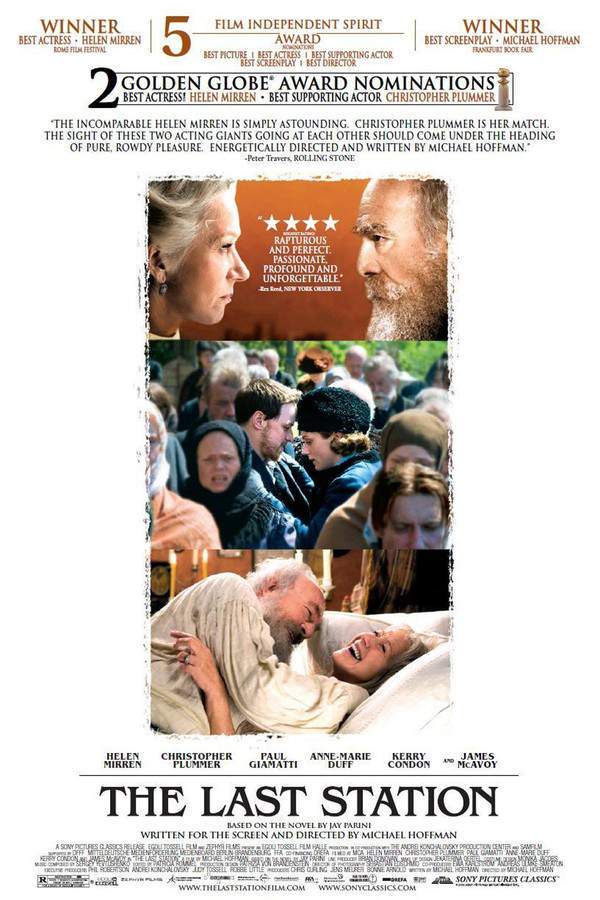
The Last Station (2009) movie poster

Characters & Themes

The Last Station (2009) Characters, Setting & Themes Explained

Release, runtime and language
2009 · 112 min · English
Directed by
Michael Hoffman
Starring
Helen Mirren, Christopher Plummer, James McAvoy
Budget
$18M

As Leo Tolstoy’s fame grows, his marriage to Countess Sofya faces turmoil when he decides to renounce his privileged status and pursue a simpler existence. Sofya struggles to safeguard her family’s future and legacy, finding herself in conflict with both her husband’s evolving beliefs and the manipulative influence of Chertkov. The film explores the complexities of their relationship and the passionate clash between Sofya's fierce determination and Tolstoy's unwavering commitment to his literary work.

On this page (9)
  1. 1 Where to watch
  2. 2 Characters explained (3)
  3. 3 Where & when it takes place
  4. 4 Themes & meaning (3)
  5. 5 Character & meaning questions
  6. 6 The book behind the movie
  7. 7 Movie threads
  8. 8 Movies like The Last Station
  9. 9 Every angle

Where to watch

Where to Watch The Last Station (2009)

Where can you watch The Last Station? Stream, rent or buy it in the US, including on Amazon Video, Apple TV Store and Fandango At Home: current JustWatch availability with up-to-date prices.

Streaming availability powered by JustWatch

3 main characters · contains spoilers

The Last Station Characters Explained: Who Is Who

The main characters of The Last Station (2009), heroes and villains: what drives them, how they change over the course of the story and what each of them reveals about the film's bigger ideas.

  • Leo Tolstoy

    Leo Tolstoy, a titan of literature, is portrayed as a complex individual torn between his spiritual beliefs and familial obligations. As he nears the end of his life, his decisions reflect profound philosophical conflicts, with his struggle for personal autonomy sharply depicted. His legacy as a writer hangs in the balance as he navigates the turmoil around him.

    • 📖 Literary Genius
    • ⚖️ Philosopher
  • Sofya Tolstaya

    played by Helen Mirren

    Sofya Tolstaya is depicted as a passionate and heartbroken woman, fiercely devoted to her husband but deeply distressed by the fallout of his philosophies on their life. Her struggle to maintain her family's legacy highlights the inner turmoil of a woman caught between love and duty. Her desperation leads to tragic consequences, revealing the vulnerability behind her strength.

    • ❤️ Devotion
    • 😢 Despair
  • Valentin Bulgakov

    played by James McAvoy

    Valentin Bulgakov, Tolstoy's secretive and devoted new secretary, serves as a bridge between the conflicting parties. He is torn between his admiration for Tolstoy and his own feelings for Masha. His character embodies the struggles of youth amid the larger ideological battles, as he seeks to navigate love while being engulfed in the drama surrounding the great writer.

    • 🧑‍💼 Mediator
    • 💞 Romantic

Last updated: October 22, 2024 at 21:42

Was this helpful?

Setting

Where and When Does The Last Station Take Place?

The setting of The Last Station (2009): the year and time period, the places and locations, and how they shape the characters, the mood and the tension of the story.

Time period

1910

The year 1910 was marked by significant social and political upheaval in Russia, paralleling the personal turmoil surrounding Tolstoy's family. This period witnessed the struggle between progressivism and conservatism, with Tolstoy himself representing the philosophical debates of his time. The events leading up to his death encapsulated the clash between artistic legacy and familial loyalty.

Location

Yasnaya Polyana, Astapovo railway station

Yasnaya Polyana is the enchanting estate where Leo Tolstoy spent much of his life, known for its picturesque landscapes and rich literary history. It served as a backdrop for spiritual and philosophical dialogues, embodying the conflicts between traditional values and modern ideologies. The Astapovo railway station becomes a crucial location, marking the final moments of Tolstoy's life and underscoring the emotional tensions between his family and followers.

  • 🏰 Estate
  • 🚂 Railway Station

Last updated: October 22, 2024 at 21:42

Was this helpful?

3 major themes

The Last Station Meaning: Themes & Message Explained

What is The Last Station (2009) really about? The emotional, social and philosophical themes the film keeps returning to, its symbolism and the message beneath the surface.

  • Legacy

    The theme of legacy is central to 'The Last Station', as various factions vie for control over Tolstoy's literary treasures. This struggle highlights the tension between the desire for public good and personal need, as Sofya fights to preserve her family's financial stability. Ultimately, it raises profound questions about what it means to truly own one's work in the face of death.

  • Love & Betrayal

    The intertwining relationships reveal themes of love and betrayal, particularly within the context of Tolstoy's marriage to Sofya. Their long, intense partnership is fraught with conflict as personal beliefs clash with emotional needs. The film explores how love can drive individuals to desperate acts, resulting in heart-wrenching consequences.

  • Artistic Freedom

    Artistic freedom arises as a key theme, illustrated through Tolstoy's yearning to write away from the pressures of his family and followers. This reflects a broader struggle for self-expression against societal expectations. The will's implications challenge the very essence of artistic integrity, questioning who has the right to dictate the narrative of a creative life.

Last updated: October 22, 2024 at 21:42

Was this helpful?

Character & theme questions

The Last Station Characters & Meaning: Your Questions Answered

The questions people ask about The Last Station (2009): who the characters really are, their relationships, what the symbols mean, where it takes place and what the movie is really about. Each answer contains spoilers.

Q1

Where is Yasnaya Polyana and why is it important to the story?

Yasnaya Polyana is the historic estate where Leo Tolstoy lived for much of his life, located in Russia. It serves as the primary setting for the film, representing both the beautiful literary legacy Tolstoy created and the traditional family life he eventually sought to abandon. The estate's picturesque landscapes provide the backdrop for the philosophical and emotional conflicts between Tolstoy and his wife Sofya.

  • Yasnaya Polyana
  • Tolstoy estate
  • Russian estate
  • setting
Q2

What is the significance of Astapovo railway station in the film?

Astapovo railway station becomes the crucial final location where Tolstoy dies. This modest setting contrasts sharply with the grandeur of Yasnaya Polyana, underscoring the simplicity Tolstoy sought in his final days. The station represents the meeting point between his family, his followers, and the end of his earthly journey.

  • Astapovo station
  • Tolstoy death
  • final moments
  • railway station
Q3

When does the story take place?

The story is set in 1910, during the final year of Tolstoy's life. This period was marked by significant social and political upheaval in Russia, providing context for the broader ideological struggles reflected in Tolstoy's personal life. The year 1910 represents a pivotal moment when Tolstoy's philosophical battles with his family and followers reached their peak.

  • 1910
  • Russian era
  • time period
  • historical context
Q4

What does the film say about legacy and who controls an artist's work?

The legacy theme centers on the struggle between various factions seeking control over Tolstoy's literary treasures after his death. Sofya fights to preserve her family's financial stability and inheritance, while Tolstoy's followers advocate for making his works publicly available. The film raises profound questions about what it means to truly own one's creative work and whether artistic legacy belongs to the family or to the public.

  • legacy
  • literary rights
  • artistic ownership
  • copyright
Q5

How does the film explore the theme of love and betrayal in Tolstoy's marriage?

The film portrays the profound tension between Tolstoy and his wife Sofya as a story of love intertwined with betrayal. Their decades-long partnership is fraught with conflict as Tolstoy's evolving spiritual beliefs clash with Sofya's need for financial security and recognition. The film shows how love can lead to desperate acts, with Sofya's desperation to protect her family's future driving her to actions that further strain their relationship.

  • love
  • betrayal
  • marriage
  • Sofya Tolstaya
  • relationship
Q6

What does the film say about artistic freedom?

Artistic freedom emerges through Tolstoy's desire to write away from the pressures of his family and devoted followers. The film explores his struggle for self-expression against societal and familial expectations. The controversy over his will, determining who controls the narrative of his creative life, questions the very essence of artistic integrity and whether creative work belongs to the artist, their family, or humanity.

  • artistic freedom
  • creative integrity
  • Tolstoy will
  • writing
Q7

Who is Leo Tolstoy in the film?

Leo Tolstoy is portrayed as a legendary literary figure grappling with profound philosophical conflicts in his final years. He is torn between his spiritual beliefs advocating simplicity and his familial obligations to his wife and children. The film depicts his struggle for personal autonomy as he navigates the demands of his family, his devoted followers, and his own conscience, ultimately choosing to leave his estate in search of a simpler existence.

  • Leo Tolstoy
  • Tolstoy
  • protagonist
  • writer
  • philosopher
Q8

Who is Sofya Tolstaya and what motivates her?

Sofya Tolstaya is Tolstoy's wife, depicted as a passionate woman fiercely devoted to her husband but deeply distressed by the impact of his philosophies on their family. Her primary motivation is safeguarding her family's future and legacy, she fears that Tolstoy's plans to renounce his copyright will leave them financially vulnerable. Her fierce determination puts her in direct conflict with both Tolstoy and his manipulative follower Chertkov.

  • Sofya Tolstaya
  • Helen Mirren
  • Tolstoy's wife
  • family protection
Q9

Who is Valentin Bulgakov and what is his role?

Valentin Bulgakov is Tolstoy's new secretary, portrayed as a young man secretly devoted to the writer's ideals while being torn between the conflicting parties. He serves as a bridge between Tolstoy's family and followers, while also navigating his own romantic feelings for Masha. Valentin's character represents the struggles of younger generations caught up in the ideological battles of their elders.

  • Valentin Bulgakov
  • James McAvoy
  • secretary
  • young follower
Q10

What is the conflict between Sofya and Chertkov about?

The central conflict pits Sofya against Vladimir Chertkov, Tolstoy's manipulative follower who advocates for the writer's progressive ideals. Chertkov seeks to influence Tolstoy's will to ensure his works enter the public domain, while Sofya fights to protect her family's inheritance and financial security. Their strategic battle creates a pervasive atmosphere of anxiety and manipulation throughout the film.

  • Chertkov
  • Sofya vs Chertkov
  • will dispute
  • family conflict
Q11

Why does Tolstoy decide to renounce his privileged status?

Tolstoy decides to renounce his privileged status and pursue a simpler existence as his spiritual beliefs evolve. He becomes increasingly committed to principles of simplicity, poverty, and universal brotherhood, which conflict with the aristocratic lifestyle he and his family enjoy. This decision creates the central tension of the film, as his desire for spiritual purity clashes with his obligations to his wife and children.

  • Tolstoy beliefs
  • simplicity
  • spiritual journey
  • renounce copyright

Movie threads

More Movies Like The Last Station, by Mood & Story

Curated lists built around what makes The Last Station tick: the same mood, the same kind of story or the same emotional payoff. Each list explains why these movies belong together.

Movies about Ideals vs Family like The Last Station

Stories where personal beliefs create profound conflicts within a marriage or family. For viewers who liked the marital conflict in The Last Station, this collection features similar movies where strong personal beliefs create intense drama within relationships. Discover other stories about philosophical ideals, power struggles, and the sacrifices made for a cause.

  • tense
  • dramatic
  • conflicted
  • passionate
  • desperate
  • reflective
  • Tone: tense, dramatic, melancholic
  • Pacing: steady, character-driven
Why these movies?

The story pattern: These narratives often follow a central figure whose unwavering commitment to an ideal—be it political, artistic, or spiritual—directly threatens their closest relationships. The story unfolds through tense dialogue and emotional confrontations, exploring the cost of conviction on personal bonds, typically leading to a bittersweet or tragic resolution.

Why they belong together: Movies are grouped here because they share a core conflict between principle and personal attachment. They feature a heavy emotional weight, a tense tone, and focus on the moral and emotional struggle of choosing between a greater cause and familial love.

Historical Legacy Dramas like The Last Station

Methodical period pieces centered on the fierce struggle to control a famous legacy. If you enjoyed The Last Station, explore more movies about famous legacies. These steady-paced historical dramas focus on the passionate conflicts surrounding a great person's work and life, often involving family, advisors, and bittersweet conclusions.

  • dramatic
  • melancholic
  • reflective
  • passionate
  • tense
  • conflicted
  • Tone: tense, bittersweet, reflective
  • Pacing: steady, methodical
Why these movies?

The story pattern: The narrative pattern revolves around a renowned, often aging figure, with various parties—family, disciples, or institutions—vying for control over their life's work. The plot builds steadily towards a pivotal event (often a death) that forces a resolution, leaving a legacy secured but personal relationships fractured.

Why they belong together: This thread groups films that share a specific setting (historical), a central theme (legacy), and a consistent pacing (steady). They offer a similar viewing experience: intellectually engaging, emotionally heavy, and focused on the consequences of fame and principle.

If you liked this

Movies Like The Last Station

Similar movies to The Last Station: the same genre, themes or kind of story. Each one comes with its own plot summary, timeline and ending explained.

Browse all movie summaries

Every angle

The Last Station (2009) Explained: Plot, Timeline & Characters

Everything about The Last Station in one place: what happens in the plot summary, the timeline in chronological order, the characters and meaning and a spoiler-free summary. What's After the Movie adds the cast, box office and post-credit scenes.

Coming soon on iOS and Android

The Plot Explained Movie Summary App

Plot summaries, endings explained and timelines on your phone. Catch up on any movie in minutes, save your favorites and never miss a twist again.

Be the first to know when we launch. Your email stays private, always.

Learn more about the app