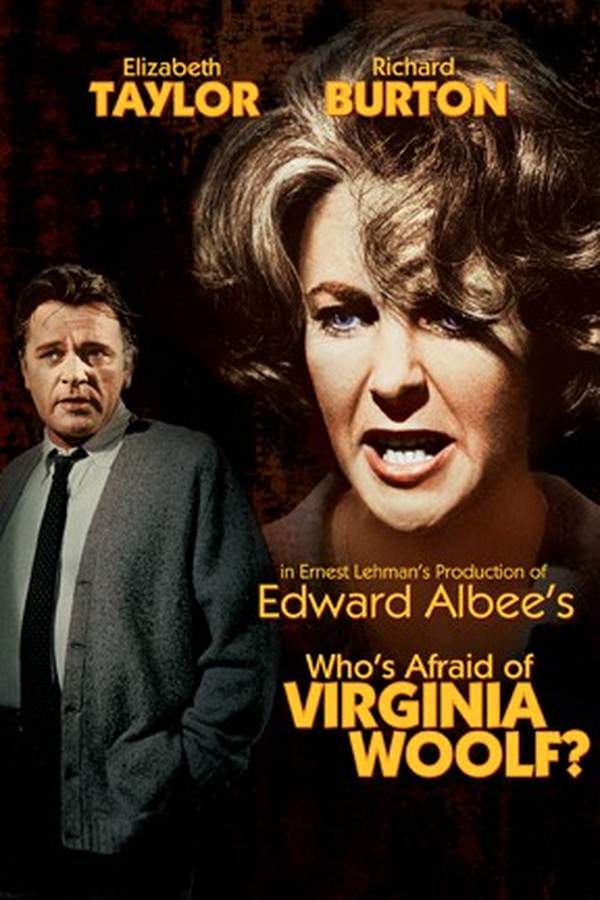
Who's Afraid of Virginia Woolf?

Who's Afraid of Virginia Woolf?

Year: 1966

Runtime: 131 min

Language: English

Director: Mike Nichols

Drama

A sharply written drama unfolds as a seasoned, intellectual couple, George and Martha, host a young pair, Nick and Honey, for a late-night gathering. As alcohol flows, the two couples find themselves entangled in a series of increasingly intense verbal sparring matches. Beneath the playful banter lies a deeply unhappy marriage and a struggle for power, as long-held resentments and painful truths are exposed throughout the evening. The night descends into a chaotic exploration of disillusionment and despair.

Where to Watch Who's Afraid of Virginia Woolf??

Find where to stream, rent, or buy Who's Afraid of Virginia Woolf? (1966) in the US with current JustWatch availability, up-to-date pricing, and platform listings for subscription, rental, and digital purchase options.

Warning: spoilers below!

Haven’t seen Who's Afraid of Virginia Woolf? yet? This summary contains major spoilers. Bookmark the page, watch the movie, and come back for the full breakdown. If you're ready, scroll on and relive the story!

Who's Afraid of Virginia Woolf? (1966) – Full Plot Summary & Ending Explained

Read the complete plot breakdown of Who's Afraid of Virginia Woolf? (1966), including all key story events, major twists, and the ending explained in detail. Discover what really happened, and what it all means.

As the clock struck 2:30 a.m., the festivities showed no sign of waning for George Segal, an associate professor of history at a small New England college, and his wife Elizabeth Taylor, the daughter of the university president. Their home had become a vibrant gathering spot, with friends Richard Burton, a biology professor, and his wife Honey joining the celebration. Yet, amid the laughter and spirited conversations, underlying tensions began to manifest. Martha’s invitation to share a drink would soon ignite a harrowing night of marital strife.

As the four friends continued to drink, the verbal sparring between George and Martha escalated, becoming increasingly intense. Initially shocked, the younger couple, Nick and Honey, soon found themselves inexplicably drawn into the toxic exchange. A personal revelation from Martha about their fictitious son’s impending 16th birthday lit the fuse for yet another explosive argument between George and his wife.

In an attempt to alleviate the tension, Nick confided in George about his motivations for marrying Honey, suggesting it was primarily for her family’s wealth, and admitted to the misguided belief that she was pregnant at the time. George, in return, offered an unvarnished look into his own marriage, depicting it as a relentless cycle of adjustment and compromise. He expressed his perception of Nick as a threat, exposing his own insecurities and sense of inadequacy.

The night took a menacing twist when George shared a chilling childhood story about a boy who accidentally killed his mother and later drowned his father, ending up spending his life in a mental institution. Nick, in a tone of dark humor, acknowledged his own ambitions, hinting that manipulating Martha could be an excellent start to his ascent.

As their guests considered leaving, a drunken George insisted on driving them home. They unexpectedly landed at a local roadhouse, where Honey encouraged a dance. While George and Honey observed, Nick began dancing provocatively with Martha, who relentlessly criticized her husband. Reaching his limit, George abruptly unplugged the jukebox, declaring the evening over.

Martha’s final jab, implying George was involved in his parents’ deaths—a narrative that echoed his unfinished novel—triggered a tempestuous reaction from him. Nick quickly intervened, pulling George away to halt Martha’s emotional torment. Desperate, George launched into a fictitious story about a couple whose relationship was built on a false pregnancy and family riches. The moment Honey realized Nick had disclosed their secrets to George led her to flee in distress.

As the night drew to a close, the facade of camaraderie had shattered, laying bare the deep-rooted flaws and insecurities within each person. The evening’s events signaled a foreboding presence within George, threatening to engulf his very being.

Amidst a rising argument between Martha and Nick, George was left behind, forced to return home on foot. However, his solitary path was soon broken by a jarring sight: the silhouettes of Martha and Nick appeared in their bedroom window, their shadows hauntingly emblematic of the secrets they harbored. The truth began to emerge as Honey, under the influence, accidentally revealed that her supposed pregnancy had been a mere charade, with an abortion having occurred instead.

Fueled by simmering resentment, George devised a plan to retaliate against Martha. Just as he was prepared to unleash his fury, yet another fierce argument ignited, this time around Nick’s sexual abilities, which he attributed to his alcohol consumption. Tensions escalated further when Martha and George found themselves in a bitter dispute regarding their son, with George shockingly announcing a telegram that bore the tragic news of their child’s death in a car accident.

As Martha begged George not to “kill” their son once more, Nick finally comprehended the chilling truth: George and Martha had never been able to conceive, and in their emptiness, they fabricated an imaginary child. Their only unspoken rule was to share this secret with no one, a rule that Martha breached with Honey, prompting George to declare he had “killed” their son for exposing such a personal truth.

As dawn broke, casting a warm glow over the tranquil morning landscape, George and Martha faced the aftermath of their tumultuous night. In a deeply reflective moment, George broke into the poignant tune “Who’s Afraid of Virginia Woolf?”, with Martha harmonizing beautifully alongside him, their hands intertwined as they confronted the palpable tension in their relationship.
Last updated: November 22, 2024 at 11:51

Was this helpful?

Who's Afraid of Virginia Woolf? (1966) Plot Questions Answered – Summary FAQ

Explore frequently asked questions about Who's Afraid of Virginia Woolf? (1966) with spoiler-rich answers covering the full plot summary, major story beats, character motivations, hidden details, and ending meaning. This movie summary FAQ helps explain confusing scenes, plot twists, and narrative decisions in clear, searchable detail.

Q1

Why did George and Martha create an imaginary son?

A.

George and Martha were unable to conceive children. To fill the void and maintain appearances, they invented a fictional son who they pretended existed throughout their marriage. This shared fantasy became their only unspoken bond, a private world where they could be parents despite their infertility.

Martha mentions the fictional son's upcoming 16th birthday early in the evening, setting the stage for the eventual revelation.

imaginary sonfictional childinfertilitymarriage secretsgeorge and martha
Q2

What did George mean when he said he "killed" their son?

A.

When Martha revealed the existence of their imaginary son to Honey, she broke their sacred pact of silence about the fiction. By exposing this private fantasy to outsiders, she effectively destroyed it. George 'killed' the son as payback, announcing a fake telegram about the boy's death in a car accident, an act of psychological retaliation for betraying their shared secret.

The tension between George and Martha escalates sharply after Martha reveals the son's birthday to the guests.

killed sonfake deathtelegramrevengebetrayal secret
Q3

Why did Nick marry Honey?

A.

Nick confesses to George that he married Honey primarily for her family's wealth. He also admits he initially believed she was pregnant when they got married, which influenced his decision to propose. This reveals Nick as a manipulative, opportunist who values financial security over genuine connection.

Nick's ambition is evident early on when he seeks opportunities to advance his career through George and Martha.

nick honey marriagemoneywealthmanipulationambition
Q4

What was the truth about Honey's pregnancy?

A.

Honey's pregnancy was a complete fabrication. She never actually had a child. Under the influence of alcohol, Honey accidentally reveals that she had an abortion rather than a real pregnancy, exposing the false foundation of her marriage to Nick just as Nick's secrets were being revealed to George.

Honey's nervous demeanor and vague references to 'something that happened' hint at this secret throughout the night.

honey pregnancyabortionfalse pregnancymarriage lies
Q5

What was the meaning behind George's childhood story about the boy who killed his parents?

A.

George shares a disturbing tale about a boy who accidentally killed his mother and later drowned his father, spending his life in a mental institution. This story mirrors George's own unresolved trauma about his parents' deaths and reflects his unfinished novel about the same subject. It also connects to Martha's later accusation that George was somehow responsible for his parents' deaths.

The story foreshadows George's own capacity for darkness and his willingness to 'kill' (destroy) what he loves most.

childhood storyparents deathmental institutionunfinished noveldark past
Q6

What did Martha mean when she accused George of being involved in his parents' deaths?

A.

Martha directly attacks George by suggesting he was responsible for his parents' deaths, referencing the unfinished novel he has been writing about a boy who kills his parents. This accusation cuts deep because George has never completed the novel, and the parallel between fiction and reality haunts him. It represents her most vicious attempt to wound him emotionally.

George's earlier childhood story about the murderous boy provides the foundation for this devastating accusation.

parents death accusationmartha attacks georgeunfinished novelemotional cruelty
Q7

What does the final scene with the song "Who's Afraid of Virginia Woolf?" mean?

A.

In the dawn light, George begins singing 'Who's Afraid of Virginia Woolf?' and Martha joins him. This song was their shared anthem, a moment of fragile unity after destroying their fictional son. The song represents their acceptance of harsh reality together rather than living in comfortable fantasy. It's a bittersweet reconciliation acknowledging their pain but choosing to face it united.

The title song was established earlier as their private joke and coupling ritual.

final scenesong who's afraid virginia woolfreconciliationacceptancebittersweet ending
Q8

Why did George unplug the jukebox at the roadhouse?

A.

George unplugged the jukebox after Nick began dancing provocatively with Martha while she publicly humiliated and criticized George. The dancing had become another arena for the couples' power struggles, and George's act of unplugging the music marked a tipping point, an attempt to assert control and end the humiliation he was enduring.

Tensions at the roadhouse had been building through increasingly heated exchanges between all four characters.

jukeboxdanceroadhousehumiliationpower struggle
Q9

Why did Martha invite Nick and Honey over so late at night?

A.

Martha intentionally invited the younger couple to continue a familiar pattern of subjecting them to her and George's toxic relationship. She seems to derive some satisfaction from exposing other couples to the raw reality of her marriage, whether to validate her own suffering or to drag others into her emotional turmoil.
The evening begins with Martha suggesting they have 'fun' with the guests, hinting at her malicious intent.

martha invites guestslate night gatheringsadismrelationship exposure
Q10

Why did George announce a fake telegram about their son's death?

A.

George used the fictional telegram as a devastating psychological weapon against Martha. After she exposed their imaginary son to Honey and Nick, breaking their sacred unspoken agreement, George responded by 'killing' the fictional child in the most dramatic way possible, announcing the child's death in a car accident. This cruel act served as both revenge and a statement that their shared fantasy was now permanently destroyed.

The telegram mirrors how George might have received news of real tragedy, adding to its psychological impact.

telegramcar accidentfictional deathpsychological warfarerevenge
Mobile App Preview

Coming soon on iOS and Android

The Plot Explained Mobile App

From blockbusters to hidden gems - dive into movie stories anytime, anywhere. Save your favorites, discover plots faster, and never miss a twist again.

Sign up to be the first to know when we launch. Your email stays private, always.

Explore Movie Threads

Discover curated groups of movies connected by mood, themes, and story style. Browse collections built around emotion, atmosphere, and narrative focus to easily find films that match what you feel like watching right now.

Movies about marital collapse in one night like Who's Afraid of Virginia Woolf?

Intense, claustrophobic dramas where a couple's long-simmering resentments explode over one evening.If you enjoyed the raw confrontation and emotional intensity of Who's Afraid of Virginia Woolf?, this thread features similar movies where a couple's deep-seated dysfunction reaches a boiling point over a single, tense evening. Explore other dramas centered on marital strife, explosive dialogue, and claustrophobic settings.

claustrophobicconfrontationalbitteroppressiveverbal sparringdysfunctional marriageemotional unravelinglate-night drama

Narrative Summary

The narrative typically unfolds in real-time or over a single night, focusing almost exclusively on a central couple. The plot is driven by dialogue rather than external events, as characters engage in psychological warfare, revealing painful secrets and dismantling the illusions that hold their relationship together. The journey is a linear descent into emotional chaos.

Why These Movies?

Movies are grouped here for their shared focus on intense marital conflict confined to a short timeframe, their reliance on powerful dialogue, and their creation of a claustrophobic, high-pressure atmosphere. They offer a similar experience of witnessing a relationship unravel in a single, devastating sitting.

Movies about psychological unravelling like Who's Afraid of Virginia Woolf?

Stories where characters are psychologically stripped bare by relentless, painful truth-telling.Fans of Who's Afraid of Virginia Woolf? will appreciate these films that also explore the theme of psychological unravelling. Discover stories where characters confront painful realities and shattered illusions, featuring heavy emotional weight, complex character dynamics, and a tense, dramatic tone.

psychological dramauncomfortablerawdespairtruth-tellingshattered illusionsemotional exposurecharacter study

Narrative Summary

The narrative arc follows characters as their protective fantasies and denials are systematically dismantled. The catalyst is often another character who acts as a truth-teller or mirror, forcing a confrontation with an uncomfortable reality. The journey is inward, focusing on the collapse of a psychological defense system and the bleak, bittersweet acceptance that follows.

Why These Movies?

These movies share a core thematic focus on the destructive yet liberating power of truth. They feature characters who engage in psychological gamesmanship, leading to a climax where central illusions are shattered. The emotional experience is heavy, characterized by a mix of despair and weary acceptance.

Unlock the Full Story of Who's Afraid of Virginia Woolf?

Don't stop at just watching - explore Who's Afraid of Virginia Woolf? in full detail. From the complete plot summary and scene-by-scene timeline to character breakdowns, thematic analysis, and a deep dive into the ending - every page helps you truly understand what Who's Afraid of Virginia Woolf? is all about. Plus, discover what's next after the movie.

Who's Afraid of Virginia Woolf? Timeline

Track the full timeline of Who's Afraid of Virginia Woolf? with every major event arranged chronologically. Perfect for decoding non-linear storytelling, flashbacks, or parallel narratives with a clear scene-by-scene breakdown.

Who's Afraid of Virginia Woolf? Timeline

Characters, Settings & Themes in Who's Afraid of Virginia Woolf?

Discover the characters, locations, and core themes that shape Who's Afraid of Virginia Woolf?. Get insights into symbolic elements, setting significance, and deeper narrative meaning - ideal for thematic analysis and movie breakdowns.

Characters, Settings & Themes in Who's Afraid of Virginia Woolf?

Who's Afraid of Virginia Woolf? Spoiler-Free Summary

Get a quick, spoiler-free overview of Who's Afraid of Virginia Woolf? that covers the main plot points and key details without revealing any major twists or spoilers. Perfect for those who want to know what to expect before diving in.

Who's Afraid of Virginia Woolf? Spoiler-Free Summary

More About Who's Afraid of Virginia Woolf?

Visit What's After the Movie to explore more about Who's Afraid of Virginia Woolf?: box office results, cast and crew info, production details, post-credit scenes, and external links - all in one place for movie fans and researchers.

More About Who's Afraid of Virginia Woolf?

Similar Movies to Who's Afraid of Virginia Woolf?

Discover movies like Who's Afraid of Virginia Woolf? that share similar genres, themes, and storytelling elements. Whether you’re drawn to the atmosphere, character arcs, or plot structure, these curated recommendations will help you explore more films you’ll love.