





Plot Explained Spoilers guaranteed!
Plot Explained

Browse by genre

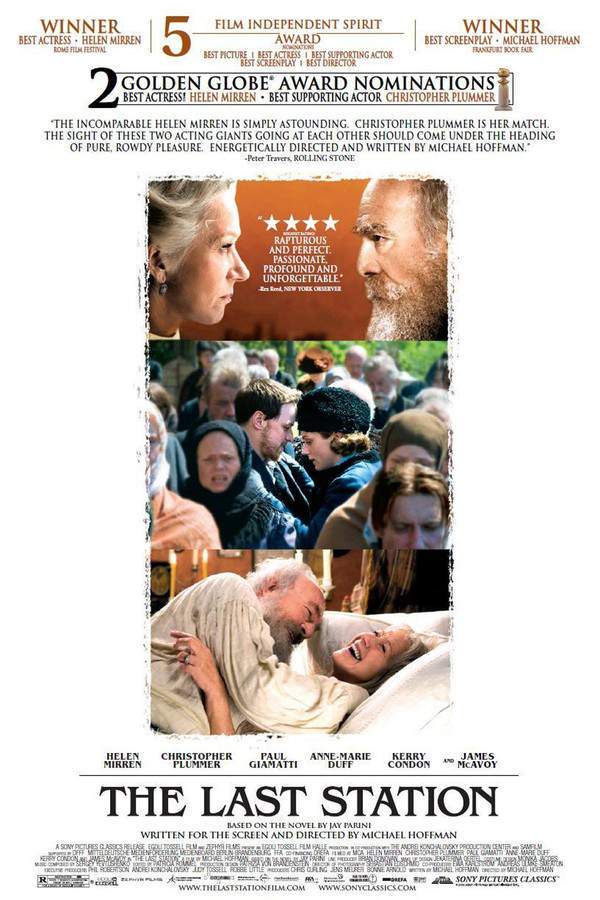
The Last Station (2009) movie poster

Timeline

The Last Station (2009) Timeline Explained – Every Event in Order

Release, runtime and language
2009 · 112 min · English
Directed by
Michael Hoffman
Starring
Helen Mirren, Christopher Plummer, James McAvoy
Budget
$18M

As Leo Tolstoy’s fame grows, his marriage to Countess Sofya faces turmoil when he decides to renounce his privileged status and pursue a simpler existence. Sofya struggles to safeguard her family’s future and legacy, finding herself in conflict with both her husband’s evolving beliefs and the manipulative influence of Chertkov. The film explores the complexities of their relationship and the passionate clash between Sofya's fierce determination and Tolstoy's unwavering commitment to his literary work.

On this page (7)
  1. 1 Where to watch
  2. 2 Events in order (14)
  3. 3 Timeline questions answered
  4. 4 The book behind the movie
  5. 5 Movie threads
  6. 6 Movies like The Last Station
  7. 7 Every angle

Where to watch

Where to Watch The Last Station (2009)

Where can you watch The Last Station? Stream, rent or buy it in the US, including on Amazon Video, Apple TV Store and Fandango At Home: current JustWatch availability with up-to-date prices.

Streaming availability powered by JustWatch

14 events in order · contains spoilers

The Last Station Timeline: Events in Chronological Order

Every key event of The Last Station (2009) in order, scene by scene, with when and where it takes place. Use it to untangle flashbacks, time jumps and parallel storylines, to refresh your memory before the sequel or to find the exact scene you are thinking of.

  1. Tolstoy in 1910

    The year is 1910, marking the final phase of Leo Tolstoy's life. His health is declining, and the tension surrounding his literary legacy begins to escalate between his supporters and his wife.

    When
    1910
    Where
    Tolstoy estate, Yasnaya Polyana
  2. Disciples vs. Sofya

    Tolstoy's loyal disciples, led by Vladimir Chertkov, engage in a strategic battle against his wife, Sofya. This conflict centers around the control of Tolstoy's literary works as they negotiate what will happen after his passing.

    When
    1910
    Where
    Tolstoy estate, Yasnaya Polyana
  3. Proposed Will

    A crucial element of the struggle revolves around a proposed will that Tolstoy is asked to sign. This document would relinquish all his copyrights to the public domain, threatening the financial security of his family.

  4. Valentin Bulgakov's Role

    Valentin Bulgakov, Tolstoy's new secretary, becomes a central character in the unfolding conflict. He is positioned as a mediator between the opposing factions, trying to balance the demands of both Tolstoy's followers and his wife.

    Where
    Tolstoy estate, Yasnaya Polyana
  5. Romance with Masha

    Amidst the strife, Bulgakov develops a romantic relationship with Masha, one of the Tolstoyans. This relationship adds a personal layer to the already complex dynamics at play.

    Where
    Tolstoy estate, Yasnaya Polyana
  6. Tolstoy's Decision

    Ultimately, Tolstoy agrees to sign the contentious will, a decision that sends shockwaves through his family and supporters. This act highlights his commitment to his spiritual philosophies and the impact of his choices on his loved ones.

  7. Journey for Solitude

    After signing the will, Tolstoy embarks on a journey to a secretive location, seeking solitude for his writing. This trip indicates his desire to escape the pressures of his domestic life and focus on his work.

  8. Sofya's Despair

    In the aftermath of Tolstoy's departure, Sofya falls into a deep state of despair. Overwhelmed with grief and frustration, she contemplates a desperate act of suicide, illustrating her emotional turmoil.

    Where
    Tolstoy estate, Yasnaya Polyana
  9. Tolstoy's Declining Health

    While on the road to his secluded destination, Tolstoy's health continues to decline steadily. This deterioration raises concerns for both his disciples and his family about his well-being and potential mortality.

    Where
    On the road
  10. Final Moments at Astapovo

    The film reaches a climax at the Astapovo railway station, where Sofya gets a fleeting chance to see Tolstoy in his final moments. This poignant reunion encapsulates the tension and love that permeated their relationship.

    Where
    Astapovo railway station
  11. Sofya's Legacy Restored

    By 1914, the Russian Senate restores the copyrights of Tolstoy's works to Sofya. This decision cements her role as the protector of his literary legacy, contrary to the intentions of his disciples.

    When
    1914
  12. Tolstoy's Final Words

    Tolstoy's recognition of his imminent death is captured with the haunting line, 'I know that I'm going to die.' This acknowledgment signifies the end of an era and the culmination of his life's work.

    Where
    Astapovo railway station
  13. Impact on followers

    The outcome of the battle over Tolstoy’s legacy profoundly impacts both his disciples and family. The emotional repercussions of his decisions and the public domain status of his works linger long after his passing.

  14. Tension in Relationships

    The intricate power dynamics and personal relationships explored during this time highlight the intersection of art, legacy, and personal conflicts. Tolstoy’s relationships ultimately shape the narrative of his life and works.

Last updated: November 15, 2024 at 20:06

Was this helpful?

Timeline questions answered

The Last Station Timeline Explained: Your Questions Answered

When does it happen, and why in that order? The questions people ask about the chronology of The Last Station (2009): time jumps, flashbacks, cause and effect between scenes and the correct order of events, each answered with spoilers.

Q2

Why was Sofya so strongly against the will?

Sofya opposed the will because she feared it would leave her family without financial security. After decades of marriage and managing the household, she would be left with nothing if the copyrights were released to the public domain. She saw the will as a betrayal of the family she had supported throughout Tolstoy's literary career and worried about how they would survive financially after his death.

Foreshadowing: The film establishes early on that Sofya is aristocratic and values traditional security, contrasting with Tolstoy's evolving beliefs.

  • sofya
  • family security
  • financial support
  • copyright
  • opposition
Q3

Who was Vladimir Chertkov and what was his role in the conflict?

Vladimir Chertkov was the leader of Tolstoy's disciples who fiercely advocated for the public domain will. He was manipulative and strategically worked to control Tolstoy's legacy by pushing him to sign the document. Chertkov represented the Tolstoyan faction that wanted to ensure Tolstoy's works would be freely available, but his methods were calculating and he actively worked to undermine Sofya's influence over Tolstoy.

Foreshadowing: Chertkov is introduced as a charismatic figure who clearly has Tolstoy's ear, creating immediate tension with Sofya.

  • vladimir chertkov
  • disciples
  • tolstoyans
  • manipulation
  • control
Q4

Who was Valentin Bulgakov and why was he important?

Valentin Bulgakov was Tolstoy's newly appointed secretary who became central to the unfolding conflict. Positioned as a mediator between the opposing factions, he tried to balance the demands of Tolstoy's followers and his wife. His perspective serves as the audience's window into the struggle, and his personal involvement with Masha, one of the Tolstoyans, added further complexity to his already difficult position.

Foreshadowing: Bulgakov's appointment as secretary is presented as a turning point that intensifies the existing tensions.

  • valentin bulgakov
  • secretary
  • mediator
  • perspective
Q5

Why did Sofya attempt suicide after Tolstoy left?

Sofya attempted suicide because she was overwhelmed with despair after Tolstoy departed to pursue his writing in solitude. The combination of feeling betrayed by the will, losing her husband's presence, and fearing for her family's future proved too much to bear. Her desperate act was a manifestation of the emotional turmoil and sense of abandonment she experienced during this period.

Foreshadowing: Earlier scenes show Sofya's increasing desperation and emotional instability as she sees control slipping away.

  • sofya
  • suicide
  • despair
  • abandonment
  • emotional breakdown
Q6

What happened at Astapovo railway station?

Astapovo railway station became the site of Tolstoy's final moments. While traveling to a secretive location for solitude, his health deteriorated severely. Sofya was brought there and granted a fleeting chance to see him one last time. The poignant reunion encapsulated the tension and love that had defined their decades-long relationship, with Tolstoy acknowledging his imminent death before passing away.

Foreshadowing: The journey for solitude was foreshadowed as Tolstoy's health was already declining throughout the film.

  • astapovo
  • railway station
  • final moments
  • tolstoy death
  • reunion
Q7

Why did the Russian Senate restore the copyrights to Sofya in 1914?

In 1914, the Russian Senate restored the copyrights of Tolstoy's works to Sofya, effectively overturning the will he had signed. This legal decision cemented her role as the protector of his literary legacy, contrary to what the Tolstoyans had intended. The outcome was bittersweet, it was a victory for Sofya but came after Tolstoy's death, meaning she secured the legacy but lost her husband.

Foreshadowing: The battle over the will directly led to this legal dispute that continued after Tolstoy's passing.

  • russian senate
  • copyrights restored
  • 1914
  • legacy
  • legal decision
Q8

Why did Tolstoy leave his estate at Yasnaya Polyana?

Tolstoy left his estate seeking solitude so he could pursue his writing away from the domestic conflicts and pressures surrounding him. The constant battle between his wife and his disciples over his legacy had become unbearable. His departure represented his attempt to escape the manipulation and find peace to focus on his work in his final days, though the journey ultimately led to his death.

Foreshadowing: Throughout the film, Tolstoy expresses growing frustration with the constant conflict and desire for a simpler life.

  • departure
  • solitude
  • yasnaya polyana
  • escape
  • writing
Q9

What was the purpose of Masha's relationship with Valentin Bulgakov?

Masha was one of the Tolstoyan disciples who became romantically involved with Valentin Bulgakov. This relationship added a personal emotional layer to the otherwise political conflict, showing how personal connections transcended the ideological battle lines. For Valentin, it created an internal conflict between his role as mediator and his growing personal attachment to someone on the Tolstoyan side.

Foreshadowing: The romance develops gradually amidst the backdrop of the central conflict, adding complexity to Valentin's position.

  • masha
  • valentin bulgakov
  • romance
  • tolstoyans
  • relationship
Q10

What was the central conflict between Tolstoy and Sofya about?

The central conflict was fundamentally about values and legacy. Tolstoy's spiritual evolution led him to reject material possessions and aristocratic privileges, believing his works should benefit the public. Sofya, coming from a traditional aristocratic background, focused on practical concerns, family security and maintaining their way of life. The will became the focal point for this deeper philosophical and personal struggle between his ideals and her need for practical security.

Foreshadowing: The film establishes their differing worldviews from the opening scenes, making the conflict inevitable.

  • conflict
  • values
  • legacy
  • philosophy
  • family security

Movie threads

More Movies Like The Last Station, by Mood & Story

Curated lists built around what makes The Last Station tick: the same mood, the same kind of story or the same emotional payoff. Each list explains why these movies belong together.

Movies about Ideals vs Family like The Last Station

Stories where personal beliefs create profound conflicts within a marriage or family. For viewers who liked the marital conflict in The Last Station, this collection features similar movies where strong personal beliefs create intense drama within relationships. Discover other stories about philosophical ideals, power struggles, and the sacrifices made for a cause.

  • tense
  • dramatic
  • conflicted
  • passionate
  • desperate
  • reflective
  • Tone: tense, dramatic, melancholic
  • Pacing: steady, character-driven
Why these movies?

The story pattern: These narratives often follow a central figure whose unwavering commitment to an ideal—be it political, artistic, or spiritual—directly threatens their closest relationships. The story unfolds through tense dialogue and emotional confrontations, exploring the cost of conviction on personal bonds, typically leading to a bittersweet or tragic resolution.

Why they belong together: Movies are grouped here because they share a core conflict between principle and personal attachment. They feature a heavy emotional weight, a tense tone, and focus on the moral and emotional struggle of choosing between a greater cause and familial love.

Historical Legacy Dramas like The Last Station

Methodical period pieces centered on the fierce struggle to control a famous legacy. If you enjoyed The Last Station, explore more movies about famous legacies. These steady-paced historical dramas focus on the passionate conflicts surrounding a great person's work and life, often involving family, advisors, and bittersweet conclusions.

  • dramatic
  • melancholic
  • reflective
  • passionate
  • tense
  • conflicted
  • Tone: tense, bittersweet, reflective
  • Pacing: steady, methodical
Why these movies?

The story pattern: The narrative pattern revolves around a renowned, often aging figure, with various parties—family, disciples, or institutions—vying for control over their life's work. The plot builds steadily towards a pivotal event (often a death) that forces a resolution, leaving a legacy secured but personal relationships fractured.

Why they belong together: This thread groups films that share a specific setting (historical), a central theme (legacy), and a consistent pacing (steady). They offer a similar viewing experience: intellectually engaging, emotionally heavy, and focused on the consequences of fame and principle.

If you liked this

Movies Like The Last Station

Similar movies to The Last Station: the same genre, themes or kind of story. Each one comes with its own plot summary, timeline and ending explained.

Browse all movie summaries

Every angle

The Last Station (2009) Explained: Plot, Timeline & Characters

Everything about The Last Station in one place: what happens in the plot summary, the timeline in chronological order, the characters and meaning and a spoiler-free summary. What's After the Movie adds the cast, box office and post-credit scenes.

Coming soon on iOS and Android

The Plot Explained Movie Summary App

Plot summaries, endings explained and timelines on your phone. Catch up on any movie in minutes, save your favorites and never miss a twist again.

Be the first to know when we launch. Your email stays private, always.

Learn more about the app