







Plot Explained Spoilers guaranteed!
Plot Explained

Browse by genre

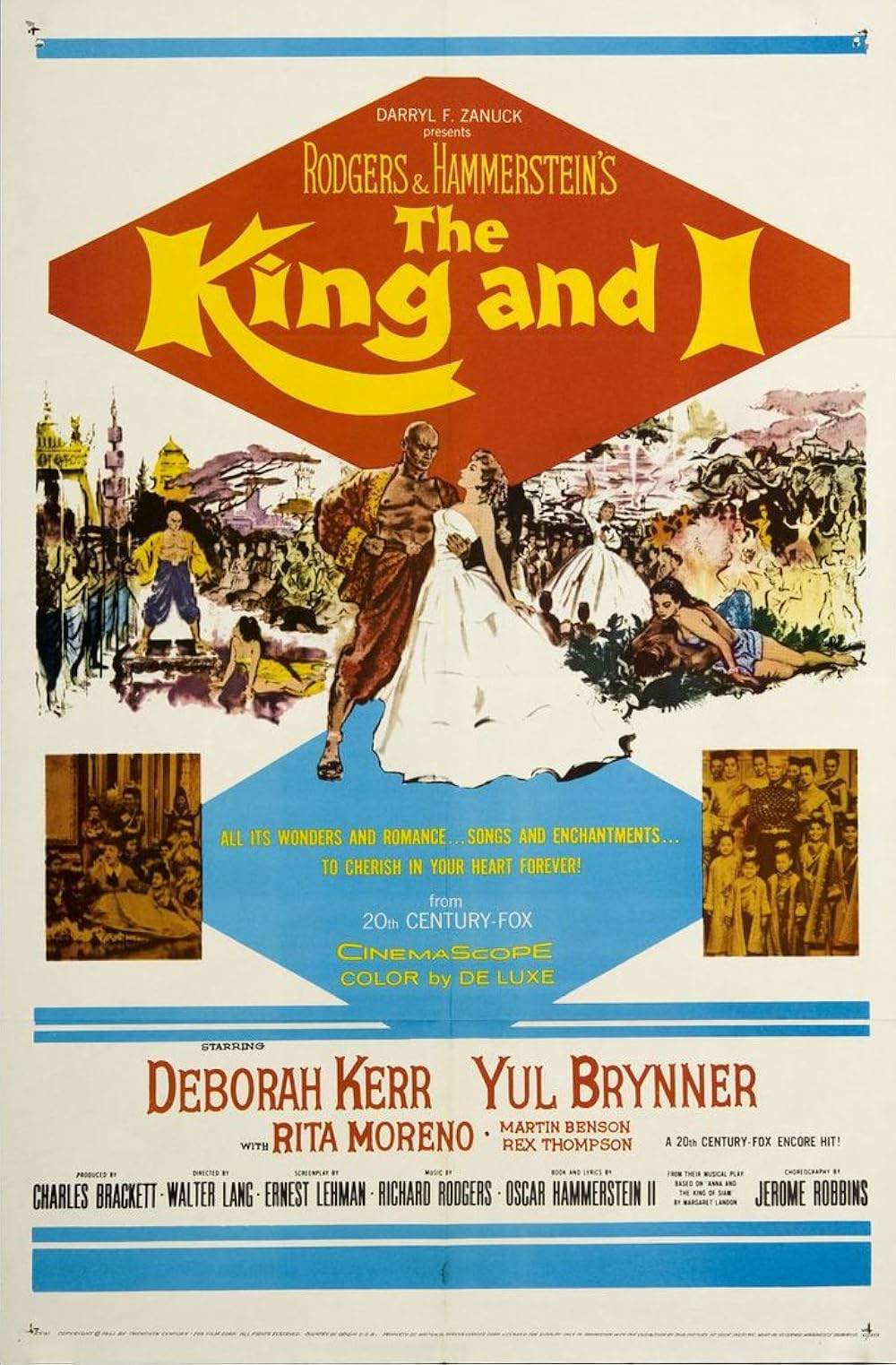
The King and I (1956) movie poster

Timeline

The King and I (1956) Timeline Explained – Every Event in Order

Release, runtime and language
1956 · 133 min
JustWatch #31,639 1
Directed by
Walter Lang
Starring
Rita Moreno, Deborah Kerr, Yul Brynner, Alan Mowbray, Martin Benson, Carlos Rivas

In 1860s Siam, the widowed British governess Anna Leonowens arrives to teach the King’s children. She finds herself navigating complex cultural differences and a clash of wills with the traditional and often stubborn King Mongkut. As she imparts English language and customs to the royal family, she also prepares for a significant reception for European diplomats, hoping to reshape perceptions of the kingdom and its enigmatic ruler.

On this page (7)
  1. 1 Where to watch
  2. 2 Events in order (15)
  3. 3 Timeline questions answered
  4. 4 The book behind the movie
  5. 5 Movie threads
  6. 6 Movies like The King and I
  7. 7 Every angle

Where to watch

Where to Watch The King and I (1956)

Where can you watch The King and I? Stream, rent or buy it in the US, including on BroadwayHD, Amazon Video and Apple TV Store: current JustWatch availability with up-to-date prices.

Streaming availability powered by JustWatch

15 events in order · contains spoilers

The King and I Timeline: Events in Chronological Order

Every key event of The King and I (1956) in order, scene by scene, with when and where it takes place. Use it to untangle flashbacks, time jumps and parallel storylines, to refresh your memory before the sequel or to find the exact scene you are thinking of.

  1. Arrival in Bangkok

    Anna Leonowens, a widowed schoolteacher, arrives in Bangkok from Wales with her young son, Louis. They are greeted by the intimidating Kralahome, who escorts them to the Royal Palace, against Anna's contract terms.

    Where
    Bangkok
  2. Introduction to King Mongkut

    Inside the Royal Palace, Anna meets King Mongkut, who ignores her objections and introduces her to his numerous wives and fifteen children. This marks the beginning of her role as tutor to the King's children.

    Where
    Royal Palace, Bangkok
  3. Tuptim's Discovery

    While unpacking, Anna discovers an old photograph of her late husband, prompting the King's wives to deride Tuptim, who is secretly in love with Lun Tha. This reveals the complex personal dynamics in the palace.

    Where
    Royal Palace, Bangkok
  4. Lessons in Chaos

    Anna attempts to teach the children about home life, but chaos ensues when they refuse to believe in snow, having never seen it. King Mongkut enters amid the disorder, sparking a conversation about cultural differences.

    Where
    Schoolroom, Royal Palace
  5. The King's Private Chamber

    In a private meeting, King Mongkut shares his thoughts on the creation of the world and compels Anna to write a letter to President Abraham Lincoln. His disregard for her advice on elephants suggests a struggle for understanding between cultures.

    Where
    King's private chamber
  6. Lun Tha's Request

    Anna encounters Lun Tha, who requests her help arranging a meeting with Tuptim. Despite her initial reluctance, memories of her past lead Anna to eventually agree to facilitate their secret rendezvous.

    Where
    Outside the Royal Palace
  7. British Imperialism Concerns

    King Mongkut grows worried about British imperialism encroaching on Siam and erupts into the schoolroom, upset by the children's song 'Home Sweet Home.' Anna stands firm against him, declaring her intention to leave.

    Where
    Schoolroom, Royal Palace
  8. Banquet Preparations

    Lady Thiang convinces Anna to assist the King in preparing for an upcoming envoy from Britain, ultimately leading to a banquet where the King hopes to portray Siam in a favorable light. Anna’s influence grows as she persuades the King about European customs.

    Where
    Royal Palace, Bangkok
  9. Tuptim's Ballet Performance

    During the banquet, Tuptim presents a version of Uncle Tom's Cabin as a Siamese ballet, igniting tension as it addresses issues of slavery. The King and Kralahome react unfavorably to the sensitive themes, illustrating the cultural rift.

    Where
    Banquet Hall, Royal Palace
  10. Tuptim's Disappearance

    After the banquet, Anna has a meaningful conversation with the King, but their moment is shattered when it is revealed that Tuptim has run away with Lun Tha. The King’s ensuing actions show his struggle with personal and cultural loyalty.

    Where
    Royal Palace
  11. Confrontation Over Tuptim

    As Tuptim’s fate hangs in the balance, Anna confronts the King about his intentions to punish her. This heated exchange highlights the conflict between their differing views on honor and love within their respective cultures.

    Where
    Royal Palace
  12. The King's Decline

    Devastated by the turn of events, King Mongkut isolates himself, refusing to eat. Anna learns from Lady Thiang about the King's emotional turmoil and glimmers of regret, prompting her to reconsider her departure.

    Where
    Royal Palace
  13. Final Farewell

    In a poignant moment before her departure, Anna visits the dying King. He expresses his gratitude and insists she wear his ring as a symbol of their bond, encouraging her and Louis to stay in Bangkok.

    Where
    Royal Palace, King's bedside
  14. Passing of the King's Title

    After King Mongkut's death, Prince Chulalongkorn takes his place, issuing a proclamation that aims to abolish slavery in Siam. This significant moment marks the transition of power and represents hope for change.

    Where
    Royal Palace
  15. Heartfelt Mourning

    As King Mongkut quietly passes, only a few, including Anna and the Kralahome, recognize the loss. Their shared sorrow reflects the impact the King had on their lives, leaving an indelible mark on Anna’s journey.

    Where
    Royal Palace

Last updated: January 19, 2025 at 18:49

Was this helpful?

Timeline questions answered

The King and I Timeline Explained: Your Questions Answered

When does it happen, and why in that order? The questions people ask about the chronology of The King and I (1956): time jumps, flashbacks, cause and effect between scenes and the correct order of events, each answered with spoilers.

Q1

Why does Anna agree to stay at the palace after the Kralahome breaks her contract?

Anna agrees to stay because the King offers her an overwhelming teaching responsibility, fifteen royal children plus sixty-seven additional students. Though initially reluctant to accept the breach of contract, she recognizes the opportunity to influence the children and ultimately decides the position is worth accepting despite the broken agreement.

  • anna leonowens
  • contract
  • king mongkut
  • teaching position
  • palace
Q2

What happens to Tuptim and Lun Tha after they run away together?

Tuptim and Lun Tha are captured after their escape during the banquet. Lun Tha's fate is sealed, he is killed. Tuptim is led away in tears upon learning of his death, and the King prepares to punish her for the forbidden romance.

  • tuptim
  • lun tha
  • forbidden love
  • capture
  • punishment
Q3

Why does King Mongkut want to send elephants to President Lincoln?

King Mongkut believes sending male elephants to America would help President Lincoln with the Civil War effort. He shares this idea with Anna during a private meeting where he also reveals his unconventional belief that the world was created over centuries rather than six days. The offer reflects his desire to appear modern and aligned with Western powers.

  • elephants
  • abraham lincoln
  • civil war
  • king mongkut
  • diplomacy
Q4

Why does the King react negatively to Tuptim's Uncle Tom's Cabin ballet?

The King and Kralahome react unfavorably because the ballet portrays a slaveholding king who dies tragically by drowning. Though the performance addresses slavery, a sensitive topic in Siam, the ending, where the oppressive ruler meets a watery doom, is seen as inappropriate and fails to earn the King's approval despite its artistic merit.

  • tuptim
  • uncle tom's cabin
  • ballet
  • slavery
  • banquet
  • king's reaction
Q5

Why does King Mongkut become sick after the banquet?

King Mongkut becomes gravely ill after isolating himself in the aftermath of the banquet. The combination of Tuptim's disappearance with Lun Tha, Anna's confrontation about his lack of compassion, and the emotional toll of the evening's events causes him to stop eating and withdraw from everyone. Lady Thiang explains his emotional turmoil and regret to Anna.

  • king mongkut
  • illness
  • banquet
  • emotional breakdown
  • isolation
Q6

Why does Prince Chulalongkorn abolish slavery after becoming king?

Prince Chulalongkorn abolishes slavery and declares that no subject shall bow before him after taking the throne. This decree fulfills the thematic arc of the film, progress born from struggle. The King's dying wish entrusts the kingdom to his son, and Chulalongkorn's proclamation represents the modernization and enlightenment the King had been working toward throughout his reign.

  • prince chulalongkorn
  • slavery
  • abolition
  • succession
  • proclamation
Q7

Why does Anna decide to stay in Siam at the end of the movie?

Anna decides to stay after receiving an unfinished letter from the dying King expressing his profound appreciation for her unwavering honesty. Moved by his gratitude and the gift of his ring as a symbol of truth, Anna rushes to his side and chooses to remain in Bangkok rather than sail back to Britain.

  • anna leonowens
  • stay in siam
  • king's letter
  • ring
  • decision to stay
Q8

What causes the main conflict between Anna and King Mongkut?

The conflict stems from clashing views on protocol, truth, and cultural values. Anna refuses to accept the King's demand that she sit at his feet with her head below his level, insists on treating students as individuals rather than subjects, and challenges his traditional views on slavery and women's roles. The King struggles with her directness while simultaneously respecting her honesty.

  • cultural conflict
  • protocol
  • truth
  • king mongkut
  • anna leonowens
  • clash of wills
Q9

Why is King Mongkut worried about British imperialism in Siam?

King Mongkut fears British imperialism because he recognizes the threat of Western powers expanding their influence over Siam. Lady Thiang explains that the King worries about appearing barbaric to British eyes, which could justify colonial intervention. This fear drives his decision to host a lavish banquet for the British envoy to demonstrate Siam's sophistication.

  • british imperialism
  • siam
  • king mongkut
  • fear
  • colonial threat
  • envoy
Q10

What does the King's ring symbolize when he gives it to Anna?

When King Mongkut presses his ring into Anna's hand as he lies dying, he urges her to wear it as a symbol of truth. The ring represents their tumultuous but meaningful relationship, built on honesty, mutual respect, and the bridge between their different cultures. It is also a gesture of his gratitude and emotional connection to her.

  • ring
  • symbol of truth
  • king mongkut
  • anna leonowens
  • gratitude
  • gift
Q11

Why does Lady Thiang ask Anna to help prepare for the British envoy?

Lady Thiang persuades Anna to help by revealing that the British envoy includes Sir Edward Ramsay, Anna's former lover. She explains the King's anxiety about British perceptions and makes clear that Anna's assistance is crucial for Siam's diplomatic success. This combination of personal stakes and political necessity convinces Anna to set aside her conflict with the King.

  • lady thiang
  • british envoy
  • sir edward ramsay
  • diplomacy
  • persuasion
Q12

Why does Anna help Tuptim and Lun Tha meet secretly?

Anna agrees to arrange a meeting between Tuptim and Lun Tha because she sees parallels between their forbidden love and her own past relationship with her late husband. Though initially hesitant to involve herself in palace affairs, her empathy for Tuptim's situation and memories of her own lost love lead her to facilitate their secret rendezvous.

  • anna helps tuptim
  • lun tha
  • secret meeting
  • forbidden love
  • empathy

Movie threads

More Movies Like The King and I, by Mood & Story

Curated lists built around what makes The King and I tick: the same mood, the same kind of story or the same emotional payoff. Each list explains why these movies belong together.

Movies about cultural clashes like The King and I

Two headstrong personalities bridge a vast cultural divide through sheer force of will. Find more movies like The King and I that explore the dramatic and romantic tension of a clash of civilizations. These stories feature strong-willed protagonists navigating cultural divides, political diplomacy, and the bittersweet bonds that form across worlds.

  • clashing
  • grand
  • formal
  • romantic
  • bittersweet
  • cultured
  • Tone: bittersweet, formal, romantic
  • Pacing: steady, character-driven
Why these movies?

The story pattern: Stories in this thread typically follow a 'fish out of water' protagonist entering a rigid, established world. The central conflict is a battle of wits and wills with a powerful, tradition-bound figure. The plot revolves around gradual mutual influence, culminating in a significant event that tests their newfound understanding, often resolving with a mix of progress and poignant loss.

Why they belong together: These movies are grouped by their focus on a central, transformative interpersonal dynamic set against a backdrop of sweeping cultural and political change. They share a formal, grand tone, a steady pacing that builds character and tension, and a bittersweet emotional core born from sacrifice and progress.

Bittersweet historical dramas like The King and I

Epic stories where progress and hope are tempered by poignant personal loss. If you liked the mix of grand spectacle and poignant emotion in The King and I, explore these other bittersweet historical dramas. These films feature steady pacing, medium emotional weight, and endings that blend hope with a sense of loss.

  • bittersweet
  • grand
  • sad
  • hopeful
  • nostalgic
  • dramatic
  • Tone: bittersweet, hopeful, sad
  • Pacing: steady, methodical
Why these movies?

The story pattern: These films often chart a period of significant change or a major undertaking. The protagonist works towards a tangible goal—reforming a system, staging an event, winning acceptance—and succeeds, but at a personal cost. The ending acknowledges the achievement while mourning what was lost to attain it, leaving the audience with a complex, reflective feeling.

Why they belong together: This thread groups films based on a specific emotional blend: the coexistence of hope and sadness within a grand narrative framework. They share a steady, deliberate pacing that allows emotional depth, a medium intensity focused on dramatic stakes, and a defining bittersweet tone that avoids simple resolutions.

If you liked this

Movies Like The King and I

Similar movies to The King and I: the same genre, themes or kind of story. Each one comes with its own plot summary, timeline and ending explained.

Browse all movie summaries

Every angle

The King and I (1956) Explained: Plot, Timeline & Characters

Everything about The King and I in one place: what happens in the plot summary, the timeline in chronological order, the characters and meaning and a spoiler-free summary. What's After the Movie adds the cast, box office and post-credit scenes.

Coming soon on iOS and Android

The Plot Explained Movie Summary App

Plot summaries, endings explained and timelines on your phone. Catch up on any movie in minutes, save your favorites and never miss a twist again.

Be the first to know when we launch. Your email stays private, always.

Learn more about the app