Balzac and the Little Chinese Seamstress

Balzac and the Little Chinese Seamstress

Year: 2005

Runtime: 110 min

Language: Chinese

Director: Sijie Dai

BiographyDramaComedyRomance

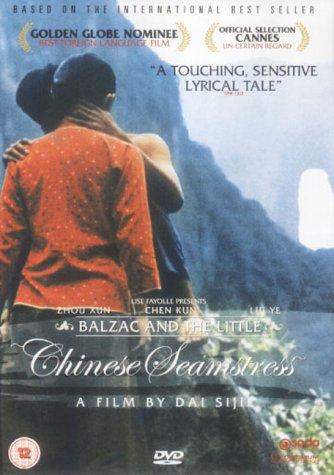
During the Cultural Revolution in China, two young men, Ma Jianling and Luo Min, are sent to a remote mountain village for re-education. There, Luo becomes infatuated with the Little Seamstress, a local girl fascinated by Western culture. He begins sharing forbidden books with her, opening her eyes to new ideas and sparking a transformative journey of self-discovery and challenging the oppressive political climate.

Warning: spoilers below!

Haven’t seen Balzac and the Little Chinese Seamstress yet? This summary contains major spoilers. Bookmark the page, watch the movie, and come back for the full breakdown. If you're ready, scroll on and relive the story!

Balzac and the Little Chinese Seamstress (2005) – Full Plot Summary & Ending Explained

Read the complete plot breakdown of Balzac and the Little Chinese Seamstress (2005), including all key story events, major twists, and the ending explained in detail. Discover what really happened—and what it all means.

The film is set during a tumultuous time between 1971 and 1974, amidst the tail end of the Chinese Cultural Revolution. It follows two teenage boys, Luo Min and Ma Jianling, who embark on a journey to a secluded village nestled in the mountains of Sichuan province for re-education. Upon their arrival, they are met with intense scrutiny from the village Chief, who interrogates them about their so-called “reactionary backgrounds” in front of the other villagers. Luo’s father, a dentist, once had the unique honor of fitting a false tooth for Chiang Kai-shek, while Ma’s father is a respected doctor. The Chief further examines their belongings, brutally discarding items he deems bourgeois, including a cookbook. In a dramatic moment, he attempts to destroy Ma’s cherished violin, but Luo cleverly intervenes, misrepresenting a piece by Mozart as a local “mountain song” titled Mozart is Thinking of Chairman Mao.

Once assigned a home, the boys dive into the local labor, engaging in grueling tasks that involve hauling human waste for fertilizer and laboring in a coal mine. Their lives change with the arrival of a spirited young girl, the granddaughter of a tailor from a neighboring village, affectionately known as the Little Seamstress](/actor/xun-zhou). She visits with her grandfather, captivated by Ma’s violin performance. A trio friendship soon blossoms as both boys develop feelings for the Little Seamstress. Eager to enrich her life—given her illiteracy and thirst for education—the boys hatch a plan to pilfer a suitcase bursting with prohibited translated Western novels from Four-Eyes, a fellow re-education participant destined to return to the city. Luo takes it upon himself to read to the Little Seamstress daily, introducing her to literary giants like Stendhal, Kipling, and Dostoevsky; yet, she finds herself most entranced by Balzac’s works.

As the bond deepens, the Little Seamstress finds herself in love with Luo. On the eve of his departure to visit his ailing father in the city, she reveals to him that she has a “problem,” although she withholds details. Later confiding in Ma, she discloses her pregnancy, but stringent population control laws prevent marriage before the age of 25, and abortion without a marriage certificate is illegal. In a selfless act of friendship, Ma ventures to the city to seek help from a gynecologist acquainted with his father, pleading for a covert abortion. The gynecologist, moved by their plight, agrees to clandestinely visit the village for the procedure.

When Luo returns, the routines of life resume until one day, the Little Seamstress—now transformed by the literature they shared—makes a bold decision to leave the village in search of a “new life,” despite the desperate pleas from both Luo and her grandfather. By 1974, both Luo and Ma find their paths leading back to the city, where Luo eventually establishes himself as a professor at a dental institute in Shanghai, while Ma pursues his passion for music in France and becomes a professional violinist. Fast forward to the late 1990s, Ma learns that their village will soon be submerged by the construction of the Three Gorges Dam. Fueled by nostalgia, he returns, hoping to reunite with the Little Seamstress, but all he brings back is a video chronicling the village’s history and its residents, including the now-aging Chief.

In a poignant reunion in Shanghai, Ma shares his fruitless search for the Little Seamstress with his old friend Luo, who confesses to his own unsuccessful attempts to locate her in Shenzhen and Hong Kong. The film closes with haunting news footage of the now flooded towns and villages, juxtaposed with the youth of the three characters submerged underwater, encapsulating the profoundness of lost time and memories.

Last Updated: November 08, 2024 at 01:51

Mobile App Preview

Coming soon on iOS and Android

The Plot Explained Mobile App

From blockbusters to hidden gems — dive into movie stories anytime, anywhere. Save your favorites, discover plots faster, and never miss a twist again.

Sign up to be the first to know when we launch. Your email stays private — always.

Explore Movie Threads

Discover curated groups of movies connected by mood, themes, and story style. Browse collections built around emotion, atmosphere, and narrative focus to easily find films that match what you feel like watching right now.

Movies about young love and rebellion like Balzac and the Little Chinese Seamstress

Young lives finding freedom and love under the shadow of political control.If you enjoyed the story of intellectual and romantic awakening against a backdrop of political oppression in 'Balzac and the Little Chinese Seamstress', you'll find similar movies here. These films explore coming-of-age journeys where forbidden ideas and love challenge authoritarian systems, often with a reflective and yearning tone.

yearningtransformativeoppressivenostalgicmelancholichopefulreflective

Narrative Summary

The narrative pattern centers on young characters sent to remote locations or living under strict control, where they discover illicit culture, literature, or love. This discovery sparks a transformation that liberates their spirit but often places them in conflict with the system, culminating in an ending that acknowledges both the beauty of their awakening and the cost of their rebellion.

Why These Movies?

Movies are grouped here by their shared focus on the collision between youthful idealism and political reality. They share a bittersweet tone, a steady, character-driven pace, and a medium emotional intensity, creating a cohesive experience of thoughtful, transformative stories set against historical or fictional oppression.

Movies about the power of books like Balzac and the Little Chinese Seamstress

Where secret literature opens new worlds and alters destinies forever.For viewers who loved how literature transformed the characters in 'Balzac and the Little Chinese Seamstress', this section features similar movies about the life-altering impact of forbidden stories. These films celebrate the subversive power of art and knowledge to ignite change, challenge authority, and shape personal identity.

intellectualtransformativeforbiddennostalgichopefulmelancholicrebellious

Narrative Summary

The narrative revolves around a hidden trove of knowledge—books, films, or music—that is discovered and shared among characters. This exposure acts as an awakening, challenging their beliefs and the status quo. The story explores the ripple effects of this new perspective, focusing on intellectual rebellion, personal transformation, and the poignant cost of possessing dangerous knowledge.

Why These Movies?

These films are united by the core theme of art and literature as instruments of liberation and change. They typically share a reflective mood, a moderate complexity in weaving together personal and political themes, and a bittersweet emotional core that acknowledges both the power of ideas and the price of enlightenment.

Unlock the Full Story of Balzac and the Little Chinese Seamstress

Don't stop at just watching — explore Balzac and the Little Chinese Seamstress in full detail. From the complete plot summary and scene-by-scene timeline to character breakdowns, thematic analysis, and a deep dive into the ending — every page helps you truly understand what Balzac and the Little Chinese Seamstress is all about. Plus, discover what's next after the movie.

Balzac and the Little Chinese Seamstress Timeline

Track the full timeline of Balzac and the Little Chinese Seamstress with every major event arranged chronologically. Perfect for decoding non-linear storytelling, flashbacks, or parallel narratives with a clear scene-by-scene breakdown.

Balzac and the Little Chinese Seamstress Timeline

Characters, Settings & Themes in Balzac and the Little Chinese Seamstress

Discover the characters, locations, and core themes that shape Balzac and the Little Chinese Seamstress. Get insights into symbolic elements, setting significance, and deeper narrative meaning — ideal for thematic analysis and movie breakdowns.

Characters, Settings & Themes in Balzac and the Little Chinese Seamstress

Balzac and the Little Chinese Seamstress Spoiler-Free Summary

Get a quick, spoiler-free overview of Balzac and the Little Chinese Seamstress that covers the main plot points and key details without revealing any major twists or spoilers. Perfect for those who want to know what to expect before diving in.

Balzac and the Little Chinese Seamstress Spoiler-Free Summary

More About Balzac and the Little Chinese Seamstress

Visit What's After the Movie to explore more about Balzac and the Little Chinese Seamstress: box office results, cast and crew info, production details, post-credit scenes, and external links — all in one place for movie fans and researchers.

More About Balzac and the Little Chinese Seamstress