Plot Explained Spoilers guaranteed!
Plot Explained

Browse by genre

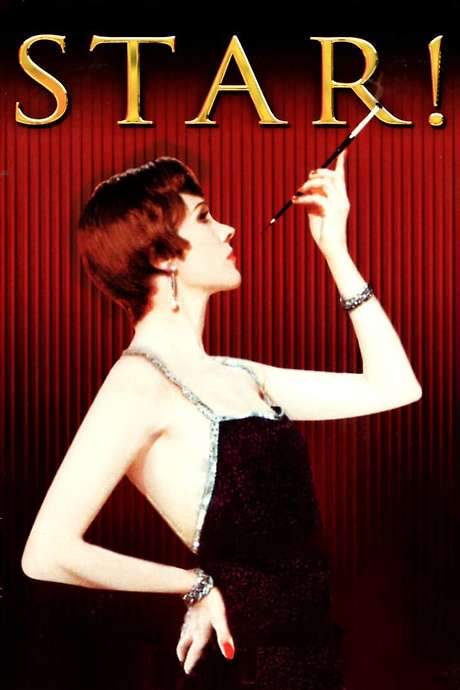
Star! (1968) movie poster

Plot Summary

Star! (1968) Plot Summary Explained

Release, runtime and language
1968 · 176 mins · English
Directed by
Robert Wise
Starring
Julie Andrews, Jenny Agutter, J. Pat O'Malley, Richard Crenna, Ian Abercrombie, Anthony Eisley

Happiness is a girl called Julie! Gertrude Lawrence rises to stage stardom at the cost of happiness.

On this page (5)
  1. 1 What happens: full plot
  2. 2 Plot questions answered
  3. 3 Movie threads
  4. 4 Movies like Star!
  5. 5 Every angle

Full plot summary · contains spoilers

What Happens in Star!: Full Plot Summary

The whole story of Star! (1968) explained, from the opening scene to the final frame: every key event, every twist and what it all adds up to. Read it as a quick recap before the sequel, to check a scene you missed, or to finally understand what really happened.

In 1940, Gertrude "Gertie" Lawrence [Julie Andrews] is in a screening room watching a documentary about her life, and the film cuts back to Clapham in 1915, when she leaves home to join her vaudevillian father in a dilapidated Brixton music hall. From there, she makes her way to the chorus of André Charlot's West End revue, where a chance encounter with childhood friend Noël Coward [Daniel Massey] sets the stage for a remarkable rise.

Charlot [Alan Oppenheimer] grows tired of Gertie’s relentless effort to stand out, but stage manager Jack Roper [John Collin] steps in, securing her a role as a general understudy to the leads. She and Roper wed, yet it soon becomes clear that Gertie’s true calling lies on the stage rather than at home as a wife. While pregnant, she insists on going on for an absent star, delivering a show-stealing performance of "Burlington Bertie" that wins the audience and forces Charlot and Roper to acknowledge her talent. The moment confirms that Gertie belongs in the spotlight, even as her personal life keeps pulling her in new directions.

After the birth of their daughter Pamela [Jenny Agutter], trouble arises when Roper takes the baby on a pub crawl and disappears from the family. A subsequent romance with Sir Anthony Spencer [Michael Craig], an English nobleman, helps polish Gertie’s manners and reshape her image into a sophisticated social figure. A disastrous sick-day absence leads to a firing from Charlot’s revue, but Spencer’s influence keeps her career afloat as she becomes a cultivated society darling. Noël Coward eventually convinces Charlot to include her in a new production, and the long path to stardom resumes with vigor.

Gertie’s ascent continues when the show opens in New York City; there, her charm attracts an actor and a banker, expanding the circle of admirers. Yet financial pressures threaten her hard-won glamour, and she must claw her way back from the brink to repay creditors and preserve her star status. Her personal life also suffers as the distance between her and Pamela grows, especially after Pamela cancels a planned holiday and Gertie’s alcohol-fueled rift at a surprise Coward party exposes vulnerabilities she must confront.

An American theatre producer, Richard Aldrich [Richard Crenna], returns with a candid appraisal after a tense night of rehearsals and observation. The encounter sparks a mix of insult and intrigue, drawing Gertie toward a possible marriage that leads her to Cape Playhouse for a pivotal prospective lead. A clash with Aldrich during rehearsal becomes a turning point, and his proposal finally arrives only after a determined push from Coward.

Back on Broadway, Gertie wrestles with a crucial performance of "The Saga of Jenny" in Lady in the Dark, while Aldrich observes and pushes her toward a stronger, more confident interpretation. The night out with Coward reinforces the idea that Aldrich is a shrewd, capable partner for her future. The transformation culminates in a triumphant rendition of "Jenny," and Gertie’s marriage to Aldrich unfolds as a new union that foreshadows the bigger triumphs to come, including her later success in The King and I. Her life comes full circle with a lasting legacy, even as liver cancer claims her life at the age of 54, leaving behind a trail of glamour, resilience, and enduring artistry.
Last updated: October 09, 2025 at 11:23

Was this helpful?

Plot questions answered

Star! Plot Explained: Your Questions Answered

The questions people ask most about Star! (1968): what happens in the confusing scenes, why the characters do what they do, the twists, hidden details and what the ending means. Each answer contains spoilers.

Q1

Why did Gertrude Lawrence leave home in 1915?

She left her home in Clapham to join her vaudevillian father at a dilapidated Brixton music hall. This marked her first major step toward a career on the stage, driven by her passion for performing.

Foreshadowing: The film opens in 1940 with Gertie watching a documentary about her own life, framing her departure as the beginning of a remarkable journey.

  • gertrude lawrence
  • vaudeville
  • father
  • clapham
  • brixton
Q2

Why was the Burlington Bertie performance important?

While pregnant with her daughter Pamela, Gertie went on for an absent star and delivered a show-stopping performance of "Burlington Bertie." The audience erupted with warmth, and both Charlot and Roper were forced to recognize that she belonged in the spotlight, marking the true birth of her star power.

Foreshadowing: Earlier, Charlot had grown tired of her relentless efforts to stand out, threatening to fire her.

  • burlington bertie
  • breakthrough
  • pregnant
  • performance
  • charlot
Q3

Why did Jack Roper take the baby on a pub crawl?

After Pamela was born, Jack Roper took the infant on a pub crawl and disappeared from the family, leaving Gertie furious and betrayed. This incident strained their marriage and highlighted the growing conflict between her domestic life and her career ambitions.

Foreshadowing: Earlier, Gertie had chosen to perform while pregnant rather than stay home as a wife, foreshadowing the tension between her ambitions and family life.

  • jack roper
  • pamela
  • pub
  • marriage
  • daughter
Q4

Why was Gertrude Lawrence fired from Charlot's Revue?

Gertie was caught at a chic supper club when she should have been sick, and Charlot used this as justification to fire her from his revue. The firing coincided with Sir Anthony Spencer's influence in her life, which helped her pivot toward becoming a glamorous society figure instead.

Foreshadowing: Charlot had previously resented her attempts to stand out and threatened to fire her multiple times.

  • charlot
  • fired
  • sick
  • supper club
  • sir anthony spencer
Q5

Why did Gertrude Lawrence's relationship with her daughter Pamela deteriorate?

As Gertie's career climbed and she spent more time in New York and London, the physical distance between her and Pamela grew. The strain intensified when Pamela cancelled a planned holiday with Gertie, and Gertie's alcohol-fueled emotional breakdown at a Coward party further exposed the fracture in their relationship.

Foreshadowing: The early tension between her career and motherhood was established when she chose to perform while pregnant.

  • pamela
  • daughter
  • relationship
  • distance
  • alcohol
Q6

How did Richard Aldrich meet Gertrude Lawrence?

Richard Aldrich, an American theatre producer, first encountered Gertie during a tense night of rehearsals and observation. After offering a candid, somewhat insulting appraisal of her performance, he invited her to Cape Playhouse to pursue a lead role. Their professional relationship evolved into romance, and after encouragement from Coward, Aldrich proposed.

Foreshadowing: Earlier in New York, Gertie had attracted multiple admirers including an actor and a banker, establishing her romantic appeal.

  • richard aldrich
  • producer
  • cape playhouse
  • marriage
  • american
Q7

Why was The Saga of Jenny performance pivotal for Gertrude Lawrence?

Gertie struggled with the crucial "The Saga of Jenny" number in Lady in the Dark on Broadway. Aldrich and Coward pushed her toward a bolder, more confident interpretation. A nightclub outing with them helped unlock the insight she needed, and her triumphant rendition cemented her status as a Broadway star.

Foreshadowing: Noël Coward had earlier persuaded Charlot to include her in a new production, showing his continued belief in her talent.

  • saga of jenny
  • lady in the dark
  • broadway
  • triumph
  • performance
Q8

How did Gertrude Lawrence die?

Gertrude Lawrence died from liver cancer at the age of 54, shortly after achieving her greatest triumph in The King and I in 1951. Her death came just eight years after marrying Richard Aldrich, adding a bittersweet conclusion to her dazzling but turbulent career.

Foreshadowing: The film's opening in 1940 shows her watching a documentary about her life, retrospectively framing her story with the knowledge of her early death.

  • death
  • liver cancer
  • king and i
  • age 54
  • tragic
Q9

Why was Sir Anthony Spencer important to Gertrude Lawrence's career?

Sir Anthony Spencer, an English nobleman, courted Gertie and helped polish her rough vaudeville manners into a sophisticated public persona. His influence reshaped her image into that of a cultivated society figure, marking a new phase in her social ascent and helping her transition from rough music hall performer to elegant star.

Foreshadowing: Earlier, Charlot had fired her, and Spencer's influence arrived at a crucial moment to help her reinvent herself.

  • sir anthony spencer
  • nobleman
  • society
  • polish
  • image
Q10

Why did Gertrude Lawrence marry Jack Roper?

She married stage manager Jack Roper, tying her personal life to the backstage world of theatre. Roper had earlier intervened on her behalf when Charlot threatened to fire her, securing her a role as understudy. However, her hunger to perform remained stronger than the pull of domestic life, and their marriage eventually crumbled under the pressure of her career.

Foreshadowing: Roper's intervention to save her job suggested a protective nature that would later conflict with her independence.

  • jack roper
  • marriage
  • stage manager
  • understudy
  • divorce
Q11

Why did Gertrude Lawrence choose career over family?

Gertie's true calling clearly lay on the stage rather than at home as a wife and mother. Even while pregnant, she insisted on performing for an absent star, and her breakthrough with "Burlington Bertie" confirmed that she belonged in the spotlight. The tension between her professional ambitions and personal relationships ran throughout her life.

Foreshadowing: The film's title "Star!" and the documentary framing emphasize that stardom was her defining purpose.

  • career
  • ambition
  • stage
  • family
  • sacrifice
Q12

Why did Noël Coward help Gertrude Lawrence?

Noël Coward, a childhood friend of Gertie, became a longtime mentor who believed in her talent. He convinced Charlot to include her in new productions after setbacks, and he pushed her toward the breakthrough performance in Lady in the Dark. His support was instrumental in her rise to international stardom.

Foreshadowing: They were childhood friends in the music hall world, establishing a connection that would span her career.

  • noel coward
  • friend
  • mentor
  • support
  • broadway

Movie threads

More Movies Like Star!, by Mood & Story

Curated lists built around what makes Star! tick: the same mood, the same kind of story or the same emotional payoff. Each list explains why these movies belong together.

Bittersweet biographical dramas like Star!

True stories of artistic triumph that come at a deep personal cost. If you liked the blend of theatrical glamour and personal loss in Star!, explore these movies like Star! that chronicle real-life stories of artistic ambition. These similar biographical dramas capture the bittersweet reality of success, where professional accolades are shadowed by private heartache.

  • biographical
  • melancholic
  • triumphant
  • glamorous
  • nostalgic
  • striving
  • Tone: bittersweet, melancholic
  • Pacing: steady, reflective
Why these movies?

The story pattern: Stories in this thread typically follow a chronological rise to fame, interweaving key career milestones with strained personal relationships. The central conflict is between public success and private fulfillment, often culminating in an ending that acknowledges the achievement but laments what was sacrificed along the way.

Why they belong together: These movies are grouped together because they share a specific emotional cocktail: the exhilaration of creative triumph mixed with the melancholy of personal cost. They have a steady, reflective pacing that allows for character depth and a tone that is neither purely celebratory nor purely tragic, but authentically bittersweet.

Movies with glamorous melancholy like Star!

Stories where the dazzling lights of fame hide a deep-seated loneliness. Find more movies like Star! that explore the theme of glamorous melancholy. If you enjoyed the dazzling stage numbers and vocal performances juxtaposed with the emotional toll of stardom in Star!, these similar stories of showbusiness dreams and disillusionment will resonate.

  • glamorous
  • melancholic
  • theatrical
  • nostalgic
  • lonely
  • striving
  • Tone: bittersweet, melancholic
  • Pacing: steady
Why these movies?

The story pattern: The narrative pattern often involves a protagonist achieving their dreams of fame, only to find that validation and adoration cannot fill a personal void. The journey explores the loneliness at the top, the commodification of the self, and the way public spectacle can mask private pain.

Why they belong together: These films are united by their unique atmosphere—a specific blend of dazzling spectacle and introspective sadness. They share a medium intensity and emotional weight, balancing moments of theatrical joy with a core theme of sacrifice, making the viewing experience both uplifting and deeply moving.

If you liked this

Movies Like Star!

Similar movies to Star!: the same genre, themes or kind of story. Each one comes with its own plot summary, timeline and ending explained.

Browse all movie summaries

Every angle

Star! (1968) Explained: Plot, Timeline & Characters

Everything about Star! in one place: what happens in the plot summary, the timeline in chronological order, the characters and meaning and a spoiler-free summary. What's After the Movie adds the cast, box office and post-credit scenes.

Coming soon on iOS and Android

The Plot Explained Movie Summary App

Plot summaries, endings explained and timelines on your phone. Catch up on any movie in minutes, save your favorites and never miss a twist again.

Be the first to know when we launch. Your email stays private, always.

Learn more about the app