Plot Explained Spoilers guaranteed!
Plot Explained

Browse by genre

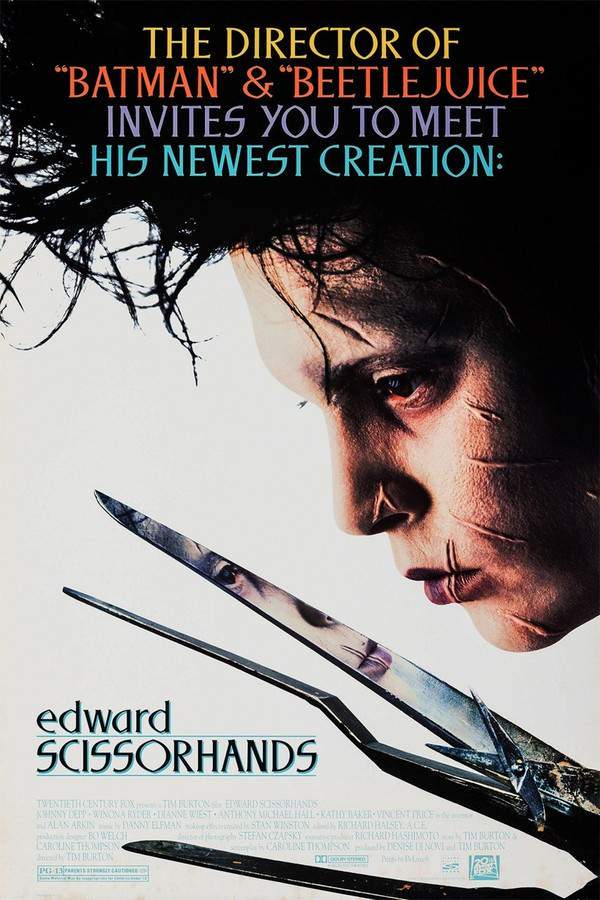
Edward Scissorhands (2024) movie poster

Plot Summary

Edward Scissorhands (2024) Plot Summary Explained

Release, runtime and language
2024 · 93 mins
Directed by
Matthew Bourne
Starring
Dominic North, Liam Mower, Ashley Shaw, Glenn Graham, Katrina Lyndon, Etta Murfitt

A lonely boy named Edward, created by an eccentric inventor, lives in a gothic castle. After his creator unexpectedly dies, Edward is left isolated and incomplete, possessing scissors for hands. A compassionate woman discovers him and invites him to live with her family in a typical suburban neighborhood. There, Edward must navigate the challenges of fitting in while the community grapples with his unusual appearance, hoping to see beyond it and recognize his gentle nature.

On this page (4)
  1. 1 What happens: full plot
  2. 2 Plot questions answered
  3. 3 Movie threads
  4. 4 Every angle

Full plot summary · contains spoilers

What Happens in Edward Scissorhands: Full Plot Summary

The whole story of Edward Scissorhands (2024) explained, from the opening scene to the final frame: every key event, every twist and what it all adds up to. Read it as a quick recap before the sequel, to check a scene you missed, or to finally understand what really happened.

On a quiet, snow-blanketed night, an elderly woman sits with her granddaughter and begins to tell the tale of a singular, pale-skinned man named Edward, whose hands are blades of silver, sharp enough to carve as well as to hurt. The story begins long before the town learns his name, with an aging inventor who creates a life-like being and imagines giving him a pair of hands. The inventor’s sudden heart attack leaves Edward unfinished, an ageless, gentle figure living in a gothic mansion that seems to guard secrets. When Peg Boggs, an Avon door-to-door saleswoman, discovers Edward living in his creator’s lonely home, she sees more than oddity—she senses a possibility for connection in a world that has kept him apart. She brings Edward to her own home, and the first light of human warmth begins to thaw the isolation that has shaped him.

In the Boggs household, Edward is introduced to Peg’s husband, Bill, their young son Kevin, and most vividly to their teenage daughter Kim, who looks at him with a mix of curiosity and unguarded openness. Edward feels something long buried awaken: a quiet, earnest longing for companionship, and, unexpectedly, love for Kim. The family’s suburban circle responds with a blend of intrigue and kindness, as they throw a neighborhood barbecue to welcome their unusual guest. Most neighbors are captivated by Edward’s unusual talents and his earnest, almost childlike demeanor, while a few remain wary or scornful. Esmeralda, a religious zealot, and Kim’s boyfriend Jim, who wears his snobbish certainty like armor, stand out as those who resist Edward’s integration into the community.

Edward’s talent quickly blossoms into a practical gift for the neighborhood. He shapes hedges into intricate topiaries, trims yards with an attentive care, and soon moves into more intimate work—tending to the hair of the women who pass by the Boggs’ home. His gentle precision earns him a growing chorus of admiration, and a neighbor named Joyce even suggests opening a hair salon. Yet Joyce’s advance is clumsy and misread, and her attempt to seduce him ends in fear and a ruined opportunity. Damaging rumors begin to spread, and Joyce’s lies about an imagined assault fracture the fragile trust Edward had begun to earn from the women of the street. The neighborhood’s faith in Edward begins to unravel, and the bank refuses him a loan for a salon, leaving his dream dangling just beyond reach.

The ache of jealousy drives Jim to manipulate Edward into a dangerous test of trust. He asks Edward to help break into his own parents’ house to steal electronics and fund the purchase of a van. Edward, naïve and eager to prove himself, complies, only for the plan to fall apart when a burglar alarm triggers an emergency, and the walls seal him inside. Jim flees, and Edward is arrested. The authorities, confronted with a lifetime of isolation that has taught him little about deception or self-preservation, decide he cannot be charged with a crime in the usual sense. He accepts responsibility anyway, telling Kim he did it because she asked him to, a gesture that leaves the town conflicted and the Boggs family deeply protective of him.

As Christmas approaches, Edward carves a glistening ice sculpture of Kim, and the shards drift down like snow, a sight the town has “never seen before.” Kim dances in the snowfall, a moment of fragile beauty and connection that seems to promise possibilities beyond fear. Jim’s jealousy erupts again, and when he questions Edward’s intentions, Kim stands up to him and ends their relationship. Edward, too, steps back, retreating to the mansion where the inventor’s work began.

Kim’s parents venture out to find Edward, while Kim herself waits, hoping to hold him again. Edward returns and she invites him to stay close, asking him to arrange his hands so they can embrace. In a cruel twist of fate, Jim’s drunken friend drives toward Kim’s house and nearly strikes Kevin, forcing Edward to push him out of harm’s way and, in the process, injuring Kevin. The neighbors weigh Edward’s guilt, seeing him as a threat, while Jim uses the moment to justify his own fear and anger. When Jim assaults Edward, the scuffle escalates, and Edward defends himself, injuring Jim’s arm before retreating back to the inventor’s mansion.

Kim resolves to find Edward, and Jim, obsessed with control, obtains a weapon and pursues them. He shoots at Edward at close range, but the confrontation becomes a deadly struggle, and Jim is killed when Edward, acting in a surge of protective fury, stabs him and pushes him from a window. Kim, witnessing the violence, admits her love for Edward and they share a kiss, accepting that their romance cannot be fulfilled in the world they inhabit. The neighbors arrive, their minds racing with rumor and fear, and Kim convinces them that Jim and Edward killed each other, a claim that allows her to protect Edward’s fragile memory.

The story’s elder narrator—now revealed to be Kim herself, aged and reflective—concludes with a note of aching tenderness. She confesses that she never saw Edward again after that night, choosing to remember him as the man she knew in youth. She holds on to the belief that he remains somewhere, because the snowfall continues to fall, an indicator, perhaps, that he endures beyond the town’s memory. The tale closes with Edward, in his own hidden space, still carving ice sculptures that crystallize his experiences with Kim, the fragments of their love and loss drifting like snow in the wind. The final line lands softly from the elder Kim: “Sometimes you can still catch me dancing in it.”

> Sometimes you can still catch me dancing in it.

Last updated: October 01, 2025 at 10:22

Was this helpful?

Plot questions answered

Edward Scissorhands Plot Explained: Your Questions Answered

The questions people ask most about Edward Scissorhands (2024): what happens in the confusing scenes, why the characters do what they do, the twists, hidden details and what the ending means. Each answer contains spoilers.

Q1

Why did the inventor leave Edward unfinished?

The inventor suffered a sudden heart attack and died before he could complete Edward by attaching the pair of hands he had been working on. This left Edward with scissors for hands - functional but dangerous, preventing him from fully integrating into human society.

  • inventor
  • creation
  • unfinished
  • heart attack
  • hands
Q2

Why did Edward agree to help Jim with the burglary?

Edward was naive about human deception because he had lived in complete isolation his entire life. Jim manipulated him by framing the burglary as a way to prove himself trustworthy, and Edward wanted to earn the town's acceptance, especially from Kim.

Foreshadowing: Earlier scenes establish Edward's lack of social experience and his desperate desire to belong.

  • burglary
  • Jim
  • manipulation
  • trust
  • naivety
Q3

Why did Joyce falsely accuse Edward of assault?

Joyce attempted to seduce Edward, but when he rejected her advances out of confusion and fear, she reacted out of embarrassment and spite. She lied about him attacking her, which spread damaging rumors through the neighborhood and destroyed the trust Edward had built.

  • Joyce
  • false accusation
  • assault
  • rumor
  • reputation
Q4

Why did Edward take responsibility for the burglary?

Edward told Kim he did it because she asked him to, but the real reason is more complex. He lacked moral framework from his isolated upbringing and genuinely didn't understand the severity of his actions. Taking responsibility was his attempt at honesty and connection, not criminal intent.

  • responsibility
  • police
  • Kim
  • confession
  • innocence
Q5

What happened to Kevin after Edward pushed him out of the car's path?

Edward saved Kevin from being hit by Jim's drunken friend's car by pushing him to safety, but the force of the push accidentally cut Kevin with Edward's scissors. The wounds were serious enough to require hospitalization, though the timeline doesn't specify long-term effects.

  • Kevin
  • car accident
  • injury
  • Edward saves him
Q6

Why did Edward kill Jim during the confrontation?

Edward killed Jim in a moment of protective fury when Jim struck Kim and then attacked Edward with a gun. Edward acted to defend Kim from further harm, stabbing Jim and pushing him out of the window. It was an act of defense, not premeditated violence, driven by Edward's love for Kim.

Foreshadowing: Jim's escalating jealousy and threats build throughout the film, making this confrontation inevitable.

  • Jim
  • killing
  • self-defense
  • Kim
  • confrontation
  • death
Q7

Why couldn't Edward and Kim be together in the end?

Edward and Kim couldn't be together because society's fear and prejudice made it impossible. Edward was a dangerous outsider with scissors for hands, and the town had already turned violent against him. Even though they loved each other, Edward's existence in the human world would always be threatened by misunderstanding and violence.

  • love
  • Kim
  • separation
  • society
  • prejudice
  • impossible relationship
Q8

Why does the snow keep falling at the end of the movie?

The snow is symbolic. Elderly Kim reveals she believes Edward is still alive because the snow continues to fall each Christmas - something that began when Edward carved his ice sculpture. The snowfall represents Edward's presence, memory, and the lasting beauty of their brief love.

  • snow
  • ending
  • symbolism
  • memory
  • ice sculpture
Q9

Why did the neighbors turn against Edward despite initially accepting him?

The neighbors' acceptance was fragile and based on novelty. Joyce's false accusation damaged his reputation, the failed burglary made him seem dangerous, and the incident with Kevin - where witnesses saw Edward holding a bleeding child - confirmed their worst fears. Rumors and misunderstanding overwhelmed the initial kindness.

  • neighbors
  • community
  • fear
  • rumors
  • rejection
  • turning point
Q10

Why did Kim lie to the neighbors about what happened to Jim?

Kim lied to protect Edward's memory. She told the neighbors that Jim and Edward killed each other, which allowed Edward to retreat to the mansion without being hunted or vilified further. It was her final act of love - preserving the gentle image of the man she loved rather than letting the town destroy his legacy.

  • Kim
  • lie
  • Jim's death
  • protection
  • memory
  • neighbors
Q11

How did Peg's decision to bring Edward into her home change him?

Peg's compassion gave Edward his first taste of human connection and belonging. Before her, he lived in complete isolation with no social experience. Her acceptance opened the door to friendship, family life, and most importantly, the possibility of love with Kim - even though that love would ultimately be unfulfilled.

  • Peg
  • Boggs family
  • kindness
  • transformation
  • first love
Q12

Why was Jim so hostile toward Edward throughout the movie?

Jim's hostility stemmed from jealousy and insecurity. He was Kim's boyfriend and felt threatened by Edward's unexpected presence and the attention Kim showed him. Jim represents the narrow-minded suburbia that fears what it doesn't understand, and his snobbery masked his own inadequacy.

  • Jim
  • jealousy
  • insecurity
  • Kim
  • rivalry
  • fear

Movie threads

More Movies Like Edward Scissorhands, by Mood & Story

Curated lists built around what makes Edward Scissorhands tick: the same mood, the same kind of story or the same emotional payoff. Each list explains why these movies belong together.

Movies about gentle outsiders like Edward Scissorhands

Stories of unique individuals finding fragile acceptance in an ordinary society. Discover movies like Edward Scissorhands that explore the bittersweet stories of gentle, unconventional individuals navigating a world that struggles to understand them. If you liked the themes of belonging and prejudice in Edward Scissorhands, these films feature similar gentle giants and outsiders yearning for acceptance.

  • tender
  • melancholic
  • yearning
  • whimsical
  • lonely
  • heartfelt
  • Tone: bittersweet, melancholic, tender
  • Pacing: steady, character-driven
Why these movies?

The story pattern: The narrative typically follows a gentle, innocent protagonist—often a 'found' being or someone with a profound difference—as they are introduced to a 'normal' society. They experience a brief period of wonder and acceptance, which is inevitably shattered by fear, prejudice, or misunderstanding, forcing a bittersweet conclusion that emphasizes their permanent status as an outsider.

Why they belong together: Movies in this thread share a core focus on the emotional journey of an innocent, unconventional protagonist. They are united by a bittersweet tone that balances whimsical discovery with the melancholy of isolation, creating a specific, tender mood centered on themes of empathy versus fear.

Bittersweet modern fairy tale movies like Edward Scissorhands

Magical, melancholic stories where love and loss are intertwined. If you enjoyed the magical yet melancholic feel of Edward Scissorhands, this list features similar bittersweet modern fairy tales. Explore movies that blend whimsical settings with heartfelt stories of love and loss, perfect for fans of Tim Burton's unique gothic romantic style.

  • whimsical
  • melancholic
  • gothic
  • romantic
  • fairy tale
  • yearning
  • Tone: melancholic, whimsical, bittersweet
  • Pacing: steady, fable-like
Why these movies?

The story pattern: These narratives often unfold as flashbacks or fables, set in stylized worlds that blend the mundane with the magical. The plot revolves around a central, often impossible, romance or connection that is deeply felt but ultimately unsustainable. The story's arc leads to a separation that is both tragic and beautiful, symbolized by an enduring memory or act of love.

Why they belong together: These films are grouped by their distinctive blend of tone and genre: a magical or gothic atmosphere paired with a straightforward, heartfelt narrative that results in a consistently bittersweet emotional experience. The shared mood is one of melancholic whimsy, where the fantastic highlights the fragility of human connection.

Every angle

Edward Scissorhands (2024) Explained: Plot, Timeline & Characters

Everything about Edward Scissorhands in one place: what happens in the plot summary, the timeline in chronological order, the characters and meaning and a spoiler-free summary. What's After the Movie adds the cast, box office and post-credit scenes.

Coming soon on iOS and Android

The Plot Explained Movie Summary App

Plot summaries, endings explained and timelines on your phone. Catch up on any movie in minutes, save your favorites and never miss a twist again.

Be the first to know when we launch. Your email stays private, always.

Learn more about the app