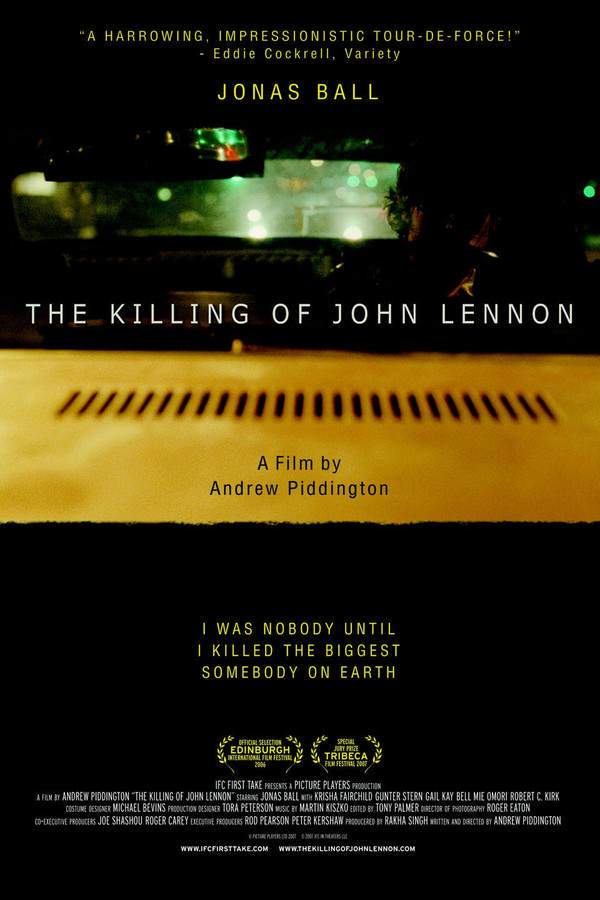
The Killing of John Lennon

The Killing of John Lennon

Year: 2008

Runtime: 114 min

Language: English

Director: Andrew Piddington

DramaCrime

A disturbing look at the events leading up to John Lennon's death, the film explores the mindset of Mark David Chapman, a troubled fan consumed by obsession. Through a gritty and immersive style, it delves into Chapman's descent into madness and the loneliness that fueled his twisted fixation. The story culminates in the tragic moment outside the Dakota apartment in 1980, examining the dark side of celebrity and the devastating consequences of unchecked obsession.

Warning: spoilers below!

Haven’t seen The Killing of John Lennon yet? This summary contains major spoilers. Bookmark the page, watch the movie, and come back for the full breakdown. If you're ready, scroll on and relive the story!

Timeline & Setting – The Killing of John Lennon (2008)

Explore the full timeline and setting of The Killing of John Lennon (2008). Follow every major event in chronological order and see how the environment shapes the story, characters, and dramatic tension.

Time period

October - December 1980

The events unfold during the late 1970s and early 1980s, a period marked by cultural upheaval and the prominence of rock music. Society was grappling with changing values, reflected in popular literature and the lives of public figures like **John Lennon**. This time frame culminates in the shocking assassination of an icon, an event that resonated across the globe.

Location

Hawaii, New York City, Dakota Hotel

Hawaii serves as the backdrop for **Mark Chapman's** initial feelings of alienation, reflecting his inner turmoil despite its serene landscapes. New York City becomes a central location as **Chapman** travels there to confront **John Lennon**, embodying the chaotic pulse of urban life. The Dakota Hotel is an iconic landmark known for its distinctive architecture and as the residence of **Lennon**, ultimately becoming the site of the tragic event.

🏝️ Hawaii 🌆 New York

Last updated: October 22, 2024 at 20:16

Was this helpful?

Main Characters – The Killing of John Lennon (2008)

Meet the key characters of The Killing of John Lennon (2008), with detailed profiles, motivations, and roles in the plot. Understand their emotional journeys and what they reveal about the film’s deeper themes.

Mark Chapman (Jonas Ball)

**Mark Chapman** is depicted as a profoundly troubled individual whose descent into obsession leads to devastating consequences. Initially struggling with feelings of isolation in Hawaii, his fixation on *The Catcher in the Rye* and **John Lennon** reveals deep-seated psychological issues. His character arc illustrates the tragic impacts of alienation and the perilous nature of obsession.

🧠 Mental Health 😞 Alienation 🔫 Violence

Last updated: October 22, 2024 at 20:16

Was this helpful?

Major Themes – The Killing of John Lennon (2008)

Explore the central themes of The Killing of John Lennon (2008), from psychological, social, and emotional dimensions to philosophical messages. Understand what the film is really saying beneath the surface.

🧠 Obsession

The theme of obsession is critical to understanding **Mark Chapman's** psyche as he becomes consumed by his fixation on **John Lennon** and *The Catcher in the Rye*. His identification with **Holden Caulfield** reveals his internal struggles and feelings of alienation. As his obsession grows, it drives him to commit an unspeakable act, showcasing the dark side of idolization and mental anguish.

😔 Alienation

**Chapman**'s journey highlights the theme of alienation, emphasizing his disconnection from society, family, and friends. His search for meaning leads him through literature, yet ultimately into darkness. This theme resonates with many individuals grappling with similar feelings, making his tragic story a cautionary tale about the need for human connection.

Last updated: October 22, 2024 at 20:16

Was this helpful?

The Killing of John Lennon (2008) Character & Theme Questions Answered – Info FAQ

Browse frequently asked questions about The Killing of John Lennon (2008) focused on characters, relationships, themes, symbols, setting, and story context. This movie info FAQ gives spoiler-aware explanations for character arcs, world details, and thematic interpretation so readers can better understand what the film is really about.

Q1

Why is Hawaii shown in the movie about John Lennon's killer?

A.

Hawaii serves as the initial setting for Mark Chapman, depicting his early feelings of alienation and inner turmoil despite the island's serene landscape. The contrast between Hawaii's peaceful environment and Chapman's disturbed psychological state highlights his disconnect from the world around him, establishing the foundation for his descent into obsession.

Chapman's isolation in Hawaii foreshadows his later journey to New York City, where his unresolved alienation will culminate in tragedy.

hawaiimark chapmanalienationsettingpsychological state
Q2

What role does New York City play in the story?

A.

New York City represents the chaotic urban environment where Chapman travels to confront John Lennon. The city embodies the cultural hub of the music world and serves as the contrasting backdrop to Chapman's earlier isolation in Hawaii, ultimately becoming the stage for the tragic event at the Dakota Hotel.

new york citydakota hotellocationurban setting
Q3

What is the Dakota Hotel and why is it important?

A.

The Dakota Hotel is an iconic New York landmark known for its distinctive architecture. It was John Lennon's residence, making it the central location where the assassination takes place. The hotel's fame as Lennon's home transforms it from a mere setting into a symbol of celebrity vulnerability and the collision between public fame and private tragedy.

dakota hoteljohn lennonlocationlandmarkassassination site
Q4

What era does the movie depict and why does it matter?

A.

The events unfold in late 1980, specifically October through December, during a period of cultural upheaval in the late 1970s and early 1980s. This era was marked by the prominence of rock music and changing social values, making John Lennon's status as a cultural icon particularly significant. The specific timing places the murder at a moment when society was grappling with the legacy of 1960s idealism and the complexities of celebrity in modern America.

1980time periodcultural context1980shistorical setting
Q5

What does the film say about obsession?

A.

The movie explores obsession as a destructive psychological force, showing how Mark Chapman becomes consumed by his fixation on John Lennon and J.D. Salinger's novel The Catcher in the Rye. His identification with the novel's protagonist Holden Caulfield reveals deep-seated feelings of alienation that fuel his twisted fixation. The theme illustrates the dark side of idolization and how unchecked obsession can lead to devastating acts of violence.

Chapman's obsession with The Catcher in the Rye is established early, hinting at his psychological fragility.

obsessioncelebritypsychologyfixationthe catcher in the rye
Q6

How does the movie portray alienation?

A.

Alienation is central to Mark Chapman's character, emphasizing his disconnection from society, family, and meaningful human relationships. His search for meaning leads him through literature, yet rather than finding solace, he descends into darkness. The film presents his tragic story as a cautionary tale about the desperate need for human connection and the dangers of isolating oneself within idealized fantasies about celebrities.

Chapman's isolation in Hawaii sets up his profound disconnection from reality.

alienationisolationdisconnectionmark chapmanpsychological themes
Q7

Who is Mark Chapman in the film?

A.

Mark Chapman is depicted as a profoundly troubled individual whose obsession with John Lennon and The Catcher in the Rye leads to devastating consequences. The film focuses on his psychological descent, showing how his feelings of isolation and alienation create a dangerous mindset that ultimately drives him to commit the murder. His character represents the tragic intersection of mental illness, celebrity obsession, and unchecked fandom.

mark chapmancharacterpsychologyobsessionjonas ball
Q8

How is John Lennon portrayed in the movie?

A.

John Lennon appears as the target of Mark Chapman's obsession and as a symbol of cultural significance. The film presents him as an iconic figure representing 1960s idealism and artistic achievement. Rather than focusing on Lennon's life or career in depth, the movie uses his public persona as the catalyst for Chapman's fixation, exploring how celebrity can become a dangerous mirror for disturbed individuals seeking meaning.

john lennoncelebritycultural icontarget of obsession
Q9

What is the significance of The Catcher in the Rye in the movie?

A.

The Catcher in the Rye serves as a crucial psychological element in Mark Chapman's character development. His identification with Holden Caulfield reveals his internal struggles and feelings of alienation from mainstream society. The novel represents Chapman's search for authenticity and his belief that he alone understands its true meaning, a fixation that becomes intertwined with his obsession with Lennon and ultimately justifies his warped sense of purpose.

Chapman's fixation on the novel is established early, connecting his psychological state to the tragic outcome.

the catcher in the ryeholden caulfieldnovelpsychological connectionliterature
Mobile App Preview

Coming soon on iOS and Android

The Plot Explained Mobile App

From blockbusters to hidden gems - dive into movie stories anytime, anywhere. Save your favorites, discover plots faster, and never miss a twist again.

Sign up to be the first to know when we launch. Your email stays private, always.

Explore Movie Threads

Discover curated groups of movies connected by mood, themes, and story style. Browse collections built around emotion, atmosphere, and narrative focus to easily find films that match what you feel like watching right now.

True Crime Obsession Stories like The Killing of John Lennon

Gripping stories of troubled individuals unraveling into real-life crimes.Explore a collection of gripping movies like The Killing of John Lennon that focus on the psychology of real-life criminals. If you were fascinated by the disturbing and immersive study of obsession leading to a tragic crime, these films offer similar deep dives into infamous figures and their troubled minds.

disturbingpsychologicaltrue crimeobsessiveunsettlinggrittysomberanxious

Narrative Summary

These narratives typically follow a downward spiral, chronicling a character's increasing alienation and fixation on a person or idea. The story is driven by internal psychological conflict rather than external action, building a steady, almost inevitable momentum towards a known, tragic conclusion.

Why These Movies?

Movies are grouped here for their shared focus on the 'why' behind a real crime. They prioritize psychological immersion over action, creating a heavy, unsettling atmosphere rooted in the grim reality of human behavior and mental illness.
Slow Burn Character Breakdowns like in The Killing of John Lennon

Unsettling journeys into a single character's disintegrating psyche.Discover movies with a similar slow-burn, psychological focus to The Killing of John Lennon. If you appreciated the methodical and immersive portrayal of a lonely individual's descent into obsession and madness, these films offer comparable studies of internal collapse and heavy, tragic conclusions.

slow burnpsychologicaldescent into madnesslonelyimmersivesomberunsettlingheavy

Narrative Summary

The narrative pattern is a focused, linear descent. It hinges on a single point-of-view, immersing the audience in the character's distorted reality. The conflict is internal, with the outside world often serving as a catalyst for the protagonist's increasing alienation and fixation.

Why These Movies?

These films are united by their immersive, patient approach to depicting psychological collapse. They share a dark tone, steady pacing, and a heavy emotional weight, prioritizing character study over plot twists to create a deeply unsettling and somber experience.

Unlock the Full Story of The Killing of John Lennon

Don't stop at just watching - explore The Killing of John Lennon in full detail. From the complete plot summary and scene-by-scene timeline to character breakdowns, thematic analysis, and a deep dive into the ending - every page helps you truly understand what The Killing of John Lennon is all about. Plus, discover what's next after the movie.

The Killing of John Lennon Summary

Read a complete plot summary of The Killing of John Lennon, including all key story points, character arcs, and turning points. This in-depth recap is ideal for understanding the narrative structure or reviewing what happened in the movie.

The Killing of John Lennon Summary

The Killing of John Lennon Timeline

Track the full timeline of The Killing of John Lennon with every major event arranged chronologically. Perfect for decoding non-linear storytelling, flashbacks, or parallel narratives with a clear scene-by-scene breakdown.

The Killing of John Lennon Timeline

The Killing of John Lennon Spoiler-Free Summary

Get a quick, spoiler-free overview of The Killing of John Lennon that covers the main plot points and key details without revealing any major twists or spoilers. Perfect for those who want to know what to expect before diving in.

The Killing of John Lennon Spoiler-Free Summary

More About The Killing of John Lennon

Visit What's After the Movie to explore more about The Killing of John Lennon: box office results, cast and crew info, production details, post-credit scenes, and external links - all in one place for movie fans and researchers.

More About The Killing of John Lennon

Similar Movies to The Killing of John Lennon

Discover movies like The Killing of John Lennon that share similar genres, themes, and storytelling elements. Whether you’re drawn to the atmosphere, character arcs, or plot structure, these curated recommendations will help you explore more films you’ll love.