Year: 1960
Runtime: 114 min
Language: English
Director: Joseph L. Mankiewicz
Following a disturbing family event in Europe, Catherine Holly suffers a psychological breakdown and is institutionalized. Her wealthy and controlling aunt, Violet Venable, attempts to bury the horrifying truth behind the incident, resorting to bribery and manipulation to control the narrative and silence those who might expose her secrets. As psychiatrist Dr. John Cukrowicz investigates Catherine's trauma, he uncovers a disturbing history and a shocking revelation that threatens to consume them all.
Find where to stream, rent, or buy Suddenly, Last Summer (1960) in the US with current JustWatch availability, up-to-date pricing, and platform listings for subscription, rental, and digital purchase options.
Warning: spoilers below!
Haven’t seen Suddenly, Last Summer yet? This summary contains major spoilers. Bookmark the page, watch the movie, and come back for the full breakdown. If you're ready, scroll on and relive the story!
Read the complete plot breakdown of Suddenly, Last Summer (1960), including all key story events, major twists, and the ending explained in detail. Discover what really happened, and what it all means.
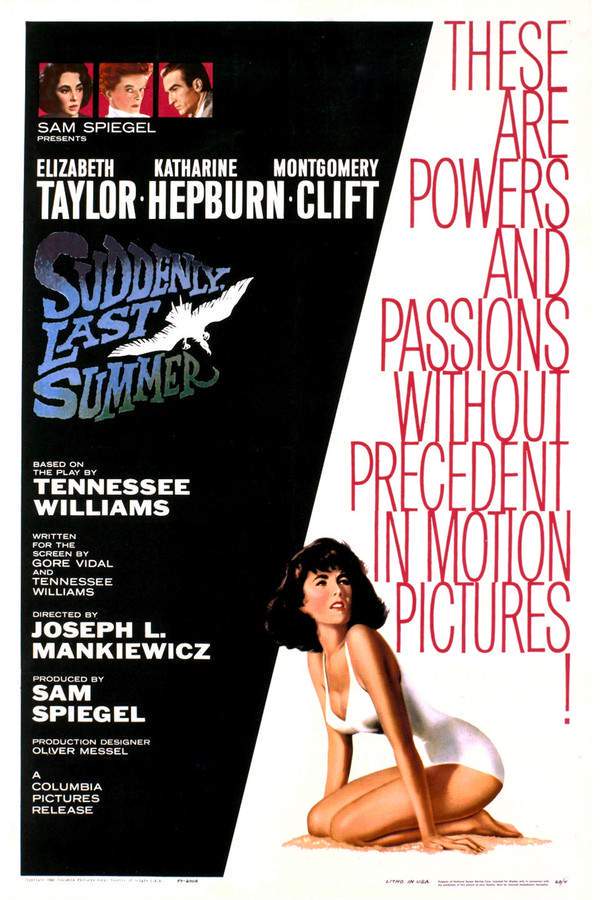
New Orleans, 1937. The story revolves around Catherine Holly, portrayed by Elizabeth Taylor, a young woman who finds herself in a mental institution following a significant emotional breakdown triggered by the mysterious death of her cousin, Sebastian Venable. This tragic event unfolded during a holiday they shared in Spain just a few months prior. His wealthy mother, Violet Venable, played by Katharine Hepburn, is desperate to suppress the truth surrounding Sebastian's untimely demise. In a drastic attempt to silence Catherine and ensure no secrets emerge, she offers a substantial bribe to hospital administrator Dr. Hockstader (Albert Dekker), proposing to fund a new wing for the institution if he can persuade brilliant young surgeon Dr. John Cukrowicz (Montgomery Clift) to perform a lobotomy on Catherine.
In a crucial meeting at her estate’s lush garden, which she describes as "like the dawn of creation," Mrs. Venable discusses her niece's case with Dr. Cukrowicz. During this conversation, she characterizes Sebastian as a poet who was more preoccupied with his art than with life, highlighting his yearly habit of writing a single poem each summer. She fondly reminisces about their shared vacations and reveals a haunting poem about witnessing the grotesque sight of birds devouring hatchling turtles—an event where Sebastian purportedly glimpsed "the face of God."
Eventually, Dr. Cukrowicz decides to evaluate Catherine, who has been isolated in a private women’s mental institution since returning from Europe. Initially, he observes her from a distance, noting an incident where she defiantly extinguishes a cigarette on her own palm in front of Sister Felicity (Joan Young). This alarming act is perceived by the nun as evidence of Catherine's instability. In their subsequent discussion, she expresses a fragmented memory, admitting that the last moment she recalls occurred before her trip to Europe—a traumatic event she refers to as the day she "lost her honor."
As the plot unfolds, Catherine's family shows up, revealing that Sebastian has left a significant inheritance in his will. However, Mrs. Venable withholds access to the funds unless they agree to commit Catherine and permit the lobotomy. In a desperate bid for freedom, Catherine attempts to escape, finding herself in a nightmarish scenario on a catwalk above the male patients, leading to a harrowing encounter.
Their strained exchanges escalate, especially when Catherine challenges Mrs. Venable about her true connection to Sebastian, hinting at sordid secrets and complicity. Mrs. Venable’s fainting spell allows Catherine to momentarily disengage from the confines of the institution. Yet, she faces further struggles, including an intense moment of vulnerability as she contemplates jumping from the catwalk but is thwarted by an orderly.
Determined to unlock the truth, Dr. Cukrowicz takes Catherine back to the Venable estate, employing truth serum in a tense confrontation attended by her family and hospital staff. In a gripping recollection, Catherine navigates through memories of their sun-soaked days in Cabeza de Lobo, where she learns the disturbing reality that Sebastian used her as bait to lure local boys. The shocking conclusion reveals her gruesome witness to Sebastian’s death, as he falls victim to a mob of starving children who consume him.
As the shocking truths unfold, Catherine collapses in despair while Mrs. Venable’s delusions become increasingly evident, revealing her denial of her son's sexuality and a desperate grip on reality. The film culminates as Mrs. Venable, now profoundly unhinged, mistakes Dr. Cukrowicz for Sebastian, leading to a chilling revelation as Catherine begins to recover, equipped with the harrowing truths she has uncovered. Together, they retreat into the house, seeking solace in the aftershocks of a traumatic but liberating revelation.
Last updated: November 07, 2024 at 22:51
Explore frequently asked questions about Suddenly, Last Summer (1960) with spoiler-rich answers covering the full plot summary, major story beats, character motivations, hidden details, and ending meaning. This movie summary FAQ helps explain confusing scenes, plot twists, and narrative decisions in clear, searchable detail.
Mrs. Venable wants Catherine to undergo a lobotomy to permanently silence her and prevent her from revealing the truth about Sebastian's death. She offers to fund a new hospital wing in exchange for Dr. Hockstader persuading Dr. Cukrowicz to perform the procedure. Catherine is the only witness to what happened in Spain, and Mrs. Venable will do anything to keep the horrifying details buried.
Earlier, Mrs. Venable bribes Dr. Hockstader, showing her desperation to control the narrative around Sebastian's death.
Sebastian was killed by a mob of starving children in Cabeza de Lobo, Spain. Catherine was forced to watch as they literally consumed him. This traumatic event is the reason Catherine had a psychological breakdown and was institutionalized.
Mrs. Venable's poem about birds devouring hatchling turtles hints at the brutal nature of Sebastian's demise.
When Catherine refers to losing her honor, she is describing the traumatic event in Spain where Sebastian used her as bait to lure local boys for his own purposes. The exact nature is implied to involve sexual exploitation, leaving Catherine traumatized by her complicity and what she witnessed.
Catherine admits the last moment she remembers clearly occurred before her trip to Europe, the day she lost her honor.
Sebastian manipulates Catherine into attracting local boys while he observes and presumably writes poetry. This reflects his predatory nature and the deeply disturbed relationship he has with his young cousin. Catherine was an innocent pawn in his twisted summer rituals.
Mrs. Venable describes Sebastian as a poet obsessed with his art who used others for his creative pursuits.
Mrs. Venable shares a poem Sebastian wrote about witnessing birds devouring hatchling turtles on a beach, which he claimed was when he saw "the face of God." This poem foreshadows his own violent death and reflects his disturbed perspective on beauty in brutality.
The poem is introduced early in Mrs. Venable's garden meeting with Dr. Cukrowicz.
Catherine deliberately burns herself with a cigarette in front of Sister Felicity as a desperate act of rebellion and to demonstrate her unstable mental state. This shocking self-harm signals her extreme psychological distress and her inability to cope with the trauma she experienced in Spain.
Dr. Cukrowicz witnesses this incident while observing Catherine from a distance at the institution.
Mrs. Venable is in complete denial about her son's sexuality and predatory behavior. She clings to the image of Sebastian as a pure poet, refusing to acknowledge his manipulation of Catherine and other boys. This denial is part of her broader effort to preserve his memory and protect the family's reputation.
Mrs. Venable describes Sebastian as preoccupied with poetry rather than "life," avoiding any mention of his actual relationships.
Under truth serum, Catherine recounts the dark memories of her time in Spain, revealing Sebastian's manipulative behavior and the horrifying circumstances of his death. She describes how he used her to lure boys and ultimately met his violent end at the hands of starving children who attacked and consumed him.
Dr. Cukrowicz brings Catherine to the Venable estate specifically to use truth serum to uncover the suppressed memories.
In the film's climax, Mrs. Venable's mental state completely collapses under the weight of the revealed truth. She projects her son's image onto Dr. Cukrowicz, demonstrating her unhinged psychological state and her inability to accept Sebastian's death or his true nature.
Throughout the film, Mrs. Venable's obsession with Sebastian intensifies as Catherine gets closer to revealing the truth.
Desperate to free herself from the mental institution and Violet's control, Catherine attempts to escape. Her escape leads her onto a dangerous catwalk above male patients, resulting in a terrifying encounter that reflects her psychological break and sense of entrapment.
Catherine's escape attempt follows her family's arrival and the revelation about Sebastian's inheritance.
Violet offers a substantial bribe to Dr. Hockstader, proposing to fund a new hospital wing if he can convince Dr. John Cukrowicz to perform a lobotomy on Catherine. This is a calculated attempt to use her wealth to permanently silence the only witness to Sebastian's death.
This bribe occurs early in the film, establishing Violet's desperation and willingness to corrupt medical ethics.
Discover curated groups of movies connected by mood, themes, and story style. Browse collections built around emotion, atmosphere, and narrative focus to easily find films that match what you feel like watching right now.
Stories where characters must excavate traumatic memories to uncover a disturbing reality.If you liked the investigative tension and psychological manipulation in Suddenly, Last Summer, you'll find similar stories here. These movies focus on characters grappling with repressed memories and dark secrets, often within oppressive settings like mental institutions or gothic family homes, delivering a similarly intense and disturbing viewing experience.
The narrative follows an investigative structure, typically involving a professional or determined individual who interviews a traumatized subject. Through a series of tense conversations and flashbacks, a horrifying secret is slowly revealed, challenging the official narrative and confronting a corrupting influence. The climax is often the cathartic, yet devastating, verbalization of the repressed truth.
These films are grouped by their shared focus on psychological mystery, the power dynamics between investigator, patient, and antagonist, and the slow-burn revelation of a deeply disturbing core truth. They create a similar feeling of oppressive suspense and psychological intensity.
Decadent, decaying families haunted by unspeakable secrets and psychological decay.Fans of the oppressive atmosphere and dark family dynamics in Suddenly, Last Summer will appreciate these movies. They explore similar themes of inheritance, repression, and grotesque secrets hidden within wealthy, decaying households, often with a melodramatic flair and a psychologically intense vibe.
The plot revolves around the intrusion of an outsider or the rebellion of a family member, which threatens to expose a long-buried, often horrific, family secret. The setting itself—a mansion, an estate—becomes a character, reflecting the family's internal decay. The narrative builds towards a shocking revelation that symbolically or literally consumes the characters.
These movies share a specific vibe: a blend of Southern Gothic or classic Gothic sensibilities with psychological horror. The similarity lies in the oppressive mood, the focus on a corrupt patriarchal/matriarchal figure, the theme of exploitation, and the use of shocking, symbolic secrets.
Don't stop at just watching - explore Suddenly, Last Summer in full detail. From the complete plot summary and scene-by-scene timeline to character breakdowns, thematic analysis, and a deep dive into the ending - every page helps you truly understand what Suddenly, Last Summer is all about. Plus, discover what's next after the movie.
Track the full timeline of Suddenly, Last Summer with every major event arranged chronologically. Perfect for decoding non-linear storytelling, flashbacks, or parallel narratives with a clear scene-by-scene breakdown.
Discover the characters, locations, and core themes that shape Suddenly, Last Summer. Get insights into symbolic elements, setting significance, and deeper narrative meaning - ideal for thematic analysis and movie breakdowns.
Discover movies like Suddenly, Last Summer that share similar genres, themes, and storytelling elements. Whether you’re drawn to the atmosphere, character arcs, or plot structure, these curated recommendations will help you explore more films you’ll love.
Suddenly, Last Summer (1960) Scene-by-Scene Movie Timeline
Suddenly, Last Summer (1960) Movie Characters, Themes & Settings
Suddenly, Last Summer (1960) Spoiler-Free Summary & Key Flow
Movies Like Suddenly, Last Summer – Similar Titles You’ll Enjoy
Spellbound (1945) Plot Summary & Ending Explained
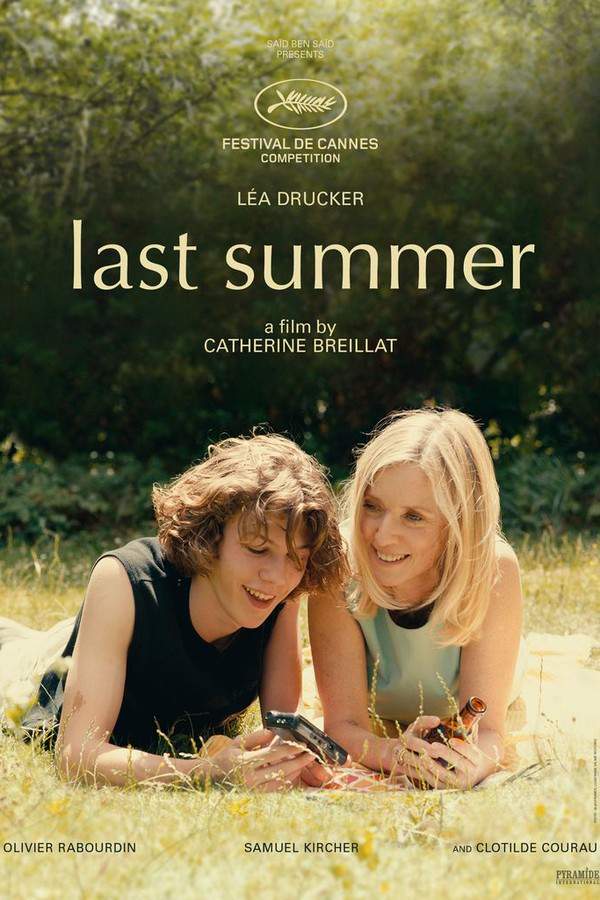
Last Summer (2021) Full Movie Breakdown
Final Analysis (1992) Detailed Story Recap
I Still Know What You Did Last Summer (1998) Full Summary & Key Details
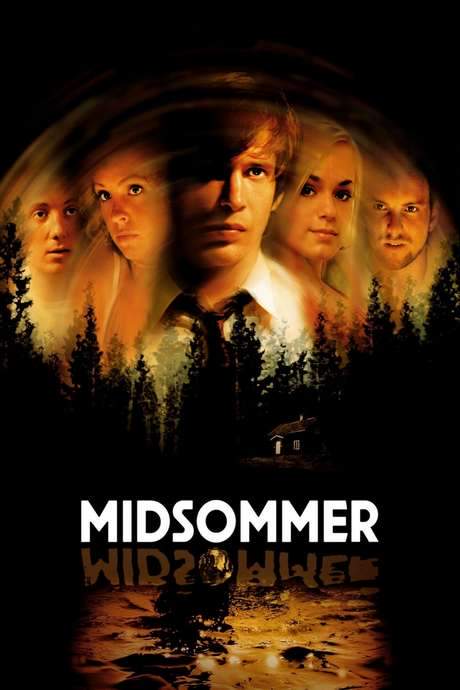
Midsummer (2003) Full Movie Breakdown
Suddenly in the Dark (1981) Full Summary & Key Details
One Deadly Summer (1983) Ending Explained & Film Insights
Two Summers (1000) Ending Explained & Film Insights
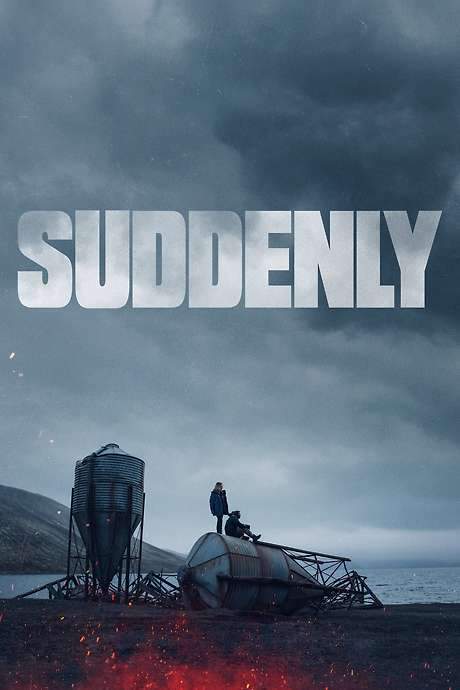
Suddenly (2023) Detailed Story Recap
Suddenly, Last Summer (1993) Story Summary & Characters
Summerfield (1977) Full Movie Breakdown
Last Summer (1969) Story Summary & Characters
Secrets of the Summer House (2008) Full Movie Breakdown
All of a Sudden (1996) Plot Summary & Ending Explained
Seclusion (2025) Movie Recap & Themes