Year: 2008
Runtime: 114 min
Language: English
Director: Andrew Piddington
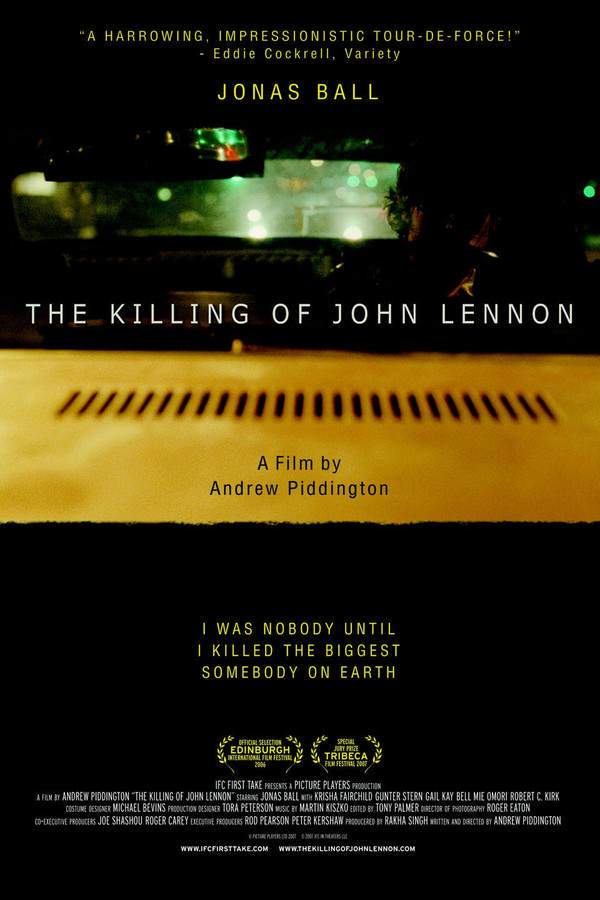
A disturbing look at the events leading up to John Lennon's death, the film explores the mindset of Mark David Chapman, a troubled fan consumed by obsession. Through a gritty and immersive style, it delves into Chapman's descent into madness and the loneliness that fueled his twisted fixation. The story culminates in the tragic moment outside the Dakota apartment in 1980, examining the dark side of celebrity and the devastating consequences of unchecked obsession.
Warning: spoilers below!
Haven’t seen The Killing of John Lennon yet? This summary contains major spoilers. Bookmark the page, watch the movie, and come back for the full breakdown. If you're ready, scroll on and relive the story!
Trace every key event in The Killing of John Lennon (2008) with our detailed, chronological timeline. Perfect for unpacking nonlinear stories, spotting hidden connections, and understanding how each scene builds toward the film’s climax. Whether you're revisiting or decoding for the first time, this timeline gives you the full picture.
Last updated: November 02, 2024 at 13:48
Find frequently asked questions about the The Killing of John Lennon (2008) timeline, including chronological order, nonlinear jumps, cause-and-effect links, and scene sequence clarifications. This timeline FAQ helps explain when key events happen, how moments connect, and why the story unfolds in that specific order.
Mark Chapman became obsessed with killing John Lennon after reading a biography of the musician. He viewed Lennon as a 'phony', a term directly from The Catcher in the Rye, believing that someone who sang about simplicity and peace while living an extravagant lifestyle was fundamentally hypocritical. This perceived hypocrisy, combined with Chapman's fragile mental state and identification with Holden Caulfield's disdain for 'phonies,' led him to fixate on Lennon as a symbol of everything he hated.
The Catcher in the Rye was the central text that shaped Mark Chapman's worldview and ultimately his crime. He deeply identified with protagonist Holden Caulfield, who despises 'phonies' and feels alienated from the adult world. Chapman applied this same lens to John Lennon, convinced that Lennon was the ultimate 'phony', a musician who preached peace but lived luxuriously. The book provided both his justification and his sense of purpose, and he even quoted it during his trial.
Chapman believed Lennon was a phony because he saw a contradiction between Lennon's music, which often espoused simplicity, peace, and anti-materialism, and his actual lifestyle. Lennon lived in the exclusive Dakota Hotel, was extremely wealthy, and presented a public image that Chapman viewed as manufactured and false. This perceived hypocrisy directly mirrors Holden Caulfield's grievances against adults in The Catcher in the Rye.
While in New York in October 1980, Chapman experienced a momentary change of heart after watching a film that reminded him of his wife's love for him. This triggered a brief realization that he should return to Hawaii and abandon his mission. However, this moment of clarity was temporary, his obsession with The Catcher in the Rye and his need to fulfill what he saw as his destiny eventually overrode this brief reflection, and he returned to New York weeks later to carry out the murder.
On December 8, 1980, Chapman approached Lennon as he left the Dakota Hotel for a recording session and asked for his autograph. Lennon signed a copy of his album 'Double Fantasy.' This interaction was significant because it created a chilling contradiction, Chapman spent a peaceful moment with his intended victim just hours before killing him. Some interpret this as either a final moment of hesitation or a deliberate act to mask his true intentions.
During his trial, Chapman shockingly waived his right to an insanity defense and instead pleaded guilty. He chose to represent himself and recited passages from The Catcher in the Rye during proceedings. His decision appeared driven by a desire for notoriety and a belief that accepting responsibility was part of fulfilling his self-perceived role, he wanted to be remembered as someone who acted on his convictions rather than being dismissed as mentally ill.
Chapman's obsession stemmed from deep feelings of alienation in Hawaii, where he struggled to connect with his job, family, and friends. When he discovered The Catcher in the Rye in a public library, he found a character in Holden Caulfield who shared his sense of not belonging and his anger toward perceived 'phonies.' This identification gave his aimlessness a purpose, and his fixation on Lennon grew from this foundation of psychological isolation and searching for meaning.
Chapman pleaded guilty to second-degree murder and was sentenced to 20 years to life. Rather than mounting a defense that might have focused on his mental state, he used his trial as a platform to express his beliefs. By pleading guilty, he accepted the legal consequences while maintaining that his actions were justified by his convictions, a final assertion of the ideology that drove the murder itself.
Chapman traveled to New York specifically because he knew Lennon resided at the Dakota Hotel on West 72nd Street. The Dakota was Lennon's home, making it the predictable location where Chapman could confront him. After obtaining Lennon's autograph earlier that day, Chapman waited outside the building for hours until Lennon returned around 10:50 PM, when he fired five shots from a revolver.
After firing the shots, Chapman calmly stood beside his car and waited for police to arrive. He made no attempt to flee or resist arrest. This behavior reflected his belief that his mission was complete, he had fulfilled what he saw as his destiny, inspired by The Catcher in the Rye, and felt a sense of closure. He showed no emotion when taken into custody, describing the moment as the end of his obsession.
Discover curated groups of movies connected by mood, themes, and story style. Browse collections built around emotion, atmosphere, and narrative focus to easily find films that match what you feel like watching right now.
Gripping stories of troubled individuals unraveling into real-life crimes.Explore a collection of gripping movies like The Killing of John Lennon that focus on the psychology of real-life criminals. If you were fascinated by the disturbing and immersive study of obsession leading to a tragic crime, these films offer similar deep dives into infamous figures and their troubled minds.
These narratives typically follow a downward spiral, chronicling a character's increasing alienation and fixation on a person or idea. The story is driven by internal psychological conflict rather than external action, building a steady, almost inevitable momentum towards a known, tragic conclusion.
Movies are grouped here for their shared focus on the 'why' behind a real crime. They prioritize psychological immersion over action, creating a heavy, unsettling atmosphere rooted in the grim reality of human behavior and mental illness.
Unsettling journeys into a single character's disintegrating psyche.Discover movies with a similar slow-burn, psychological focus to The Killing of John Lennon. If you appreciated the methodical and immersive portrayal of a lonely individual's descent into obsession and madness, these films offer comparable studies of internal collapse and heavy, tragic conclusions.
The narrative pattern is a focused, linear descent. It hinges on a single point-of-view, immersing the audience in the character's distorted reality. The conflict is internal, with the outside world often serving as a catalyst for the protagonist's increasing alienation and fixation.
These films are united by their immersive, patient approach to depicting psychological collapse. They share a dark tone, steady pacing, and a heavy emotional weight, prioritizing character study over plot twists to create a deeply unsettling and somber experience.
Don't stop at just watching - explore The Killing of John Lennon in full detail. From the complete plot summary and scene-by-scene timeline to character breakdowns, thematic analysis, and a deep dive into the ending - every page helps you truly understand what The Killing of John Lennon is all about. Plus, discover what's next after the movie.
Read a complete plot summary of The Killing of John Lennon, including all key story points, character arcs, and turning points. This in-depth recap is ideal for understanding the narrative structure or reviewing what happened in the movie.
Discover the characters, locations, and core themes that shape The Killing of John Lennon. Get insights into symbolic elements, setting significance, and deeper narrative meaning - ideal for thematic analysis and movie breakdowns.
Discover movies like The Killing of John Lennon that share similar genres, themes, and storytelling elements. Whether you’re drawn to the atmosphere, character arcs, or plot structure, these curated recommendations will help you explore more films you’ll love.
The Killing of John Lennon (2008) Plot Summary & Movie Recap
The Killing of John Lennon (2008) Scene-by-Scene Movie Timeline
The Killing of John Lennon (2008) Spoiler-Free Summary & Key Flow
Movies Like The Killing of John Lennon – Similar Titles You’ll Enjoy
The Killing (1956) Full Summary & Key Details
The Killing of Kenneth Chamberlain (2021) Story Summary & Characters
The Assassination of Richard Nixon (2004) Complete Plot Breakdown
The Killing Fields (1985) Story Summary & Characters
The U.S. vs. John Lennon (2006) Story Summary & Characters
Soaked in Bleach (2015) Plot Summary & Ending Explained
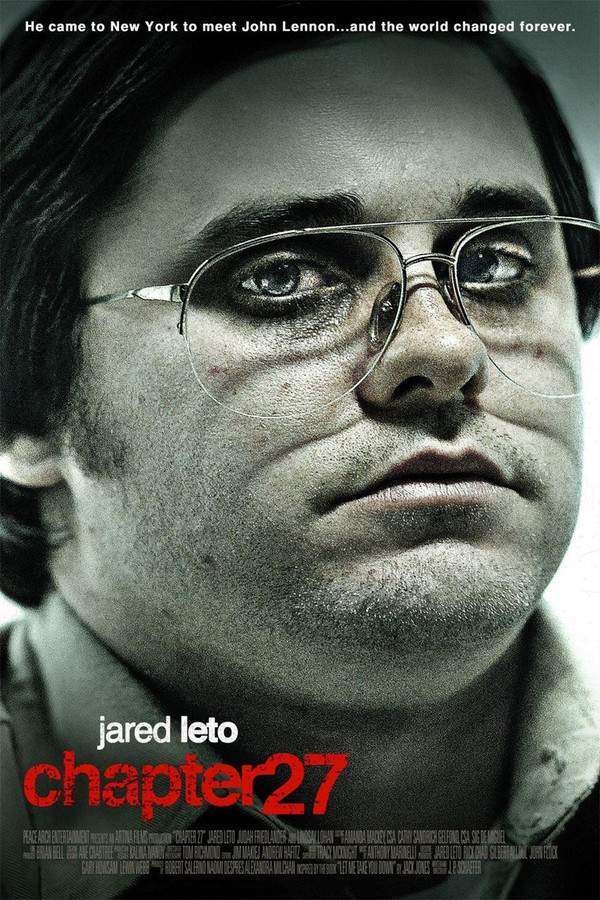
Chapter 27 (2008) Story Summary & Characters
The Killing Jar (2010) Complete Plot Breakdown
The Lennon Report (2016) Detailed Story Recap
CHAOS: The Manson Murders (2025) Complete Plot Breakdown
The Killing of Kenneth Chamberlain (2019) Detailed Story Recap
I Killed John Lennon (2005) Spoiler-Packed Plot Recap
The Killing of America (1981) Movie Recap & Themes
Acts of Violence (1985) Plot Summary & Ending Explained
Kurt & Courtney (1998) Movie Recap & Themes