Year: 1936
Runtime: 98 mins
Language: English
Set in 1930s China amid a brutal civil war, General Pen assigns the daring American adventurer O’Hara the task of delivering a substantial sum to Mr. Wu. The money is destined for the purchase of arms in Shanghai, a desperate effort to overthrow General Yang’s oppressive rule that keeps an entire province under a merciless iron fist.
Warning: spoilers below!
Haven’t seen The General Died at Dawn yet? This summary contains major spoilers. Bookmark the page, watch the movie, and come back for the full breakdown. If you're ready, scroll on and relive the story!
Trace every key event in The General Died at Dawn (1936) with our detailed, chronological timeline. Perfect for unpacking nonlinear stories, spotting hidden connections, and understanding how each scene builds toward the film’s climax. Whether you're revisiting or decoding for the first time, this timeline gives you the full picture.
Last updated: October 09, 2025 at 11:15
Find frequently asked questions about the The General Died at Dawn (1936) timeline, including chronological order, nonlinear jumps, cause-and-effect links, and scene sequence clarifications. This timeline FAQ helps explain when key events happen, how moments connect, and why the story unfolds in that specific order.
Peter Perrie, who is dying, steals the money belt from O'Hara because he wants to secure a future for his daughter Judy. He hides it in his suitcase lining thinking he can protect both the money and his daughter, despite Judy's pleas that the theft will end badly. His desperate attempt to provide for her leads to his ultimate fate.
Earlier, Peter explains he is dying and wants Judy to see America before he dies, establishing his desperate motivation.
Brighton, the gunrunner from Brighton, wakes from a stupor seeking alcohol and stumbles into Yang's soldiers on the boat. In the ensuing chaos, he confronts Yang directly and manages to mortally wound the general with a knife. This random encounter shifts the entire balance of power on the boat.
The timeline notes Brighton as 'a man slipping into a stupor while seeking a drink,' setting up his unintended intervention.
As Yang lies dying from his wound, he orders his men to turn on one another as a final act of twisted honor. He wants to preserve a narrative of greatness even in death, attempting to create a symbolic collapse of power rather than simply being overtaken. It's his last grasp at a legacy of strength and dominance.
Yang is established as a warlord obsessed with power and markets, showing his need for control extends even to his final moments.
Judy is faced with an impossible choice when Yang threatens the lives of both O'Hara and Wu. She contemplates revealing the money's location to save them, showing her willingness to sacrifice the stolen funds for the people she cares about. Yang cruelly forces her to kiss O'Hara goodbye first, using her love as psychological torment.
Judy's reluctance to participate in her father's theft and her growing connection to O'Hara establish her emotional investment in the outcome.
O'Hara manages to evade Yang's trap during the train sequence. While Judy and her father attempt to distract him as part of Yang's plan, O'Hara is able to slip away and make his way to Wu's residence. The summary notes he 'escapes Yang's initial capture' but the specific details of his escape are not fully detailed in the source material.
O'Hara is introduced as a 'tough, world-weary soldier of fortune' with survival skills that allow him to navigate dangerous situations.
Leach, who schemes throughout the film trying to get a cut of the stolen money, is shot dead by Yang's men on the boat. His opportunistic greed proves fatal as he becomes another victim of Yang's ruthless campaign to reclaim the money. His death demonstrates Yang's willingness to eliminate anyone who stands in his way.
Leach's constant demand for a share and his scheming foreshadow his fatal involvement.
Despite the death and destruction that have occurred, the ending shows Judy and O'Hara embracing as the sun rises. They have survived Yang's tyranny and the perilous night. The dawn represents a new beginning and hope for the future, though the memory of the ordeal lingers. Their bond, forged through shared danger, offers a bittersweet sense of closure.
The contrast between the darkness and danger of the night-time boat sequence and the breaking dawn establishes the shift from survival to hope.
The money hidden in the belt is intended to fund a weapons deal. Wu recruits O'Hara to travel to Shanghai and then to Brighton (a gunrunner in Brighton, England) to purchase arms. These weapons would arm Wu's forces to oppose General Yang's invasion plans and overthrow his oppressive rule over the province.
Wu enlists O'Hara specifically to acquire weapons, establishing the money's purpose from the start.
The money is described this way to highlight the moral complexity of the mission. It represents funds extracted from peasants crushed by General Yang's oppressive regime. Wu uses this money, taken from those oppressed by Yang, to fund the weapons that would overthrow him, creating a cycle where the victims' suffering enables their potential liberation.
Yang's rule is described as merciless, with peasants bearing the burden of his silk, rice, and opium ambitions.
As Yang lies dying, O'Hara pleads for mercy, arguing that letting them live would preserve a story of loyalty and honor for the world to see. He suggests that Yang could be remembered as a great leader who showed mercy, rather than as a brutal tyrant. This appeals to Yang's ego and desire for legacy.
O'Hara's argument plays on Yang's earlier concerns about honor and reputation.
Discover curated groups of movies connected by mood, themes, and story style. Browse collections built around emotion, atmosphere, and narrative focus to easily find films that match what you feel like watching right now.
Ordinary people caught in dangerous webs of conspiracy and survival.If you enjoyed the tense, dangerous atmosphere of The General Died at Dawn, you'll find more movies like it here. These films feature desperate missions against oppressive regimes, gripping political intrigue, and characters operating under the constant threat of betrayal and violence.
The narrative pattern typically involves a lone individual or small group tasked with a critical mission within a hostile, war-torn, or politically unstable setting. The journey is a gauntlet of deception and close calls, where allegiances are fluid and trust is a liability. The climax often hinges on a final confrontation with the oppressive force.
These movies are grouped together because they share a core experience of high-tension survival against overwhelming political odds. They feature fast pacing, high emotional stakes, and a world where the threat of violence is ever-present, creating a consistently anxious and gripping viewing experience.
Stories where survival forces impossible choices in chaotic conflicts.Fans of The General Died at Dawn who appreciated its exploration of mercenaries, war profiteering, and difficult survival choices will find similar stories here. These movies examine the gray areas of morality during civil unrest and the heavy emotional weight of participating in violence.
These narratives often follow morally ambiguous characters—like mercenaries, profiteers, or reluctant heroes—navigating a civil war or oppressive conflict. The central journey is as much an internal moral struggle as an external physical one, forcing characters to compromise their ethics for a chance at survival or a greater good, leading to a emotionally heavy but often hopeful resolution.
This thread connects movies that share a focus on the psychological and moral burdens of war. They combine heavy emotional weight with tense, fast-paced action, creating a complex experience that is both thrilling and morally provocative.
Don't stop at just watching - explore The General Died at Dawn in full detail. From the complete plot summary and scene-by-scene timeline to character breakdowns, thematic analysis, and a deep dive into the ending - every page helps you truly understand what The General Died at Dawn is all about. Plus, discover what's next after the movie.
Read a complete plot summary of The General Died at Dawn, including all key story points, character arcs, and turning points. This in-depth recap is ideal for understanding the narrative structure or reviewing what happened in the movie.
Discover the characters, locations, and core themes that shape The General Died at Dawn. Get insights into symbolic elements, setting significance, and deeper narrative meaning - ideal for thematic analysis and movie breakdowns.
Discover movies like The General Died at Dawn that share similar genres, themes, and storytelling elements. Whether you’re drawn to the atmosphere, character arcs, or plot structure, these curated recommendations will help you explore more films you’ll love.
The General Died at Dawn (1936) Plot Summary & Movie Recap
The General Died at Dawn (1936) Scene-by-Scene Movie Timeline
The General Died at Dawn (1936) Spoiler-Free Summary & Key Flow
Movies Like The General Died at Dawn – Similar Titles You’ll Enjoy
General Commander (2019) Complete Plot Breakdown
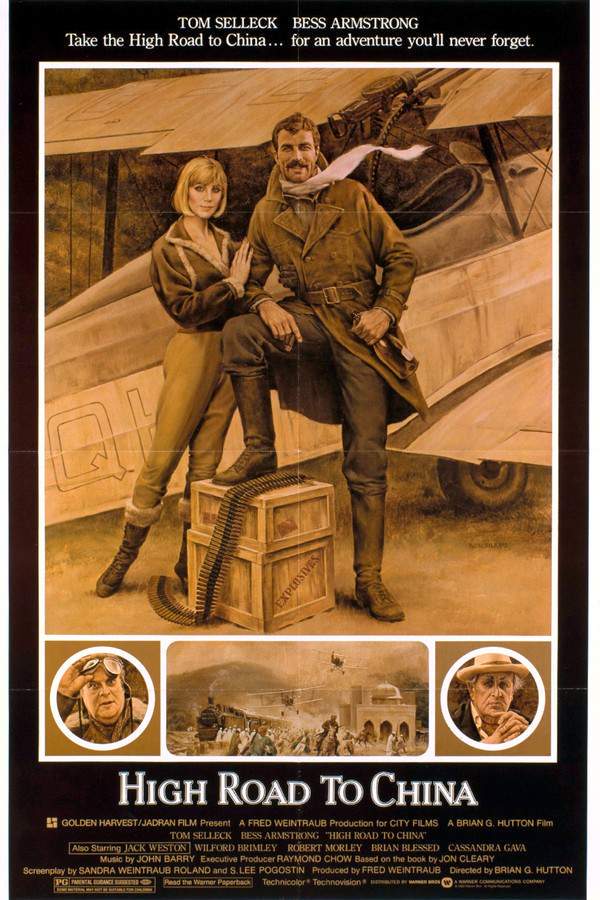
High Road to China (1983) Film Overview & Timeline
The Warlords (2007) Plot Summary & Ending Explained
The General of the Dead Army (1983) Full Summary & Key Details
The Gunrunner (1989) Full Movie Breakdown
The Mountain Road (1960) Detailed Story Recap
Death Duel of Kung Fu (1979) Film Overview & Timeline
General Massacre (1973) Full Movie Breakdown
China Gate (1957) Detailed Story Recap
My General’s Wives (1951) Full Summary & Key Details
The Mysterious Dr. Fu Manchu (1929) Plot Summary & Ending Explained
China Venture (1953) Full Movie Breakdown
A Bullet for the General (1967) Story Summary & Characters
The Girl and the General (1967) Film Overview & Timeline
West of Shanghai (1937) Detailed Story Recap