Year: 1936
Runtime: 98 mins
Language: English
Set in 1930s China amid a brutal civil war, General Pen assigns the daring American adventurer O’Hara the task of delivering a substantial sum to Mr. Wu. The money is destined for the purchase of arms in Shanghai, a desperate effort to overthrow General Yang’s oppressive rule that keeps an entire province under a merciless iron fist.
Warning: spoilers below!
Haven’t seen The General Died at Dawn yet? This summary contains major spoilers. Bookmark the page, watch the movie, and come back for the full breakdown. If you're ready, scroll on and relive the story!
Explore the full timeline and setting of The General Died at Dawn (1936). Follow every major event in chronological order and see how the environment shapes the story, characters, and dramatic tension.
Last updated: October 04, 2025 at 16:03
Meet the key characters of The General Died at Dawn (1936), with detailed profiles, motivations, and roles in the plot. Understand their emotional journeys and what they reveal about the film’s deeper themes.
Last updated: October 04, 2025 at 16:03
Explore the central themes of The General Died at Dawn (1936), from psychological, social, and emotional dimensions to philosophical messages. Understand what the film is really saying beneath the surface.
Last updated: October 04, 2025 at 16:03
Browse frequently asked questions about The General Died at Dawn (1936) focused on characters, relationships, themes, symbols, setting, and story context. This movie info FAQ gives spoiler-aware explanations for character arcs, world details, and thematic interpretation so readers can better understand what the film is really about.
The film is set primarily in 1930s China, with key scenes in Shanghai and surrounding areas. The story also spans a train, various houses, a ship, and concludes at a port in Brighton, England. This international backdrop reflects the era's complex web of political intrigue and mercenary schemes.
The opening establishes Shanghai as a hub of commerce and danger, while the final act's port setting underscores how the character's schemes extend beyond China's borders.
The movie takes place during China's Warlord Era in the 1930s, a time of brutal civil war and political fragmentation. Rival generals compete for control while foreign powers interest themselves in the chaos, exploiting the instability for profit and political leverage.
The era's mention of shifting loyalties and mercenary schemes hints at the moral compromises characters will face.
The film explores several interconnected themes: power and corruption, family and duty, deception and survival, and hope. Central to the narrative is how wealth and force feed each other, as money meant for peasants funds arms deals that perpetuate oppression. The characters grapple with whether power can be exercised without corrupting those who wield it.
The title itself, with its reference to dawn, foreshadows the film's ultimate meditation on hope emerging from darkness.
General Yang is a ruthless warlord who seeks to conquer provinces and control markets in 1930s China. He maintains an iron grip over an entire province, using fear and diplomatic pressure to coerce others. His ambition drives much of the conflict, as he attempts to dominate trade routes and expand his influence across the region.
Yang's presence looms over the entire narrative, representing the oppressive force that the protagonists must ultimately confront.
O'Hara is an American adventurer and soldier of fortune drawn into a dangerous gunrunning scheme in China. Despite his world-weary exterior, he possesses moral complexity and courage. His priorities shift from personal survival to protecting others, particularly Judy Perrie, as he navigates the treacherous landscape of shifting loyalties.
O'Hara's initial pragmatism gives way to increasingly heroic choices as the stakes escalate.
Dawn symbolizes hope and renewal amid violence and corruption. The film climaxes at dawn, offering a fragile moment of humanity as O'Hara and Judy confront the consequences of their choices. The ending suggests that life can continue beyond the schemes and darkness of the warlord era, though costs remain.
The film's title promises a resolution that transcends the moral compromises and violence of the narrative.
Judy Perrie is the daughter of Peter Perrie, caught in her father's scheme to secure money for her future in America. She wrestles with loyalty to her dying father and her own desire for independence. Her evolving stance throughout the film drives the narrative toward its climax, as she must choose between familial duty and personal freedom.
Judy's internal conflict between duty and autonomy sets her apart as more than a passive character.
Shanghai serves as the film's primary urban setting, a mercantile landscape where political instability meets international commerce. The city represents both the dangers of warlord-era China and the lucrative opportunities that attract foreigners and schemers alike. Its contrast with frontier settings highlights the story's international scope.
Shanghai's characterization as a port city hints at the transcontinental schemes that drive the plot.
Peter Perrie is Judy's dying father who engineers a plan to steal money so his daughter can have a better life in America. He hides the wealth inside his suitcase and manipulates those around him to secure his family's future. His scheming sets the chain of events in motion, though his fate underscores the moral costs of greed.
Peter's desperate scheme establishes the central conflict that drives the narrative forward.
Leach is a opportunistic schemer who seeks a cut from Peter's theft. He plays multiple factions against each other to increase his own payoff, driven entirely by greed. His duplicity leads to a violent reckoning when the plan unravels, illustrating the film's theme that deception ultimately destroys those who practice it.
Leach's duplicity marks him as a representative of the film's darker themes about trust and betrayal.
The film is classified as a Drama and Thriller, combining the political intrigue of 1930s China with tense, dangerous cat-and-mouse sequences. The pacing is fast, driven by critical events on a train and boat with little downtime. The tone remains tense throughout, punctuated by suspenseful moments and the looming threat of the firing squad.
The thriller classification reflects the film's constant life-or-death stakes and action-driven plot.
Discover curated groups of movies connected by mood, themes, and story style. Browse collections built around emotion, atmosphere, and narrative focus to easily find films that match what you feel like watching right now.
Ordinary people caught in dangerous webs of conspiracy and survival.If you enjoyed the tense, dangerous atmosphere of The General Died at Dawn, you'll find more movies like it here. These films feature desperate missions against oppressive regimes, gripping political intrigue, and characters operating under the constant threat of betrayal and violence.
The narrative pattern typically involves a lone individual or small group tasked with a critical mission within a hostile, war-torn, or politically unstable setting. The journey is a gauntlet of deception and close calls, where allegiances are fluid and trust is a liability. The climax often hinges on a final confrontation with the oppressive force.
These movies are grouped together because they share a core experience of high-tension survival against overwhelming political odds. They feature fast pacing, high emotional stakes, and a world where the threat of violence is ever-present, creating a consistently anxious and gripping viewing experience.
Stories where survival forces impossible choices in chaotic conflicts.Fans of The General Died at Dawn who appreciated its exploration of mercenaries, war profiteering, and difficult survival choices will find similar stories here. These movies examine the gray areas of morality during civil unrest and the heavy emotional weight of participating in violence.
These narratives often follow morally ambiguous characters—like mercenaries, profiteers, or reluctant heroes—navigating a civil war or oppressive conflict. The central journey is as much an internal moral struggle as an external physical one, forcing characters to compromise their ethics for a chance at survival or a greater good, leading to a emotionally heavy but often hopeful resolution.
This thread connects movies that share a focus on the psychological and moral burdens of war. They combine heavy emotional weight with tense, fast-paced action, creating a complex experience that is both thrilling and morally provocative.
Don't stop at just watching - explore The General Died at Dawn in full detail. From the complete plot summary and scene-by-scene timeline to character breakdowns, thematic analysis, and a deep dive into the ending - every page helps you truly understand what The General Died at Dawn is all about. Plus, discover what's next after the movie.
Read a complete plot summary of The General Died at Dawn, including all key story points, character arcs, and turning points. This in-depth recap is ideal for understanding the narrative structure or reviewing what happened in the movie.
Track the full timeline of The General Died at Dawn with every major event arranged chronologically. Perfect for decoding non-linear storytelling, flashbacks, or parallel narratives with a clear scene-by-scene breakdown.
Discover movies like The General Died at Dawn that share similar genres, themes, and storytelling elements. Whether you’re drawn to the atmosphere, character arcs, or plot structure, these curated recommendations will help you explore more films you’ll love.
The General Died at Dawn (1936) Plot Summary & Movie Recap
The General Died at Dawn (1936) Scene-by-Scene Movie Timeline
The General Died at Dawn (1936) Spoiler-Free Summary & Key Flow
Movies Like The General Died at Dawn – Similar Titles You’ll Enjoy
General Commander (2019) Movie Recap & Themes
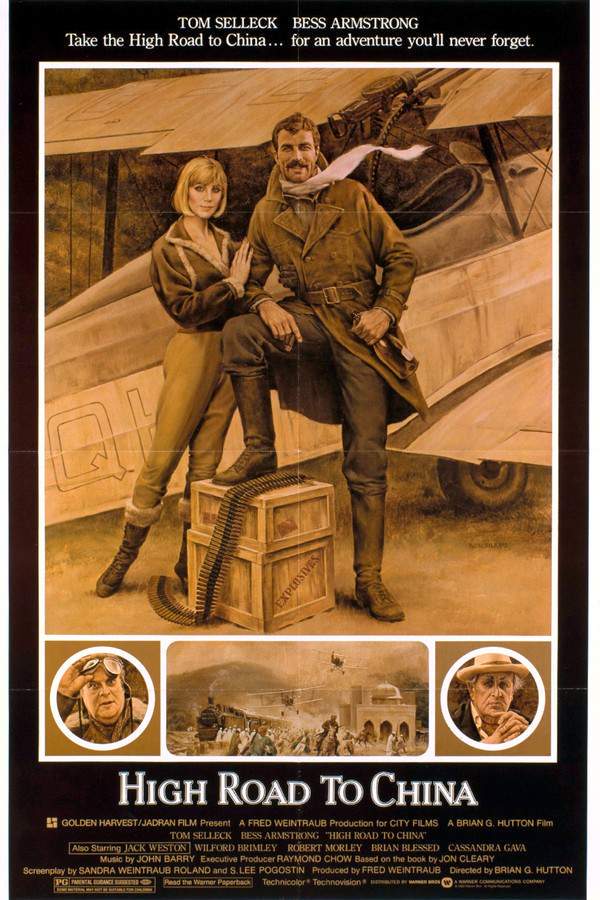
High Road to China (1983) Full Movie Breakdown
The Warlords (2007) Detailed Story Recap
The General of the Dead Army (1983) Story Summary & Characters
The Gunrunner (1989) Story Summary & Characters
The Mountain Road (1960) Ending Explained & Film Insights
Death Duel of Kung Fu (1979) Plot Summary & Ending Explained
General Massacre (1973) Detailed Story Recap
China Gate (1957) Full Movie Breakdown
My General’s Wives (1951) Spoiler-Packed Plot Recap
The Mysterious Dr. Fu Manchu (1929) Full Movie Breakdown
China Venture (1953) Full Summary & Key Details
A Bullet for the General (1967) Full Movie Breakdown
The Girl and the General (1967) Film Overview & Timeline
West of Shanghai (1937) Spoiler-Packed Plot Recap