Plot Explained Spoilers guaranteed!
Plot Explained

Browse by genre

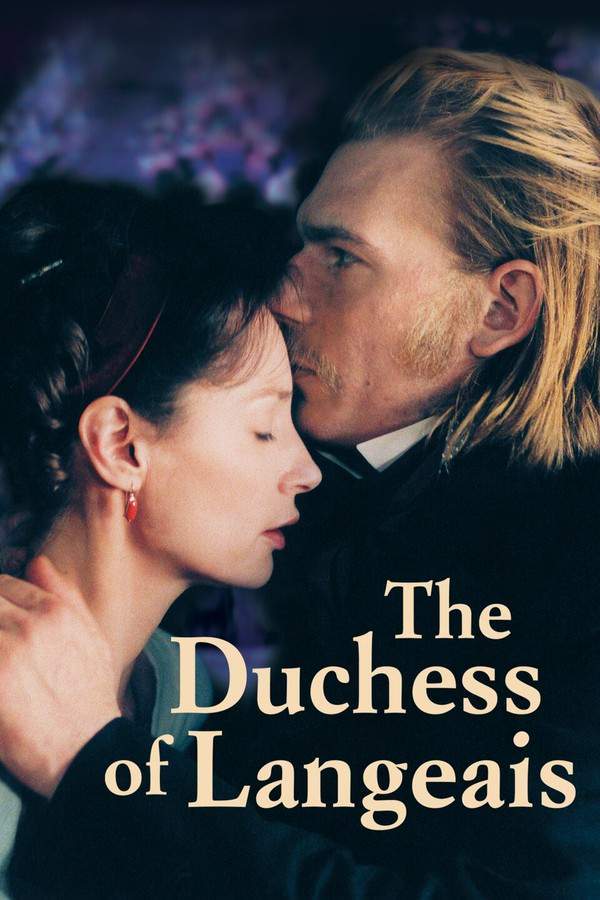
The Duchess of Langeais (2008) movie poster

Characters & Themes

The Duchess of Langeais (2008) Characters, Setting & Themes Explained

Release, runtime and language
2008 · 137 min · French
Directed by
Jacques Rivette

Amidst the lavish Parisian society of the 1820s, the captivating Duchess of Langeais enjoys manipulating the affections of those around her. Her playful games of seduction are challenged when she encounters General Armand de Montriveau, whose sincere feelings complicate her calculated approach. A passionate and turbulent affair develops between them, awakening Antoinette's own capacity for love. However, pride and unspoken desires threaten to keep them apart, potentially destroying any chance of happiness for these entangled lovers.

On this page (6)
  1. 1 Characters explained (2)
  2. 2 Where & when it takes place
  3. 3 Themes & meaning (3)
  4. 4 Character & meaning questions
  5. 5 Movie threads
  6. 6 Every angle

2 main characters · contains spoilers

The Duchess of Langeais Characters Explained: Who Is Who

The main characters of The Duchess of Langeais (2008), heroes and villains: what drives them, how they change over the course of the story and what each of them reveals about the film's bigger ideas.

  • Armand de Montriveau

    Armand is a passionate general who feels disillusioned and insignificant after serving under Napoleon. His intense love for Antoinette leads him to pursue her relentlessly, showcasing both his determination and vulnerability. As the story unfolds, his character evolves from a suitor to a man grappling with rejection and despair.

    • 💔 Love-stricken
    • ⚔️ Passionate
    • 🌀 Troubled
  • Antoinette de Langeais

    Antoinette is a captivating and complex character, embodying the traits of a natural coquette who enjoys the thrill of romance while navigating societal constraints. She manipulates Armand’s affections while pretending to be devoted to her marriage and faith. Her tragic fate highlights her struggle between desire and duty.

    • 🎭 Manipulative
    • 🙏 Pious
    • 💔 Tragic

Last updated: October 22, 2024 at 21:56

Was this helpful?

Setting

Where and When Does The Duchess of Langeais Take Place?

The setting of The Duchess of Langeais (2008): the year and time period, the places and locations, and how they shape the characters, the mood and the tension of the story.

Time period

19th Century

The narrative is set during the 19th century, a time marked by significant social and political changes in Europe following the Napoleonic Wars. This period of the Restoration was characterized by the struggle between old traditions and new ideas, reflected in the characters' complex relationships and societal expectations.

Location

Majorca, Paris

The movie takes place in the beautiful island of Majorca, known for its stunning landscapes and vibrant history. It contrasts with the bustling nightlife of Paris, where opulent parties and social intrigues unfold. Each location serves as a backdrop for the passionate and tumultuous relationship between Armand and Antoinette.

  • 🏰 Historical
  • 🌆 Urban

Last updated: October 22, 2024 at 21:56

Was this helpful?

3 major themes

The Duchess of Langeais Meaning: Themes & Message Explained

What is The Duchess of Langeais (2008) really about? The emotional, social and philosophical themes the film keeps returning to, its symbolism and the message beneath the surface.

  • Love and Loss

    The movie explores the themes of love and loss through the passionate yet destructive relationship between Armand and Antoinette. Their tumultuous affair is defined by yearning, manipulation, and ultimately heartbreak, underscoring the consequences of their desires. The tragic ending serves as a poignant reminder of the fragility of love.

  • Manipulation

    Manipulation plays a crucial role in the dynamics of Armand and Antoinette's relationship. Antoinette's coquetry and Armand's eventual manipulation reflect the power struggles inherent in romance. Their psychological games lead to misunderstandings and tragic outcomes, showcasing the darker sides of attraction and desire.

  • Faith and Piety

    The film delves into themes of faith and piety, particularly through Antoinette's use of her marital vows and religious pretense to resist Armand's advances. This tension between personal desire and societal expectations highlights the constraints placed on women during this era, shaping their actions and decisions.

Last updated: October 22, 2024 at 21:56

Was this helpful?

Character & theme questions

The Duchess of Langeais Characters & Meaning: Your Questions Answered

The questions people ask about The Duchess of Langeais (2008): who the characters really are, their relationships, what the symbols mean, where it takes place and what the movie is really about. Each answer contains spoilers.

Q1

Where does The Duchess of Langeais take place?

The film is set in two primary locations: the beautiful island of Majorca with its stunning landscapes, and the bustling nightlife of Paris with its opulent parties and social intrigues. These contrasting settings serve as a backdrop for the passionate relationship between Armand and Antoinette, with Majorca offering a more intimate andraw setting compared to the social theater of Parisian high society.

  • majorca
  • paris
  • setting
  • locations
  • backdrop
Q2

What time period does the movie depict?

The story is set during the 19th century, specifically during the Restoration period following the Napoleonic Wars. This era was characterized by the struggle between old traditions and new ideas, which is reflected in the complex relationships and societal expectations that constrain the characters.

  • 19th century
  • restoration
  • historical period
  • napoleonic wars
Q3

What are the main themes of The Duchess of Langeais?

The film explores three interconnected themes: love and loss, as the passionate yet destructive relationship between Armand and Antoinette leads to yearning and ultimately heartbreak; manipulation, where both characters engage in psychological games that create misunderstandings and tragic outcomes; and faith and piety, as Antoinette uses her marital vows and religious pretense to resist Armand's advances while navigating societal expectations placed on women of the era.

  • themes
  • love
  • loss
  • manipulation
  • faith
  • piety
Q4

Who is Armand de Montriveau?

Armand de Montriveau is a passionate general who feels disillusioned and insignificant after serving under Napoleon. His intense love for Antoinette drives him to pursue her relentlessly, showcasing both his determination and vulnerability. Throughout the story, his character evolves from a determined suitor to a man grappling with rejection and despair as his pursuit becomes increasingly obsessive.

  • armand de montriveau
  • general
  • character
  • napoleon
Q5

Who is Antoinette de Langeais?

Antoinette de Langeais is the captivating Duchess of the title, a complex character who embodies the traits of a natural coquette who enjoys the thrill of romance while navigating the strict societal constraints of her era. She manipulates Armand's affections while pretending devotion to her marriage and faith. Her tragic fate highlights her internal struggle between personal desire and societal duty.

  • antoinette de langeais
  • duchess
  • coquette
  • character
Q6

What defines the relationship between Armand and Antoinette?

The relationship between Armand and Antoinette is defined by a power struggle rooted in manipulation and genuine emotion. Antoinette initially treats romance as a game, enjoying the attention of suitors while remaining emotionally guarded. When she encounters Armand, whose sincere feelings complicate her calculated approach, she finds herself genuinely affected. Their dynamic oscillates between passion and psychological warfare, with pride and unspoken desires threatening to keep them apart.

  • armand
  • antoinette
  • relationship
  • romance
  • passion
Q7

How is faith portrayed in the movie?

Faith and piety play a significant role in the film through Antoinette's use of her marital vows and religious pretense to resist Armand's advances. This tension between personal desire and societal expectations highlights the constraints placed on women during the Restoration era. Antoinette's manipulation of religious devotion serves both as a shield against her own desires and as a social weapon in her games with Armand.

  • faith
  • religion
  • piety
  • marriage
  • vows
  • church
Q8

What role does manipulation play in the story?

Manipulation is central to the dynamics between Armand and Antoinette. Antoinette's coquetry represents a calculated approach to romance, using charm and psychological games to maintain power in her relationships. Armand's eventual manipulation reflects his own desperation as his sincere feelings evolve into obsessive pursuit. These psychological games lead to misunderstandings and tragic outcomes, showcasing the darker sides of attraction and desire.

  • manipulation
  • coquetry
  • psychological games
  • power dynamics
Q9

Does the film have a tragic ending?

Yes, The Duchess of Langeais has a definitively tragic ending where the heroine dies. The film's melancholic tone is defined by a pervasive sense of loss and doomed desire, punctuated by moments of intense passion and despair. The tragic conclusion serves as a poignant reminder of the fragility of love and the destructive consequences of pride and unspoken desires.

  • tragic ending
  • death
  • sad
  • doom
  • loss
Q10

What is the social world of the movie like?

The film takes place within the lavish Parisian society of the 1820s, where opulent parties and social intrigues unfold. This environment serves as a playground for the Duchess of Langeais, who enjoys manipulating the affections of those around her. The Parisian setting represents the social theater where reputation and appearances matter greatly, adding pressure on characters like Antoinette who must maintain their public personas while grappling with private desires.

  • paris
  • high society
  • aristocracy
  • social class
  • upper class

Movie threads

More Movies Like The Duchess of Langeais, by Mood & Story

Curated lists built around what makes The Duchess of Langeais tick: the same mood, the same kind of story or the same emotional payoff. Each list explains why these movies belong together.

Obsessive period romances like The Duchess of Langeais

Tragic romances where forbidden desire clashes with rigid societal rules. For viewers who liked the tragic romance in The Duchess of Langeais, this collection features movies about obsessive passion constrained by 19th century society. Discover similar stories of forbidden love, emotional manipulation, and the heavy price of defying social norms in historical dramas and literary adaptations.

  • tragic romance
  • forbidden love
  • obsessive passion
  • social constraints
  • period drama
  • emotional manipulation
  • Tone: melancholic, tragic, passionate
  • Pacing: slow, deliberate
Why these movies?

The story pattern: These narratives typically follow a pattern of intense attraction between characters from different social spheres, where their passion becomes a form of rebellion. The story unfolds as their love is tested by external pressures, gossip, and their own internal conflicts of pride and desire, often culminating in a separation or tragic end that underscores the power of societal conventions.

Why they belong together: Movies are grouped here for their shared focus on the volatile mix of obsessive love and social constraints. They feature a melancholic tone, heavy emotional weight, and explore how characters are torn between personal fulfillment and public duty, creating a specific, emotionally charged viewing experience.

Slow burn character tragedies like The Duchess of Langeais

Character-driven dramas where pride and misunderstanding lead to irreversible sorrow. If you appreciated the slow, deliberate pacing and tragic character arc in The Duchess of Langeais, this list features movies where pride and emotional games lead to self-destruction. Find similar melancholic dramas with heavy emotional weight, complex character psychology, and sorrowful conclusions that linger long after the credits roll.

  • slow burn
  • tragic
  • character study
  • psychological
  • somber
  • melancholic
  • Tone: melancholic, somber, desperate
  • Pacing: slow, psychological
Why these movies?

The story pattern: The narrative pattern involves a gradual build-up of emotional tension between complex characters. Key moments of potential reconciliation are missed due to pride or misunderstanding, creating a cascade of consequences. The pacing is slow to emphasize the interior turmoil, and the story arc is a downward spiral towards an inevitably sad ending that feels both earned and devastating.

Why they belong together: These films are united by their melancholic tone, slow pacing, and focus on internal, psychological conflict leading to tragedy. They share a high intensity derived from emotional volatility rather than action, and a heavy emotional weight that leaves a lasting impression of sorrow and reflection.

Every angle

The Duchess of Langeais (2008) Explained: Plot, Timeline & Characters

Everything about The Duchess of Langeais in one place: what happens in the plot summary, the timeline in chronological order, the characters and meaning and a spoiler-free summary. What's After the Movie adds the cast, box office and post-credit scenes.

Coming soon on iOS and Android

The Plot Explained Movie Summary App

Plot summaries, endings explained and timelines on your phone. Catch up on any movie in minutes, save your favorites and never miss a twist again.

Be the first to know when we launch. Your email stays private, always.

Learn more about the app