Plot Explained Spoilers guaranteed!
Plot Explained

Browse by genre

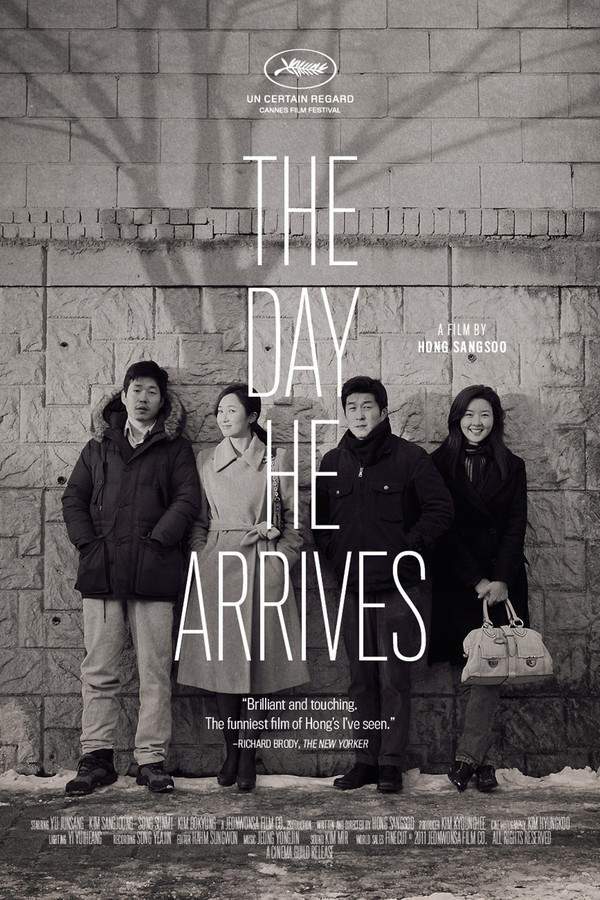
The Day He Arrives (2012) movie poster

Plot Summary

The Day He Arrives (2012) Plot Summary Explained

Release, runtime and language
2012 · 79 min · Korean
Loading streaming availability…
Directed by
Sang-soo Hong

In Seoul, film director Seongjun finds himself trapped in a time loop, repeatedly experiencing the same day. He encounters familiar people, including a woman resembling an ex-girlfriend, and confronts unresolved connections from his past. As the cycle continues, Seongjun struggles to find meaning and understanding, grappling with themes of love, loss, and the challenges of artistic creation. He searches for answers, questioning the nature of his existence and the reasons behind this strange repetition.

On this page (5)
  1. 1 Where to watch
  2. 2 What happens: full plot
  3. 3 Plot questions answered
  4. 4 Movie threads
  5. 5 Every angle
Loading streaming availability…

Full plot summary · contains spoilers

What Happens in The Day He Arrives: Full Plot Summary

The whole story of The Day He Arrives (2012) explained, from the opening scene to the final frame: every key event, every twist and what it all adds up to. Read it as a quick recap before the sequel, to check a scene you missed, or to finally understand what really happened.

Seong-jun arrives in Seoul with the intention of reconnecting with a dear friend residing in Bukchon, nestled in the heart of the Jongno District. When his calls go unanswered, he finds himself wandering the picturesque streets of Bukchon, where he unexpectedly encounters an old acquaintance, an actress he once knew. Their brief conversation is filled with nostalgia, but their paths diverge once more. Alone, Seong-jun makes his way to Insa-dong, savoring a glass of makgeolli (a traditional rice wine) as he reflects on his past.

At a nearby table, a group of eager film students recognizes him and invites him to join them, aware of his previous life as a film director. As the makgeolli flows, Seong-jun finds himself inebriated, eventually setting his sights on the home of his ex-girlfriend.

The narrative shifts, and we find Seong-jun still meandering through Bukchon, the timeline ambiguous. He crosses paths with the actress again, leading to another fleeting yet meaningful exchange. Later, he reconnects with his friend at a bar aptly named Novel, accompanied by a female professor known to his friend. The bar owner bears an uncanny resemblance to Seong-jun's ex-girlfriend, prompting him to entertain the crowd by playing the piano for her.

In yet another twist, the story unfolds with Seong-jun and his friend visiting the Jeongdok Public Library, where he reflects on his youthful pursuits of love. Their drinking continues as they reunite with a former actor who had ventured into business in Vietnam. The professor reappears, and the four of them find themselves at the bar named Soseol (which translates to "Novel"). As the night deepens, Seong-jun succumbs to the allure of alcohol and passionately kisses the pub owner.

As days blend into each other, it remains uncertain whether Seong-jun has spent merely a day or several days in Seoul. He ponders the lessons learned from his encounters with his ex-girlfriend and the striking familiarity of her doppelgänger. In a city that feels richly layered yet fleeting, Seong-jun must confront the essence of his "today," facing the inevitable truths of his life head-on.

Last updated: November 16, 2024 at 11:22

Was this helpful?

Plot questions answered

The Day He Arrives Plot Explained: Your Questions Answered

The questions people ask most about The Day He Arrives (2012): what happens in the confusing scenes, why the characters do what they do, the twists, hidden details and what the ending means. Each answer contains spoilers.

Q1

Why does Seong-jun decide to visit his ex-girlfriend's home while in Seoul?

Seong-jun visits his ex-girlfriend's home because he is overwhelmed by nostalgia and unresolved feelings from their past relationship. After drinking makgeolli with the film students, his emotional state intensifies, pulling him deeper into memories of lost love. This impulsive decision reflects his internal struggle with regrets and his need to confront the emotional ties he still carries.

Foreshadowing: Earlier, while drinking in Insa-dong, Seong-jun reflects on his past relationships, setting the emotional stage for this later action.

  • ex-girlfriend
  • nostalgia
  • lost love
  • makgeolli
  • emotional regret
Q2

Who is the bar owner at Novel and Soseol bars?

The bar owner at both the Novel and Soseol bars bears a striking resemblance to Seong-jun's ex-girlfriend, but it is never explicitly stated whether she is actually the same person or a doppelgänger. This ambiguity is central to the film's dreamy atmosphere. Seong-jun is drawn to her precisely because of this similarity, and his emotional reaction to her presence suggests he sees her as a manifestation of his unresolved feelings about his past relationship.

Foreshadowing: Seong-jun's earlier decision to visit his ex-girlfriend's home establishes his preoccupation with her memory before he even meets the bar owner.

  • bar owner
  • ex-girlfriend
  • doppelganger
  • resemblance
  • memory
Q3

Why does Seong-jun kiss the pub owner at Soseol bar?

Seong-jun kisses the pub owner while under the influence of alcohol, acting on impulse rather than rational thought. His emotional vulnerability, combined with her resemblance to his ex-girlfriend, creates a moment where he projects his unresolved feelings onto her. This passionate kiss represents his longing for connection and his attempt to reclaim something lost, though the act complicates his emotional landscape further.

Foreshadowing: The bar owner's resemblance to his ex-girlfriend has already stirred deep emotions during his piano performance at Novel bar.

  • kiss
  • pub owner
  • alcohol
  • emotional projection
  • longing
Q4

Is Seong-jun experiencing a time loop or just a long, fragmented day?

The film deliberately blurs this distinction, leaving the nature of Seong-jun's time in Seoul ambiguous. The narrative shifts between similar scenes and locations, suggesting either a literal time loop or simply the dreamy, repetitive quality of someone lost in reflection and alcohol. The meta note confirms the timeline is intentionally ambiguous, requiring active interpretation from the viewer.

Foreshadowing: Seong-jun encounters the same actress twice in Bukchon, creating an early suggestion of repetition.

  • time loop
  • fragmented day
  • ambiguity
  • repetition
  • narrative
Q5

Why did Seong-jun come back to Seoul?

Seong-jun returns to Seoul specifically to reconnect with a dear friend who lives in Bukchon, in the Jongno District. His intention is to rekindle this friendship, suggesting he is seeking meaningful human connection. However, his calls go unanswered, and he ends up wandering through the city, encountering various people from his past instead, which shifts his journey from one of friendship toward personal reflection.

Foreshadowing: The opening scene establishes his purpose as reconnecting with his friend, yet this goal remains unfulfilled as other encounters take precedence.

  • Seoul
  • friend
  • Bukchon
  • reconnect
  • purpose
Q6

What is the significance of Seong-jun meeting the former actor turned businessman in Vietnam?

The meeting with the former actor turned businessman in Vietnam serves as a mirror for Seong-jun's own life choices. Both men have left their artistic pasts behind Seong-jun as a director, the actor as a performer and both are now grappling with what that departure means. Their conversation about the past, mixed with laughter and longing, reinforces the film's theme of regret and the passage of time, showing Seong-jun what might have been or what he might become.

Foreshadowing: Earlier, film students invite Seong-jun to join them, reminding him of his former career as a director.

  • former actor
  • Vietnam
  • artistic past
  • regret
  • life choices
Q7

Why does Seong-jun visit Jeongdok Public Library with his friend?

Seong-jun visits Jeongdok Public Library because it holds memories of his younger self and his past pursuits of love. The location represents a time when he was more idealistic and hopeful. At the library, he and his friend drink while reminiscing about love and lost dreams, using the setting to reflect on how his life has changed and what he has left behind.

Foreshadowing: The earlier encounter with the actress in Bukchon already signals Seong-jun's tendency to connect present moments with past memories.

  • Jeongdok Public Library
  • youth
  • memories
  • reflection
  • lost dreams
Q8

What does Seong-jun's piano performance at Novel bar represent?

Seong-jun's piano performance at Novel bar is an emotional outburst triggered by the bar owner's resemblance to his ex-girlfriend. Playing the piano becomes his way of expressing the feelings he cannot verbally communicate. This act stirs deep emotions within him, bridging his present state with past memories. It represents his attempt to process and release the emotional weight he carries from his past relationship.

Foreshadowing: The bar owner's resemblance to his ex-girlfriend is immediately noted, creating the emotional context for his performance.

  • piano
  • emotional expression
  • ex-girlfriend
  • memory
  • artistic release
Q9

Why does Seong-jun encounter the same actress twice in Bukchon?

Seong-jun encounters the actress he once knew twice in Bukchon, first during his initial wander and then again later. These repeated encounters underscore the film's ambiguous, almost dreamlike quality. The actress represents Seong-jun's connection to his artistic past and serves as another figure from his history who bridges his present reflections with memories. The repetition suggests either a time loop or simply the circular nature of his thoughts as he moves through the city.

Foreshadowing: The timeline itself presents these encounters as recurring moments, mirroring the narrative's looping structure.

  • actress
  • Bukchon
  • repeated encounter
  • memory
  • past connection
Q10

What is the central theme of The Day He Arrives?

The central theme revolves around regret, reflection, and the search for meaning in everyday life. Seong-jun's journey through Seoul represents an emotional odyssey where he confronts unresolved connections from his past, including lost love and abandoned artistic pursuits. The time loop ambiguity reinforces how one can become trapped in repetitive thoughts, constantly revisiting the same questions about life, love, and purpose without finding clear answers.

Foreshadowing: The film's melancholic tone, established from the start, prepares viewers for this introspective exploration.

  • regret
  • reflection
  • meaning
  • lost love
  • artistic stagnation
Q11

Why does the film revisit the same bars and locations multiple times?

The film revisits locations like Novel bar and Soseol bar to create a sense of循环 repetition that mirrors Seong-jun's emotional state. These revisits are not merely structural choices but reflections of how people processing loss and nostalgia often return mentally to the same places and memories. The shifting timeline suggests Seong-jun is either literally trapped in a loop or psychologically cycling through the same thoughts and feelings.

Foreshadowing: The ambiguity of whether Seong-jun has spent one day or several days in Seoul directly connects to this recurring structure.

  • repetition
  • locations
  • emotional cycling
  • narrative structure
  • memory
Q12

What does the ending mean when Seong-jun must confront the essence of his today?

The ending suggests Seong-jun must face the reality of his present life rather than getting lost in memories of the past. 'Today' represents both a single day and his current state of existence. By confronting its 'essence,' he must acknowledge his regrets, unfinished business, and the need to move forward. The ambiguous ending implies he may continue cycling or finally begin to break free, leaving the resolution open to interpretation.

Foreshadowing: Throughout the film, Seong-jun oscillates between past memories and present encounters, building toward this moment of reckoning.

  • ending
  • confrontation
  • present
  • resolution
  • acceptance

Movie threads

More Movies Like The Day He Arrives, by Mood & Story

Curated lists built around what makes The Day He Arrives tick: the same mood, the same kind of story or the same emotional payoff. Each list explains why these movies belong together.

Movies with Philosophical Time Loops like The Day He Arrives

Characters trapped in cycles, seeking meaning in repeated patterns of life. If you liked the contemplative time loop in The Day He Arrives, explore other movies that use repetition to delve into character introspection, unresolved pasts, and existential questions, rather than frantic problem-solving. These films share a similar meditative pace and melancholic tone.

  • meditative
  • repetitive
  • existential
  • nostalgic
  • dreamlike
  • introspective
  • Tone: melancholic, reflective, philosophical
  • Pacing: slow, deliberate, cyclical
Why these movies?

The story pattern: Narratives in this thread are defined by a cyclical structure where a character relives a day or a situation, but the focus is on internal growth and philosophical inquiry. The plot progresses through subtle variations in interaction and reflection, leading to ambiguous or character-focused resolutions rather than a clear escape from the cycle.

Why they belong together: Movies are grouped here because they prioritize the emotional and psychological impact of repetition over conventional plot mechanics. They share a slow, atmospheric pacing, a melancholic or reflective tone, and a central theme of searching for meaning within constrained circumstances.

Movies about Artistic Melancholy like The Day He Arrives

Quiet stories of artists grappling with inertia, lost love, and the past. Discover movies similar to The Day He Arrives that explore the lives of artists facing creative blocks and personal regrets. These films share an intimate, slow-burn vibe, a melancholic tone, and a focus on the quiet struggles of artistic creation and memory.

  • melancholic
  • introspective
  • nostalgic
  • artistic
  • lonely
  • reflective
  • Tone: melancholic, intimate, bittersweet
  • Pacing: slow, character-driven, observational
Why these movies?

The story pattern: Stories follow a protagonist, often an artist, who is emotionally and creatively stagnant. The plot unfolds through gentle encounters and conversations, frequently involving a figure from their past. The conflict is internal, centered on overcoming inertia and finding a way to reconnect with their art and themselves.

Why they belong together: These films are connected by their central theme of artistic paralysis, a melancholic and intimate atmosphere, and a pacing that allows for deep character introspection. They resonate with viewers interested in the subtle dramas of creative life and emotional baggage.

Every angle

The Day He Arrives (2012) Explained: Plot, Timeline & Characters

Everything about The Day He Arrives in one place: what happens in the plot summary, the timeline in chronological order, the characters and meaning and a spoiler-free summary. What's After the Movie adds the cast, box office and post-credit scenes.

Coming soon on iOS and Android

The Plot Explained Movie Summary App

Plot summaries, endings explained and timelines on your phone. Catch up on any movie in minutes, save your favorites and never miss a twist again.

Be the first to know when we launch. Your email stays private, always.

Learn more about the app