












Plot Explained Spoilers guaranteed!
Plot Explained

Browse by genre

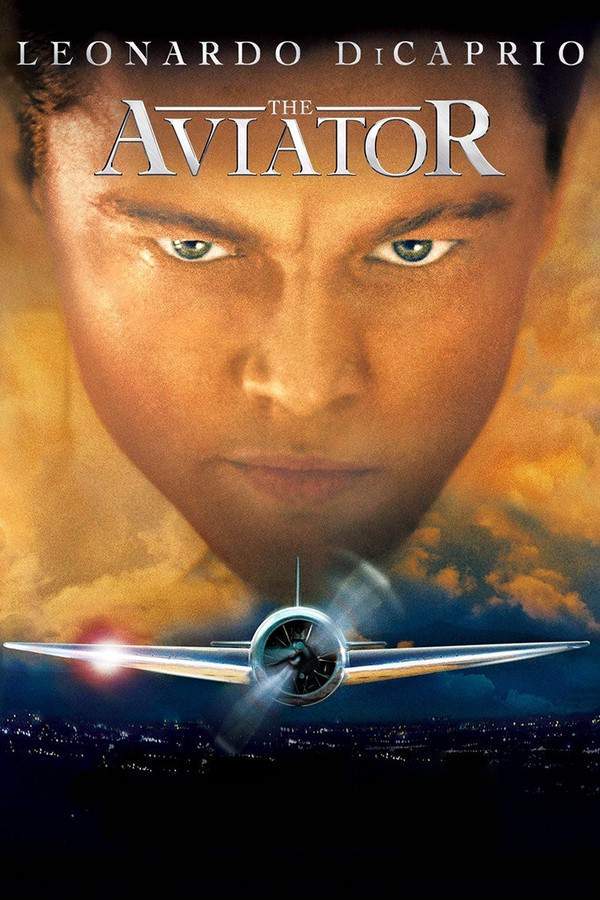
The Aviator (2004) movie poster

Timeline

The Aviator (2004) Timeline Explained – Every Event in Order

Release, runtime and language
2004 · 170 min · English
JustWatch #2,049 43
Directed by
Martin Scorsese
Starring
Cate Blanchett, Leonardo DiCaprio, Kate Beckinsale
Budget
$110M

The film portrays the extraordinary life of Howard Hughes, showcasing his ascent as a groundbreaking filmmaker, ambitious entrepreneur, and visionary in aviation. It explores his remarkable achievements alongside a descent into personal struggles, revealing the challenges he faced while battling debilitating phobias and depression. The narrative follows Hughes as he balances a life of immense wealth and extravagance with a growing internal conflict, ultimately exposing the vulnerability hidden behind his public persona.

On this page (6)
  1. 1 Where to watch
  2. 2 Events in order (15)
  3. 3 Timeline questions answered
  4. 4 Movie threads
  5. 5 Movies like The Aviator
  6. 6 Every angle

Where to watch

Where to Watch The Aviator (2004)

Where can you watch The Aviator? Stream, rent or buy it in the US, including on fuboTV, Paramount Plus Essential and Paramount Plus Premium: current JustWatch availability with up-to-date prices.

Streaming availability powered by JustWatch

15 events in order · contains spoilers

The Aviator Timeline: Events in Chronological Order

Every key event of The Aviator (2004) in order, scene by scene, with when and where it takes place. Use it to untangle flashbacks, time jumps and parallel storylines, to refresh your memory before the sequel or to find the exact scene you are thinking of.

  1. Childhood Warning

    In the year 1914, young Howard Hughes is bathed by his concerned mother, who instills a deep fear of danger in him. She warns him, 'You are not safe,' foreshadowing Howard's future struggles with paranoia and obsessive behavior.

    When
    1914
  2. Becoming a Filmmaker

    By 1927, Howard has grown into a wealthy heir and is fully immersed in his career as a filmmaker. At just 22 years old, he is directing the ambitious film 'Hell's Angels' in California, building his legacy in Hollywood.

    When
    1927
    Where
    California
  3. Film Production Challenges

    Hughes becomes consumed by his relentless pursuit of realism in filmmaking, dedicating several years to complete 'Hell's Angels.' Despite the immense financial burden, he remains steadfast, signaling his obsession with perfection.

  4. Competing Film Releases

    Upon completion, 'Hell's Angels' faces fierce competition from 'The Jazz Singer,' the first partially talking film. Unfazed, Hughes decides to incorporate sound into his film, leading to an additional expenditure of $1.7 million.

  5. Romance with Katharine Hepburn

    Amid his film endeavors, Hughes begins a romantic relationship with actress Katharine Hepburn. Their connection provides him with some respite from his crippling obsessive-compulsive disorder, but it also becomes a source of tension as Hughes's fame grows.

  6. Aviation Dreams

    Hughes's true passion emerges as he develops an interest in aviation, securing control of Transcontinental & Western Air (TWA). This step lays the groundwork for his future ventures in the aviation industry, showcasing his innovative spirit.

  7. Speed Record Achievement

    In 1935, Hughes tests his H-1 Racer, setting a new speed record, much to his excitement. He confidently boasts to Hepburn, declaring himself 'the fastest man on the planet' after achieving this milestone.

    When
    1935
    Where
    Beet Field
  8. Record-Breaking Flight

    By 1938, Hughes completes a remarkable flight around the globe in just four days, besting the previous record by an impressive three days. This achievement further cements his status as an aviation pioneer.

    When
    1938
  9. Strained Relationships

    Hughes's relationship with Hepburn faces challenges when she confesses her love for Spencer Tracy. This revelation leads Hughes to briefly pursue other interests, including actress Ava Gardner, indicating the toll his fame takes on his personal life.

  10. World War II Contracts

    Hughes secures contracts with the Army Air Forces for two significant aviation projects aimed at wartime needs. However, as WWII continues to escalate, he finds himself struggling with the completion of both the XF-11 and the H-4 Hercules.

  11. XF-11 Crash

    In a moment of desperation brought on by his deteriorating mental state, Hughes tests the XF-11 reconnaissance aircraft. Unfortunately, a malfunction leads to a crash in Beverly Hills, resulting in severe injuries and a lengthy recovery process.

    Where
    Beverly Hills
  12. Struggle with Paranoia

    As Hughes's obsessive-compulsive disorder worsens, he becomes increasingly reclusive, obsessing over cleanliness and germ fears. He takes extreme measures, like installing microphones to eavesdrop, as paranoia seeps into every aspect of his life.

  13. Senate Investigation

    Following Hughes's isolation, his rival Juan Trippe orchestrates a Senate investigation aimed at exposing his business dealings. Hughes, however, manages to confront this challenge, passionately defending his commitment to complete the H-4 aircraft.

  14. Final Test Flight

    After overcoming his challenges and recovering, Hughes finally successfully test-flies the H-4 Hercules, exhilarated by this major achievement. He envisions new projects for TWA, showcasing a glimpse of his resilience.

  15. Deterioration and Reflection

    In his final moments, Hughes is haunted by his troubled past and obsessive thoughts, repeating 'the way of the future.' The narrative closes with a poignant reflection on his ambition and struggles, leaving a profound impact.

Last updated: November 03, 2024 at 23:40

Was this helpful?

Timeline questions answered

The Aviator Timeline Explained: Your Questions Answered

When does it happen, and why in that order? The questions people ask about the chronology of The Aviator (2004): time jumps, flashbacks, cause and effect between scenes and the correct order of events, each answered with spoilers.

Q1

Why did Howard Hughes become so obsessed with re-cutting Hell's Angels?

Hughes was driven by an intense perfectionism that defined his entire career. After spending years and millions of dollars filming Hell's Angels, he refused to accept the finished product once sound films became popular with The Jazz Singer. Rather than move on, he poured another $1.7 million into re-shooting the entire film with audio, demonstrating his inability to let go of a project once it didn't meet his exacting standards. This pattern continued even after the film's successful premiere, as he continued re-cutting it post-release.

  • hell's angels
  • perfectionism
  • filmmaking
  • sound film
  • howard hughes
Q2

Why did Howard Hughes withdraw from public life and isolate himself?

Hughes's withdrawal was directly caused by his worsening obsessive-compulsive disorder, which escalated severely after his XF-11 crash in 1946. His OCD manifested as an intense fear of germs and dust, leading him to install microphones to spy on Ava Gardner and becoming increasingly paranoid about contamination. The FBI's search of his home for war profiteering evidence left him emotionally scarred, and combined with his mental deterioration, he retreated into isolation in his screening room, essentially abandoning his business responsibilities for months.

  • ocd
  • paranoia
  • isolation
  • fbi
  • withdrawal
  • mental illness
Q3

Why did Howard Hughes have relationships with so many famous actresses?

Hughes was notoriously drawn to Hollywood starlets, beginning with Katharine Hepburn, who provided him temporary relief from his OCD symptoms. His pattern of pursuing actresses like Kate Beckinsale and later Ava Gardner reflected both his wealth and fame attracting famous women, as well as his need for companionship during his increasingly difficult psychological state. The relationships often became complicated, Hepburn eventually confessed her love for Spencer Tracy, leading to the end of her romance with Hughes.

  • katharine hepburn
  • ava gardner
  • relationships
  • romance
  • actresses
Q4

What caused the XF-11 crash in Beverly Hills?

The XF-11 reconnaissance aircraft crashed primarily due to a mechanical failure, specifically, one of the propellers failed to disengage properly during testing. However, Hughes's deteriorating mental state and physical condition from his worsening OCD contributed to the disaster. He was desperate to prove his aircraft worked despite his psychological struggles, and he pushed forward with the test despite being in a fragile condition. The crash left him severely injured and required a lengthy recovery period.

  • xf-11
  • crash
  • beverly hills
  • aircraft
  • test flight
  • mechanical failure
Q5

Why was Howard Hughes targeted in a Senate investigation?

The Senate investigation was orchestrated by Hughes's rival Juan Trippe, chairman of Pan American World Airways, who wanted to eliminate Hughes as competition for international air travel. Trippe enlisted Senator Owen Brewster to push the Commercial Airline Bill, which would have granted Pan Am a monopoly. When that failed, Trippe orchestrated the Senate subpoena hoping Hughes would avoid confrontation due to his withdrawal. However, Hughes ultimately appeared and defended himself, denying any wrongdoing and reaffirming his commitment to complete the H-4 Hercules.

  • senate investigation
  • juan trippe
  • owen brewster
  • pan am
  • twa
  • commercial airline bill
Q6

Why did the Spruce Goose (H-4 Hercules) take so long to complete?

The H-4 Hercules, famously called the Spruce Goose, was Hughes's ambitious flying boat project designed for World War II to transport troops across the Atlantic. Development was plagued by delays due to the project's massive scale and engineering challenges. By 1946, only the XF-11 was completed while the Hercules remained unfinished. Hughes faced a critical decision: either bail out struggling TWA or continue funding his aviation dream. He chose to mortgage TWA's assets to personally finance the Hercules, ultimately completing it years later for a successful test flight in 1947.

  • spruce goose
  • h-4 hercules
  • flying boat
  • twa
  • aviation
  • world war ii
Q7

Why did Hughes refuse to sell TWA when Brewster offered a deal?

Hughes refused to sell TWA to Trippe even when Brewster offered to drop the war profiteering charges in exchange for the sale. This decision was characteristic of Hughes's stubbornness and his deep personal investment in his aviation ventures. He had built TWA into a major airline and wasn't willing to surrender his dream to a competitor, especially one he viewed as unethical. Additionally, his deteriorating mental state made him more suspicious and resistant to what he perceived as attempts to manipulate or control him.

  • twa
  • sale
  • brewster
  • trippe
  • business
  • refusal
Q8

How did Howard Hughes's childhood influence his later mental health issues?

The opening scene in 1914 establishes the psychological foundation for Hughes's adult struggles. His mother bathed him while warning "You are not safe," instilling a deep-seated fear of disease and danger. This childhood trauma directly foreshadowed his later battles with obsessive-compulsive disorder, manifested as an overwhelming fear of germs and contamination. The film suggests his lifelong anxiety and paranoia were planted by his mother's well-intentioned but damaging warnings, creating a psychological pattern that would haunt him throughout his adult life.

Foreshadowing: His mother's warning in 1914 directly plants the seed for his future germophobia and paranoia.

  • childhood
  • mother
  • ocd
  • fear
  • germs
  • foreshadowing
  • psychological
Q9

Why did Hughes transition from filmmaking to aviation?

While Hughes achieved remarkable success with Hell's Angels, both as a commercial success and a technical achievement in filmmaking, his true passion had always been aviation. The film was merely a means to prove himself and fund his real ambitions in aircraft development. His interest in planes predated the film, and his earnings from Hollywood provided the capital to pursue aviation ventures. He eventually secured control of Transcontinental & Western Air (TWA) and began developing advanced aircraft, viewing aviation as "the way of the future" that would transform global transportation.

  • hell's angels
  • aviation
  • filmmaking
  • twa
  • transition
  • passion
Q10

What do the visions at the end of the film represent?

The final scene shows Hughes haunted by visions of men in germ-resistant suits, repeating "the way of the future" obsessively. These visions represent the permanent psychological damage caused by his OCD and paranoia, he cannot escape his fears even after his greatest technical achievement (the Spruce Goose flight). The recurring phrase reflects his lifelong drive to innovate, but now it's twisted by his broken mind. The flashback to his childhood vow to achieve greatness suggests his ambition consumed him entirely, leaving him brilliant but ultimately trapped by his own mental illness.

  • ending
  • visions
  • germ suits
  • the way of the future
  • psychological
  • hallucination
Q11

Why did Juan Trippe become Howard Hughes's main rival?

Juan Trippe and Hughes became rivals because they both sought dominance in the emerging commercial aviation industry. Trippe chaired Pan American World Airways and wanted to establish a monopoly on international air travel through the Commercial Airline Bill. Hughes controlled TWA and threatened Trippe's ambitions. Their conflict escalated when Trippe enlisted Senator Brewster to push legislation that would benefit Pan Am at Hughes's expense. Trippe's strategy involved both business competition and political maneuvering, ultimately leading to the Senate investigation when he thought Hughes was too broken to fight back.

  • juan trippe
  • rival
  • pan am
  • competition
  • aviation business
  • senate
Q12

Why did Hughes crash the H-1 Racer in 1935?

Hughes crashed his H-1 Racer during a test run in 1935 after setting a new speed record. Despite achieving the speed record that made him claim to be "the fastest man on the planet," the aircraft went out of control and crashed in a beet field. The crash was attributed to mechanical failure rather than pilot error, specifically, the aircraft's design caused control issues at high speeds. Hughes survived the crash, demonstrating both his willingness to personally test his creations and the risks inherent in pushing aviation technology to its limits.

  • h-1 racer
  • crash
  • speed record
  • 1935
  • beet field
  • test flight

Movie threads

More Movies Like The Aviator, by Mood & Story

Curated lists built around what makes The Aviator tick: the same mood, the same kind of story or the same emotional payoff. Each list explains why these movies belong together.

Movies about genius and mental turmoil like The Aviator

Brilliant minds pushed to the brink by their own ambitions and demons. Explore movies like The Aviator that delve into the lives of brilliant but troubled figures. These films show the high-stakes world of genius, where immense talent is shadowed by psychological struggles, obsession, and the heavy toll of ambition.

  • obsessive
  • anxious
  • grandiose
  • tragic
  • strained
  • paranoid
  • Tone: dark, intense, tragic
  • Pacing: steady, character-driven
Why these movies?

The story pattern: These narratives typically follow an arc of ascent and strain, charting a character's rise to greatness alongside a parallel descent into psychological distress. The central conflict is often internal, pitting extraordinary talent against debilitating fears, compulsions, or isolation.

Why they belong together: These films are united by their deep focus on the character's internal world, a tone that balances admiration with tragedy, and a heavy emotional weight stemming from the unflinching portrayal of a mind at war with itself.

Stories of wealth and downfall similar to The Aviator

A stark look at the unraveling of powerful lives behind a facade of grandeur. If you liked The Aviator's portrayal of Howard Hughes's lavish life and tragic struggles, you'll appreciate these movies. They showcase the dramatic arcs of powerful individuals whose empire-building is matched by a profound personal unraveling.

  • grandiose
  • tragic
  • lonely
  • ambitious
  • decadent
  • melancholic
  • Tone: dark, bittersweet, critical
  • Pacing: steady, deliberate
Why these movies?

The story pattern: The plot follows a trajectory of building an empire or achieving immense success, only to have it threatened or undone by internal conflicts—be it addiction, mental health, pride, or moral failings. The setting is often one of extravagant wealth, which contrasts sharply with the character's inner poverty.

Why they belong together: Movies in this thread share a bittersweet or bleak ending feel, a dark tone that critiques the hollow nature of extreme wealth, and a heavy emotional weight. They contrast grandiose visuals with intimate tragedies.

If you liked this

Movies Like The Aviator

Similar movies to The Aviator: the same genre, themes or kind of story. Each one comes with its own plot summary, timeline and ending explained.

Browse all movie summaries

Every angle

The Aviator (2004) Explained: Plot, Timeline & Characters

Everything about The Aviator in one place: what happens in the plot summary, the timeline in chronological order, the characters and meaning and a spoiler-free summary. What's After the Movie adds the cast, box office and post-credit scenes.

Coming soon on iOS and Android

The Plot Explained Movie Summary App

Plot summaries, endings explained and timelines on your phone. Catch up on any movie in minutes, save your favorites and never miss a twist again.

Be the first to know when we launch. Your email stays private, always.

Learn more about the app