Plot Explained Spoilers guaranteed!
Plot Explained

Browse by genre

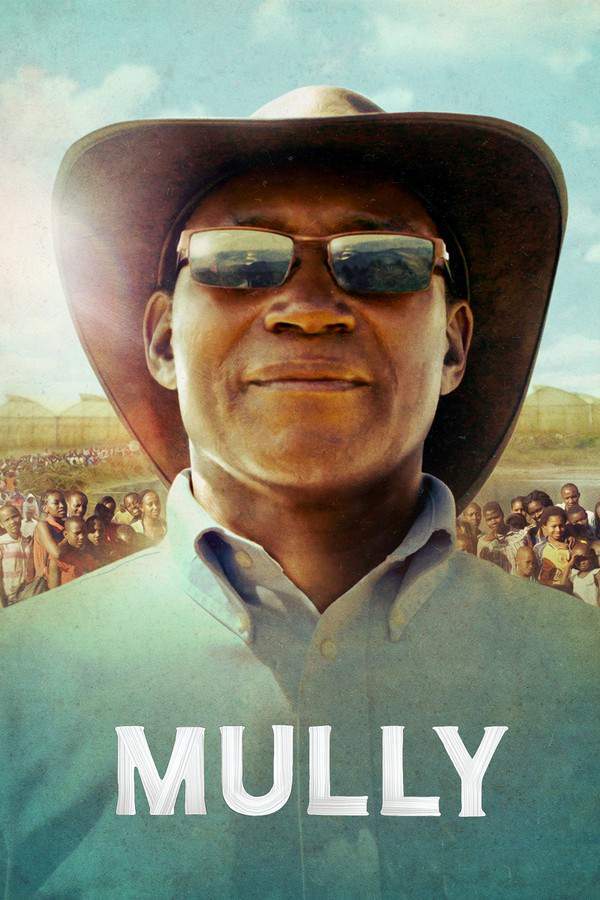
Mully (2017) movie poster

Plot Summary

Mully (2017) Plot Summary Explained

Release, runtime and language
2017 · 81 min · English
Echo score 75
JustWatch #7,909 5
Starring
Charles Mully, Dickson Mulli, Esther Mully, Grace Mulli, Isaac Mulli, Janey Mulli
Budget
$60M

Abandoned as a young boy on the harsh streets of Kenya, Charles Mully must learn to survive. This is the inspiring true story of how he overcomes incredible hardship to become one of Kenya's wealthiest individuals. However, Mully's journey isn't without its challenges, as he later confronts profound questions about his life and purpose.

On this page (6)
  1. 1 Where to watch
  2. 2 What happens: full plot
  3. 3 Plot questions answered
  4. 4 Movie threads
  5. 5 Movies like Mully
  6. 6 Every angle

Where to watch

Where to Watch Mully (2017)

Where can you watch Mully? Stream, rent or buy it in the US, including on Amazon Prime Video, Angel Studios and fuboTV: current JustWatch availability with up-to-date prices.

Streaming availability powered by JustWatch

Full plot summary · contains spoilers

What Happens in Mully: Full Plot Summary

The whole story of Mully (2017) explained, from the opening scene to the final frame: every key event, every twist and what it all adds up to. Read it as a quick recap before the sequel, to check a scene you missed, or to finally understand what really happened.

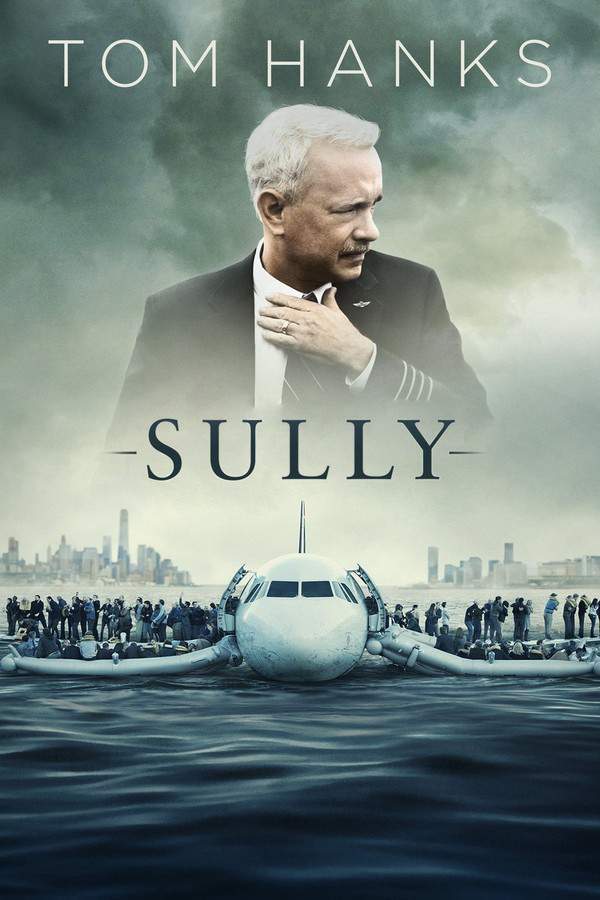
On January 15, 2009, Captain Chesley "Sully" Sullenberger (Tom Hanks) and First Officer Jeff Skiles (Aaron Eckhart) embark on US Airways Flight 1549, flying from LaGuardia Airport to Charlotte Douglas International Airport. Just three minutes into their ascent, while soaring at around 2,800 feet (850 m), their Airbus A320 collides with a flock of birds, crippling both engines. Faced with a dire situation and realizing they couldn’t reach the nearest airports (with Teterboro being the closest option), Sully demonstrates remarkable composure as he makes the critical decision to ditch the aircraft into the Hudson River.

As a highly respected captain with a spotless record during his tenure at US Airways, Sully is initially celebrated as a hero for ensuring the safe evacuation of all crew and passengers with no fatalities, despite suffering from minor injuries himself. Yet, the aftermath becomes emotionally challenging for him. Laura Linney plays his wife, Lorraine Sullenberger, who, along with Sully, finds themselves in the unwanted limelight of media scrutiny as the press hounds them for information regarding the incident.

During their stay in New York City for the investigation, Sully discovers preliminary data from ACARS indicating that the left engine may have still been operational at idle power. Charles Porter (Mike O'Malley) leads this high-stakes investigation, assisted by Dr. Elizabeth Davis (Anna Gunn) and Ben Edwards (Jamey Sheridan). Sully firmly believes that what transpired was not a crash but a forced water landing. He asserts that he requested to return to LaGuardia, but his extensive piloting experience led him to understand that the airbus lacked the necessary speed and altitude for such a maneuver, ultimately choosing to steer the plane towards the Hudson. In a moment of high tension, he placed both his life and the lives of the passengers on the line with his decision.

Contrary to Sully’s account, the National Transportation Safety Board (NTSB) posits that the aircraft still had sufficient power to land safely at LaGuardia or Teterboro. This sensational disagreement gradually exacerbates the tension between Sully and the investigating bodies. Mike Cleary (Holt McCallany) represents Sully and Skiles, while Larry Rooney (Chris Bauer), a friend and colleague, offers his support.

For four decades, Sully safely transported millions of passengers, yet he finds himself facing the possibility of being judged solely on the 208 seconds of that fateful flight. Jeff underscores that the miraculous survival of all on board was largely due to Sully's decisive action in activating the Auxiliary Power Unit, buried deep among the Airbus's procedures. Sully contemplates how the simulations presented by the NTSB suggested an alternative scenario where a successful landing at either airport was possible.

As the investigation intensifies, the NTSB fears that their findings may point toward pilot error, a development that could severely jeopardize Sully’s career. In response, he arranges for the simulations to be repeated using live pilots to demonstrate the actual conditions they faced, results which yield successful landings.

In recollections of the harrowing flight, Sully recalls the cold, grueling circumstances as a bird strike rendered both engines useless. The crew, including stewardesses Sheila Dail (Jane Gabbert), Doreen Welsh (Molly Hagan), and Donna Dent (Ann Cusack), find themselves grappling with the chaos that unfolds following Sully's decision to land on water. Amidst the crisis, Patrick Harten (Patch Darragh), the Air Traffic Controller, clears paths for the emergency landing while ensuring safety protocols are adhered to.

As the A320 touches down on the river, emergency services, including seven ferries like the Thomas Jefferson and Intrepid, respond within a mere 24 minutes, with over 1,200 rescue workers involved in the operation. Passengers and crew evacuate through the wing exits, leading to the iconic image of them perched on the wings and life rafts, a testament to Sully’s leadership and quick actions.

Upon reaching safety via ferry, Sully's immediate concern turns to his wife, as he anxiously discovers that all 155 souls aboard survived. Faced with skepticism regarding the computer simulations, Sully argues that they are unrealistic, given the pilots’ foreknowledge of the emergency they would need to manage, having practiced under similar scenarios numerous times prior. The NTSB eventually concedes to his reasoning, resulting in a new round of simulations allowing for an adjustment in timing.

Ultimately, the analysis of the port engine, now retrieved from the river, confirms Sully's earlier claims about its damage due to the bird strike, validating his instincts during the emergency and reinforcing his commendable actions that day. As he reflects on the incident, Sully credits not just his efforts, but the heroic contributions of everyone involved in the successful rescue operation.
Last updated: November 04, 2024 at 01:24

Was this helpful?

Plot questions answered

Mully Plot Explained: Your Questions Answered

The questions people ask most about Mully (2017): what happens in the confusing scenes, why the characters do what they do, the twists, hidden details and what the ending means. Each answer contains spoilers.

Q1

Why did Sully choose to land on the Hudson River instead of trying to return to an airport?

Sully determined that the Airbus A320 lacked the necessary speed and altitude to reach any nearby airport after losing both engines to the bird strike. With the plane descending rapidly at around 2,800 feet and both engines crippled, he calculated that attempting to glide back to LaGuardia or reach Teterboro was physically impossible. The Hudson River was the only viable option that offered a chance of survival for all 155 people on board.

Foreshadowing: Earlier in his career, Sully had trained extensively for emergency water landings, though he never expected to use such skills.

  • bird strike
  • engine failure
  • hudson river
  • emergency landing
  • airport decision
Q2

Why did the NTSB investigate Sully's decision if the landing was successful?

The NTSB's job is to determine the cause of aviation incidents and determine whether pilot actions were correct, regardless of outcome. They questioned whether Sully had enough altitude and power to reach LaGuardia or Teterboro after the bird strike. Their computer simulations initially suggested the plane could have made it to an airport, which would have meant the Hudson landing was unnecessary. This investigation threatened Sully's career and reputation despite the successful evacuation.

Foreshadowing: Sully's spotless 40-year safety record made the investigation even more personally devastating.

  • ntsb
  • investigation
  • pilot error
  • computer simulations
  • career threat
Q3

What was the ACARS data that Sully discovered during the investigation?

ACARS (Aircraft Communications Addressing and Reporting System) preliminary data indicated that the left engine may have still been operational at idle power after the bird strike. This discovery supported Sully's argument that the incident should be classified as a forced water landing rather than a crash, and it became a key point of contention during the NTSB hearings.

Foreshadowing: Sully's meticulous review of technical data reflected his professional background as both a pilot and safety consultant.

  • acars
  • left engine
  • idle power
  • data
  • evidence
Q4

Why did Sully argue that the computer simulations were unrealistic?

Sully argued the computer simulations were unrealistic because they gave pilots advance knowledge of the emergency. The simulation controllers knew in advance that a bird strike would occur and could react instantly with the perfect response. In reality, pilots need time to assess the situation, diagnose the problem, and make decisions. The foreknowledge created an artificial scenario that didn't reflect real human decision-making under sudden crisis.

Foreshadowing: This argument echoed Sully's insistence throughout the film that the 208 seconds should be judged with human reaction time in mind.

  • computer simulation
  • human reaction
  • foreknowledge
  • emergency decision
  • NTSB hearing
Q5

How did the live pilot simulations prove Sully's account was correct?

Sully arranged for live pilots to repeat the simulation using the actual conditions they faced that day, without advance knowledge of the emergency. These live pilot simulations resulted in failed landings or crashes, proving that the computer-generated scenarios were unrealistic. When the NTSB adjusted their simulation to account for the real decision-making timeline, the results validated Sully's judgment that the Hudson landing was the only safe option.

Foreshadowing: The live pilots experienced the same confusion and time pressure Sully described, leading to unsuccessful outcomes.

  • live pilot simulation
  • failed landing
  • validation
  • results
  • NTSB adjustment
Q6

What evidence finally validated Sully's decision at the end of the movie?

The port (left) engine was retrieved from the Hudson River, and forensic analysis confirmed it had sustained catastrophic damage consistent with the bird strike. This physical evidence proved Sully's assertion that both engines had been rendered non-functional by the collision with the flock of birds, validating his assessment that he had no viable option but to ditch the plane in the river.

Foreshadowing: The retrieval of the engine was shown as a climactic moment that would either vindicate or condemn Sully's actions.

  • port engine
  • retrieved
  • damage
  • bird strike
  • forensic evidence
  • validation
Q7

How did activating the Auxiliary Power Unit help during the emergency?

Jeff Skiles pointed out that the miraculous survival of all on board was largely due to Sully's decisive action in activating the Auxiliary Power Unit (APU). The APU provides backup electrical power when both main engines are failed, ensuring that critical systems like flight controls, communications, and emergency lighting remained operational. This allowed the crew to maintain control of the aircraft and execute the evacuation effectively.

Foreshadowing: This technical detail highlighted Sully's deep knowledge of the Airbus A320's systems.

  • auxiliary power unit
  • apu
  • electrical power
  • systems
  • evacuation
Q8

Why was Sully's career at risk despite successfully landing the plane with no fatalities?

Despite the successful emergency landing and saving all 155 lives, Sully faced potential career ruin because the NTSB's initial findings suggested pilot error. If the investigation concluded that Sully could have safely landed at an airport but chose not to, he could have lost his pilot's license and faced legal consequences. The scrutiny questioned his professional judgment after 40 years of safely transporting millions of passengers.

Foreshadowing: The film emphasized how quickly a lifetime of exemplary service could be overshadowed by 208 seconds of crisis.

  • career
  • pilot license
  • reputation
  • professional judgment
  • NTSB findings
Q9

Why did Sully and his wife face media scrutiny after being celebrated as heroes?

After the initial celebration as heroes, Sully and his wife Lorraine became targets of intense media attention as the NTSB investigation progressed. The press hounded them for information about the incident, and the narrative shifted from celebrating the miracle landing to questioning whether Sully's decision was correct. This unwanted attention added emotional strain during an already difficult period of uncertainty about his career.

Foreshadowing: The media's change in tone reflected the broader public debate about Sully's actions.

  • media
  • press
  • lorraine
  • scrutiny
  • fame
  • investigation
Q10

How quickly did emergency services respond to the Hudson River landing?

Emergency services responded within remarkably fast 24 minutes. Seven ferries, including the Thomas Jefferson and Intrepid, rushed to the scene along with over 1,200 rescue workers. This rapid response was critical in getting all 155 passengers and crew to safety. The coordination between the air traffic controllers who cleared emergency paths and the ferry operators ensured survivors were evacuated from the freezing water before hypothermia could set in.

Foreshadowing: The timeline of the rescue was a testament to New York City's maritime infrastructure and emergency preparedness.

  • ferry
  • rescue
  • emergency services
  • thomas jefferson
  • intrepid
  • hudson river

Movie threads

More Movies Like Mully, by Mood & Story

Curated lists built around what makes Mully tick: the same mood, the same kind of story or the same emotional payoff. Each list explains why these movies belong together.

Inspiring True Stories of Triumph like Mully

Inspiring real-life journeys of individuals overcoming immense hardship to achieve greatness. If you were moved by Mully, you'll find similar hope in these movies. This collection features powerful, true-life biographies about individuals overcoming extreme adversity, from poverty to personal crisis, to achieve extraordinary things. Discover films that celebrate resilience and the inspiring power of a single life.

  • inspiring
  • heroic
  • emotional
  • gripping
  • relieving
  • true story
  • Tone: tense, hopeful
  • Pacing: variable, reflective
Why these movies?

The story pattern: Stories in this thread typically follow a biographical arc, beginning with a protagonist at their lowest point due to circumstances beyond their control. The narrative charts their difficult journey of struggle, key turning points, and hard-won successes, culminating in a validation of their life's work and a positive impact on their community or the world.

Why they belong together: Movies are grouped here for their shared foundation in true events, their focus on a heroic individual's difficult ascent from hardship, and their emotionally heavy yet ultimately happy and inspiring conclusion. They create a powerful blend of gritty realism and profound hope.
Tense Procedural Investigations like in Mully

Methodical dramas where a hero's integrity is tested by an official inquiry. For viewers who appreciated the investigative tension in Mully, this list features movies with similar high-stakes procedural drama. These stories follow professionals whose judgment is questioned after a crisis, leading to gripping hearings and simulations. Find films that masterfully build suspense around proving one's integrity.

  • tense
  • methodical
  • gripping
  • anxious
  • professional integrity
  • investigation
  • Tone: tense, methodical
  • Pacing: variable, methodical
Why these movies?

The story pattern: The narrative pattern involves a 'flashback' structure, where a pivotal, chaotic event is shown early on. The main plot then unfolds as a slow-burn, methodical investigation (courtroom hearings, internal reviews, simulations) that re-examines the event frame-by-frame. The protagonist's character is the central focus, as they endure psychological pressure and fight to prove their version of the truth.

Why they belong together: These movies share a specific blend of tones and pacing: the high intensity of a life-or-death event combined with the sustained, tense drama of a methodical inquiry. They are united by the theme of professional integrity under fire and the emotional weight of defending one's legacy.

If you liked this

Movies Like Mully

Similar movies to Mully: the same genre, themes or kind of story. Each one comes with its own plot summary, timeline and ending explained.

Browse all movie summaries

Every angle

Mully (2017) Explained: Plot, Timeline & Characters

Everything about Mully in one place: what happens in the plot summary, the timeline in chronological order, the characters and meaning and a spoiler-free summary. What's After the Movie adds the cast, box office and post-credit scenes.

Coming soon on iOS and Android

The Plot Explained Movie Summary App

Plot summaries, endings explained and timelines on your phone. Catch up on any movie in minutes, save your favorites and never miss a twist again.
Be the first to know when we launch. Your email stays private, always.

Learn more about the app