Plot Explained Spoilers guaranteed!
Plot Explained

Browse by genre

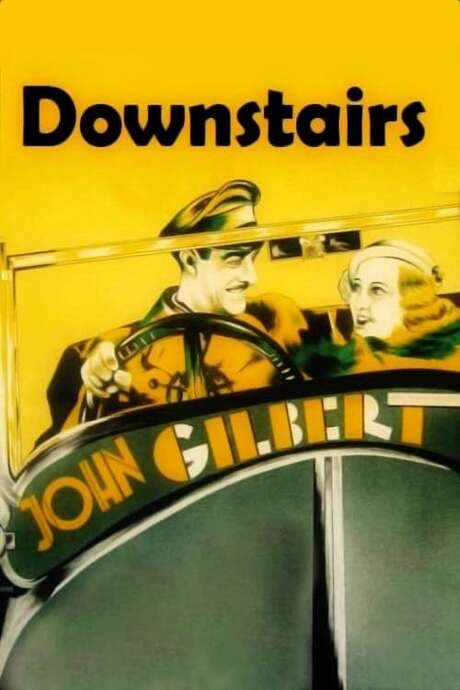
Downstairs (1932) movie poster

Plot Summary

Downstairs (1932) Plot Summary Explained

Release, runtime and language
1932 · 77 mins · English
Directed by
Monta Bell
Starring
Karen Morley, John Gilbert, Paul Lukas, Torben Meyer, Reginald Owen, Olga Baclanova

In the Austrian manor of Baron and Baroness von Burgen, the upstairs aristocracy and downstairs staff enjoy a surprisingly cordial relationship, with head butler Albert and maid Anna even falling in love. The arrival of lecherous chauffeur Karl Schneider brings affairs, blackmail, and gradually shatters the household’s harmony.

On this page (6)
  1. 1 Where to watch
  2. 2 What happens: full plot
  3. 3 Plot questions answered
  4. 4 Movie threads
  5. 5 Movies like Downstairs
  6. 6 Every angle

Where to watch

Where to Watch Downstairs (1932)

Where can you watch Downstairs? Stream, rent or buy it in the US, including on Plex and Tubi TV: current JustWatch availability with up-to-date prices.

Streaming availability powered by JustWatch

Full plot summary · contains spoilers

What Happens in Downstairs: Full Plot Summary

The whole story of Downstairs (1932) explained, from the opening scene to the final frame: every key event, every twist and what it all adds up to. Read it as a quick recap before the sequel, to check a scene you missed, or to finally understand what really happened.

On the Baron's Austrian estate, Baron 'Nicky' von Burgen's trusted head butler Albert presides over a wedding that ties the lives of everyone there to a delicate lattice of desire and status as Karl Schneider, the new chauffeur, arrives and quietly re-enters the orbit of his old confidante, Countess De Marnac, who is clearly not fond of Karl mingling with her elite circle.

That evening, when François, one of the butlers, drinks too much and cannot work, Albert steps in to fill the shift. Anna, the young housemaid, finds herself alone with Karl, who wins her sympathy by recounting a troubled childhood and presenting himself as someone who understands hardship. The two share a moment of connection that Karl soon tries to turn to his advantage, testing the boundaries between master’s world and servant’s longing.

A day later, Karl drives Baroness Eloise von Burgen to Vienna for shopping and escorts her back to a town apartment she keeps for visits with her lover. Eloise later claims they were in an accident, but Albert remains skeptical and cautions Karl to stay loyal to their employers, reminding him of his place in the social order. Despite this warning, Karl’s interest in Anna intensifies, even as he hides his own scheming behind a veneer of charm.

Karl’s fascination with Anna leads him down a dangerous path. He begins to pursue her despite her initial resistance, while Sophie, the cook, becomes entangled as a secondary casualty of Karl’s manipulations. After a flirtatious encounter, Sophie spends the night with him, only to be later insulted by Karl and the pair’s uneasy alliance collapses into a calculative game. Karl also finds a way to leverage Eloise’s jewelry—a clever ploy that involves a jewel he has swiped from Eloise—to win Anna’s sympathy, even as Eloise recognizes the item as her own and accuses Anna of theft. Karl claims the jewel as his own, a gambit that buys him time and rekindles Anna’s trust, though the underlying motive remains exploitation.

The plot thickens as Eloise realizes Karl’s true intent and uses the escalating scandal to test the boundaries of loyalty within the household. Eloise, who is drawn to the rhapsody of danger in Karl’s presence, schemes for a private moment between Karl and Anna on a fishing trip, but a late intervention by the Baron forces Albert to accompany them. This confrontation leaves Karl and Anna in a precarious position, with Albert warning Karl to keep his distance.

Karl’s deception becomes more brazen as he persuades Eloise to reinstate him as chauffeur through the backdoor of blackmail, while Albert contemplates resigning in response to the humiliation and the pressure to protect Eloise from scandal. Eloise, unable to publicly admit her affair, leans on Albert’s sense of justice and sympathy, revealing a vulnerability that complicates the power dynamics at the estate. Sophie, disillusioned by Karl’s predatory behavior and longing for a better life, offers him all her savings to help him realize his dream of opening a shop—an act that underscores the moral costs of Karl’s ambitions.

The next morning, Karl attempts to slip away to Paris with Sophie’s savings and begs Anna to join him. Anna, torn by love for Albert, refuses to abandon him, and when Sophie’s money is found, a chaotic chase ensues that ends with a dramatic clash of loyalties. The Baron, misunderstanding the conflict as a quarrel over wine, orders the two to apologize, while Albert himself orchestrates a fragile reconciliation with Karl—one built on a grim acknowledgment of Karl’s cleverness and Albert’s own resolve to protect the household’s integrity. A final confrontation makes it clear that Karl’s deceit cannot endure, and Albert’s steady loyalty ultimately prevails over Karl’s schemes. With Anna choosing fidelity to Albert and the family’s stability restored, Karl exits the scene, already plotting his next maneuver to insinuate himself into another aristocratic life.

In the end, the film presents a stark study of social ambition, manipulation, and the fragile line between affection and manipulation within a tightly knit upper-class environment. The characters spiral through a web of entanglements that test trust, loyalty, and the cost of desire, leaving a lasting impression of how power and affection can distort judgment and reshape lives on a grand Austrian estate.

Last updated: October 09, 2025 at 11:06

Was this helpful?

Plot questions answered

Downstairs Plot Explained: Your Questions Answered

The questions people ask most about Downstairs (1932): what happens in the confusing scenes, why the characters do what they do, the twists, hidden details and what the ending means. Each answer contains spoilers.

Q1

Why does Karl pursue Anna despite her resistance?

Karl pursues Anna because he sees her as a pathway to social advancement. After recounting his troubled childhood to win her sympathy, Karl attempts to manipulate her emotions to gain status within the household. Anna's initial vulnerability and her position as the Baron's maid represent someone Karl believes he can control and use to improve his circumstances.

Foreshadowing: Karl's early manipulation tactics, including his fabricated sad backstory, establish his pattern of exploiting vulnerable people.

  • karl schneider
  • anna
  • manipulation
  • seduction
  • social climbing
Q2

How does Karl manipulate Sophie into giving him money?

Karl manipulates Sophie by first spending the night with her, then lying about being the illegitimate son of royalty to extort money. When Sophie becomes disillusioned with his predatory behavior, he appeals to her dreams of a better life, convincing her that opening a shop together would fulfill those aspirations. Sophie gives him all her savings hoping to escape her current life.

Foreshadowing: The earlier insult after their night together shows Karl's pattern of using and discarding people.

  • karl schneider
  • sophie
  • extortion
  • manipulation
  • savings
Q3

Why does Eloise allow Karl to blackmail her instead of exposing him?

Eloise allows Karl to blackmail her because she cannot go to the police without revealing her own affair at the town apartment in Vienna. Karl leverages her secret relationship with her lover, making it impossible for her to seek legal recourse. This creates a power dynamic where Karl can extort her while maintaining his position as chauffeur.

Foreshadowing: Eloise's earlier lies about the Vienna accident establish her willingness to hide her affair at any cost.

  • eloise von burgen
  • karl schneider
  • blackmail
  • affair
  • vienna
Q4

Why does Albert decide to stay and help Eloise after discovering the blackmail?

Albert decides to stay and help Eloise because she reveals vulnerability and begs him not to abandon her to the scandal. Despite his previous humiliation and desire to resign, Albert's sense of justice and loyalty compels him to protect the household and orchestrate a plan to outmaneuver Karl. His commitment reflects his role as the moral backbone of the staff.

Foreshadowing: Albert's earlier warning to Karl about loyalty establishes his protective nature toward the household.

  • albert
  • eloise von burgen
  • loyalty
  • blackmail
  • resolve
Q5

What is the jewel that Karl gives Anna and how does it cause trouble?

The jewel Karl gives Anna is actually stolen from Eloise's collection during the Vienna trip. Karl presents it as his own property to win Anna's sympathy and trust. When Eloise sees the jewel in Anna's possession, she immediately accuses Anna of theft, creating a scandal that Karl exploits to further his manipulation while buying himself time.

Foreshadowing: Karl's earlier opportunity to access Eloise's belongings during the Vienna trip sets up the jewel theft.

  • jewel
  • theft
  • eloise
  • anna
  • karl schneider
  • accusation
Q6

Why does Sophie give Karl all her savings despite his cruel behavior?

Sophie gives Karl her savings because she longs to escape her life as a cook and open a shop with him. Despite his insults and manipulative nature, she believes his promise of a better future. This act highlights her desperation to improve her circumstances and illustrates how Karl preys on people's hopes and vulnerabilities.

Foreshadowing: Sophie's earlier night with Karl and subsequent insult show the unstable foundation of their relationship.

  • sophie
  • savings
  • karl schneider
  • escape
  • dream
  • shop
Q7

Why does Anna refuse to flee with Karl despite their night together?

Anna refuses to flee with Karl because she still loves Albert, her husband. Despite Karl's manipulation and the physical intimacy they shared, Anna's emotional loyalty to Albert proves stronger. Her choice demonstrates genuine affection over the false promises and status Karl offers.

Foreshadowing: Anna's earlier slap when Karl tried to kiss her shows her initial resistance to his advances.

  • anna
  • albert
  • karl schneider
  • love
  • loyalty
  • refusal
Q8

How does Karl manage to return as chauffeur after being fired?

Karl returns as chauffeur by blackmailing Eloise, threatening to expose her affair if she doesn't reinstate him. Unable to go to the police about the blackmail, Eloise is forced to arrange his return through backdoor channels. This demonstrates how Karl exploits everyone's secrets to maintain his position.

Foreshadowing: Eloise's earlier attempt to arrange privacy for Karl and Anna shows her complicity in his schemes.

  • karl schneider
  • reinstated
  • chauffeur
  • blackmail
  • eloise
Q9

What triggers the final confrontation at the estate?

The final confrontation is triggered when Karl attempts to escape with Sophie's savings and Anna's refusal to join him. During their failed escape, they knock over a rack of wine bottles, creating noise that draws the Baron's attention. This commotion exposes the chaos and forces a resolution.

Foreshadowing: Karl's earlier packing of bags with Sophie's money sets up the escape attempt.

  • wine rack
  • escape
  • baron
  • confrontation
  • karl schneider
Q10

Why does Albert pretend to reconcile with Karl at the end?

Albert pretends to reconcile with Karl to maintain household stability and avoid further scandal. By offering Karl wine and appearing to make peace, Albert lures Karl into a false sense of security before decisively telling him to leave. This strategic deception allows Albert to resolve the situation without causing additional disruption.

Foreshadowing: Albert's earlier warning to Karl about keeping his distance establishes his patient approach to dealing with threats.

  • albert
  • karl schneider
  • reconciliation
  • strategy
  • departure
Q11

What happens during the fishing trip that changes everything?

During the fishing trip, Karl and Anna finally get privacy together despite Albert's presence. They go to a pub where Anna discovers Karl has arranged a private room for them. She leaves in disgust, but Karl follows, declares his love, and they spend the night together. This event intensifies the love triangle and leads to Albert firing Karl upon their return.

Foreshadowing: Eloise's earlier arrangement for privacy and the Baron's insistence on Albert accompanying them foreshadow this confrontation.

  • fishing trip
  • anna
  • karl
  • albert
  • privacy
  • night together
Q12

What motivates Karl's behavior throughout the film?

Karl is motivated by social ambition and a predatory desire to exploit others for personal gain. He manipulates multiple people, Anna, Sophie, and Eloise, using charm, lies, and blackmail. His claim of being royalty's illegitimate son is a fabricated story to extort money. Karl sees every relationship as an opportunity for advancement, making him a dangerous presence in the household.

Foreshadowing: Karl's arrival with Countess De Marnac's disapproving presence establishes his questionable background.

  • karl schneider
  • motivation
  • ambition
  • manipulation
  • exploitation

Movie threads

More Movies Like Downstairs, by Mood & Story

Curated lists built around what makes Downstairs tick: the same mood, the same kind of story or the same emotional payoff. Each list explains why these movies belong together.

Movies about servants and masters like Downstairs

Stories that explore the volatile tensions between servants and masters. If you liked the intricate power plays and class tensions in Downstairs, you'll appreciate these other movies that delve into the complex dynamics of servants and masters. This list features similar dramas set in grand estates, exploring themes of loyalty, betrayal, and societal constraint.

  • claustrophobic
  • deceitful
  • oppressive
  • societal constraint
  • tense
  • melodramatic
  • Tone: dark, tense, melodramatic
  • Pacing: steady, methodical
Why these movies?

The story pattern: The narrative pattern typically involves an intrusion—a new servant or a disruptive event—that upsets the delicate equilibrium of the household. Secrets are exposed, loyalties are tested, and the rigid social hierarchy is challenged, leading to scandal, moral decay, or a bittersweet restoration of order that leaves permanent scars.

Why they belong together: These films are grouped together because they share a specific setting and thematic focus. They portray the domestic sphere as a pressure cooker for class conflict, creating stories rich in psychological tension, moral ambiguity, and an exploration of the human cost of social ambition.

Movies with manipulative characters like the chauffeur in Downstairs

A charming but destructive person systematically dismantles a stable community. Fans of Downstairs who were fascinated by Karl Schneider's destructive schemes will enjoy these films featuring similar charismatic corruptors. These stories follow a slow-burn narrative where a manipulative individual disrupts the peace, leading to affairs, blackmail, and psychological damage.

  • manipulative
  • tense
  • psychological
  • uneasy
  • deceitful
  • corruption
  • Tone: dark, tense, deceitful
  • Pacing: steady, slow burn
Why these movies?

The story pattern: The narrative follows a predictable yet effective arc: a stable environment is introduced, a charismatic but morally bankrupt individual arrives, and they use charm and cunning to sow discord, often through sexual transgression and blackmail. The focus is on the psychological unraveling of the victims and the antagonist's chilling, often unpunished, freedom to move on.

Why they belong together: These movies are united by a specific character archetype and a consistent tone. They deliver a heavy emotional experience through a steady-paced plot that emphasizes psychological manipulation over physical action, leaving the viewer with a sense of unease and a bittersweet, often unresolved, conclusion.

If you liked this

Movies Like Downstairs

Similar movies to Downstairs: the same genre, themes or kind of story. Each one comes with its own plot summary, timeline and ending explained.

Browse all movie summaries

Every angle

Downstairs (1932) Explained: Plot, Timeline & Characters

Everything about Downstairs in one place: what happens in the plot summary, the timeline in chronological order, the characters and meaning and a spoiler-free summary. What's After the Movie adds the cast, box office and post-credit scenes.

Coming soon on iOS and Android

The Plot Explained Movie Summary App

Plot summaries, endings explained and timelines on your phone. Catch up on any movie in minutes, save your favorites and never miss a twist again.

Be the first to know when we launch. Your email stays private, always.

Learn more about the app