Plot Explained Spoilers guaranteed!
Plot Explained

Browse by genre

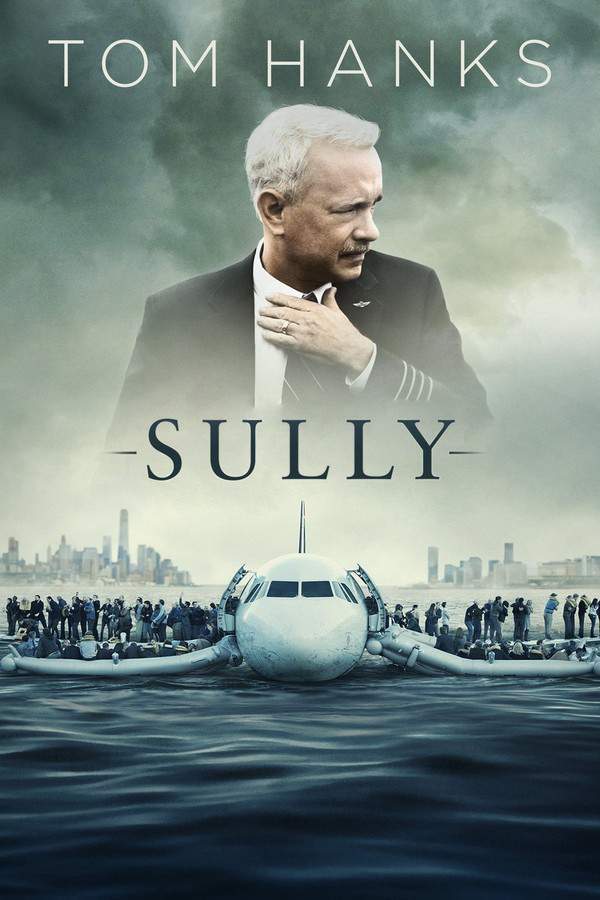
Sully (2016) movie poster

Plot Summary

Sully (2016) Plot Summary Explained

Release, runtime and language
2016 · 96 min · English
Starring
Tom Hanks, Aaron Eckhart, Laura Linney
Budget
$60M

After a remarkable emergency landing on the Hudson River, Captain Chesley "Sully" Sullenberger is hailed as a hero. However, an official inquiry into the incident begins, and Sully finds himself facing intense scrutiny regarding his decisions and actions during the flight. The investigation puts his reputation and career at risk as questions arise about what truly happened, and whether he could have avoided the Hudson River landing.

On this page (7)
  1. 1 Where to watch
  2. 2 What happens: full plot
  3. 3 Plot questions answered
  4. 4 The book behind the movie
  5. 5 Movie threads
  6. 6 Movies like Sully
  7. 7 Every angle

Where to watch

Where to Watch Sully (2016)

Where can you watch Sully? Stream, rent or buy it in the US, including on YouTube Free, Amazon Video and Apple TV Store: current JustWatch availability with up-to-date prices.

Streaming availability powered by JustWatch

Full plot summary · contains spoilers

What Happens in Sully: Full Plot Summary

The whole story of Sully (2016) explained, from the opening scene to the final frame: every key event, every twist and what it all adds up to. Read it as a quick recap before the sequel, to check a scene you missed, or to finally understand what really happened.

On the fateful afternoon of January 15, 2009, Captain Chesley "Sully" Sullenberger, portrayed by Tom Hanks, along with First Officer Jeff Skiles, played by Aaron Eckhart, embarks on US Airways Flight 1549 from LaGuardia Airport to Charlotte Douglas International Airport. Just three minutes into the flight, at an altitude of approximately 2,800 ft (850 m), the Airbus A320 encounters a flock of birds, leading to catastrophic damage to both engines. Faced with limited options, they realize that returning to any nearby airports, including Teterboro, isn't a feasible choice. With remarkable skill and quick judgment, Sully makes the bold decision to ditch the plane in the Hudson River.

A seasoned captain with an exemplary record, Sully finds himself hailed as a hero after the flight's emergency landing, where all passengers and crew members escape without fatalities despite suffering only mild injuries. However, the aftermath leaves him grappling with trauma. As he struggles to cope with the attention from the media that scrutinizes him and his family, particularly his wife Lorraine Sullenberger, portrayed by Laura Linney, he seeks refuge in alcohol yet finds no solace in the chaos surrounding him.

While in New York City for investigative purposes, Sully discovers that preliminary data from the Aircraft Communications Addressing and Reporting System (ACARS) suggests that the left engine was operational at idle power. Charles Porter leads the investigation, joined by Dr. Elizabeth Davis and Ben Edwards. Sully firmly believes this was not a crash but rather a forced water landing. Drawing from his extensive experience, he articulates that he requested to return to LaGuardia, but recognizing the inadequate speed and altitude, opted for the Hudson instead—effectively wagering both his and the lives of the passengers on that split-second decision.

The investigation casts doubts regarding Sully's judgment, indicating that the plane theoretically could have successfully landed at LaGuardia or Teterboro. Tensions rise as Sully and Skiles clash with the investigators. The pilot's union, represented by Mike Cleary, and his friend Larry Rooney emphasize Sully's incredible track record, as he finds himself under scrutiny for a crisis that unfolded in just 208 seconds.

Skiles points out that Sully's activation of the Auxiliary Power Unit—the 15th item on the Airbus checklist—proved vital, contributing to their successful landing. However, he remains perplexed by the conflicting data from the simulations that indicate otherwise.

As the National Transportation Safety Board (NTSB) starts to lean towards a narrative of pilot error, which threatens Sully's career, he takes the initiative to have the simulations rerun with live pilots, ultimately showcasing successful landings. Sully reflects on the harrowing flight, detailing how the cold day turned into a life-or-death situation due to the bird strike that incapacitated the engines. When Patrick Harten, the air traffic controller, clears the path for Flight 1549, Sully makes the decisive command: “Brace for impact.”

After executing the water landing, he ensures the evacuation of the aircraft, as emergency services respond swiftly, with multiple ferries arriving within 24 minutes and 1,200 rescue workers mobilized. The iconic image of passengers standing on the wings, surrounded by rescuers, captures the moment of survival.

Once aboard a ferry, Sully's first call is to Lorraine, anxious to confirm the survival of all 155 individuals on board. Upon learning of the successful evacuation, he grapples with the implications of the investigation, adamantly arguing that the NTSB's simulations lacked realism. With powerful assertions about the necessity of a realistic approach to evaluate the situation, the NTSB agrees to rerun the tests, leading to inconclusive results that validate Sully's account.

Ultimately, the investigation culminates in confirmation that the left engine was indeed destroyed by the birds, and Sully's decisions prove prudent in ensuring the safety of everyone aboard Flight 1549. He praises the teamwork and bravery of the entire crew and the rescue teams who played a crucial role in the incident's successful outcome.

Last updated: November 03, 2024 at 20:30

Was this helpful?

Plot questions answered

Sully Plot Explained: Your Questions Answered

The questions people ask most about Sully (2016): what happens in the confusing scenes, why the characters do what they do, the twists, hidden details and what the ending means. Each answer contains spoilers.

Q1

Why did Sully land on the Hudson River instead of trying to return to LaGuardia?

Sully determined that returning to LaGuardia or Teterboro was impossible because the plane had lost both engines at only 2,800 feet altitude with insufficient speed to reach any runway. He calculated they had only 208 seconds before hitting something, making the Hudson River the only viable option. His experience told him the math didn't work for turning back, he would have crashed into a populated area.

  • hudson river landing
  • emergency landing
  • la guardia
  • airport return
  • engine failure
Q2

Why was Sully investigated after successfully landing the plane?

The NTSB investigation focused on whether Sully's decision was the only safe option. Preliminary data from ACARS suggested the left engine might still be operational at idle power, which raised the possibility that the plane could have reached a nearby runway. The investigation wasn't accusing him of wrongdoing, but rather examining if pilot error contributed to the emergency.

  • ntsb investigation
  • pilot error
  • investigation
  • flight 1549
Q3

What did the ACARS data reveal about the left engine?

The ACARS system initially showed the left engine was producing some power at idle, leading investigators to question whether it was truly destroyed. This data fueled the theory that Sully might have had enough engine power to reach an airport. However, the final investigation confirmed the left engine was indeed destroyed by the bird strike, the ACARS data was misleading because it showed residual spinning rather than actual thrust.

  • acars
  • left engine
  • bird strike
  • engine data
  • flight data
Q4

Why did the flight simulations initially show Sully could have landed at an airport?

The initial simulations were run by computer algorithms that assumed optimal conditions, pilots knew in advance the engines would fail and could react perfectly from the moment of the bird strike. When the NTSB reran simulations with live pilots who had to recognize and react to the emergency naturally, no one could successfully reach an airport. The original tests were unrealistic because they removed the human reaction time component.
  • flight simulation
  • ntsb simulation
  • pilot error test
  • 208 seconds
Q5

What is the Auxiliary Power Unit and why did it matter?

The APU is a small turbine in the tail of the Airbus A320 that provides electrical power when the main engines are off. Sully's activation of the APU, the 15th item on the emergency checklist, was crucial because it kept critical systems like hydraulics and instrumentation functioning during the water landing. Without it, controlling the plane during the ditching would have been far more difficult.

  • apu
  • auxiliary power unit
  • airbus checklist
  • hydraulics
Q6

Why did Sully struggle with trauma despite being called a hero?

Sully experienced survivor's guilt and PTSD after the incident. While the public celebrated him, he was haunted by the fact that he had gambled 155 lives on a water landing with no guarantee of survival. The intense media scrutiny and investigation added to his stress, and he turned to alcohol briefly but found no solace. His trauma stemmed from the 208 seconds of pure survival mode and the uncertainty of whether his split-second decision was truly correct.

  • ptsd
  • trauma
  • survivor guilt
  • alcohol
  • stress
Q7

What happened to both engines during the bird strike?

Three minutes after takeoff at 2,800 feet, Flight 1549 struck a flock of Canada geese. The birds were ingested into both engines, causing catastrophic damage that destroyed the fan blades and eliminated all thrust. The Airbus A320 lost power completely from both engines, leaving Sully and Skiles with a gliding aircraft and no ability to maintain altitude or reach any runway.

  • bird strike
  • geese
  • engine failure
  • flight 1549
  • canada geese
Q8

How did the rescue operation work after the water landing?

Within 24 minutes of the water landing, multiple ferries arrived at the scene along with over 1,200 rescue workers. Passengers stood on the wings while ferries pulled alongside the plane. The fast response was coordinated by air traffic controller Patrick Harten, who cleared the path for emergency vessels. All 155 passengers and crew survived with only minor injuries.

  • rescue
  • ferry
  • hudson river
  • passengers
  • evacuation
  • rescue workers
Q9

Why was the 208-second timeframe significant in the investigation?

The entire crisis unfolded in just 208 seconds, from the bird strike to the water landing. This compressed timeframe became the central focus of the investigation because it represented the minimal window Sully had to assess options, make decisions, and execute the emergency landing. The NTSB scrutinized whether a pilot could reasonably evaluate alternatives in such a short period.

  • 208 seconds
  • emergency timeline
  • bird strike to landing
Q10

How was Sully finally vindicated by the investigation?

The investigation concluded that both engines were confirmed destroyed by the bird strike, validating Sully's account that he had no viable option but the Hudson River. When simulations were rerun with live pilots who didn't know in advance about the emergency, no one could reach an airport. This proved Sully's split-second decision was the correct one, and he was fully cleared of any wrongdoing.

  • vindication
  • ntsb conclusion
  • pilot cleared
  • innocent

Movie threads

More Movies Like Sully, by Mood & Story

Curated lists built around what makes Sully tick: the same mood, the same kind of story or the same emotional payoff. Each list explains why these movies belong together.

Movies about professional vindication like Sully

Experts under fire, fighting to prove their judgment was correct. If you liked Sully's tense drama about an expert defending his decisions, you'll appreciate these movies about professionals under fire. This list features similar stories where skilled individuals face intense investigations and fight to clear their names, blending high-stakes procedure with heavy emotional weight.

  • tense
  • anxious
  • methodical
  • cathartic
  • stressful
  • triumphant
  • Tone: tense, methodical
  • Pacing: variable, procedural
Why these movies?

The story pattern: The narrative typically follows a skilled protagonist immediately after a high-pressure event. Their professional competence is called into question by an official investigation, creating a dual conflict: the external battle for vindication and the internal struggle with trauma or self-doubt. The story often builds through flashbacks and procedural details, culminating in a public or legal exoneration.

Why they belong together: These movies are grouped by their shared focus on the intense pressure of defending one's professional integrity. They combine a tense, methodical tone with high emotional stakes, creating a cathartic experience centered on expertise and truth prevailing against institutional doubt.

Movies that use flashbacks to unravel a crisis like Sully

Stories piecing together a traumatic event through memory and inquiry. Fans of Sully's storytelling, which builds tension by juxtaposing the investigation with flight flashbacks, will enjoy these movies. This collection highlights films with a similar narrative style, using recollection under pressure to explore traumatic events and their heavy psychological aftermath.

  • non-linear
  • tense
  • anxious
  • traumatic
  • psychological
  • cathartic
  • Tone: tense, stressful, psychological
  • Pacing: variable, non-linear
Why these movies?

The story pattern: The narrative unfolds across two timelines: a tense present-day aftermath (like an investigation or trial) and fragmented flashbacks to the core traumatic event. The pacing is variable, shifting between the slow-burn procedural elements and the high-intensity crisis sequences. The protagonist's internal state and memory are central, as the truth is pieced together for both the character and the audience.

Why they belong together: These films are united by their specific narrative technique and emotional impact. They share a variable pacing that builds anxiety, a heavy emotional weight focused on trauma, and a tense tone driven by the gap between memory and official account, leading to a cathartic resolution.

If you liked this

Movies Like Sully

Similar movies to Sully: the same genre, themes or kind of story. Each one comes with its own plot summary, timeline and ending explained.

Browse all movie summaries

Every angle

Sully (2016) Explained: Plot, Timeline & Characters

Everything about Sully in one place: what happens in the plot summary, the timeline in chronological order, the characters and meaning and a spoiler-free summary. What's After the Movie adds the cast, box office and post-credit scenes.

Coming soon on iOS and Android

The Plot Explained Movie Summary App

Plot summaries, endings explained and timelines on your phone. Catch up on any movie in minutes, save your favorites and never miss a twist again.

Be the first to know when we launch. Your email stays private, always.

Learn more about the app