Year: 1998
Runtime: 84 min
Language: English
Director: Darren Aronofsky
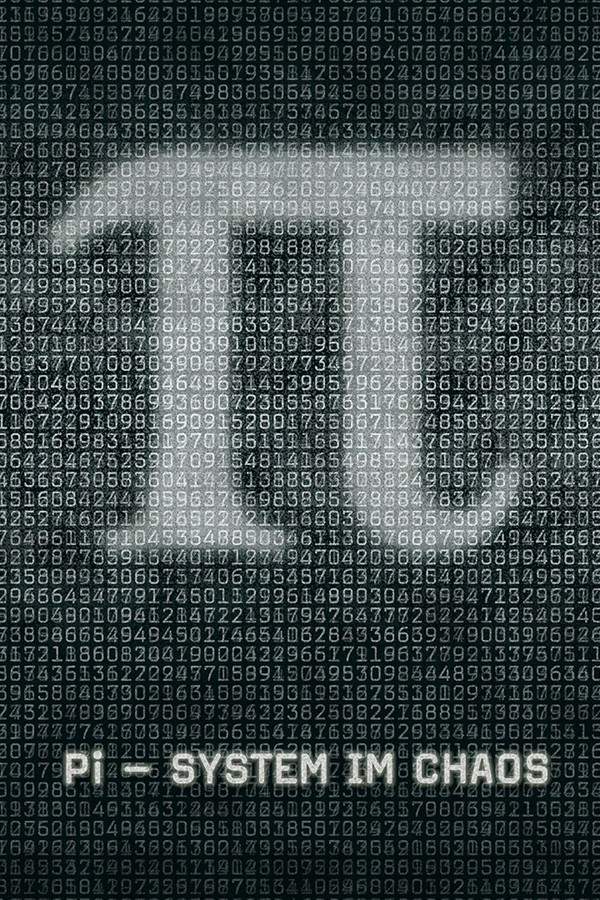
A gifted mathematician becomes increasingly obsessed with uncovering the digits of Pi, believing they hold the key to understanding the universe. His relentless pursuit leads him down a dangerous path, blurring the lines between reality and delusion as he grapples with complex equations and unsettling discoveries. The search becomes an all-consuming quest that threatens his sanity and the world around him.
Warning: spoilers below!
Haven’t seen Pi yet? This summary contains major spoilers. Bookmark the page, watch the movie, and come back for the full breakdown. If you're ready, scroll on and relive the story!
Read the complete plot breakdown of Pi (1998), including all key story events, major twists, and the ending explained in detail. Discover what really happened—and what it all means.
The film revolves around Maximilian Cohen, a brilliant yet troubled mathematical genius portrayed by Sean Gullette. Max, who currently finds himself without a job, believes that the secrets of the universe can be unraveled through numbers. He takes on the challenge of predicting stock market patterns, using his intricate knowledge and his homemade supercomputer, Euclid, in the confines of his cramped New York City apartment located in Chinatown.
Through a captivating narrative, the film opens with Max recalling a traumatic childhood memory where he defied his mother’s warning and tried to stare directly at the sun. This reckless decision led to lasting damage to his eyes, and although they healed, they brought with them severe headaches that haunt him to this day. These debilitating pains push him to the brink of insanity and often leave him incapacitated. Alongside these physical ailments, Max wrestles with extreme paranoia and experiences unsettling hallucinations, making it increasingly difficult to distinguish between reality and the manifestations of his tortured mind.
Despite his isolation, Max finds a brief connection with Jenna, a curious young girl played by Kristyn Mae-Anne Lao, who is intrigued by his mathematical genius. As he works tirelessly on his stock predictions, a catastrophic event occurs when Euclid crashes and spits out a seemingly random 216-digit number right before it fails. Dismayed, Max discards the printout, only to discover the next morning that the stock predictions made prior to the crash were astonishingly accurate. He desperately scours the park’s trash bins for the printout but comes up empty-handed.
Max’s interactions remain limited, mostly involving a young neighbor, Devi (played by Samia Shoaib). His solitary existence is occasionally interrupted by visits to Sol Robeson, his former mathematics professor, portrayed by Mark Margolis. Sol, who is now immobile and reliant on others for care, had once been a pioneer in studying the mathematical constant Pi. As they reconnect, Sol grows uneasy when Max brings up the enigmatic 216-digit number. He appears to have had a similar experience years earlier, leading him to caution Max about the dangers of pursuing the number’s meaning.
In a twist of fate, Max meets Lenny Meyer at a coffee shop—a Hasidic Jew researching mathematical concepts within the Torah. Lenny shows Max an intriguing concept called Gematria, correlating Hebrew letters to numerical values and suggesting that the Torah encodes a profound message in numbers. Drawn in by this idea, Max realizes that the number they seek overlaps with some of his existing numeric theories.
The plot thickens as shadowy figures from a Wall Street firm, led by Marcy Dawson (Pamela Hart), take an interest in Max’s discoveries. She strategically offers him a high-performance computer chip, “Ming Mecca,” to entice him into commercializing his research. Although Max declines her offer, the lure of potential breakthroughs into understanding the Torah proves too tempting. After using the chip, he finds himself overwhelmed by visions of stock market patterns and increasingly intense migraines, culminating in a grotesque vein-like protrusion on his temple.
Guided by Sol’s cryptic warnings about the 216-digit number’s significance, tension builds as Max encounters both Marcy’s agents and Lenny, each trying to extract the secrets he’s uncovered. Upon capture, Max’s life hangs by a thread when Lenny, who initially appears to be a friend, tries to wrestle the number from him, resulting in Max being knocked unconscious.
Upon awakening, Max is introduced to Rabbi Cohen (Stephen Pearlman), a leader amongst Kabbalists, who reveal that the number could herald a new messianic age. However, Max zealously asserts that the knowledge belongs solely to him. In a frantic turn of events, he learns of Sol’s passing and is driven to uncover his final insights, eventually finding scribblings leading back to his own calculations.
As the narrative spirals into madness, Max’s compulsion to connect the dots leads to destructive behavior, as he believes the headache and the number are intertwined. In a moment of profound despair, he partners with insanity, self-inflicting harm in an attempt to rid himself of the burdens of his knowledge. Ultimately, he burns the paper containing the number and resorts to trepanning himself in an act of desperation.
In a poignant conclusion, Max’s life takes an unexpected turn when Jenna approaches him in a park, innocently posing mathematical questions. With a newfound sense of tranquility, Max smiles and admits that he no longer knows the answer. No longer grappling with complex equations or haunted by his former anxieties, he sits peacefully on a park bench, embracing the simplicity of existence amidst the rustling trees.
Last Updated: November 04, 2024 at 01:04
Discover curated groups of movies connected by mood, themes, and story style. Browse collections built around emotion, atmosphere, and narrative focus to easily find films that match what you feel like watching right now.
Brilliant minds collapse under the weight of a single, all-consuming obsession.Explore a collection of movies like Pi, featuring brilliant protagonists whose search for a transcendent truth leads to psychological collapse. These films delve into the dark side of obsession, exploring the fine line between genius and madness in a tense, cerebral style.
The narrative follows a character of exceptional intellect who becomes consumed by a quest for an ultimate answer. Their pursuit is marked by increasing isolation, physical and mental distress, and a growing unreliability of perception, often culminating in a tragic or bittersweet resolution where knowledge comes at a great personal cost.
Movies in this thread share a core focus on the psychological unraveling of a brilliant mind. They create a claustrophobic, high-intensity atmosphere through a steady pacing that mirrors the protagonist's deepening obsession, blending cerebral themes with a dark, emotionally heavy tone.
High-tension stories where the primary conflict unfolds within a collapsing mind.If you liked the tense, claustrophobic feel of Pi, this list features similar movies where the drama is intensely psychological. These stories generate high stress from within a character's unraveling perception, creating an oppressive and anxious viewing experience.
The plot is secondary to the immersive experience of a character's psychological state. The narrative structure often mimics a descent, using visual and auditory techniques to create a sense of entrapment and escalating unease, where the protagonist's internal world becomes the main source of conflict.
This thread groups films based on a shared visceral experience: a high-intensity, claustrophobic mood built from a character's internal crisis. The similarity lies in the oppressive atmosphere, steady pacing of dread, and focus on psychological unraveling over external action.
Don't stop at just watching — explore Pi in full detail. From the complete plot summary and scene-by-scene timeline to character breakdowns, thematic analysis, and a deep dive into the ending — every page helps you truly understand what Pi is all about. Plus, discover what's next after the movie.
Track the full timeline of Pi with every major event arranged chronologically. Perfect for decoding non-linear storytelling, flashbacks, or parallel narratives with a clear scene-by-scene breakdown.
Discover the characters, locations, and core themes that shape Pi. Get insights into symbolic elements, setting significance, and deeper narrative meaning — ideal for thematic analysis and movie breakdowns.
Get a quick, spoiler-free overview of Pi that covers the main plot points and key details without revealing any major twists or spoilers. Perfect for those who want to know what to expect before diving in.
Visit What's After the Movie to explore more about Pi: box office results, cast and crew info, production details, post-credit scenes, and external links — all in one place for movie fans and researchers.
Discover movies like Pi that share similar genres, themes, and storytelling elements. Whether you’re drawn to the atmosphere, character arcs, or plot structure, these curated recommendations will help you explore more films you’ll love.
Pi (1998) Scene-by-Scene Movie Timeline
Pi (1998) Movie Characters, Themes & Settings
Pi (1998) Spoiler-Free Summary & Key Flow
Movies Like Pi – Similar Titles You’ll Enjoy
Persona (1967) Detailed Story Recap
Tau (2018) Film Overview & Timeline
K-PAX (2001) Plot Summary & Ending Explained
Pig (2019) Detailed Story Recap
Pieta (2013) Spoiler-Packed Plot Recap
Brand Upon the Brain! (2007) Spoiler-Packed Plot Recap
Donnie Darko (2001) Complete Plot Breakdown
Cube (1998) Movie Recap & Themes
THX 1138 (1971) Spoiler-Packed Plot Recap
Beyond the Black Rainbow (2012) Full Summary & Key Details
The Mandela Effect (2019) Plot Summary & Ending Explained
Pandorum (2009) Complete Plot Breakdown
Irrational Man (2015) Ending Explained & Film Insights
Psychotronic (2017) Film Overview & Timeline
Cube (2021) Ending Explained & Film Insights