Year: 2011
Runtime: 180 min
Language: Romanian
Director: Andrei Ujica
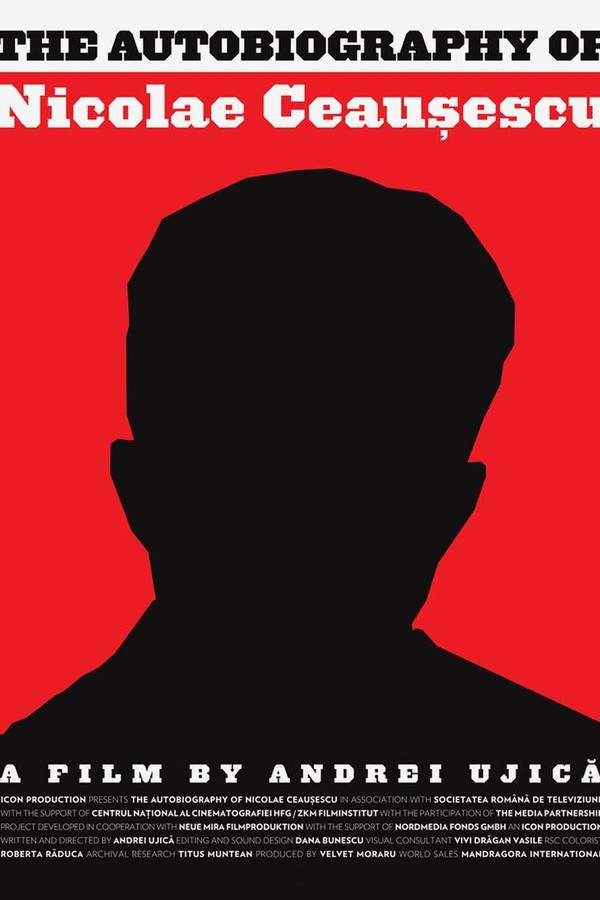
Using archival footage, this documentary provides a disturbing look at the life and rule of Nicolae Ceausescu, the dictator of Romania. The film features footage of him speaking to large gatherings, participating in official ceremonies, and demonstrating his control over the country. It offers a revealing portrait of a controversial figure and a period of Romanian history.
Warning: spoilers below!
Haven’t seen The Autobiography of Nicolae Ceausescu yet? This summary contains major spoilers. Bookmark the page, watch the movie, and come back for the full breakdown. If you're ready, scroll on and relive the story!
Read the complete plot breakdown of The Autobiography of Nicolae Ceausescu (2011), including all key story events, major twists, and the ending explained in detail. Discover what really happened, and what it all means.
Cinemas possess a remarkable ability to influence perception, a power encapsulated in Andrei Ujică's monumental work, The Autobiography of Nicolae Ceausescu. This film stands as a contemporary fresco portraying the life of Romania's fallen dictator, Nicolae Ceausescu, alongside his wife, Elena. A provocative and chilling endeavor, this project completes the filmmaker's trilogy that began with the groundbreaking Videograms of a Revolution, co-created with noted German film essayist Harun Farocki.
Autobiography transcends conventional categorization, functioning most similarly to a Vertovian film-object. It assembles fragments of reality, meticulously editing together a repository of images that aim to reveal a deeper truth about Ceausescu’s reign. However, one must ponder: what is reality when its representations have been meticulously orchestrated into grand spectacles or quasi-musicals by an unhinged autocrat?
Ceausescu's legendary megalomania and relentless self-aggrandizement are at the forefront of this historical narrative. Serving as Romania's tyrannical president from 1965 to 1989, he cultivated an eccentric and infectious cult of personality surrounding himself. While his draconian austerity measures thrust the nation into widespread poverty and his prohibition of contraception led to rampant child abandonment and a surge of AIDS/HIV-infected orphans, Ceausescu was nevertheless celebrated on the global stage. His accolades included being knighted by the Queen of England, receiving visits from President Nixon during the Cold War, and garnering warm receptions from influential leaders like Charles de Gaulle, Mao Tse-tung, and notably the North Koreans, whose lavish ceremonies for him paralleled the grandiosity of the Beijing Olympics.
The film opens with the notorious television footage depicting the frail, cornered Ceausescu as he faces a mock trial just before he and his wife’s execution on Christmas Day. From this arresting beginning, the film delves into a breathtaking display of pomp and circumstance, chronicling the 25-year reign of a ruler whose grip on power was as spectacular as it was devastating. Notably, the film eschews voice-over commentary, instead relying on brilliant montage techniques and nuanced sound reconstruction to create a unique cinematic experience that resides in the creative space between Godard's Histoire(s) du cinéma and Vertov's Man with a Movie Camera.
Taking four years to complete and drawing from over a thousand hours of both public and private archival footage, this captivating exploration unfolds as though it is pieced together from the introspective and nostalgic memories of Ceausescu himself. It invites the viewer to reflect on the manifold layers of truth and distortion that characterized a turbulent era in Romania's history.
Last updated: May 12, 2025 at 07:04
Explore frequently asked questions about The Autobiography of Nicolae Ceausescu (2011) with spoiler-rich answers covering the full plot summary, major story beats, character motivations, hidden details, and ending meaning. This movie summary FAQ helps explain confusing scenes, plot twists, and narrative decisions in clear, searchable detail.
Ceausescu was executed on December 25, 1989, following a swift revolution that overthrew his regime. After being ousted from power during widespread anti-communist protests, he and his wife Elena were captured, subjected to a brief military tribunal, and shot by firing squad. The timing was significant, Christmas Day marked the end of the communist era and symbolized a violent break from the dictator's 24-year rule. The execution was broadcast nationally, serving as both a legal proceeding and a public spectacle that mirrored the theatrical nature of Ceausescu's own regime.
The film opens with this execution footage, immediately establishing the brutal fate that awaits the man whose 25-year reign the documentary will chronicle.
Ceausescu cultivated an elaborate cult of personality through massive public spectacles, staged rallies, and controlled media. His regime produced countless propaganda films, portraits, and ceremonies portraying him as a beloved father figure and brilliant leader. State-controlled television broadcast his speeches to massive crowds, often featuring cheering citizens who were actually bussed in and coached to react. These orchestrated events, which the documentary assembles from archival footage, created an illusion of universal support while concealing the severe hardship his policies inflicted on ordinary Romanians.
The timeline shows that creation of the cult of personality began immediately after his 1965 rise to power, preceding the more devastating policies that would come later.
Despite Romania's internal repression and poverty, Ceausescu maintained surprising international legitimacy because of Cold War geopolitics. As a relatively independent communist leader who refused to completely align with Moscow, he was valuable to Western powers seeking a pragmatic relationship with the Eastern Bloc. Western leaders visited him hoping to encourage Romanian independence from Soviet influence. His recognition included being knighted by Queen Elizabeth II and receiving President Nixon in 1969, creating a stark contrast between his image abroad and the suffering of his citizens at home.
The film juxtaposes footage of Ceausescu receiving grand international receptions with images of domestic hardship, highlighting this disconnect throughout.
In the 1960s, Ceausescu implemented Decree 770, banning contraception and abortion in an effort to increase Romania's population. The policy forced women to carry unwanted pregnancies to term, leading to a massive increase in child abandonment. Many children ended up in underfunded state orphanages where conditions were dire. These orphans became particularly vulnerable to HIV/AIDS, creating a humanitarian crisis that drew international attention in the 1980s. The policy reflected Ceausescu's view of citizens as assets for the state rather than individuals with autonomous rights.
The summary mentions this policy specifically as part of the 'draconian' measures that created widespread suffering, though the film presents these consequences through visual evidence rather than explicit commentary.
Ceausescu's regime collapsed rapidly in December 1989 due to mounting economic failure and growing public discontent. By the late 1980s, his severe austerity measures had created widespread poverty while he and his family lived in extreme luxury. When anti-communist revolutions swept through Eastern Europe, Romanian citizens began openly protesting. Unlike other communist leaders who fled or negotiated, Ceausescu refused to acknowledge the people's discontent and attempted to maintain control. His security forces turned against him, and within days he was ousted, tried, and executed, a remarkably swift end to a 24-year dictatorship.
The timeline shows the 'decline of communism' as a late 1980s development, with the 'final days' representing the rapid unraveling that had been building for years.
The film deliberately avoids voice-over narration to force viewers to interpret the archival footage themselves. Director Andrei Ujică presents only the official state recordings, propaganda films, speeches, and ceremonial footage, trusting the audience to recognize the manipulation, contradiction, and hubris within these images. This approach places the viewer in the position of an active interpreter rather than a passive recipient of historical analysis. The absence of explanatory commentary creates what the film calls a 'Vertovian film-object,' mimicking the experience of watching historical footage without editorial mediation.
The summary notes the film's position 'between Godard's Histoire(s) du cinéma and Vertov's Man with a Movie Camera,' suggesting this interpretive approach was intentional from the outset.
The film opens with the infamous execution footage because it provides the终点 (endpoint) that shapes how viewers interpret everything that follows. By showing the dictator's humiliation and death first, the documentary transforms the earlier propaganda footage, from grand speeches to lavish international visits, into a tragic irony. Viewers watch the same state-produced content that once celebrated Ceausescu but now witness its protagonist's ignominious end. This reverse chronology creates a sense of inexorable decline, making the earlier displays of power appear not as strength but as the desperate theatrical performances of a doomed autocrat.
This opening immediately establishes the film's approach: using Ceausescu's own footage to chronicle both his rise and fall.
Ceausescu's visits to North Korea resulted in elaborate state ceremonies that rivaled the Beijing Olympics in scale and theatricality. Both dictators shared a fascination with massive, choreographed displays of popular support, precisely the kind of propaganda spectacles documented in this film. The North Korean receptions were notable for their extreme choreography, thousands of performers, and synchronized displays of adoration. These visits reflected Ceausescu's affinity for the most extreme forms of personality cult and demonstrated the international dimension of his autocratic ambitions.
The timeline specifically highlights these visits as key moments showcasing 'the regime's affinity for theatrical propaganda,' linking directly to the film's central theme.
The mock trial that preceded the Ceausescus' execution was a rapid military proceeding designed to provide legal legitimacy to their deaths while serving as public spectacle. Held on December 25, 1989, the trial lasted less than an hour. The proceedings were broadcast on state television, allowing citizens to witness the once-untouchable dictator facing judgment. While legally questionable, the trial served political purposes, it demonstrated the regime's complete collapse and provided a sense of justice for the suffering Ceausescu had caused. The speed and theatrical nature of the trial echoed the very spectacle-driven politics Ceausescu himself had perfected.
This mock trial directly follows Ceausescu's 'final days' in the timeline, representing the swift reckoning that concluded his 25-year reign.
Unlike traditional documentaries that use narration, interviews, or explanatory text, this film presents only unedited archival footage from Ceausescu's Romania. The director assembled over 1,000 hours of state-produced material, including speeches, ceremonies, and official events, into a continuous visual essay without commentary. This approach treats the propaganda footage itself as evidence, asking viewers to recognize manipulation, contradiction, and eventual collapse within these officially sanctioned images. The film functions more like a 'film-object' than a conventional documentary, occupying a creative space between historical record and artistic interpretation.
The summary explicitly positions the film as similar to Vertov's 'Man with a Movie Camera,' indicating this experimental approach was the director's core intention.
Discover curated groups of movies connected by mood, themes, and story style. Browse collections built around emotion, atmosphere, and narrative focus to easily find films that match what you feel like watching right now.
Films that use found footage to dissect the mechanisms of authoritarian rule.If you liked the unsettling, found-footage approach of *The Autobiography of Nicolae Ceausescu*, explore more movies that use archival material to dissect political power and propaganda. These films offer a similar, complex look at history through its own mediated images, creating a tense and intellectually demanding viewing experience.
These films typically eschew conventional voice-over narration, instead building their narrative through the strategic montage of historical footage. The journey is one of revelation, where the viewer becomes an active participant in uncovering the truth behind the manufactured reality presented by regimes or powerful figures.
They are grouped by their unique formal approach to history and politics. They share a commitment to using primary visual sources to create a tense, thought-provoking atmosphere, focusing on the gap between official imagery and underlying reality.
Sobering narratives tracing the inevitable collapse of flawed, powerful figures.Viewers seeking the grim, historical narrative of *The Autobiography of Nicolae Ceausescu* will find similar movies here. These films explore the devastating collapse of powerful individuals and systems, sharing a tense atmosphere, heavy emotional weight, and a ultimately bleak perspective on power and its consequences.
The narrative pattern is one of inescapable decline. It often begins at a point of perceived power, then moves backward or forward to reveal the cracks, miscalculations, and brutal realities that foretell a tragic end. The journey is less about suspense regarding the outcome and more about understanding the mechanics of the collapse itself.
They are united by their tragic arc and oppressive mood. Whether fictional or historical, they share a high intensity, a tense tone, and a focus on the human cost and systemic failure that accompanies a dramatic downfall, resulting in a profoundly bleak viewing experience.
Don't stop at just watching - explore The Autobiography of Nicolae Ceausescu in full detail. From the complete plot summary and scene-by-scene timeline to character breakdowns, thematic analysis, and a deep dive into the ending - every page helps you truly understand what The Autobiography of Nicolae Ceausescu is all about. Plus, discover what's next after the movie.
Track the full timeline of The Autobiography of Nicolae Ceausescu with every major event arranged chronologically. Perfect for decoding non-linear storytelling, flashbacks, or parallel narratives with a clear scene-by-scene breakdown.
Discover the characters, locations, and core themes that shape The Autobiography of Nicolae Ceausescu. Get insights into symbolic elements, setting significance, and deeper narrative meaning - ideal for thematic analysis and movie breakdowns.
Get a quick, spoiler-free overview of The Autobiography of Nicolae Ceausescu that covers the main plot points and key details without revealing any major twists or spoilers. Perfect for those who want to know what to expect before diving in.
Discover movies like The Autobiography of Nicolae Ceausescu that share similar genres, themes, and storytelling elements. Whether you’re drawn to the atmosphere, character arcs, or plot structure, these curated recommendations will help you explore more films you’ll love.
The Autobiography of Nicolae Ceausescu (2011) Scene-by-Scene Movie Timeline
The Autobiography of Nicolae Ceausescu (2011) Movie Characters, Themes & Settings
The Autobiography of Nicolae Ceausescu (2011) Spoiler-Free Summary & Key Flow
Movies Like The Autobiography of Nicolae Ceausescu – Similar Titles You’ll Enjoy
Uppercase Print (2021) Complete Plot Breakdown
12:08 East of Bucharest (2007) Full Movie Breakdown
Videocracy (2010) Movie Recap & Themes
Fidel (2002) Spoiler-Packed Plot Recap
The Dead Nation (2017) Spoiler-Packed Plot Recap
Collective (2019) Full Summary & Key Details
30 Years of Democracy (2019) Ending Explained & Film Insights
Exam (2003) Ending Explained & Film Insights
Détour Ceausescu (1990) Story Summary & Characters
The Way I Spent the End of the World (2006) Spoiler-Packed Plot Recap
Echoes from a Sombre Empire (1990) Plot Summary & Ending Explained
Pontecorvo: The Dictatorship of Truth (1992) Movie Recap & Themes
The Pitești Experiment (2022) Complete Plot Breakdown
Mirror (1994) Full Summary & Key Details
Tales from the Golden Age (2009) Detailed Story Recap