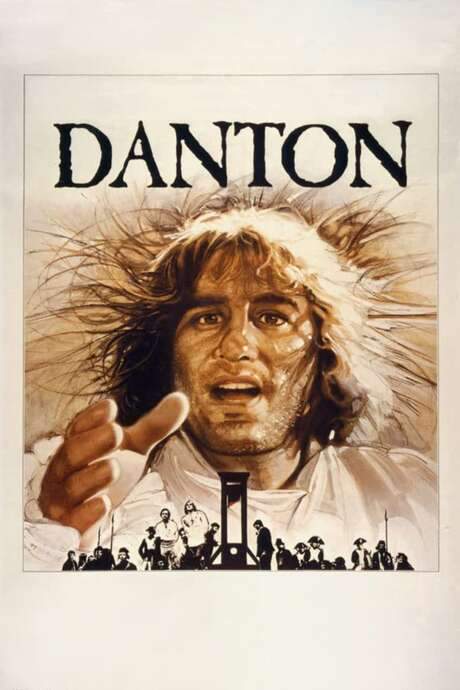
Robespierre [Wojciech Pszoniak] sits at the heart of a Paris gripped by the Reign of Terror in the cold spring of 1794, where city streets are searched, rain blurs the cobbles, and long lines form for scarce bread. Ill in his flat, he watches Danton [Gérard Depardieu], freshly returned from the countryside and greeted as a hero by a hungry, dispirited people who crave leadership and courage. The atmosphere is thick with tension as Robespierre weighs his next moves against the rising question of whether mercy or iron will can sustain a republic.
Desmoulins [Patrice Chéreau], a bold printer, feeds public feeling with pro-Danton pamphlets from his shop, and Robespierre soon orders Héron to destroy that print shop, setting in motion a skirmish between intelligence, influence, and popular will. While the pressure mounts, Robespierre is tended by his barber, and his ally Saint-Just [Bogusław Linda] urges a harder line, pressing him to remove Danton from the political stage. Robespierre resists, preserving a wary line between friendship and the brutal necessity he believes the Revolution demands.
Before the National Convention sits, Westermann [Jacques Villeret] pressures for a coup to topple Robespierre’s power, while Danton declines, convinced that the people’s support and the power of his newspaper, Le Vieux Cordelier, will shield him. Yet he asks Bourdon [Andrzej Seweryn] to denounce Héron and his secret police in the Convention, a move that will pull others into the fray and expose the fragility of alliances in revolutionary times. The city breathes with a fragile hope that oratory and popular affection can outlast a tightening net.
That night, Robespierre invites Danton to a private dinner, building himself up with wine as he offers a chance to reconcile, while Danton drinks and coolly refuses to join Robespierre’s cause. The scene underscores a core tension: the more Robespierre seeks to line up the future of the Republic, the more Danton’s charisma and street-level support threaten to outpace him. After Robespierre leaves, a confrontation in the streets reveals a group of armed men—Westermann’s coup cohort—though Danton again refuses to be part of an illegal plot.
When Robespierre goes to Desmoulins’ house, he finds Desmoulins furious at the destruction of his printing work and unwilling to listen to Robespierre’s arguments about political strategy. Desmoulins’ wife pleads for him to live and think of the people, but Robespierre can do little more than press the case that the leadership must be unified, or the Republic will fracture. Robespierre then moves to the Committee of Public Safety and orders warrants for the arrest that night of Danton, Desmoulins, Westermann and several core associates, a drastic step that sends shockwaves through the revolutionary city. Danton, though he could rally more troops, chooses restraint, allowing the arrest to proceed and declaring that his oratory and the affection of the people will protect him.
The next morning, the National Convention reacts with outrage as Robespierre justifies the arrests by branding Danton an enemy of the Republic. Bourdon publicly shifts sides to back Robespierre, a turn that adds weight to Robespierre’s cause, while Danton faces the prospect of leadership being erased from the nation’s stage. At the Revolutionary Tribunal, the trial begins with uneasy silence as jurors grapple with the charges, and Danton’s interruptions threaten to derail the proceedings. The courtroom itself feels like a battlefield, where authority, legitimacy, and the people’s trust hang in the balance.
In prison, Danton’s confidence flinches when a fellow inmate mocks the possibility of a triumphant verdict, heightening the sense that the trial is more about political theater than due process. The following day, Robespierre learns from Fouquier-Tinville [Roger Planchon] that Danton’s constant interruptions have turned the process into a farce, spurring Robespierre to push through a decree that silences any speaker who steps out of line. The accused are quickly herded from court, and the verdict of guilt is announced with clinical finality.
On the eve of execution, Danton reflects that his greatest failure may not be his own harm but his inability to truly fulfill the people’s trust. As the condemned men are paraded through silent crowds to the scaffold and guillotined, Robespierre’s long-held composure ruptures. Saint-Just cheers him on, urging a declaration of dictatorship, while Robespierre recoils at the thought, admitting that if dictatorship becomes necessary, democracy itself may be an illusion. The trial’s drama closes on a sobering note: the Declaration of the Rights of Man and of the Citizen, once recited as a beacon of liberty, is shown here under the shadow of fear, doubt, and the moral compromise of revolution. The film leaves the viewer with a stark meditation on how the noblest ideals of the Revolution are fatally compromised.