Plot Explained Spoilers guaranteed!
Plot Explained

Browse by genre

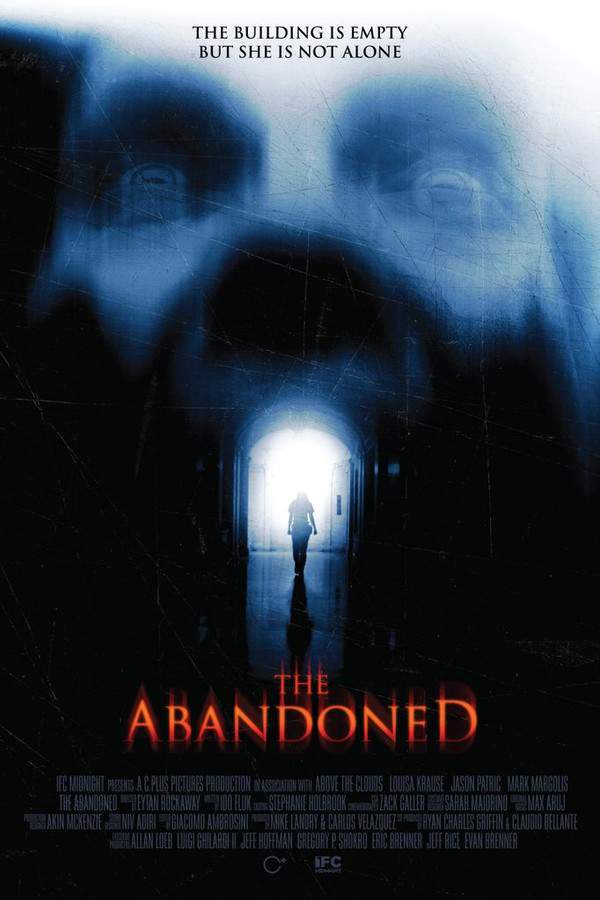
The Abandoned (2016) movie poster

Ending Explained

The Abandoned (2016) Ending Explained – Final Scene & Meaning

Release, runtime and language
2016 · 86 min · English
Loading streaming availability…
Directed by
Eytan Rockaway

Seeking redemption from a troubled past, Streak takes a job at a decaying apartment complex. As she explores the abandoned building, she discovers a sinister presence that threatens her sanity. The unsettling atmosphere and strange occurrences force her to confront not only the malevolent force within the complex, but also the darkness within herself. She must fight to maintain her grip on reality as the night progresses and the true terror of the building is revealed.

On this page (6)
  1. 1 Where to watch
  2. 2 What happens at the end
  3. 3 Final events in order
  4. 4 Ending questions answered
  5. 5 Movie threads
  6. 6 Every angle
Loading streaming availability…

Ending explained · contains spoilers

What Happens at the End of The Abandoned?

How The Abandoned (2016) ends, what the final scene means, which earlier moments set it up and how to read the ending if the film leaves it open. The full ending explained, with every spoiler.

In the end, Wu finally confronts and captures Chang-Fu, the murderer responsible for Waree’s and Yeti’s deaths, along with the others he had killed. She finds him on the top floor of his compound, where he’s been keeping many of his victims’ hearts and fingers as twisted trophies. Chang-Fu, a man devastated by love lost and driven by a sick desire for revenge, reveals that he is the killer. His motivation stems from his painful breakup with his wife, which led him to see immigrant women as objects of betrayal and disdain, resulting in his gruesome acts of mutilation and murder.

When Wu locates Saipin, she arrives just in time to prevent Chang-Fu from killing her. He tries to trap Wu in a room with her, but she fights back fiercely, managing to wound him and ultimately shooting him in the chest to stop his rampage. As the building fills with deadly carbon monoxide, Chang-Fu desperately claims he’s forgotten the password, but it’s clear he’s just trying to prevent Wu and Saipin from escaping. Wu, risking her life, forces her way through the poisoned space, breaking the door open, and rescuing Saipin in the process.

In the aftermath, Wu is left battered but victorious. She finally understands that her obsession with her past and her grief had blinded her to the possibility of moving forward. Her near-death experience and the discovery of Chang-Fu’s atrocities help her realize that she has to let go of her guilt and pain. She adopts a dog, symbolizing a new beginning, and finally finds peace. The case has also helped Wu see the difference between obsession and love, allowing her to begin healing—ready to live again. Meanwhile, Wu and Wei share a moment of camaraderie, suggesting that they will continue supporting each other as they heal from their trauma. The film closes on a note of hope, emphasizing that even amidst darkness, there is a chance for renewal and redemption.

Last updated: June 25, 2025 at 09:00

Was this helpful?

The last 4 events

How The Abandoned Ends: The Final Events in Order

The last events of The Abandoned (2016) in chronological order, the run-up to the ending explained above. The complete timeline has all 12 events, scene by scene.

Open the full timeline
  1. Julia dives into the reservoir to save Clara

    Thinking the survivor is Clara, Julia jumps into the reservoir to rescue the person, ignoring Cooper's warning. She is saved by Cooper, whose life is lost in the rescue.

    Where
    Reservoir chamber
  2. Confrontation with the locked door and the children

    After the rescue, Julia finds the door locked and is confronted by the deformed children, including the face-deformed blonde girl. She pleads for mercy, and the children allow her to leave.

    Where
    Room 441 corridor / dormitory
  3. The mind twist: events are inside Julia's mind

    It is revealed that all events are happening inside Julia's mind. She is the deformed girl, the daughter of Dennis Cooper; Dixon is the doctor and Jim is a sickly old man; Clara is the name of her doll.

    Where
    Inside Julia's mind
  4. Ending: Julia flatlines beside her grieving father

    The film ends with Julia flatlining on life support that she has had since childhood, while her father mourns nearby. The ending confirms the traumatic origins of her mind and the dreamlike cycle she has endured.

    Where
    Hospital life-support ward

Ending questions answered

The Abandoned Ending: Your Questions Answered

The questions people ask most about the ending of The Abandoned (2016): what the final scene means, how the twist works, what happens to each character and how to read the ending. Each answer contains spoilers.

Q1

Why is the protagonist actually a comatose child?

The entire story of Wu exploring the apartment complex is revealed to be a dying fantasy. The protagonist we followed throughout the movie is actually a hospitalized, traumatized girl who has been in a coma. Her mind created the elaborate narrative of Wu's investigation as a way to process her trauma and impending death.

Foreshadowing: The increasingly surreal and impossible elements of the building's geography hint that this is not a real-world investigation.

  • comatose girl
  • twist ending
  • protagonist reveal
  • dying fantasy
  • hospitalized
Q2

What does the ending mean?

The ending reveals that the entire horror narrative was a psychological delusion. The girl's mind constructed an elaborate fantasy where she was a detective (Wu) fighting evil, likely as a way to feel powerful and in control when she was actually helpless on a hospital life support system.

Foreshadowing: The meta notes describe the narrative as VERY_COMPLEX with a major twist that recontextualizes everything.

  • ending meaning
  • twist
  • psychological ending
  • delusion
  • interpretation
Q3

Why is the supernatural plot revealed to be a fantasy?

The meta notes explicitly state that the supernatural elements were part of a dying fantasy. The girl's traumatic situation, being trapped on life support with severe deformities and abuse, caused her mind to create an alternate identity (Wu) who could fight back against threats, giving her a sense of agency she lacks in reality.

Foreshadowing: The eerie atmosphere and impossible spatial logic of the building hint at a dreamlike or non-real setting.

  • supernatural fantasy
  • dying dream
  • psychological horror
  • delusion
Q4

What happens to Wu at the end?

Wu does not truly exist as an independent character. She is a manifestation of the comatose girl's imagination. The 'victory' Wu achieves, adopting a dog and finding peace, represents what the dying girl wished for herself: escape from her suffering and a chance at a new, peaceful life.

Foreshadowing: Wu's deep personal trauma and desire for redemption mirror the girl's own suffering.

  • wu character
  • fate
  • identity reveal
  • fantasy character
Q5

Why is the ending described as sad and hopeless?

The ending is profoundly tragic because it reveals the protagonist has been suffering alone in a hospital bed the entire time. Her 'victory' in the fantasy is just that, a fantasy. In reality, she remains a severely abused, deformed child on life support with no escape. The story ends with her dying, having never experienced the freedom and healing her imaginary self achieved.

Foreshadowing: The meta notes emphasize themes of child abuse, severe deformity, and the bleak reality of a life spent on life support.

  • tragic ending
  • sad ending
  • child abuse
  • death
  • hopeless
Q6

Is the entire movie just a dream?

Yes. The ending reveals that everything, the apartment complex, the investigation, Chang-Fu, Saipin, and Wu herself, was entirely constructed in the mind of a comatose girl. This is not simply a dream but a dying fantasy created to cope with her horrific reality of abuse and near-death.

Foreshadowing: The slow, atmospheric pacing and increasingly surreal elements create a dreamlike quality throughout.

  • dream
  • dying fantasy
  • entire story imagined
  • hallucination
Q7

What real events inspired the fantasy?

The fantasy appears to be rooted in the girl's actual trauma. Elements like the threatening building, the evil killer (Chang-Fu), and the victim she tries to save likely reflect her real experiences of abuse, fear, and helplessness. Her mind transformed these traumatic memories into the narrative of Wu's investigation.

Foreshadowing: Themes of child abuse and mental illness run throughout the narrative.

  • trauma
  • abuse
  • fantasy vs reality
  • real events
Q8

How does the twist change the story's meaning?

The twist fundamentally recontextualizes the entire film. What appeared to be a supernatural horror about a detective confronting evil is actually a tragic window into a dying child's mind. The 'monsters' she imagined fighting represent her real-life abusers and her desperate need for rescue that never came. The story becomes less about external evil and more about the profound tragedy of childhood trauma.

Foreshadowing: The escalating horror was always escalating toward this revelation of psychological truth.

  • twist impact
  • recontextualization
  • meaning change
  • psychological depth

Movie threads

More Movies Like The Abandoned, by Mood & Story

Curated lists built around what makes The Abandoned tick: the same mood, the same kind of story or the same emotional payoff. Each list explains why these movies belong together.

Psychological horror mirrors like The Abandoned

Stories where supernatural terrors reflect and challenge deep-seated personal trauma. If you liked how The Abandoned used a haunted building to explore internal trauma, you'll find similar experiences here. These movies, like Jacob's Ladder or Session 9, feature supernatural horror that directly reflects a character's psychological state, making the terror deeply personal and ambiguous.

  • psychological
  • unsettling
  • claustrophobic
  • oppressive
  • dreamlike
  • anxious
  • Tone: dark, psychological, introspective
  • Pacing: slow burn, atmospheric
Why these movies?

The story pattern: These narratives typically follow a vulnerable protagonist entering an oppressive environment where strange events begin to occur. The horror escalates in parallel with the character's psychological unraveling, often through discoveries that link the external menace to their own unprocessed past. The climax involves a direct confrontation with both the malevolent force and the truth of their own trauma.

Why they belong together: Movies in this thread are united by their use of horror as a metaphor for internal struggle. They share a dark, psychologically complex tone, a slow-burning pace to build unease, and a heavy emotional weight stemming from themes of grief, guilt, and mental fragility. The experience is less about jump scares and more about a creeping, claustrophobic dread.


Slow burn surreal tragedies like The Abandoned

Deliberate, atmospheric journeys where reality fractures and ends in profound sadness. For viewers who appreciated The Abandoned's slow build of dread and its heartbreaking final twist. This collection features horror and thriller movies with a deliberate pace, a surreal or dreamlike quality, and endings that are profoundly sad or bleak, similar to films like The Others or Saint Maud.

  • slow burn
  • tragic
  • surreal
  • dreamlike
  • unsettling
  • melancholic
  • Tone: dark, tragic, surreal
  • Pacing: very slow, deliberate
Why these movies?

The story pattern: The journey in these films is characterized by a gradual accumulation of eerie details and unexplained phenomena within a confined or isolating setting. The narrative complexity often stems from a major twist or revelation in the final act that casts the preceding events in a new, tragic light. The emotional arc is one of inevitable descent, culminating in a conclusion that is emotionally heavy and somber.

Why they belong together: These films share a specific combination of pacing, tone, and narrative structure. They prioritize atmosphere over action, use surreal or ambiguous elements to disorient the viewer, and are committed to endings that are emotionally impactful and tragic rather than hopeful. The overall experience is one of immersive dread and cathartic sorrow.

Every angle

The Abandoned (2016) Explained: Plot, Ending, Timeline & Characters

Everything about The Abandoned in one place: what happens in the plot summary, the timeline in chronological order, the characters and meaning, the ending explained and a spoiler-free summary. What's After the Movie adds the cast, box office and post-credit scenes.

Coming soon on iOS and Android

The Plot Explained Movie Summary App

Plot summaries, endings explained and timelines on your phone. Catch up on any movie in minutes, save your favorites and never miss a twist again.

Be the first to know when we launch. Your email stays private, always.

Learn more about the app