Year: 1991
Runtime: 125 mins
Language: Chinese
Director: Zhang Yimou
In 1920s rural China, 19‑year‑old Songlian is sent to become the fourth wife—officially a concubine—of the wealthy household master. She must navigate strict rituals, share a single lantern that signals the master's attention, and vie with the three senior wives for favor, freedom, and survival within the oppressive family hierarchy.
Warning: spoilers below!
Haven’t seen Raise the Red Lantern yet? This summary contains major spoilers. Bookmark the page, watch the movie, and come back for the full breakdown. If you're ready, scroll on and relive the story!
Read the complete plot breakdown of Raise the Red Lantern (1991), including all key story events, major twists, and the ending explained in detail. Discover what really happened—and what it all means.
In 1920s Republican China, Songlian, a nineteen-year-old educated woman, faces a grim turn of fate after her father dies and leaves the family bankrupt. Her stepmother pushes her into a marriage with the powerful Chen family, elevating her to the position of the Fourth Mistress (Sì Tàitai) within a house where wealth masks a strict social game. On arrival, she is briefly treated as royalty—foot massages, bright red lanterns, and a guarded welcome from her husband, the master, whose face remains unseen as if to underscore the mystery and distance at the core of the household.
The everyday order inside the manor is delicately scripted by the master, who decides each night which wife will receive his attention. The chosen woman enjoys lighting her lantern, a comforting foot rub, a preferred menu, and the most deference from the servants, while the others fade into the margins of the household’s ritual. Against this gilded backdrop, the inhabitants maneuver for status and affection, and the drama unfolds around a web of rivalries, alliances, and private disappointments.
Among the women, the First Mistress, Yuru, appears as stern and authoritative, having borne a son years earlier, which anchors her seniority. The Second Mistress, Zhuoyun, offers warmth to Songlian, praising her youth and beauty, and gifts her luxurious silk while also warning her about the ambitious Third Mistress, Mei Shan, a former opera singer who seems unsettled by aging and losing her place as the youngest favorite. The atmosphere grows tense as Mei Shan remains cool and distant toward Songlian, a contrast that sharpens the sense of rivalry in the house.
Songlian’s personal maid, Yan’er, harbors resentment toward her mistress. The power dynamic shifts when Songlian catches Yan’er with the Master in her bed, laying bare the ache of forbidden proximity and the fragility of loyalty within servitude. In the background, Songlian’s search for a lost flute—an heirloom from her late father—becomes a symbolic thread that unravels into revelations about loyalty, secrecy, and control. As she searches for the flute, she discovers red lanterns hidden in Yan’er’s room and a curse charm bearing Songlian’s name, hinting at the way names and fates intertwine in this household.
A crisis of trust follows when Yan’er’s name is revealed to Zhuoyun by Songlian, who had been pressed into a lie by the surrounding intrigues. Zhuoyun’s response to the situation escalates when a pair of bloodied undergarments surfaces, suggesting that Songlian’s pregnancy claim is a sham. To verify the claim, the family physician, Dr. Gao, is summoned, and his examination confirms that the pregnancy is a fabrication. In a punitive backlash, the master orders Songlian’s lanterns to be covered with black canvas, signaling a drastic tightening of control over her status. Blaming Yan’er for the troubling turn of events, Songlian tries to expose the hidden room of red lanterns, and Yan’er is punished—kneeling in the snow through the night until she collapses and falls gravely ill.
The household’s scheming deepens when Zhuoyun asks Songlian for a haircut, and Songlian unintentionally injures her by cutting Zhuoyun’s ear. Mei Shan, sensing the volatile mood, exposes Zhuoyun’s past treachery and counsels Songlian to strive for a son if she hopes to keep her foothold with the master. In a dark moment of introspection, Songlian muses that it might be better to end her life; Mei Shan offers a more cynical coping strategy, claiming she survives by indulging in her own affairs, including an ongoing relationship with Doctor Gao. Meishan warns Songlian that secrets, if spoken, would invite grave consequences.
On Songlian’s twentieth birthday, she chooses to celebrate alone with alcohol, only to learn that Yan’er has died, uttering Songlian’s name in her final breath. She drinks in sorrow, and Zhuoyun’s attendants arrive to try to curb her behavior. Later, Songlian learns that Meishan and Doctor Gao were together in a hotel, a fact she had previously hinted at while drunk, and Zhuoyun’s servant confirms the betrayal. The fallout culminates when Meishan is dragged to a secluded “room of death” atop the estate for her infidelity, leaving Songlian in a state of horror. After the servants depart, Songlian enters the room and is overwhelmed, crying out that they are murderers.
The summer that follows brings another marriage for the master, and the new Mistress is attended by the household as she goes about her duties. A servant casually notes that the fourth mistress—the youngest and now the target of rumors—has begun to unravel, and the atmosphere grows increasingly haunted by whispers of instability. The film closes with Songlian wandering the courtyard in her old schoolgirl clothes, a solitary figure drifting through a house that both shapes and consumes her.
It would be better if she just hanged herself.
In this film, the quiet architecture of power inside the Chen mansion mirrors the fragile inner lives of the women who inhabit it. The narrative declines into a study of desire, competition, secrecy, and the heavy price of being seen—or unseen—in a world where attention is a scarce currency and every action can be read as a vote in a deadly, unspoken jury.
Last Updated: October 10, 2025 at 16:04
Discover curated groups of movies connected by mood, themes, and story style. Browse collections built around emotion, atmosphere, and narrative focus to easily find films that match what you feel like watching right now.
Characters being crushed by the weight of a beautiful but suffocating system.If you liked the suffocating atmosphere and psychological pressure of Raise the Red Lantern, explore more movies about characters trapped in beautiful but cruel worlds. These films feature slow-burning tension, claustrophobic settings, and tragic character arcs within rigid societal or institutional hierarchies.
Stories typically follow a protagonist entering or being born into a highly structured, often beautiful, environment. The narrative charts their initial attempt to navigate or resist the system's rules, followed by a gradual psychological breakdown as the system's power proves inescapable, often ending in tragedy or madness.
These films are grouped by their shared mood of oppressive melancholy and their central theme of an individual's spirit being systematically crushed. They share a deliberate, slow pacing that builds dread and a high emotional weight derived from psychological manipulation and confinement.
Dark secrets and tragic power struggles within a single, imposing household.Fans of the intricate power dynamics and tragic beauty of Raise the Red Lantern will find similar themes in these gothic-inspired domestic dramas. Discover movies set in grand, confining estates where dark secrets, female rivalries, and patriarchal oppression lead to heartbreaking conclusions.
The narrative pattern centers on a new arrival (often a young woman) entering a secluded, wealthy household. They must navigate complex, unspoken rules and rivalries among the inhabitants, uncovering dark secrets that lead to a devastating climax, reinforcing the cycle of tragedy within the walls of the home.
These movies share a specific world-building element: the ornate, confining household as a microcosm of societal ills. They are united by a dark tone, themes of patriarchal power and female confinement, a slow, ritualistic pacing, and a consistently bleak emotional outlook.
Don't stop at just watching — explore Raise the Red Lantern in full detail. From the complete plot summary and scene-by-scene timeline to character breakdowns, thematic analysis, and a deep dive into the ending — every page helps you truly understand what Raise the Red Lantern is all about. Plus, discover what's next after the movie.
Track the full timeline of Raise the Red Lantern with every major event arranged chronologically. Perfect for decoding non-linear storytelling, flashbacks, or parallel narratives with a clear scene-by-scene breakdown.
Discover the characters, locations, and core themes that shape Raise the Red Lantern. Get insights into symbolic elements, setting significance, and deeper narrative meaning — ideal for thematic analysis and movie breakdowns.
Get a quick, spoiler-free overview of Raise the Red Lantern that covers the main plot points and key details without revealing any major twists or spoilers. Perfect for those who want to know what to expect before diving in.
Visit What's After the Movie to explore more about Raise the Red Lantern: box office results, cast and crew info, production details, post-credit scenes, and external links — all in one place for movie fans and researchers.
Discover movies like Raise the Red Lantern that share similar genres, themes, and storytelling elements. Whether you’re drawn to the atmosphere, character arcs, or plot structure, these curated recommendations will help you explore more films you’ll love.
Raise the Red Lantern (1991) Scene-by-Scene Movie Timeline
Raise the Red Lantern (1991) Movie Characters, Themes & Settings
Raise the Red Lantern (1991) Spoiler-Free Summary & Key Flow
Movies Like Raise the Red Lantern – Similar Titles You’ll Enjoy
The Road Home (2001) Full Summary & Key Details
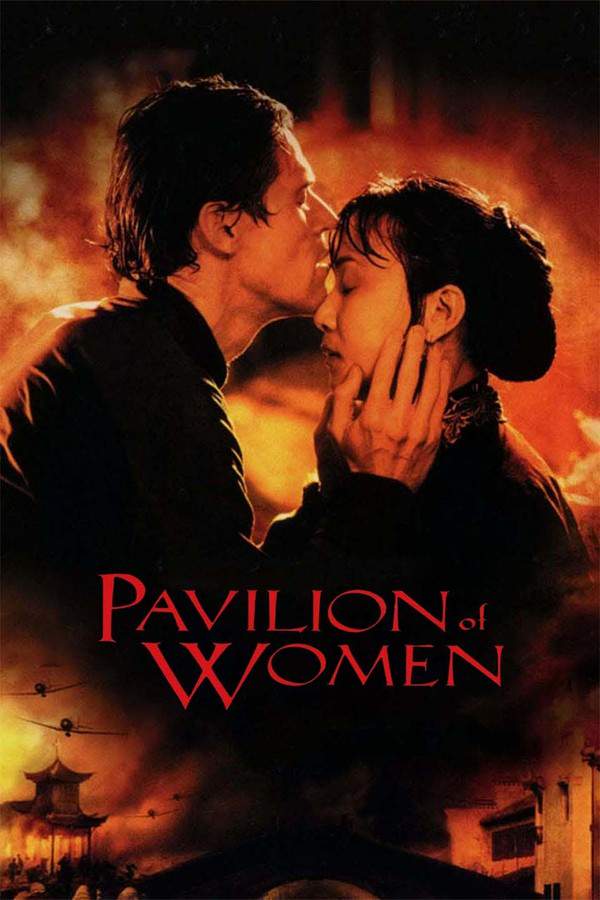
Pavilion of Women (2001) Movie Recap & Themes
Red Doors (2006) Full Movie Breakdown
A Flower in the Rainy Night (1983) Movie Recap & Themes
Little Red Flowers (2006) Full Summary & Key Details
Ju Dou (1990) Ending Explained & Film Insights
Red Sorghum (1988) Full Summary & Key Details
Rouge of the North (1988) Plot Summary & Ending Explained
The Red Lantern (1919) Plot Summary & Ending Explained
The Wooden Man’s Bride (1994) Ending Explained & Film Insights
To Live (1994) Film Overview & Timeline
The King of Masks (1995) Movie Recap & Themes
The Red Lanterns (1963) Spoiler-Packed Plot Recap
The Song Lantern (1943) Detailed Story Recap
The Road Home (1999) Ending Explained & Film Insights