Plot Explained Spoilers guaranteed!
Plot Explained

Browse by genre

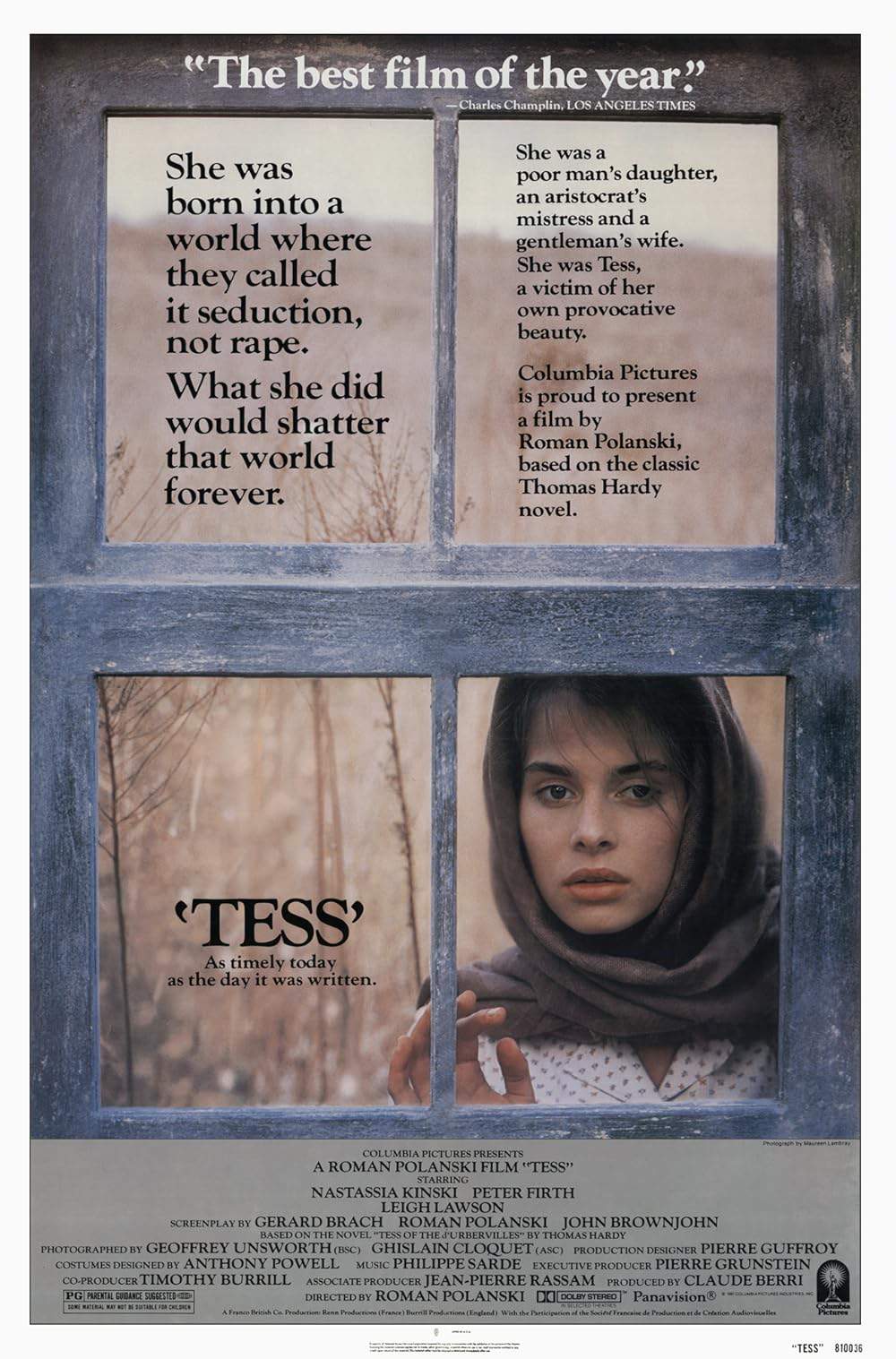
Tess (1980) movie poster

Characters & Themes

Tess (1980) Characters, Setting & Themes Explained

Release, runtime and language
1980 · 186 min
Loading streaming availability…
Directed by
Roman Polanski
Starring
Nastassja Kinski, Peter Firth, Leigh Lawson

A spirited young heiress, Tess, is sent to a grand manor house hoping to uncover a familial link. As she attempts to integrate into the world of the aristocracy, she encounters complex relationships and hidden truths. The experience challenges her perspective and exposes her to the stark realities concealed behind the opulent lifestyle, ultimately leading to a loss of innocence.

On this page (9)
  1. 1 Where to watch
  2. 2 Characters explained (3)
  3. 3 Where & when it takes place
  4. 4 Themes & meaning (3)
  5. 5 Character & meaning questions
  6. 6 The book behind the movie
  7. 7 Movie threads
  8. 8 Movies like Tess
  9. 9 Every angle
Loading streaming availability…

3 main characters · contains spoilers

Tess Characters Explained: Who Is Who

The main characters of Tess (1980), heroes and villains: what drives them, how they change over the course of the story and what each of them reveals about the film's bigger ideas.

  • Tess Durbeyfield (Nastassja Kinski)

    A young, beautiful rural girl whose innocence is tested by a ruthless social order. She navigates poverty, vulnerability, and moral scrutiny with quiet determination. Her choices are constrained by class, fate, and the men who influence her life.

    • 💎 Innocence
    • 🧭 Morality
    • 🔥 Resilience
  • Alec d'Urberville (Peter Firth)

    A calculating, predatory nobleman who uses his social position to pursue Tess. He is charming at first but reveals a self-serving, coercive nature. His actions set Tess's trials in motion and shape the tragedy that follows.

    • 👹 Predation
    • 🗝️ Deceit
    • 🏰 Aristocracy
  • Angel Clare (Leigh Lawson)

    An idealistic farmer from a respectable family who believes Tess to be innocent at first. He embodies moral earnestness, but his rigid codes are challenged by Tess's past. His pursuit of virtue clashes with the complexities of love and social judgment.

    • 🕊️ Idealism
    • 💔 Disillusionment
    • 🧭 Morality

Last updated: October 04, 2025 at 08:07

Was this helpful?

Setting

Where and When Does Tess Take Place?

The setting of Tess (1980): the year and time period, the places and locations, and how they shape the characters, the mood and the tension of the story.

Time period

1880s

Set in the 1880s, a period of rigid social codes and economic hardship in rural England. The era's moral expectations scrutinize women's conduct and family honor, intensifying Tess's vulnerability. Poverty and class pressures push characters toward desperate choices, driving the tragedy.

Location

Wessex (Thomas Hardy's fictional region)

Set in Hardy's Wessex, a fictional rural England, the story unfolds amid that landscape's hedgerows, villages, and manor houses. The setting highlights a late 19th-century society defined by strict class divisions and social expectations. The countryside serves as both idyll and trap for Tess and her family, shaping the drama with its beauty and its hardness.

  • 🏞️ Rural England
  • 🏰 Manor life
  • 🕰️ Victorian era

Last updated: October 04, 2025 at 08:07

Was this helpful?

3 major themes

Tess Meaning: Themes & Message Explained

What is Tess (1980) really about? The emotional, social and philosophical themes the film keeps returning to, its symbolism and the message beneath the surface.

  • Lineage

    The discovery of a noble lineage drives the plot, as the parson's note that the Durbeyfields descend from the ancient d'Urbervilles promises social mobility while exposing the fragility of status. Lineage becomes a tool for manipulation, revealing how birthright can be a currency as dangerous as wealth. The narrative critiques a society that measures value by bloodlines rather than character.

  • Morality

    Tess's experiences illuminate harsh moral codes regarding female sexuality and virtue. The rape at the d'Urberville manor and Tess's subsequent pregnancy expose double standards that condemn women while excusing male transgressors. The story questions whether individuals can escape labeling and punishment when society defines them by reputation. The tragedy arises from the clash between personal integrity and social expectation.

  • Resilience

    Against poverty and exploitation, Tess endures and fights to protect her family, seeking dignity amid deprivation. Her endurance persists through betrayals and misfortune, highlighting a stubborn will to survive. The narrative frames resilience as both a virtue and a burden within a unforgiving social order. Ultimately, Tess's resolve propels the emotional core of the tragedy.

Last updated: October 04, 2025 at 08:07

Was this helpful?

Character & theme questions

Tess Characters & Meaning: Your Questions Answered

The questions people ask about Tess (1980): who the characters really are, their relationships, what the symbols mean, where it takes place and what the movie is really about. Each answer contains spoilers.

Q1

Where is Tess set?

Tess is set in Hardy's Wessex, a fictional region of rural England. The story unfolds amid the countryside's hedgerows, villages, and manor houses, highlighting the stark contrast between pastoral beauty and the harsh social realities of the era. The setting serves as both an idyllic backdrop and a trap for Tess and her family.

  • wessex
  • rural england
  • setting
  • manor house
  • countryside
Q2

What time period is Tess set in?

Tess is set in the 1880s, during England's Victorian era. This period was defined by rigid social codes, particularly regarding women's conduct and family honor. The era's moral expectations and economic hardship intensify Tess's vulnerability and drive the tragic narrative.

  • 1880s
  • victorian era
  • time period
  • 19th century
Q3

What are the main themes in Tess?

Tess explores three major themes: lineage and social status, morality and female virtue, and resilience in the face of exploitation. The film examines how birthright functions as currency in Victorian society, critiques the double standards surrounding female sexuality, and portrays the burden of enduring hardship with dignity.

  • themes
  • lineage
  • morality
  • resilience
  • social status
Q4

Who is Tess Durbeyfield?

Tess Durbeyfield is a young, beautiful rural girl whose innocence is tested by a ruthless social order. Born into poverty, she navigates class constraints, vulnerability, and moral scrutiny with quiet determination. Her choices are fundamentally shaped by her lower social standing and the men who wield power over her life.

  • tess durbeyfield
  • protagonist
  • heroine
  • character
Q5

Who is Alec d'Urberville?

Alec d'Urberville is a calculating, predatory nobleman who discovers the Durbeyfields' ancient lineage and uses his social position to pursue Tess. Initially charming, he reveals a coercive, self-serving nature. His actions set Tess's suffering in motion and drive much of the tragedy that unfolds.

  • alec d'urberville
  • antagonist
  • nobleman
  • villain
Q6

Who is Angel Clare?

Angel Clare is an idealistic farmer from a respectable middle-class family who falls in love with Tess. He embodies moral earnestness and believes in Tess's innocence, yet his rigid codes are severely challenged when he discovers her past. His pursuit of virtue conflicts with the complexities of love and social judgment.

  • angel clare
  • love interest
  • farmer
  • idealist
Q7

What does the lineage theme explore in Tess?

The lineage theme examines how the discovery of noble ancestry promises social mobility while exposing the fragility of status. When Tess learns her family descends from the ancient d'Urbervilles, bloodlines become a currency for manipulation. The film critiques a society that measures worth by birth rather than character.

  • lineage
  • ancestry
  • d'urberville
  • social class
  • bloodline
Q8

How does the film portray Victorian morality?

Tess illuminates the harsh moral codes that scrutinize female sexuality and virtue while excusing male transgressions. The story shows how society condemns women for the same actions it tolerates in men, trapping Tess in a cycle of labeling and punishment based on reputation rather than actual wrongdoing.

  • victorian morality
  • gender
  • double standards
  • female virtue
  • social expectations
Q9

What role does class play in Tess?

Class defines every aspect of Tess's existence. The strict social hierarchies of Victorian England determine her opportunities, relationships, and fate. Her lower status makes her vulnerable to exploitation by Alec while complicating her relationship with Angel. The film portrays class as an unforgiving force that shapes tragedy.

  • class division
  • social hierarchy
  • poverty
  • aristocracy
  • social mobility
Q10

What is Wessex in the context of the film?

Wessex is Thomas Hardy's fictional representation of rural southwestern England, serving as both setting and character in Tess. The landscape embodies the tension between natural beauty and social oppression. Its villages and manor houses represent the divide between peasant hardship and aristocratic privilege.

  • wessex
  • thomas hardy
  • rural england
  • countryside
  • setting
Q11

How is resilience portrayed in Tess?

Resilience in Tess is depicted as both a virtue and a burden. Despite poverty, exploitation, and betrayal, Tess endures and fights to protect her family, seeking dignity in deprivation. This stubborn will to survive propels the emotional core of the tragedy, even as the unforgiving social order ultimately destroys her.

  • resilience
  • endurance
  • survival
  • strength
  • determination
Q12

What is the tone and emotional weight of Tess?

Tess has a melancholic tone characterized by quiet sadness and resignation. The film deals unflinchingly with themes of exploitation, injustice, and the destruction of innocence. Its slow pacing lingers on pastoral landscapes, amplifying the emotional weight and sense of tragic fatalism that defines the story.

  • tone
  • mood
  • melancholy
  • tragedy
  • emotional weight

Movie threads

More Movies Like Tess, by Mood & Story

Curated lists built around what makes Tess tick: the same mood, the same kind of story or the same emotional payoff. Each list explains why these movies belong together.

Melancholic social tragedies like Tess

Stories of individuals crushed by the relentless weight of societal injustice. Discover movies like Tess that explore heartbreaking stories of individuals destroyed by class conflict and social judgment. These heavy dramas share a melancholic tone and a fatalistic view of societal structures, perfect for viewers seeking similar emotionally crushing narratives about injustice.

  • tragic
  • somber
  • oppressive
  • fatalistic
  • grim
  • desperate
  • Tone: melancholic, bleak, tragic
  • Pacing: slow, deliberate
Why these movies?

The story pattern: The narrative typically follows a protagonist from a lower or marginalized social standing who attempts to navigate or rise within a privileged, oppressive system. Their efforts are met with betrayal, judgment, and violence, leading to a tragic, often fatal, downfall that serves as a critique of the society itself.

Why they belong together: Movies are grouped here for their shared focus on social critique through personal tragedy, a consistently melancholic and somber tone, and a heavy emotional weight derived from witnessing an individual's spirit broken by systemic forces.


Movies with fatalistic descents and crushing endings like Tess

Narratives where a character's fate spirals inevitably toward a devastating conclusion. If you appreciated the inevitable tragic arc and bleak conclusion of Tess, this collection features similar films about fatalistic love, loss of innocence, and devastating downfalls. Find other heavy dramas with slow pacing and a grim, oppressive mood that lead to emotionally crushing finales.

  • fatalistic
  • bleak
  • tragic
  • desperate
  • grim
  • oppressive
  • Tone: bleak, tragic, grim
  • Pacing: slow burn
Why these movies?

The story pattern: The narrative pattern is one of inescapable decline. A sequence of traumatic events—betrayal, violence, loss—propels the protagonist toward a pre-ordained tragic ending. The pacing is often slow, allowing the sense of impending doom to build, making the final, bleak outcome feel both shocking and inevitable.

Why they belong together: These films are united by their oppressive mood, a narrative structure centered on an irreversible descent into tragedy, and an ending that leaves the audience with a profound sense of loss and futility, rather than closure or hope.

If you liked this

Movies Like Tess

Similar movies to Tess: the same genre, themes or kind of story. Each one comes with its own plot summary, timeline and ending explained.

Browse all movie summaries

Every angle

Tess (1980) Explained: Plot, Timeline & Characters

Everything about Tess in one place: what happens in the plot summary, the timeline in chronological order, the characters and meaning and a spoiler-free summary. What's After the Movie adds the cast, box office and post-credit scenes.

Coming soon on iOS and Android

The Plot Explained Movie Summary App

Plot summaries, endings explained and timelines on your phone. Catch up on any movie in minutes, save your favorites and never miss a twist again.

Be the first to know when we launch. Your email stays private, always.

Learn more about the app