Plot Explained Spoilers guaranteed!
Plot Explained

Browse by genre

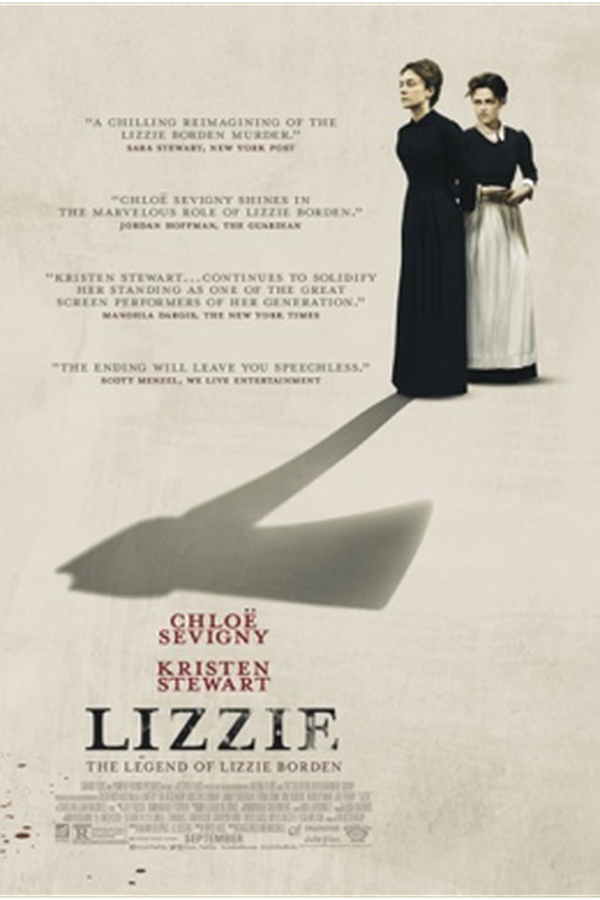
Lizzie (2018) movie poster

Plot Summary

Lizzie (2018) Plot Summary Explained

Release, runtime and language
2018 · 105 min · English
Echo score 56
Loading streaming availability…
Directed by
Craig Macneill
Starring
Chloë Sevigny, Kristen Stewart, Kim Dickens, Fiona Shaw, Denis O'Hare, Jamey Sheridan

A new servant, Bridget Sullivan, arrives at the Fall River estate of reclusive heiress Lizzie Borden, disrupting her isolated life. Lizzie finds a connection with the young maid and the two women develop a complicated relationship as Lizzie seeks a way to escape her restrictive home life and the controlling influence of her family. Their bond deepens, leading Lizzie to consider drastic measures to gain her freedom.

On this page (6)
  1. 1 Where to watch
  2. 2 What happens: full plot
  3. 3 Plot questions answered
  4. 4 Movie threads
  5. 5 Movies like Lizzie
  6. 6 Every angle
Loading streaming availability…

Full plot summary · contains spoilers

What Happens in Lizzie: Full Plot Summary

The whole story of Lizzie (2018) explained, from the opening scene to the final frame: every key event, every twist and what it all adds up to. Read it as a quick recap before the sequel, to check a scene you missed, or to finally understand what really happened.

In 1892 Fall River, Massachusetts, Lizzie Borden, Chloë Sevigny, a 32-year-old woman, lives under the domineering rule of her father, Andrew Borden, Jamey Sheridan, and his wife Abby, Fiona Shaw, sharing a tense dynamic with her elder sister Emma Borden, Kim Dickens. The household feels stifling, not just from bosses and expectations but from the shadows of a community that watches their every move. Into this carefully maintained world arrives Bridget “Maggie” Sullivan, an Irish immigrant who takes a job as a servant, and whose arrival begins to loosen Lizzie’s tightly wound daily routine. Bridget, Kristen Stewart, is earnest and hopeful, and Lizzie, sensing a chance for change, quickly forms a close bond with her, even as she guides Bridget toward literacy and a sense of autonomy that had long eluded her.

As the days unfold, the house becomes a stage for intrusions—trespassers, unsettling notes, and threats that Lizzie suspects are tied to Andrew’s recent land purchases and the shifting power within the family. Lizzie overhears a private conversation between her father and Uncle John, the town constable, Denis O’Hare, in which Andrew hints that his estate will pass to Abby rather than to his daughters. The tension mounts when Lizzie acts on a desperate impulse: she raids Abby’s jewelry box and hawks its contents at a local pawnbroker, a choice that enrages Andrew and leads him to retaliate in a brutal way—killing Lizzie’s pet pigeons and forcing Bridget to prepare them for dinner. The household’s fragility becomes clear, and Bridget’s world—still fragile, still hopeful—begins to tilt under the weight of hidden resentments.

A new strain of fear enters when a letter from Ireland arrives for Bridget, delivered just as Bridget learns of her母’s death. Late one night, Lizzie discovers Andrew sexually assaulting Bridget in the attic servants’ quarters, an accusation that shatters any remaining illusion of safety. In a moment of shock, Lizzie smashes a hand mirror in her bedroom and flings the broken glass toward Bridget’s door, leaving a literal mark on the path of their fear. Andrew, sensing vulnerability, cuts his feet on the glass as he leaves. From this point, Lizzie and Bridget’s bond deepens into a perilous romance—one that Lizzie guards with a mix of tenderness and secrecy as Bridget, now able to write, begins to exchange letters with Lizzie across the house.

Complications compound when Uncle John’s threatening notes grow more personal, and Lizzie confronts him only to witness him assault her—an assault Bridget also witnesses. The danger of their relationship leaks into the public sphere: Andrew discovers Lizzie and Bridget together in the barn, and in the aftermath, he brands Lizzie an abomination and forbids any further contact, even as Bridget remains loyal and supportive. In a bid to reclaim some control, Lizzie destroys evidence of the will she fears will deny her a share of the family’s wealth by burning Andrew’s will on the kitchen stove, a moment that crystallizes the stakes for both sisters.

The following day, tragedy erupts: Andrew and Abby are found dead in the house, each bludgeoned with a hatchet. Authorities quickly turn their suspicions toward Lizzie, though Emma swears her sister’s innocence. Lizzie faces a tense, closed trial, while Bridget visits in jail and, after a final farewell, boards a train to Montana, asking Lizzie to end all contact. A climactic flashback reveals the murders in their full, horrifying complexity: Lizzie and Bridget stage a sequence of events in which Abby is killed inside her room, Bridget is present yet hesitant in the den, and Lizzie ultimately finishes Andrew with the hatchet. The crime is completed with the grisly act of cutting and disposing of the murder weapon and cleaning up the evidence, signaling a calculated act of survival that will define Lizzie’s life.

In the courtroom, Lizzie is ultimately acquitted, but the verdict does little to mend her standing in Fall River. She remains a social outcast, estranged from Emma, and she spends the rest of her life in the town she once sought to reform. After her death at 66, she leaves the majority of her estate to the local humane society, a final, quiet statement of a life lived under scrutiny and rumor. Bridget, who chose Montana over the chaos of the memory of Fall River, stays there for the remainder of her life, living to the age of 82 and preserving a personal history that intertwined deeply with Lizzie’s. The story lingers as a portrait of power, longing, violence, and the fragile line between protection and control, told through a lens that centers on two women navigating a world that wants to define them by the shadows of their choices.

Last updated: February 25, 2026 at 08:09

Was this helpful?

Plot questions answered

Lizzie Plot Explained: Your Questions Answered

The questions people ask most about Lizzie (2018): what happens in the confusing scenes, why the characters do what they do, the twists, hidden details and what the ending means. Each answer contains spoilers.

Q1

Why does Lizzie Borden kill her father and stepmother?

Lizzie kills Andrew and Abby Borden after years of oppressive control and abuse. The final triggers include learning her father's estate will go to Abby instead of her and Emma, witnessing Andrew sexually assault Bridget, and being forbidden from seeing Bridget after Andrew discovers their relationship. These accumulated injustices and the desperate desire for freedom lead Lizzie and Bridget to plan and execute the murders.

Foreshadowing: Earlier, Lizzie overhears her father discussing how his estate will pass to Abby, planting the seed of betrayal she feels.

  • lizzie borden murders
  • motivation
  • freedom
  • abuse
  • Andrew Borden
Q2

Was Bridget involved in the murders?

Yes, Bridget actively participates in the murders. She helps stage the events by delivering a doctored telegram to bring Abby to her room, where Lizzie is waiting. Bridget is present in the house during both killings and assists with the aftermath, hiding the murder weapon in the basement and burning the blood-stained clothes. Their collaboration indicates a calculated act committed together.

Foreshadowing: The scene where Lizzie smashes the mirror and leaves glass at Bridget's door foreshadows their united response to danger.

  • bridget sullivan
  • lizzie borden
  • murder plot
  • collaboration
Q3

What causes Lizzie to turn against her father?

Multiple factors fuel Lizzie's transformation: her father's strict control over her life, discovering the estate will go to Abby rather than her and Emma, witnessing Andrew sexually assault Bridget, and being punished for the theft of Abby's jewelry by having her pet pigeons killed and served for dinner. Each betrayal erodes her loyalty until she sees murder as the only path to freedom.

Foreshadowing: Lizzie's theft of Abby's jewelry and subsequent punishment shows her willingness to defy her father despite severe consequences.

  • andrew borden
  • abuse
  • betrayal
  • motivation
  • revenge
Q4

Why does Lizzie burn her father's will?

Lizzie burns Andrew's will the night before the murders after learning the estate would pass to Abby rather than to Lizzie and Emma. By destroying the will, she removes the legal document that would deny her inheritance, acting on her belief that she deserves a share of the family wealth. This act symbolizes her complete break from the family and her willingness to seize control through any means.

Foreshadowing: Lizzie's earlier discovery of the estate plan during the overheard conversation establishes her knowledge that the will works against her.

  • will
  • inheritance
  • rebellion
  • estate
  • burning
Q5

What happens to Bridget after Lizzie is acquitted?

After visiting Lizzie in jail, Bridget boards a train to Montana and asks Lizzie to end all contact. She spends the rest of her life in Montana, dying at age 82, far from the scandal and memory of Fall River. Their relationship effectively ends with Bridget choosing a new life away from the trauma of the murders and Lizzie's presence.

Foreshadowing: Earlier, Lizzie and Bridget exchange letters across the house, showing their desperate attempt to maintain connection despite being forbidden.

  • bridget
  • montana
  • life after
  • trial
  • separation
Q6

Why is Lizzie acquitted of the murders?

Lizzie is ultimately acquitted at trial despite strong suspicion. The exact reasons are complex, she benefits from a closed trial, lack of direct physical evidence tying her to the murders, and possible jury bias. Her acquittal doesn't restore her social standing in Fall River, where she remains an outcast for the rest of her life despite being legally free.

Foreshadowing: Emma publicly swears her sister's innocence during the investigation, providing some familial support but not changing public perception.

  • acquittal
  • trial
  • legal outcome
  • fall river
  • verdict
Q7

What does the mirror glass scene signify in Lizzie?

After Lizzie witnesses her father assaulting Bridget in the attic, she smashes a hand mirror in her bedroom and scatters the broken glass at Bridget's door. When Andrew leaves Bridget's room, he cuts his feet on the glass. The act represents Lizzie's first violent response to protect Bridget and her defiance of her father, marking her transformation from passive victim to active defender willing to use aggression.

Foreshadowing: The glass mirrors the hatchet that will later be used in the murders, Lizzie's escalating violence against those who threaten those she loves.

  • mirror
  • glass
  • assault
  • protection
  • lizzie
Q8

Why does Uncle John assault Lizzie?

Uncle John, the town constable, has been leaving threatening notes for Lizzie and confronts her after she challenges him about them. He assaults her in a scene that reveals another layer of predatory behavior within Lizzie's household. Bridget witnesses this assault, further exposing the pattern of men in positions of power abusing Lizzie and those around her.

Foreshadowing: Earlier, Uncle John is part of the conversation about the estate passing to Abby, showing his involvement in family matters and potential leverage over Lizzie.

  • uncle john
  • assault
  • constable
  • threats
  • witness
Q9

How do Lizzie and Bridget plan the murders?

The murders are meticulously planned. Bridget delivers a doctored telegram to bring Abby to her room, where Lizzie is hiding. Lizzie kills Abby while Bridget waits downstairs. When Andrew returns home, Lizzie lures him inside and kills him with the hatchet. They then kill a pigeon to test the weapon, hide it in the basement, and burn their blood-stained clothes. The flashback reveals a calculated operation rather than a spontaneous crime.

Foreshadowing: The burning of the will the night before demonstrates Lizzie's willingness to destroy family documents to protect herself.

  • planning
  • hatchet
  • murder method
  • telegram
  • evidence
Q10

Why does Lizzie stay in Fall River after being acquitted?

Despite being acquitted, Lizzie remains in Fall River for the rest of her life rather than fleeing the town. She lives as a social outcast, estranged from her sister Emma, and dies at age 66. The film suggests she either cannot leave or chooses not to, perhaps bound to the place where she committed the act that finally gave her freedom, or unable to escape the shadow of her infamy.

Foreshadowing: The film establishes that Fall River's community watches the Borden household closely, making escape emotionally complicated even after acquittal.

  • fall river
  • life after
  • ostracized
  • emma
  • death
Q11

Why does Andrew forbid Lizzie from seeing Bridget?

Andrew discovers Lizzie and Bridget having sex in the barn and brands their relationship an abomination. He forbids Lizzie from any further contact with Bridget and states his intention to fire Bridget from the household. This discovery represents the final public exposure of their secret romance and intensifies Lizzie's desperation to escape her father's control by any means necessary.

Foreshadowing: The earlier scene where Lizzie teaches Bridget to read and write, and they exchange secret letters, establishes the hidden nature of their relationship.

  • andrew
  • forbidden
  • barn
  • sex
  • abomination
Q12

Why does Bridget stay in the Borden household despite the abuse?

Bridget remains because she is an Irish immigrant with few economic options, she needs the job to survive. Additionally, after her mother dies in Ireland, she has no family to return to. Her vulnerability as an immigrant and servant with no support system makes her trapped in the abusive household, which is precisely why Lizzie feels compelled to protect her and eventually take drastic action.

Foreshadowing: The letter announcing her mother's death arrives just before the assault, deepening Bridget's isolation and dependence on the household.

  • immigrant
  • servant
  • abuse
  • trapped
  • vulnerability

Movie threads

More Movies Like Lizzie, by Mood & Story

Curated lists built around what makes Lizzie tick: the same mood, the same kind of story or the same emotional payoff. Each list explains why these movies belong together.

Claustrophobic Thrillers like Lizzie

Stories where a confined setting creates unbearable psychological pressure. If the oppressive atmosphere and tense, confined setting of Lizzie captivated you, explore more movies like it. These films master the art of building unbearable pressure within tight spaces, leading to explosive conclusions.

  • claustrophobic
  • tense
  • oppressive
  • psychological
  • uneasy
  • trapped
  • Tone: dark, tense, oppressive
  • Pacing: steady, slow burn
Why these movies?

The story pattern: Narratives in this thread typically unfold within a limited, often domestic space where a protagonist feels trapped. The plot methodically builds a sense of entrapment and psychological unease, culminating in a desperate, violent act meant to break free from oppressive circumstances.

Why they belong together: Movies are grouped here based on their shared use of a claustrophobic setting to generate intense psychological tension and a foreboding mood. They often feature characters pushed to their limits by oppressive forces within their own homes or workplaces.

Tragic Queer Period Dramas like Lizzie

Historic love stories where societal oppression leads to a tragic outcome. If you were moved by the tragic romantic thread in Lizzie, discover more movies with similar themes. These stories explore intense, forbidden loves in historical settings where happiness is often sacrificed to societal pressures.

  • tragic
  • romantic
  • melancholic
  • forbidden love
  • historical
  • rebellious
  • Tone: tragic, melancholic, dark
  • Pacing: steady, character-driven
Why these movies?

The story pattern: The narrative follows a burgeoning queer relationship that serves as a beacon of hope and rebellion against a repressive society. The romance is intense but fragile, ultimately unable to withstand external pressures, leading to a conclusion marked by separation, loss, or a pyrrhic victory.

Why they belong together: These films are connected by their focus on a central, doomed lesbian relationship within a historically accurate, oppressive setting. They share a heavy emotional weight, a dark tone, and explore themes of forbidden desire, rebellion, and tragic sacrifice.

If you liked this

Movies Like Lizzie

Similar movies to Lizzie: the same genre, themes or kind of story. Each one comes with its own plot summary, timeline and ending explained.

Browse all movie summaries

Every angle

Lizzie (2018) Explained: Plot, Timeline & Characters

Everything about Lizzie in one place: what happens in the plot summary, the timeline in chronological order, the characters and meaning and a spoiler-free summary. What's After the Movie adds the cast, box office and post-credit scenes.

Coming soon on iOS and Android

The Plot Explained Movie Summary App

Plot summaries, endings explained and timelines on your phone. Catch up on any movie in minutes, save your favorites and never miss a twist again.

Be the first to know when we launch. Your email stays private, always.

Learn more about the app