Plot Explained Spoilers guaranteed!
Plot Explained

Browse by genre

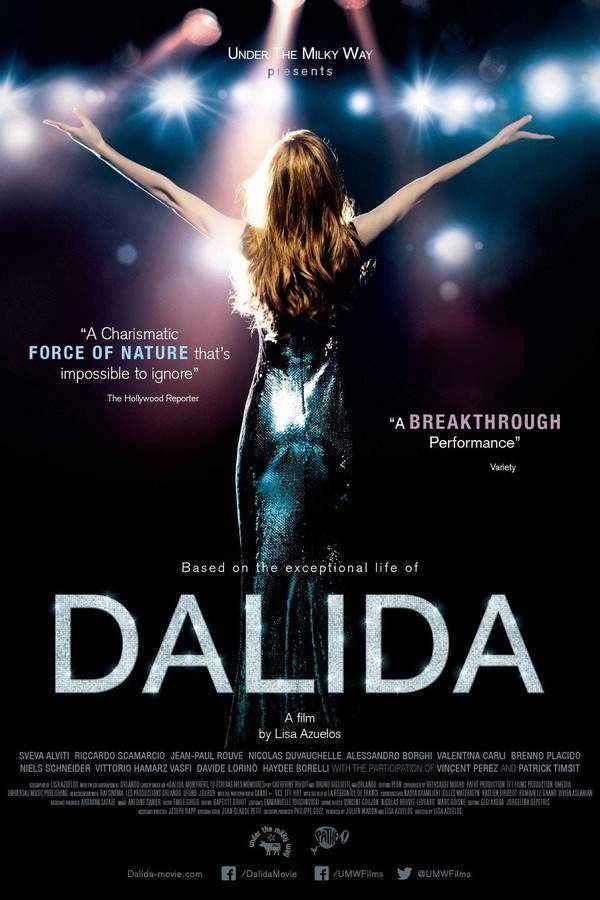
Dalida (2017) movie poster

Plot Summary

Dalida (2017) Plot Summary Explained

Release, runtime and language
2017 · 127 min · French
Echo score 69
Loading streaming availability…
Directed by
Lisa Azuelos
Starring
Riccardo Scamarcio, Nicolas Duvauchelle, Sveva Alviti, Patrick Timsit, Vincent Perez, Alessandro Borghi
Budget
$15M

This poignant biography explores the remarkable life and career of Dalida, a singer who rose from war-torn Egypt to achieve international fame. The film portrays her journey from a difficult childhood to a celebrated 30-year reign filled with iconic hits and sold-out performances. Dalida faced personal tragedies, including the loss of three lovers, which deeply impacted her life and career, ultimately shaping her enduring legacy as a beloved and influential artist.

On this page (6)
  1. 1 Where to watch
  2. 2 What happens: full plot
  3. 3 Plot questions answered
  4. 4 Movie threads
  5. 5 Movies like Dalida
  6. 6 Every angle
Loading streaming availability…

Full plot summary · contains spoilers

What Happens in Dalida: Full Plot Summary

The whole story of Dalida (2017) explained, from the opening scene to the final frame: every key event, every twist and what it all adds up to. Read it as a quick recap before the sequel, to check a scene you missed, or to finally understand what really happened.

In 1967, Dalida makes a desperate hotel exit that ends in suicide attempts, and the people closest to her rush in to piece together the many facets of her life. Standing with her are three men who each see a different side of who she is: her ex-husband Lucien Morisse, her former lover Jean Sobieski, and her brother Orlando (Bruno). Together, they lay out a story of a woman whose inner world was shaped by love, fame, insecurity, and a fierce drive to create.

Dalida grew up with a passionate love for music, inspired by a father who was a violinist in Cairo, yet she carried the ache of feeling unattractive because of the large glasses she wore. Her talents would carry her to Paris, where Lucien Morisse, a radio programmer, discovered her and fell for her, even leaving his wife for a chance at something lasting. She married him, but his focus on building her career and delaying marriage sometimes left her feeling unsettled. Soon after, she began an affair with artist Jean Sobieski, a relationship that would again complicate her sense of self. The pattern continued when she left Sobieski to pursue a romance with the temperamental musician Luigi Tenco.

Tenco’s volatile presence culminates in tragedy when he has a breakdown and walks off stage at the 1967 Sanremo Music Festival, later taking his own life. Dalida discovers his body, and many friends and family believe this moment helps precipitate the deepening storm in her mental health. The shock reverberates through her life, but it is not the end of her story. With the support of her brother, she begins to rebuild, returning to the recording studio and finding new audiences as she travels to perform in Italy.

As a new chapter unfolds, she meets a young 22-year-old student with whom she starts a love affair. When she learns she is pregnant, she makes the difficult choice to terminate the pregnancy, believing the timing wouldn’t allow for a responsible upbringing and recognizing the strain of parenthood in a life still intertwined with romance. The relationship ends, but her career and resilience begin to reassert themselves.

Orlando steps into a more active role, managing her career and guiding a period of renewed public success. In the meantime, Morisse’s shadow grows heavier, and he ultimately dies in their old apartment, leaving a complex void in the narrative of her life.

Dalida then enters a relationship with media personality Richard Chanfray. For the first time, she feels a sense of safety and stability, yet the relationship soon sours. He becomes entangled in a violent incident, accidentally shooting the boyfriend of her housekeeper, and Dalida is left to navigate a messy settlement to keep him out of legal trouble. Jealousy and tension arise as Richard’s interference with her career grows, and Dalida even records an album with him, despite his lack of singing talent. A second pregnancy looms in her mind, but another abortion devastates her body—she discovers the procedure has destroyed her uterus, ending any chance of carrying a child herself. A New Year’s Eve party becomes a breaking point: after Richard’s public taunts about her struggle with an eating disorder, she ejects him from her life. He would not survive the night.

With the personal turmoil gradually contained, Dalida returns to work and achieves critical and popular success, notably starring in Le Sixième Jour, a performance that earns her high praise and helps her regain a national welcome, even as she travels back to Egypt to be celebrated by her fans there. Yet the triumph is haunted by the emotional toll of years of heartbreak, creative pressure, and the relentless spotlight. The isolation deepens, and the bulimia grows more severe, pushing her toward a painful conclusion. In the end, Dalida’s life closes in the face of unbearable sorrow, leaving behind a note that speaks to life’s overwhelming difficulty and the quiet necessity of rest.

This portrait threads together music, romance, fame, and pain, tracing how a woman who began with a violinist’s dream and glasses that made her feel unseen moved through a world that kept asking for more—until the weight became too heavy to bear.
Last updated: October 09, 2025 at 16:15

Was this helpful?

Plot questions answered

Dalida Plot Explained: Your Questions Answered

The questions people ask most about Dalida (2017): what happens in the confusing scenes, why the characters do what they do, the twists, hidden details and what the ending means. Each answer contains spoilers.

Q1

Why did Dalida struggle with self-esteem despite becoming famous?

Dalida's low self-esteem stemmed from childhood experiences in Cairo where she felt unattractive because of her large glasses. Even as she became an internationally famous singer, these early insecurities remained deeply rooted, contributing to her lifelong emotional struggles and her complicated relationships with men who could not seem to fill the void left by her childhood feelings of inadequacy.

  • self-esteem
  • insecurities
  • childhood
  • glasses
  • cairo
Q2

What caused Luigi Tenco's breakdown at Sanremo and subsequent suicide?

Luigi Tenco suffered a breakdown during his performance at the 1967 Sanremo Music Festival, walking off stage in front of the audience. The intense pressure of the music industry, combined with his volatile personality and likely pre-existing mental health struggles, led him to take his own life shortly after. Dalida discovered his body, and the trauma of finding him profoundly worsened her own psychological state.

Foreshadowing: The timeline notes that Tenco's intensity mirrored Dalida's own drive, suggesting two emotionally fragile people drawn to each other's volatility.

  • luigi tenco
  • sanremo
  • suicide
  • breakdown
  • 1967
Q3

Why did Dalida decide to have an abortion during her affair with the student?

Dalida ended her pregnancy because she believed her 22-year-old student lover was too young to be a responsible parent. The timing felt wrong to her, and she recognized that raising a child while still deeply entangled in a passionate but unstable romance would be impractical. She ended both the pregnancy and the relationship shortly after.

  • abortion
  • student
  • pregnancy
  • italy
  • relationship
Q4

What happened with Richard Chanfray and the shooting incident?

Richard Chanfray accidentally shot the boyfriend of Dalida's housekeeper, creating a serious legal crisis. To protect him from criminal consequences, Dalida paid off the victim's family and settled the matter privately. The incident revealed the lengths she would go to maintain relationships, even those that were becoming increasingly toxic.

  • richard chanfray
  • shooting
  • housekeeper
  • legal
  • incident
Q5

Why did Richard Chanfray commit suicide after Dalida ended their relationship?

Richard Chanfray killed himself shortly after Dalida broke up with him on New Year's Eve. The exact reasons are not fully detailed, but the pattern of her romantic partners taking their own lives, following Luigi Tenco's suicide, suggests profound emotional instability or a sense of loss and hopelessness after losing Dalida. His death added yet another traumatic loss to her life.

Foreshadowing: The timeline establishes that Richard had become increasingly jealous and interfering in her career, creating tension that preceded the breakup.

  • richard chanfray
  • suicide
  • breakup
  • new years eve
  • death
Q6

What happened to Dalida's second pregnancy and why was it devastating?

After her abortion in Italy, Dalida later learned she was pregnant again. However, the previous abortion had damaged her uterus, destroying it completely and ending any chance she had of carrying a child. This medical consequence devastated her, as she had always wanted children but the multiple losses and medical complications made motherhood impossible.

  • pregnancy
  • abortion
  • uterus
  • infertility
  • medical
Q7

Why did Dalida's brother Orlando take over managing her career?

After Dalida's 1967 suicide attempt and the trauma of Luigi Tenco's death, her brother Orlando stepped in to help manage her career. He guided her recovery and took an active role in her professional life, helping her return to recording and touring. His support marked a turning point that enabled her renewed success in the late 1960s and beyond.

  • orlando
  • brother
  • manager
  • career
  • support
Q8

What caused Dalida's bulimia and worsening mental health?

Dalida developed bulimia as her emotional struggles intensified over the years. The relentless pressure of fame, the deaths of three lovers (Tenco, Morisse, and Chanfray), her infertility, and the cumulative trauma of multiple suicides in her life all contributed to her deteriorating mental health. Despite professional success with films like Le Sixième Jour, her private suffering grew overwhelming.

  • bulimia
  • mental health
  • depression
  • fame
  • pressure
Q9

What led to Lucien Morisse's suicide after their divorce?

Dalida's ex-husband Lucien Morisse, who had left his wife for her and helped launch her career, eventually succumbed to mental health issues and took his own life in their old apartment. His suicide added to Dalida's growing burden of guilt and grief, as she felt somehow responsible for the men in her life who couldn't cope without her.

Foreshadowing: The timeline indicates Morisse's reluctance to marry or have children created distance, and his mental health declined after their relationship ended.

  • lucien morisse
  • suicide
  • ex-husband
  • death
  • apartment
Q10

How did Dalida's role in Le Sixième Jour affect her career?

Le Sixième Jour marked a significant professional triumph for Dalida, earning her critical praise and helping her regain public acceptance in France. The success was particularly meaningful because it came after years of personal turmoil. She also traveled back to Egypt, where fans celebrated her, creating a moment of validation that contrasted sharply with her internal struggles.

  • le sixième jour
  • film
  • success
  • egypt
  • career
Q11

Why did three of Dalida's lovers commit suicide?

Dalida lost three romantic partners to suicide: Luigi Tenco in 1967, her ex-husband Lucien Morisse in the late 1960s, and Richard Chanfray after their breakup. Each man's death followed personal struggles and emotional instability. While Dalida was not directly responsible, the pattern suggests she was drawn to emotionally vulnerable men, and the repeated losses deeply traumatized her, contributing to her own mental decline.

  • suicide
  • lovers
  • pattern
  • tenco
  • morisse
  • chanfray
Q12

What did Dalida's suicide note say?

Dalida left behind a note that spoke to the overwhelming difficulty of life and the quiet necessity of rest. The note reflected her profound exhaustion from years of personal tragedy, professional pressure, and emotional pain. Despite her international fame and artistic achievements, she could no longer bear the weight of her suffering.

  • suicide note
  • message
  • final
  • rest
  • death

Movie threads

More Movies Like Dalida, by Mood & Story

Curated lists built around what makes Dalida tick: the same mood, the same kind of story or the same emotional payoff. Each list explains why these movies belong together.

Tragic lives of iconic artists like in Dalida

Biographical dramas where immense creative success is shadowed by profound personal tragedy. Explore movies like 'Dalida' that portray the tragic lives of iconic artists. These biographical dramas focus on famous musicians and performers whose soaring careers are inextricably linked with devastating personal struggles, loneliness, and sorrow, offering a poignant look at the cost of fame.

  • tragic
  • melancholic
  • introspective
  • dramatic
  • sorrowful
  • lonely
  • Tone: melancholic, tragic
  • Pacing: steady, chronological
Why these movies?

The story pattern: This narrative pattern follows a biographical arc, often chronologically spanning decades. It juxtaposes a subject's rising career milestones with a parallel descent into personal turmoil, frequently involving mental health crises, destructive relationships, and the isolating nature of fame, leading to a sorrowful or tragic conclusion.

Why they belong together: Movies are grouped here for their shared focus on the 'tortured artist' archetype, blending factual biography with a heavy, melancholic tone. They create a cohesive experience by exploring the dark side of genius and the human cost behind legendary public personas.

Heavy emotional biographies similar to Dalida

True stories that explore deep grief, loss, and the crushing weight of personal trauma. Find more heavy emotional biographies like 'Dalida'. These films are true stories told with a steady pace and high emotional intensity, focusing on themes of profound grief, suicide, mental health, and tragic love, resulting in a deeply melancholic and sorrowful viewing experience.

  • sorrowful
  • heavy
  • tragic
  • dramatic
  • grieving
  • introspective
  • Tone: melancholic, dramatic
  • Pacing: steady, methodical
Why these movies?

The story pattern: Stories in this thread are defined by a cumulative emotional impact. They methodically present a series of personal tragedies and hardships that befall the subject, building a sense of inescapable sorrow. The narrative structure serves to make the audience feel the weight of each successive loss, leading to an emotionally resonant climax.

Why they belong together: These films are connected by their HEAVY emotional weight, STEADY pacing that lets tragedy sink in, and a dominant MELANCHOLIC tone. They are united by a focus on distressing themes like suicide, grief, and mental health, creating a coherent vibe of profound sadness.

If you liked this

Movies Like Dalida

Similar movies to Dalida: the same genre, themes or kind of story. Each one comes with its own plot summary, timeline and ending explained.

Browse all movie summaries

Every angle

Dalida (2017) Explained: Plot, Timeline & Characters

Everything about Dalida in one place: what happens in the plot summary, the timeline in chronological order, the characters and meaning and a spoiler-free summary. What's After the Movie adds the cast, box office and post-credit scenes.

Coming soon on iOS and Android

The Plot Explained Movie Summary App

Plot summaries, endings explained and timelines on your phone. Catch up on any movie in minutes, save your favorites and never miss a twist again.

Be the first to know when we launch. Your email stays private, always.

Learn more about the app