Plot Explained Spoilers guaranteed!
Plot Explained

Browse by genre

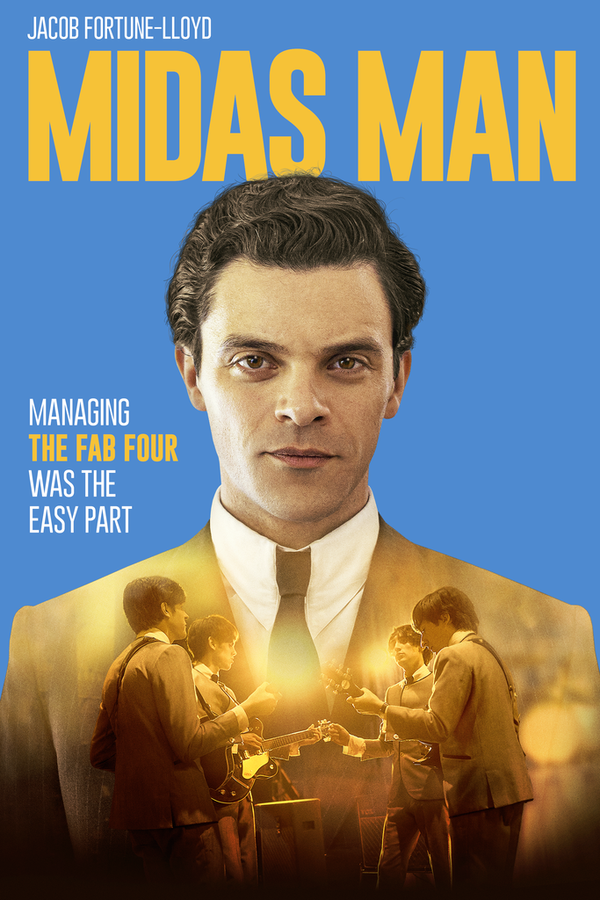
Midas Man (2025) movie poster

Plot Summary

Midas Man (2025) Plot Summary & Ending Explained

Release, runtime and language
2025 · 1 h 52 m · English
Echo score 72
JustWatch #2,349 40
Directed by
Joe Stephenson
Starring
Eddie Marsan, Emily Watson, Ed Speleers, Jacob Fortune-Lloyd, Bill Milner, Alfredo Tavares

This is the story of Brian Epstein, a man who experienced a lifetime of events in a short period, and who fundamentally altered the landscape of music. Beginning with his ownership of a Liverpool record store, Epstein’s career involved shaping the sound of a generation. Jacob Fortune-Lloyd portrays the ambitious and passionate figure behind The Beatles' incredible success, as he navigates unprecedented fame, a cultural revolution, and personal struggles. The film explores the triumphs and heartbreaks of a man seeking acceptance and love amidst the glitz and glamour of the 1960s, revealing the secrets of the man who changed music forever.

On this page (7)
  1. 1 Where to watch
  2. 2 What happens: full plot
  3. 3 Plot questions answered
  4. 4 How it ends
  5. 5 Movie threads
  6. 6 Movies like Midas Man
  7. 7 Every angle

Where to watch

Where to Watch Midas Man (2025)

Where can you watch Midas Man? Stream, rent or buy it in the US, including on Amazon Prime Video, Amazon Video and Apple TV Store: current JustWatch availability with up-to-date prices.

Streaming availability powered by JustWatch

Full plot summary · contains spoilers

What Happens in Midas Man: Full Plot Summary

The whole story of Midas Man (2025) explained, from the opening scene to the final frame: every key event, every twist and what it all adds up to. Read it as a quick recap before the sequel, to check a scene you missed, or to finally understand what really happened.

In 1961 Liverpool, Brian Epstein, portrayed by Jacob Fortune-Lloyd, is the accomplished manager of his family's record store, NEMS. The store becomes a focal point in the local music scene as he receives a wave of requests from enthusiastic teenage girls wanting the German single "My Bonnie" by an emerging Liverpudlian band known as the Beatles. Intrigued by their growing popularity, Brian decides to visit the Cavern Club for a firsthand experience of their performance. The energy of the crowd, predominantly made up of young fans, astonishes him. Despite being a novice in the music industry, Brian confidently proposes to become their manager, believing his background in retail gives him an edge in understanding their audience. The Beatles welcome his offer, and with Brian's guidance, they agree to enhance their public image by adopting a more polished appearance, donning matching suits and haircuts.

As 1962 rolls in, Brian secures an audition for the band at Decca Records, yet the meeting does not go as planned. Decca's executive, Dick Rowe, played by Alex MacQueen, questions Brian's motivation for leaving a comfortable life to manage a group like the Beatles. However, he remains persistent and takes the audition tape to various other record labels, but faces rejection at every turn. Fortunately, he gets an opportunity to meet George Martin, the head of Parlophone, and persuades him to let the band audition. Their performance receives positive feedback, although Martin advises Brian to replace drummer Pete Best. After bringing in Ringo Starr, the Beatles achieve great success with their initial singles, "Love Me Do" and "From Me To You," launching them into the realm of national acclaim.

Throughout 1963, Brian expands his management roster, bringing several more Liverpudlian talents into the fold, including Gerry and the Pacemakers, Billy J. Kramer and the Dakotas, and Cilla Black, played by Darci Shaw, who initially worked as the Cavern’s coat check girl. However, an unexpected and troubling event arises when Brian learns that a man involved in a sexual encounter with him is attempting to blackmail him. While his parents, Harry Epstein (played by Eddie Marsan) and Queenie Epstein (played by Emily Watson), lean towards involving the police, Brian is adamant about settling the matter privately to protect his privacy. His mother's concern for his safety leads to a heartfelt exchange, at which point he discloses his plan to move to London to better handle the Beatles' burgeoning fame. As Brian's managerial responsibilities escalate, so do his struggles with substance abuse as he turns to barbiturates and stimulants to cope.

By 1964, Brian takes a pivotal trip to America, where he aims to secure the Beatles a spot on The Ed Sullivan Show. During this journey, he crosses paths with an aspiring actor named Tex Ellington, played by Ed Speleers. Their brief affair blossoms into a complicated relationship, with Brian urging Tex to come visit him in London. The Beatles' dazzling performances on Sullivan, coupled with their vibrant single "I Want to Hold Your Hand," propel them to international fame, leading to a whirlwind American tour. Yet, despite his professional triumphs, Brian grapples with profound loneliness. He takes Cilla as his date to his brother Clive's wedding, sharing his fears of familial rejection and pondering why he is yet to find a significant other.

The following year, Brian's bond with Tex evolves, and he decides to take him on as a client, offering a financial retainer. The Beatles continue their success through 1966, but a disastrous tour of Asia, alongside the uproar stirred by John Lennon's controversial statements about Jesus, prompts the band to cease touring. The night of their final concert proves to be a turning point, as Tex, feeling neglected, steals Brian's suitcase, which contains $20,000 and a cache of pills. This act of betrayal, combined with the tumult of the Beatles no longer touring, drives Brian into a deep emotional spiral, resulting in a nervous breakdown.

In 1967, the Beatles are invited to participate in Our World, heralded as the first-ever global television broadcast. Brian suggests they craft a new song carrying a hopeful message to uplift spirits in a troubled world. Unfortunately, tragedy strikes when Harry passes away, shattering Brian, although Queenie reassures him that his father always harbored pride for him, even if he never expressed it openly. Observing familial moments at the funeral stirs sorrow within Brian as he reflects on his own longing for a family, even as his butler, Lonnie, comforts him by suggesting that his chosen family surrounds him.

As Our World goes live, Brian witnesses the Beatles receive warm accolades from their fans and family, marking a triumphant occasion. Not long after, however, Brian's life takes a tragic turn as he succumbs to an accidental overdose of barbiturates at the tender age of 32, leaving behind a complex legacy intertwined with the triumphs and tribulations of the Beatles.
Last updated: March 08, 2025 at 15:50

Was this helpful?

Plot questions answered

Midas Man Plot Explained: Your Questions Answered

The questions people ask most about Midas Man (2025): what happens in the confusing scenes, why the characters do what they do, the twists, hidden details and what the ending means. Each answer contains spoilers.

Q1

Why did Brian Epstein decide to manage the Beatles?

Brian Epstein decided to manage the Beatles after visiting the Cavern Club and witnessing their ability to captivate the teenage audience. Despite having no experience in the music industry, he believed his background in retail at his family's record store NEMS gave him an understanding of what audiences wanted. He was confident he could help shape their public image and career.

  • brian epstein
  • beatles manager
  • cavern club
  • nemS
  • motivation
Q2

Why did Decca Records reject the Beatles?

Decca Records rejected the Beatles after an audition in early 1962. Executive Dick Rowe questioned Brian's motivation for leaving his comfortable life to manage the band, expressing skepticism about their potential commercial success. This rejection led Brian to approach other labels until he secured an audition with George Martin at Parlophone.

  • decca records
  • dick rowe
  • beatles audition
  • rejection
Q3

Why was Pete Best replaced by Ringo Starr?

George Martin, head of Parlophone, advised Brian Epstein to replace drummer Pete Best after the successful audition. Martin believed Ringo Starr would be a better fit for the band's sound and image. Brian followed this advice, bringing in Ringo, which proved pivotal to the Beatles' later success with hits like "Love Me Do" and "From Me To You."

  • pete best
  • ringo starr
  • george martin
  • beatles drummer
  • replacement
Q4

What was the blackmail situation involving Brian Epstein?

In 1963, Brian learned that a man he had a sexual encounter with was attempting to blackmail him. Despite his parents urging him to involve the police, Brian insisted on handling the matter privately to protect his privacy and avoid public scrutiny. This incident added to the growing pressures in his life.

  • blackmail
  • brian epstein
  • privacy
  • 1963
Q5

Why did Brian Epstein move to London?

Brian decided to move to London to better handle the Beatles' burgeoning fame and expand his management operations. The move was prompted by his increasing workload and the need to be closer to the center of the music industry. This transition also marked the beginning of his increased reliance on substances to cope with stress.

  • brian epstein
  • london move
  • beatles fame
  • 1963
Q6

Who was Tex Ellington and what was his relationship with Brian?

Tex Ellington was an aspiring actor Brian met during his 1964 trip to America while securing the Beatles' appearance on The Ed Sullivan Show. Their brief affair developed into a complicated relationship, with Brian urging Tex to visit him in London and eventually taking him on as a client with a financial retainer. In 1966, Tex betrayed Brian by stealing a suitcase containing $20,000 and pills on the night of the Beatles' final concert.

  • tex ellington
  • brian epstein relationship
  • betrayal
  • suitcase theft
Q7

Why did the Beatles stop touring in 1966?

The Beatles decided to stop touring in 1966 after a disastrous Asian tour and the controversy surrounding John Lennon's controversial statements about Jesus. The combination of fan chaos, exhaustion from constant touring, and public backlash prompted the band to end their live performances permanently, marking a significant turning point in their career.

  • beatles touring
  • 1966
  • john lennon jesus
  • final concert
  • asia tour
Q8

What caused Brian Epstein's nervous breakdown?

Brian's nervous breakdown in 1966 was triggered by multiple factors: Tex's betrayal and theft of $20,000 and pills on the night of the Beatles' final concert, the emotional turmoil of the band ceasing to tour, and his long-standing struggle with substance abuse. The combination of these events led to a profound emotional spiral and mental health crisis.

  • brian epstein
  • nervous breakdown
  • tex betrayal
  • 1966
  • substance abuse
Q9

Why did Brian suggest the Beatles perform on Our World?

In 1967, Brian suggested the Beatles perform on "Our World," the first-ever global television broadcast, because he wanted them to craft a new song with a hopeful message to uplift spirits in a troubled world. His idea reflected his desire for positivity during a difficult period in his life, including his father's recent death.

  • our world
  • beatles performance
  • global broadcast
  • all you need is love
  • 1967
Q10

How did Brian Epstein die?

Brian Epstein died in September 1967 at age 32 from an accidental overdose of barbiturates. His death came just two months after his father Harry passed away. The overdose was a tragic end to a life marked by extraordinary professional success but profound personal struggle with loneliness, addiction, and the pressures of managing the world's biggest band.

  • brian epstein death
  • barbiturate overdose
  • 1967
  • age 32
  • accidental death
Q11

What was Brian Epstein's relationship with his father Harry?

Brian had a complex relationship with his father Harry Epstein. Despite Harry's pride in his son's achievements, which Queenie revealed to Brian after Harry's death, their bond was strained by Brian's secrets about his personal life and his struggles. At Harry's funeral, Brian observed familial moments that deepened his sorrow and longing for acceptance and a traditional family life.

  • harry epstein
  • father son relationship
  • brian epstein family
  • funeral
Q12

Why did Brian Epstein become dependent on drugs?

Brian Epstein developed a dependence on barbiturates and stimulants as his managerial responsibilities escalated and the pressures of managing the Beatles' international fame grew. The combination of work stress, personal loneliness, the blackmail threat, and his struggles with his identity contributed to his substance abuse as a coping mechanism.

  • brian epstein
  • drug dependence
  • barbiturates
  • stimulants
  • addiction
  • stress
Q13

What was Brian Epstein's relationship with Cilla Black?

Brian signed Cilla Black to his management roster in 1963, having first known her as the coat check girl at the Cavern Club. He took her as his date to his brother Clive's wedding, sharing his fears about familial rejection and his search for a significant other. Their relationship was professional but also reflected Brian's longing for genuine connection and family life.

  • cilla black
  • brian epstein
  • management
  • relationship
  • 1963

Ending explained

What Happens at the End of Midas Man?

How Midas Man (2025) ends, in short: the final scene, the last twist and what it means for the characters. The full ending explained, with every spoiler, lives on its own page.

Read the full ending explained

Ricky, Sunita, and Victor’s plan to bring Gregory Brent’s dark secrets to light reaches its climax as Claire, Gregory's daughter, plays a crucial role. With her help, they obtain the evidence needed to expose Gregory's illegal activities, particularly his involvement in Project Foresight, which was orchestrated to scam policyholders like Ricky’s mother, Mia, by predicting high-risk genetic diseases and then terminating policies to avoid payouts. Gregory's manipulation is revealed to be part of a scheme that could even be considered deadly, as it led to Mia losing her coverage just before her own cancer diagnosis was uncovered, risking her life.

Gregory Brent’s cunning nature is exposed when he invites Mia to an event, knowing she would be vulnerable, and he warns Ricky not to speak out or face severe consequences. Despite Gregory's threats, Claire's initiative to gather evidence and send it to Ricky proves pivotal. Combined with the FBI investigation and the eventual arrest of Gregory and Tom, the truth finally comes to light—exposing the corrupt practices at Midas and ending Gregory’s reign of deception.

Continue reading the ending (1 more paragraphs)

In the story's resolution, Ricky, Sunita, and Victor are rewarded financially for their efforts, receiving a large settlement after Gregory and Tom are jailed. While they evade immediate punishment for their insurance fraud, there's a lingering question about whether Gregory might still find ways to manipulate the system in the future. With Claire's support and the newfound evidence, however, Ricky now has a chance to return to his studies and care for his family without the shadow of Gregory’s schemes looming over him. The ending underscores a theme of justice and resilience, leaving the audience with a sense of hope that righteousness can triumph over greed and corruption.

Midas Man ending explained in full

Movie threads

More Movies Like Midas Man, by Mood & Story

Curated lists built around what makes Midas Man tick: the same mood, the same kind of story or the same emotional payoff. Each list explains why these movies belong together.

Tragic biopics of fame and loneliness like Midas Man

Stories of brilliant but troubled figures who achieved greatness at a heavy cost. If you were captivated by the melancholic story of Brian Epstein in Midas Man, explore these movies like Midas Man. These films are similar biographical dramas about brilliant, troubled figures in music, art, or culture, whose public triumphs are shadowed by private despair and a tragic end.

  • melancholic
  • tragic
  • lonely
  • reflective
  • somber
  • bittersweet
  • Tone: melancholic, tragic
  • Pacing: steady, character-driven
Why these movies?

The story pattern: Narratives in this thread typically follow a chronological rise-to-fame arc, but with a central focus on the protagonist's internal battles. The external success serves as a stark contrast to their personal deterioration, culminating in an ending that feels more tragic than triumphant, emphasizing the high price of fame and genius.

Why they belong together: Movies are grouped here for their shared focus on the duality of success and suffering. They share a melancholic tone, steady pacing that allows for deep character study, and a heavy emotional weight derived from themes of addiction, loneliness, and the ultimate tragedy of a life cut short.

Movies about the hidden forces behind fame like Midas Man

Focus on the unsung, often isolated figures who shape cultural phenomena. For viewers who liked the perspective of Midas Man, this section features movies similar to Midas Man that explore the lives of behind-the-scenes figures. These dramas focus on the creators, managers, and mentors who build cultural legends, often grappling with their own identity and loneliness amidst the glitz of success.

  • lonely
  • reflective
  • somber
  • triumphant
  • melancholic
  • nostalgic
  • Tone: somber, reflective
  • Pacing: steady, linear
Why these movies?

The story pattern: These narratives often use a straightforward, chronological structure to show how a behind-the-scenes figure strategically builds something monumental. The central conflict is internal: the protagonist's struggle with their own demons, identity, and the feeling of being an outsider, even as they orchestrate massive public adoration for others.

Why they belong together: These films share a specific character archetype and thematic focus. They are united by a melancholic, reflective mood, a steady pacing that allows for character depth, and a heavy emotional weight stemming from themes of creative ambition, LGBTQ+ identity, and the personal cost of building a legacy for someone else.

If you liked this

Movies Like Midas Man

Similar movies to Midas Man: the same genre, themes or kind of story. Each one comes with its own plot summary, timeline and ending explained.

Browse all movie summaries

Every angle

Midas Man (2025) Explained: Plot, Ending, Timeline & Characters

Everything about Midas Man in one place: what happens in the plot summary, the timeline in chronological order, the characters and meaning, the ending explained and a spoiler-free summary. What's After the Movie adds the cast, box office and post-credit scenes.

Coming soon on iOS and Android

The Plot Explained Movie Summary App

Plot summaries, endings explained and timelines on your phone. Catch up on any movie in minutes, save your favorites and never miss a twist again.

Be the first to know when we launch. Your email stays private, always.

Learn more about the app