Plot Explained Spoilers guaranteed!
Plot Explained

Browse by genre

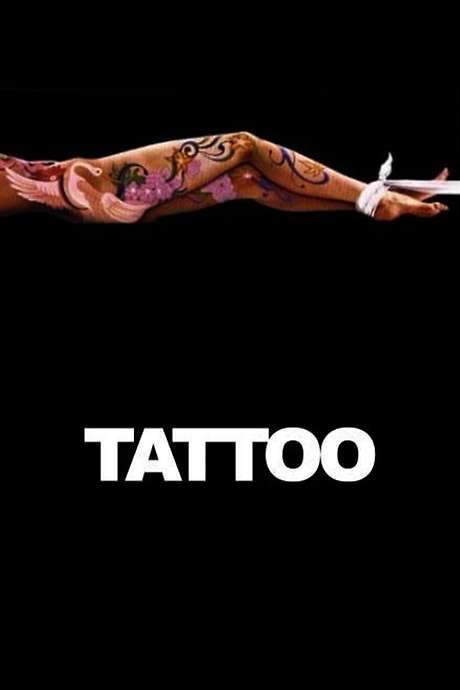
Tattoo (2003) movie poster

Plot Summary

Tattoo (2003) Plot Summary Explained

Release, runtime and language
2003 · 108 min · Persian
Directed by
Robert Schwentke

A young Iranian woman's routine task unexpectedly spirals into a tense and unsettling ordeal when she finds herself under intense scrutiny from the authorities. Every aspect of her appearance is examined, forcing her to confront a complex system of bureaucracy. As she tries to navigate this challenging situation, she uncovers a disturbing undercurrent of control and the hidden darkness within her society.

On this page (5)
  1. 1 What happens: full plot
  2. 2 Plot questions answered
  3. 3 Movie threads
  4. 4 Movies like Tattoo
  5. 5 Every angle

Full plot summary · contains spoilers

What Happens in Tattoo: Full Plot Summary

The whole story of Tattoo (2003) explained, from the opening scene to the final frame: every key event, every twist and what it all adds up to. Read it as a quick recap before the sequel, to check a scene you missed, or to finally understand what really happened.

In this gripping thriller, Marc Schrader, a rookie cop caught red-handed with drugs during a police raid on an illegal rave, is drawn into a tense homicide investigation led by Chief Inspector Minks. The victim is a naked young woman whose back bears the stark, gruesome mark of skin removal as she stumbles into traffic, setting a stark, unsettling tone for the case.

As Schrader and Minks dig into the murder, the investigation is shaken by a jarring forensic clue: a finger found inside the victim’s stomach. The analysis confirms that the digit belongs to Nobert Günzel, a man with a violent past who has already been convicted of rape and assault. The team storms Günzel’s residence and uncovers a horrifying tableau in his basement: a blood-stained table set with restraints, bits of human flesh, and evidence of a meticulously controlled, disturbing environment. The discovery doesn’t stop there—video equipment and preserved, tattooed skin from the victim’s back surface, and a grim trail of bodies buried in the garden. Before long, Günzel vanishes, leaving the investigators with more questions than answers and a widening sense that they are chasing a deeply dangerous predator.

As the case unfolds, Schrader learns that Minks has a personal stake in the pursuit: the missing daughter of an old friend. The pursuit of truth becomes intertwined with a painful backstory, and a painful realization surfaces—that the missing girl may be Minks' runaway daughter. The tension tightens as more bodies emerge and the body count rises, forcing the pair to confront their own inner demons and the moral costs of pursuing justice in a world where danger, deceit, and darkness are never far apart.

The plot carries the weight and atmosphere of a psychological thriller, and it bears a notable resemblance to Roald Dahl’s short story "Skin," while presenting its own stark, procedural perspective that keeps the tension taut and the revelations coming at a relentless pace.

Last updated: February 17, 2026 at 19:57

Was this helpful?

Plot questions answered

Tattoo Plot Explained: Your Questions Answered

The questions people ask most about Tattoo (2003): what happens in the confusing scenes, why the characters do what they do, the twists, hidden details and what the ending means. Each answer contains spoilers.

Q1

Why was Schrader pulled into the homicide investigation despite being caught with drugs at the rave?

Schrader was caught with drugs during a raid on an illegal rave and faced serious charges. Instead of being punished, Chief Inspector Minks recruited him into the homicide investigation as a way to avoid internal disciplinary action. Minks likely saw potential in the rookie cop and needed additional manpower for the brutal murder case, though Schrader must prove himself in this high-stakes environment.

Foreshadowing: Earlier scenes establish Schrader's precarious position as a rookie cop with a serious liability.

  • Marc Schrader
  • drug raid
  • recruited
  • Minks
  • homicide investigation
Q2

How did the finger end up inside the victim's stomach?

Forensic analysis revealed a finger was found inside the victim's stomach, suggesting she may have swallowed it either during her ordeal as an act of desperate resistance or as evidence of a violent struggle. The finger belonged to Nobert Günzel, the primary suspect, which established a direct forensic link between the victim and her attacker.

Foreshadowing: This bizarre forensic detail signals early on that the case involves an unusual and disturbed killer.

  • finger
  • victim stomach
  • forensic evidence
  • Günzel
  • autopsy
Q3

What did police find when they raided Günzel's residence?

The raid uncovered a horrifying basement setup: a blood-stained table with restraints, bits of human flesh, and evidence of a meticulously controlled killing environment. Police also found video equipment and preserved, tattooed skin removed from victims' backs. Additionally, multiple bodies were discovered buried in the garden, revealing a long-running crime spree far larger than initially anticipated.

Foreshadowing: The basement discovery transforms the case from a single murder to a serial killing investigation.

  • Günzel basement
  • restrained table
  • human flesh
  • video equipment
  • buried bodies
  • garden
Q4

Why does Minks have a personal stake in the case?

Minks reveals that the missing daughter of an old friend is connected to the case. As the investigation progresses, Schrader discovers the missing girl is actually Minks' own runaway daughter, turning what began as a professional investigation into a deeply personal vendetta. This revelation adds significant emotional pressure and threatens the objectivity of the investigation.

Foreshadowing: Early mentions of Minks' personal interest hint at a deeper connection beyond professional duty.

  • Chief Inspector Minks
  • missing daughter
  • personal stake
  • runaway daughter
  • emotional pressure
Q5

What is the darker truth uncovered by the investigation?

Beyond Günzel's obvious depravity as a serial killer who skins victims and preserves their tattooed skin, the investigation reveals deeper layers of complexity. The case forces Schrader and Minks to confront uncomfortable truths about their own moral compromises, Schrader's drug problem and Minks' personal involvement, with the resolution offering moral ambiguity rather than clean justice.

Foreshadowing: The constant references to inner demons and the bleak tone foreshadow a conclusion without redemption.

  • darker truth
  • moral ambiguity
  • inner demons
  • investigation conclusion
  • unresolved ending
Q6

What happened to Günzel after the raid on his home?

After police discovered the horrors in his basement and unearthed additional bodies buried in his garden, Günzel went missing. The timeline indicates he vanished soon after the raid, prompting a manhunt. The summary does not clarify whether he was ultimately captured, adding to the film's unresolved tension.

Foreshadowing: The timing of his disappearance shortly after the garden discovery suggests he had escape plans in place.

  • Günzel escaped
  • missing
  • manhunt
  • disappeared
  • capture
Q7

How does the case connect to Roald Dahl's short story Skin?

The investigators note striking parallels between the murder case and Roald Dahl's short story "Skin," in which a tattooed man's skin is removed. The resemblance fuels speculation about whether Günzel's crimes were inspired by or modeled after the literary source. This connection adds a literary layer of fate and design to the brutal murders.

Foreshadowing: The reference appears mid-investigation, suggesting the killer may have consciously emulated the story.

  • Roald Dahl
  • Skin short story
  • literary connection
  • inspired killing
  • tattooed skin
Q8

Why did the killer remove the skin from the victim's back specifically?

The killer specifically targeted the victim's back to remove tattooed skin, which was then preserved. This suggests the tattoos themselves held significance to Günzel, he collected them as trophies. The preserved tattooed skin found in his basement indicates a ritualistic and organized approach to killing, where the artwork on victims became prized possessions.

Foreshadowing: The discovery of preserved tattooed skin confirms the killer's specific fascination with body art.

  • back skin removed
  • tattooed skin
  • trophy
  • collection
  • ritualistic killing
  • victim mutilation
Q9

What was the purpose of the video equipment found in Günzel's basement?

The video equipment found in Günzel's basement suggests he recorded his crimes, treating them as performances to be documented. Along with the preserved tattooed skin trophies, this indicates a highly organized killer who derived gratification not just from the acts themselves but from preserving and cataloging evidence of his work.

Foreshadowing: The presence of recording equipment signals a killer who carefully plans and documents his actions.

  • video equipment
  • recorded crimes
  • documentation
  • basement
  • evidence
  • organized killer
Q10

How many victims were discovered during the investigation?

The investigation reveals a significantly higher body count than initially thought. Beyond the initial victim who died after stumbling into traffic, police uncover multiple bodies buried in Günzel's garden. The discovery of additional victims transforms the case from a single brutal murder to a serial killing investigation with multiple confirmed deaths.

Foreshadowing: The garden excavation reveals the true scale of Günzel's crimes.

  • body count
  • multiple victims
  • buried bodies
  • garden
  • serial killer
  • scale of crimes

Movie threads

More Movies Like Tattoo, by Mood & Story

Curated lists built around what makes Tattoo tick: the same mood, the same kind of story or the same emotional payoff. Each list explains why these movies belong together.

Grim crime procedurals exposing corruption like in Tattoo

Brutal crimes force investigators to confront the darkness within their own institutions. For viewers who appreciated the bleak system critique in Tattoo, this list features movies like Tattoo where a police investigation uncovers deep-rooted corruption and societal decay. These films offer a heavy, tense experience with a similarly dark and unsettling atmosphere.

  • gritty
  • disturbing
  • grim
  • suspenseful
  • corruption
  • unsettling
  • Tone: dark, bleak, unsettling
  • Pacing: steady, investigative
Why these movies?

The story pattern: The narrative follows a procedural investigation, often led by a determined but weary protagonist, that gradually reveals the crime is not an isolated incident but a symptom of a larger, more pervasive corruption. The journey typically ends without a sense of victory, reinforcing the bleakness of the uncovered truth.

Why they belong together: Movies in this thread are grouped by their shared focus on using a brutal crime to critique societal or institutional power structures. They create a cohesive experience through a consistently dark tone, heavy emotional weight, and a bleak outlook that prioritizes unsettling truth over catharsis.

Claustrophobic bureaucratic nightmares like in Tattoo

A simple task becomes a terrifying struggle against an oppressive and irrational system. If you were captivated by the tense ordeal of navigating authority in Tattoo, explore these movies like Tattoo where individuals face similarly claustrophobic and unsettling bureaucratic systems. These films share a steady, suspenseful pace and a dark, emotionally heavy tone.

  • claustrophobic
  • suspenseful
  • unsettling
  • psychological
  • oppressive
  • tense
  • Tone: tense, dark, unsettling
  • Pacing: steady, mounting dread
Why these movies?

The story pattern: The story follows an ordinary individual who, through a routine interaction, is drawn into a bureaucratic process that becomes increasingly hostile and illogical. The conflict is internal and psychological, pitting the protagonist's sense of self against a faceless system designed to control and intimidate.

Why they belong together: These movies are connected by the specific experience of psychological tension derived from navigating an oppressive system. They share a steady, mounting pace that creates a sense of entrapment, a dark and unsettling tone, and a heavy emotional weight stemming from the protagonist's powerlessness.

If you liked this

Movies Like Tattoo

Similar movies to Tattoo: the same genre, themes or kind of story. Each one comes with its own plot summary, timeline and ending explained.

Browse all movie summaries

Every angle

Tattoo (2003) Explained: Plot, Timeline & Characters

Everything about Tattoo in one place: what happens in the plot summary, the timeline in chronological order, the characters and meaning and a spoiler-free summary. What's After the Movie adds the cast, box office and post-credit scenes.

Coming soon on iOS and Android

The Plot Explained Movie Summary App

Plot summaries, endings explained and timelines on your phone. Catch up on any movie in minutes, save your favorites and never miss a twist again.

Be the first to know when we launch. Your email stays private, always.

Learn more about the app