Plot Explained Spoilers guaranteed!
Plot Explained

Browse by genre

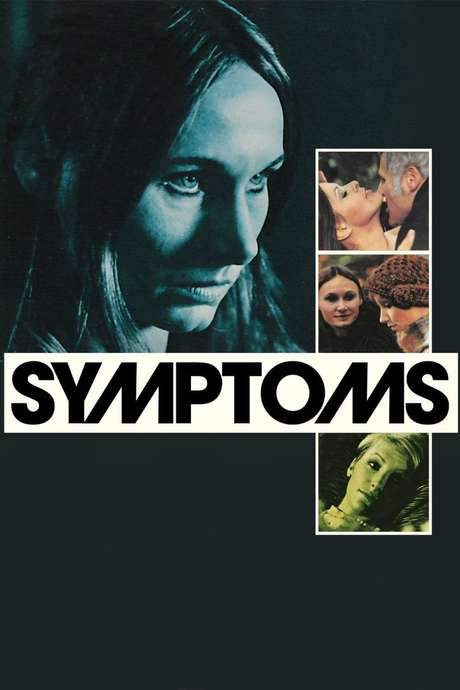
Symptoms (1974) movie poster

Plot Summary

Symptoms (1974) Plot Summary Explained

Release, runtime and language
1974 · 91 mins · English
Loading streaming availability…
Directed by
José Ramón Larraz
Starring
Raymond Huntley, Peter Vaughan, Angela Pleasence, Mike Grady, Lorna Heilbron, Nancy Nevinson

A haunting dream begins: “Last night I dreamt they had returned. They were here again…” When a young woman accepts an invitation to stay at her girlfriend’s remote English country mansion, she soon discovers the house hides unsettling secrets, and her host is far from the companion she expected.

On this page (6)
  1. 1 Where to watch
  2. 2 What happens: full plot
  3. 3 Plot questions answered
  4. 4 Movie threads
  5. 5 Movies like Symptoms
  6. 6 Every angle
Loading streaming availability…

Full plot summary · contains spoilers

What Happens in Symptoms: Full Plot Summary

The whole story of Symptoms (1974) explained, from the opening scene to the final frame: every key event, every twist and what it all adds up to. Read it as a quick recap before the sequel, to check a scene you missed, or to finally understand what really happened.

The film centers on Helen, a reclusive translator who invites her friend Anne to spend a weekend at her family's estate, a secluded manor by a lake tucked away in a forest. The setting feels timeless and slightly uncanny: stone walls cloaked in ivy, rooms that seem half-forgotten, and the water outside that mirrors the tension gathering between the two women. The two have grown distant after Helen’s return to England and a recent breakup with her boyfriend, and their reunion unfolds with careful, uneasy conversations about life, memory, and what might lie beyond death. The mood is contemplative at first, but the house gradually reveals a more suffocating undercurrent as the storm outside intensifies.

The next morning, Helen stops by a local chemist’s shop, where the clerk—Burke—asks about her friend, Cora Porter, whom he has heard spoken of in hushed whispers. Returning to the manor, Helen and Anne wander the grounds and woods, and Helen reveals a rumor of a drowning at the lake, a past tragedy that seems to hover over the property. Their walk leads them to the water again, where the atmosphere grows increasingly unsettled. When they cross paths with Brady, the handyman who lives in the stables, Anne notes that he has been watching Helen with an unsettling intensity, a detail Helen herself dismisses with a mixture of derision and fear. Later, Helen begins to spy on Brady from the house, her nerves frayed by the isolation and the storm.

Sleep becomes elusive for Helen; she hears voices and sounds emanating from the attic, and the house seems to press in from every side. The following morning, Anne borrows Helen’s car and heads into town. On the way back, she stops by the lake, lights a cigarette, and encounters Brady again. He introduces himself more plainly, mentions Cora, and hints at things he’s seen in relation to the house and its occupants. Anne returns to the manor and finds Helen in a state of distress, confessing to illness and, at one point, a dangerous kiss that troubles them both. The tension between the two women deepens, complicated by the presence of the men around them and the sense that someone else may be in the house with them.

That night, the house is filled with moans and whispers. Anne is awakened and asks if anyone else might be living there, but Helen shrugs it off. John arrives to pick up Anne, and Helen is blindsided to see John kiss Anne in the car, a moment that stings with jealousy and fear. Later, Helen’s attention is drawn to an attic door in her bedroom, and she experiences a moment of intense arousal before the atmosphere in the house turns deadly: a figure bursts into Anne’s room and stabs her to death.

Hannah, the housekeeper, arrives the next morning and finds Helen sleeping on the couch, urging her to stay hidden for a few days. At the drugstore, Hannah tells Mr. Burke and recalls a story of Cora having an encounter with Brady in the stables—and that Cora has not been seen since. While wandering the woods, Helen is confronted by Brady, who questions her about Anne’s whereabouts and insinuates that Helen may have harmed both Anne and Cora. Helen flees in panic.

Back in the house, Anne’s dead body is discovered, sitting in a chair in Helen’s bedroom, while Helen is haunted by disembodied voices and other unsettling phenomena. A rainstorm brings John back, searching for Anne, and he enters through an unlocked door. In a violent outburst, Helen kills him, stabbing him multiple times in the head and neck. Later that night, Brady pays another visit to press for answers about Cora; he reveals he has found Cora’s decomposing body in the lake and has even cut off a few strands of her hair to show Helen. Brady also intimates that he witnessed Helen push Cora into the water, a claim Helen coolly denies. In a flash of recognition framed by lightning, she seems to glimpse Cora standing in a doorway as the storm rages on.

The next morning, Hannah, Mr. Burke, and his protégé Nick arrive at the house to try to understand what happened. They discover Brady’s corpse in the living room and, while exploring upstairs, find John dead in the hallway, with Helen standing outside the confusion, staring blankly through a window. In the yard, Helen witnesses a final, unsettling sight: Brady and Cora appear to embrace, as if the past truths of the estate are finally laid bare for her to confront.

Last updated: October 09, 2025 at 11:26

Was this helpful?

Plot questions answered

Symptoms Plot Explained: Your Questions Answered

The questions people ask most about Symptoms (1974): what happens in the confusing scenes, why the characters do what they do, the twists, hidden details and what the ending means. Each answer contains spoilers.

Q1

Why does Helen spy on Brady from the attic?

Helen watches Brady from the attic because she suspects him of knowing something about Cora Porter's disappearance. Her surveillance begins after their initial encounter at the lake, where she noticed his unsettling intensity and his connection to the missing woman. The attic provides her with a vantage point to monitor his movements around the stables, reflecting her growing paranoia and determination to uncover what happened to Cora.

Foreshadowing: Earlier, Brady mentions Cora during their lakeside encounter, hinting that he knows more about her fate than he initially reveals.

  • Helen
  • Brady
  • attic
  • spying
  • Cora Porter
  • surveillance
  • mystery
Q2

Who kills Anne in the film?

Anne is killed by a figure who stabs her in her bedroom during the night. The identity of the killer remains deliberately ambiguous, while Helen is present in the house and becomes increasingly unstable, the film never definitively confirms whether she is the perpetrator or if another person is responsible for the attack. The lack of a clear answer contributes to the film's unsettling, unreliable narrative.

Foreshadowing: The night before Anne's death, the house is filled with moans and whispers, and Helen's attention is drawn to an attic door in her bedroom, creating tension about what might emerge from within the house.

  • Anne
  • killed
  • stabbed
  • killer
  • murder
  • night
  • attic
Q3

What happened to Cora Porter?

Cora Porter is revealed to have been murdered by Helen. Brady confronts Helen late in the film, claiming he found Cora's decomposing body in the lake and that he witnessed Helen push her into the water. Helen denies this, but the revelation comes as Brady shows her a lock of hair he cut from her corpse. Cora's death occurred before Anne arrived at the estate, adding to the mystery of the household.

Foreshadowing: From the beginning, Mr. Burke asks Helen about Cora in hushed tones, and Helen insists she is not with Cora, establishing early that something has happened to the missing woman.

  • Cora Porter
  • Brady
  • body
  • lake
  • drowning
  • murdered
Q4

Why does Helen kill John?

Helen kills John in a violent outburst when he returns to the manor searching for Anne during a rainstorm. John enters through an unlocked door, and Helen stabs him multiple times in the head and neck. The murder appears to be driven by Helen's psychological unraveling and her intense jealousy upon seeing John kiss Anne earlier. Her mental state has deteriorated significantly by this point, compounding her paranoid beliefs that others are plotting against her.

Foreshadowing: Earlier, Helen is blindsided by seeing John kiss Anne in the car, a moment that clearly stings with jealousy and fear, foreshadowing her violent reaction to his return.

  • John
  • killed
  • stabbed
  • jealousy
  • Helen
  • murder
  • rainstorm
Q5

What is the relationship between Helen and Cora?

Helen and Cora appear to have had a close relationship that ended in violence. The exact nature of their connection is never fully explained, but Brady's accusation that Helen pushed Cora into the lake, and Helen's defensive denial, suggests a romantic or intimate relationship that turned fatal. Cora's photograph is found in the house, further indicating she was significant to Helen before her disappearance.

Foreshadowing: The chemist shopkeeper's question about Cora Porter establishes that she was known to Helen and connected to the estate before the events of the film.

  • Helen
  • Cora
  • relationship
  • romantic
  • intimate
  • murder
  • lake
Q6

Why does Helen kiss Anne?

Helen kisses Anne during a tense evening when she confesses to feeling ill and Anne suggests they return to London. The kiss is a moment of repressed desire and emotional vulnerability, revealing the complicated romantic tension between them. This charged moment occurs amid the growing unease of the house and Helen's deteriorating mental state, making it a pivotal emotional turning point in their relationship.

Foreshadowing: Their reunion has been marked by careful, uneasy conversations about life and memory, hinting at deeper feelings beneath the surface.

  • Helen
  • Anne
  • kiss
  • romance
  • desire
  • feelings
  • emotional
Q7

Is Helen the killer, or is the story unreliable?

Helen is heavily implied to be responsible for multiple murders, including Cora and likely Anne, yet the film deliberately maintains ambiguity about her actions. The narrative is told through Helen's perspective, and her unreliable psychological state, evident in her paranoia, voices, andvisions, raises questions about what is real. This ambiguity aligns with the film's exploration of an unreliable protagonist whose perception of reality is deeply questionable.

Foreshadowing: The opening sequence hints at a dark relationship and tragedy at the lake, while Helen's increasingly erratic behavior throughout creates uncertainty about the truth of events.

  • Helen
  • killer
  • unreliable
  • narrative
  • ambiguous
  • psychological
  • murders
Q8

What does the ending with Brady and Cora embracing mean?

The final scene shows Helen witnessing Brady and Cora embracing in the yard, a haunting image that suggests the truth of the estate's tragedies has been laid bare. This spectral reunion appears to be either a hallucination or a supernatural moment, representing the unresolved past, Cora's murder at Helen's hands and Brady's own death, finally confronting Helen. It serves as a bleak, unsettling conclusion that leaves the viewer questioning reality.

Foreshadowing: Brady reveals he found Cora's body and witnessed Helen push her, setting up the supernatural or psychological reckoning at the film's conclusion.

  • Brady
  • Cora
  • embrace
  • ending
  • final scene
  • supernatural
  • hallucination
Q9

Why does Helen become increasingly unstable?

Helen's mental deterioration stems from multiple factors: her reclusive lifestyle, isolation at the remote estate, guilt over Cora's murder, and perhaps unresolved grief over her recent breakup. The oppressive atmosphere of the house, combined with the storm and the presence of those who know her secrets, triggers her psychological unraveling. She experiences disembodied voices, paranoia about being watched, and violent outbursts that culminate in murder.

Foreshadowing: The early dinner conversation about death foreshadows Helen's fragile emotional state and obsession with what lies beyond, hinting at her psychological fragility.

  • Helen
  • unstable
  • psychological
  • breakdown
  • guilt
  • paranoia
  • isolation
Q10

What is the drowning at the lake that Helen mentions?

Helen mentions a drowning at the lake as a past tragedy associated with the property, referring to Cora's death. During the woods walk with Anne, Helen reveals this rumor, creating an atmosphere of unease around the water. The lake becomes a focal point for the estate's dark history, and it is later revealed that Helen herself pushed Cora into these waters, making the drowning a central element of the film's dark past.

Foreshadowing: The opening sequence features a woman's body floating in the lake, directly foreshadowing this tragedy.

  • lake
  • drowning
  • Cora
  • tragedy
  • backstory
  • property
  • water

Movie threads

More Movies Like Symptoms, by Mood & Story

Curated lists built around what makes Symptoms tick: the same mood, the same kind of story or the same emotional payoff. Each list explains why these movies belong together.

Isolated psychological horror movies like Symptoms

Stories of the mind fracturing under the weight of solitude and hidden secrets. Explore a selection of movies like Symptoms, where secluded settings amplify psychological terror. If you enjoyed the claustrophobic dread of a remote mansion driving its inhabitants to madness, you'll find similar stories of isolation-fueled breakdowns and atmospheric horror here.

  • claustrophobic
  • isolated
  • paranoid
  • unsettling
  • atmospheric
  • uneasy
  • Tone: dark, oppressive, paranoid
  • Pacing: slow, deliberate
Why these movies?

The story pattern: The narrative typically follows a protagonist, often an unreliable narrator, arriving at a secluded location. As they settle in, the isolation and the environment's oppressive nature begin to erode their grip on reality, blurring the lines between memory, hallucination, and truth, leading to a devastating psychological collapse.

Why they belong together: These movies are grouped by their central theme of using extreme isolation as a pressure cooker for the mind. They share a focus on internal horror, atmospheric dread, and the slow, inevitable descent of a character into paranoia or madness, making the setting itself a primary antagonist.

Gothic slow burn horror films similar to Symptoms

Atmospheric tales where decaying grandeur and repressed desires breed dread. Discover movies similar to Symptoms that master the art of gothic slow burn horror. If you appreciated the film's atmospheric dread, repressed themes, and the deliberate pacing within a haunting manor, this collection features comparable tales of psychological decay in ornate, unsettling worlds.

  • gothic
  • atmospheric
  • dreamlike
  • melancholic
  • oppressive
  • somber
  • Tone: dark, melancholic, somber
  • Pacing: slow burn, atmospheric
Why these movies?

The story pattern: Stories unfold within grandiose but decaying environments like mansions or estates, which are often haunted by the past. The plot progresses slowly, emphasizing mood over action, as it explores themes of repression, trauma, and forbidden desires that inevitably lead to a tragic and bleak conclusion.

Why they belong together: These films are united by their distinct gothic atmosphere, deliberate slow-burn pacing, and focus on psychological horror over visceral scares. They prioritize a dense, oppressive mood, thematic depth, and a visual style that complements the story's dark and tragic core.

If you liked this

Movies Like Symptoms

Similar movies to Symptoms: the same genre, themes or kind of story. Each one comes with its own plot summary, timeline and ending explained.

Browse all movie summaries

Every angle

Symptoms (1974) Explained: Plot, Timeline & Characters

Everything about Symptoms in one place: what happens in the plot summary, the timeline in chronological order, the characters and meaning and a spoiler-free summary. What's After the Movie adds the cast, box office and post-credit scenes.

Coming soon on iOS and Android

The Plot Explained Movie Summary App

Plot summaries, endings explained and timelines on your phone. Catch up on any movie in minutes, save your favorites and never miss a twist again.

Be the first to know when we launch. Your email stays private, always.

Learn more about the app