Year: 1963
Runtime: 112 min
Language: English
Director: Robert Wise
Following her mother's death, Alexis returns to Hill House, a sprawling estate filled with unsettling history. As she settles in, long-buried family secrets begin to surface, stirring a sinister presence that threatens her and those around her. A descent into psychological terror unfolds, challenging her perception of reality and exposing a terrifying darkness within the house and herself.
Warning: spoilers below!
Haven’t seen The Haunting yet? This summary contains major spoilers. Bookmark the page, watch the movie, and come back for the full breakdown. If you're ready, scroll on and relive the story!
Read the complete plot breakdown of The Haunting (1963), including all key story events, major twists, and the ending explained in detail. Discover what really happened—and what it all means.
The film begins with an eerie narration set against the haunting silhouette of Hill House during the night. The speaker, Dr. John Markway (Richard Johnson), ominously states, “An evil old house, the kind some people call haunted is like an undiscovered country waiting to be explored. Hill House had stood for 90 years and might stand for 90 more. Silence lay steadily against the wood and stone of Hill House. Whatever walked there walked alone.” After the title and credits, the tale continues, detailing the spine-chilling history of Hill House. The narrative unfolds the tragic stories of its past, from scandals to murder, insanity, and suicide, all of which makes the house a perfect subject for Markway’s investigative pursuits—“Scandal, murder, insanity, suicide: The history of Hill House was ideal. It had everything I wanted.”
Constructed in New England by Hugh Crain (uncredited [Howard Lang]), the house was meant to be a home for his wife and young daughter. However, tragedy strikes when an accident claims the life of the first Mrs. Crain (uncredited Pamela Buckley), who never even laid eyes upon the house. Left embittered, Hugh marries again, only to lose his second wife in a fatal fall down the main staircase. Abandoned by her father, Abigail Crain (uncredited [Janet Mansell]), the couple’s daughter, is left to grow old in the same nursery room, descending into a life of isolation until her nurse-companion (uncredited [Susan Richards]) finally inherits the house. This companion’s tragic end—hanging herself—marks the transition of the house to distant relative Mrs. Sannerson (Fay Compton).
In pursuit of his research, Markway persuades Mrs. Sannerson to allow him to use the hauntingly beautiful, yet foreboding, Hill House as a site for psychic investigation. He articulates his intent clearly, declaring, “I shall occupy the house with a group of carefully selected assistants… I must have specially qualified help to take notes and document any evidence of the supernatural I may find.” Under pressure from her lawyer Eldridge Harper (Ronald Adam), who exhibits concerns about the welfare of women in the house and public scrutiny, Mrs. Sannerson ultimately agrees on their invitation, suggesting her nephew Luke Sannerson (Russ Tamblyn) partake in the experiment as he is the expected heir.
Among those who accept Markway’s invitation are Eleanor Lance (Julie Harris) and Theodora (Claire Bloom), both with haunted histories of their own. Eleanor is introduced as a quiet soul, beleaguered after years of caring for her ailing mother, who has just passed away. With no intention of returning to her sister’s home, she embarks on a journey to Hill House, where her emotional turmoil deepens as she contemplates her lonely existence.
Crossing the stone walls enclosed in an iron gate, Eleanor is greeted with skepticism and a hint of condescension from the dry-witted caretaker, Mr. Dudley (Valentine Dyall). Upon entering, she meets Mrs. Dudley (Rosalie Crutchley), whose reticence adds to the oppressive atmosphere of the house. It’s at this moment she encounters Theodora, who quickly breaks the ice with a flirtatious remark, igniting an unexpected and undeniable chemistry between the two.
As the eerie house envelops them, Eleanor and Theodora soon perceive that the walls may harbor deeper emotions as Eleanor sees the house as “alive.” They soon meet Dr. Markway, who unveils the architectural oddities within the house—doors that seem to close of their own accord and corridors that bend reality. In an intense dinner conversation, he delves into their past experiences, bringing into light Eleanor’s childhood poltergeist incident, hinting that the very fabric of Hill House has an insidious desire to manipulate and control.
In an uncanny chain of events, Eleanor becomes intertwined in the spiritual fabric of the house, interpreting laughter and voices that beckon her. Unbeknownst to her, Dr. Markway harbors hidden feelings as well, creating a complex psychological dynamic as the specters of their tortured pasts emerge. As tensions escalate, the other guests, including Luke and Theodora, vie for favor and leverage, with Theodora hinting at a romantic connection to Eleanor, who is caught in a whirlwind of burgeoning emotions.
The spirits grow restless as messages scrawled on the walls shout for Eleanor’s attention and secrets unfold, revealing a complex interplay between past and present. One fateful night, as the winds of the supernatural swirl around them, Grace Markway (Lois Maxwell), John’s wife, arrives, further complicating their dynamics and sparking a series of unnerving events that test their sanity.
The night spirals out of control, leaving behind remnants of heartbreak and despair. The psychological tension reaches a climax when “Help Eleanor Come Home” is found inscribed upon the wall. As the supernatural presence grows stronger, Eleanor finds herself combating both the external horror and her internal struggles, culminating in a tragic accident that sees her trapped in the very grounds she aimed to escape.
The film concludes with the spectral whisper of Eleanor’s voice from beyond, haunting the audience with the realization of the psychological and supernatural horrors of Hill House. As she reflects, “we who walk here… walk alone,” we are left pondering the consequences of the past and the unrelenting grip that our fears can have on our present. The chilling final scene beneath the ominous gaze of Hill House encapsulates a story where the very structure feels alive, intricately intertwined with the fates of those who dare to explore its depths.
Last Updated: January 19, 2025 at 18:49
Discover curated groups of movies connected by mood, themes, and story style. Browse collections built around emotion, atmosphere, and narrative focus to easily find films that match what you feel like watching right now.
Eerie settings and fragile psyches intertwine, leading to tragic conclusions.Explore movies like The Haunting where a character's fragile psyche becomes intertwined with an oppressive, atmospheric setting, leading to a tragic psychological unraveling. These stories masterfully blend gothic atmosphere with deep-seated psychological terror, focusing on themes of inherited trauma and the inescapable past.
These narratives focus on a vulnerable protagonist, often isolated within a foreboding location like a mansion or remote estate. The story unfolds as the environment's dark history and unsettling presence amplify the character's own anxieties and trauma, blurring the line between external haunting and internal breakdown. The arc is typically a downward spiral, ending in tragedy or bleak resignation.
These films are grouped by their shared core: the symbiotic relationship between a psychologically fragile individual and an oppressive, sentient-seeming environment. They prioritize atmospheric dread over jump scares, use slow pacing to build unease, and deliver emotionally heavy, often bleak conclusions that underscore the themes of madness and inherited doom.
Where tension simmers quietly, letting unease and terror soak in slowly.Find more movies like The Haunting that expertly build psychological terror through slow pacing and oppressive atmosphere. If you liked the masterful tension and dread in The Haunting, these films use a similar approach, focusing on mood and anticipation to create a deeply unsettling experience.
The narrative pattern involves a gradual introduction to an unsettling situation or location. The plot unfolds patiently, focusing on small, uncanny details and the characters' subtle reactions to build a foundation of dread. The horror emerges from the atmosphere itself—the silence, the shadows, the history of a place—culminating in a release of tension that feels earned and devastating.
These movies are united by their commitment to a specific pacing and mood. They share a 'slow burn' approach that prioritizes psychological tension and atmospheric immersion over plot speed or action. This creates a specific, cohesive viewing experience for audiences who find sustained unease more terrifying than quick frights.
Don't stop at just watching — explore The Haunting in full detail. From the complete plot summary and scene-by-scene timeline to character breakdowns, thematic analysis, and a deep dive into the ending — every page helps you truly understand what The Haunting is all about. Plus, discover what's next after the movie.
Track the full timeline of The Haunting with every major event arranged chronologically. Perfect for decoding non-linear storytelling, flashbacks, or parallel narratives with a clear scene-by-scene breakdown.
Discover the characters, locations, and core themes that shape The Haunting. Get insights into symbolic elements, setting significance, and deeper narrative meaning — ideal for thematic analysis and movie breakdowns.
Get a quick, spoiler-free overview of The Haunting that covers the main plot points and key details without revealing any major twists or spoilers. Perfect for those who want to know what to expect before diving in.
Visit What's After the Movie to explore more about The Haunting: box office results, cast and crew info, production details, post-credit scenes, and external links — all in one place for movie fans and researchers.
Discover movies like The Haunting that share similar genres, themes, and storytelling elements. Whether you’re drawn to the atmosphere, character arcs, or plot structure, these curated recommendations will help you explore more films you’ll love.
The Haunting (1963) Scene-by-Scene Movie Timeline
The Haunting (1963) Movie Characters, Themes & Settings
The Haunting (1963) Spoiler-Free Summary & Key Flow
Movies Like The Haunting – Similar Titles You’ll Enjoy
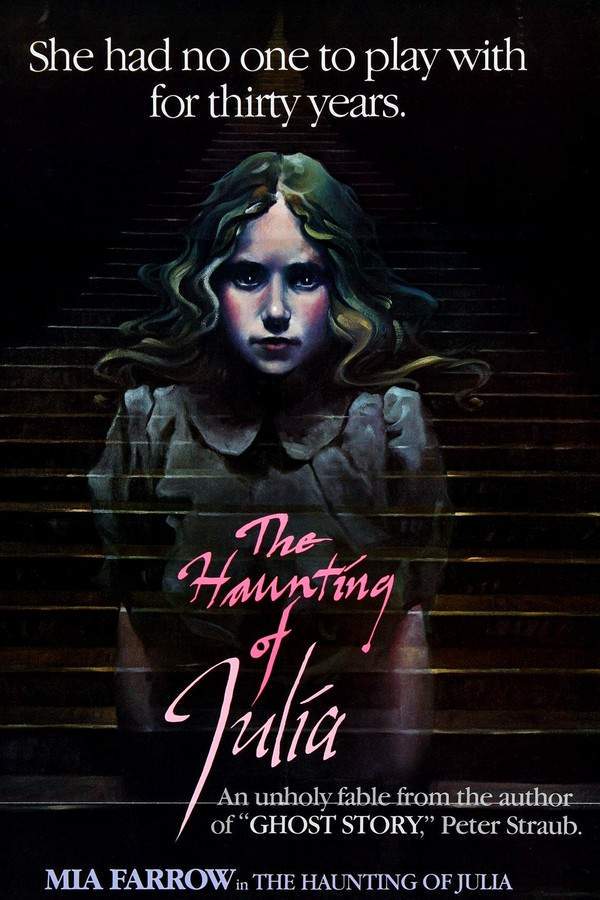
The Haunting of Julia (1981) Detailed Story Recap
An American Haunting (2006) Story Summary & Characters
The Haunting (1999) Spoiler-Packed Plot Recap
Haunt (2014) Full Movie Breakdown
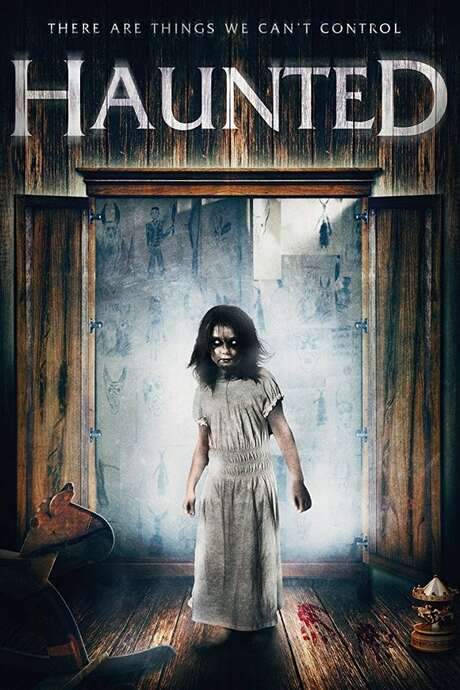
Haunted (2017) Spoiler-Packed Plot Recap
The Haunting of Hill House (1000) Story Summary & Characters
The Haunting of Marsten Manor (2007) Story Summary & Characters
House of Shadows (2020) Detailed Story Recap
The Haunting of Bly Manor (1000) Story Summary & Characters
The Haunting of Julia (1977) Ending Explained & Film Insights
Haunted (1995) Detailed Story Recap
The Haunted House of Horror (1969) Full Movie Breakdown
Haunting of Winchester House (2009) Film Overview & Timeline
The Haunting of Hell House (1999) Plot Summary & Ending Explained
House on Haunted Hill (1959) Movie Recap & Themes