Plot Explained Spoilers guaranteed!
Plot Explained

Browse by genre

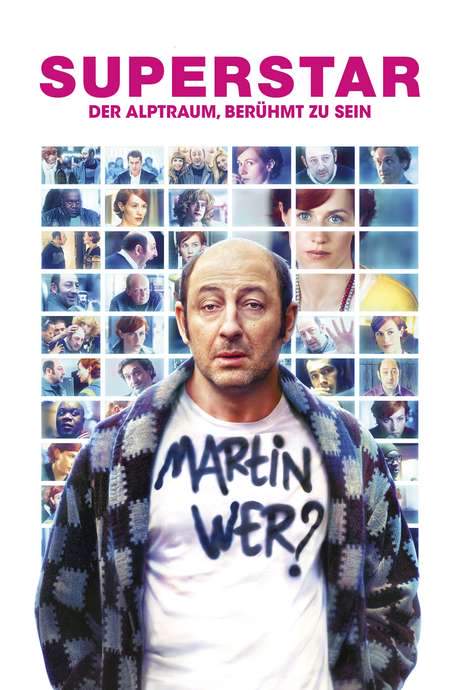
Superstar (2012) movie poster

Timeline

Superstar (2012) Timeline Explained – Every Event in Order

Release, runtime and language
2012 · 112 mins · French
Directed by
Xavier Giannoli
Starring
Cécile De France, Michaël Abiteboul, Hervé Pierre, Aurore Broutin, Stéphan Wojtowicz, Vincent Schmitt

An average guy who works in a recycling plant wakes up one morning to discover that he’s become inexplicably famous.

On this page (4)
  1. 1 Events in order (13)
  2. 2 Timeline questions answered
  3. 3 Movie threads
  4. 4 Every angle

13 events in order · contains spoilers

Superstar Timeline: Events in Chronological Order

Every key event of Superstar (2012) in order, scene by scene, with when and where it takes place. Use it to untangle flashbacks, time jumps and parallel storylines, to refresh your memory before the sequel or to find the exact scene you are thinking of.

  1. Awakening as a Celebrity

    On the way to work, Martin realizes he has inexplicably become a national celebrity. He finds strangers recognizing him and his quiet routine crowded by attention, yet he can't comprehend why this is happening. He repeats the question 'Why?' as his ordinary life spirals into media fascination.

    When
    Morning
    Where
    Train to work
  2. Seeking Help

    Desperate to regain privacy, Martin consults a lawyer who helps him navigate the invasion of his privacy. The lawyer connects him with Fleur Arnaud, a sharp media agent who thrives on managing publicity. The meeting marks the first step into a world he never asked to join.

    When
    Soon after
    Where
    Lawyer's office
  3. Meeting Fleur Arnaud

    Fleur begins shaping Martin's public image, arranging interviews and appearances. Her strategy unintentionally amplifies his fame rather than restoring his anonymity. The negotiations blur the line between help and exploitation.

    When
    Soon after
    Where
    Fleur's media agency
  4. The TV Show Debut

    Martin appears on Fleur's television show, where every word he says is twisted into a symbolic statement. The audience reads significance into his pleas for privacy, and his fame grows even as he asks to be left alone. The performance marks a turning point from sympathy to spectacle.

    When
    During the show
    Where
    Television studio
  5. Attention Intensifies

    The more Martin tries to retreat from the spotlight, the more relentless the attention becomes. He is told his behavior is disruptive at his job and is chased by well-wishers and paparazzi. The constant scrutiny erodes his sense of self.

    When
    Weeks after first appearance
    Where
    Workplace and public spaces
  6. The Affair and Alliance

    Fleur's closeness with Martin deepens, even as she is involved with the studio's manipulative producer. The conflicting loyalties and romantic entanglements strain their relationship and complicate the public narrative. Martin begins to realize he is being exploited as a spectacle.

    When
    Around this period
    Where
    TV studio / Fleur's office
  7. Bankruptcy and Refusal to Cash In

    Martin's finances deteriorate as fame fails to translate into stability. The TV studio offers him a chance to cash in on his status, but he refuses to monetize his misfortune. This choice marks a rejection of further sensationalism and a vow to reclaim dignity.

    When
    Later
    Where
    TV studio / contract meeting
  8. The Shady Offers

    A TV host introduces Martin to questionable figures who want him involved in unsavory activities. He stubbornly refuses, maintaining his moral lines despite the pressure. The encounter foreshadows how the industry weaponizes fame.

    When
    After the refusal
    Where
    Studio / host's circle
  9. Public Vilification

    The public turns against him as the backlash intensifies. A woman strikes him and spits on him in a grocery store, a stark sign of his fallen status. He becomes the target of a hostile crowd and is driven further into isolation.

    When
    Later
    Where
    Grocery store
  10. Hiding and Shelter

    Hounded by the mob, Martin hides out with Philomène, a drag queen who previously appeared with him on a talk show. The unlikely refuge offers a momentary escape from the relentless attention. Their odd companionship underscores the instability of his life.

    When
    Post-broadcast backlash
    Where
    Hideout with Philomène
  11. Return to the Studio

    Martin returns to the studio to seek help, only to be treated with contempt by the producer. The producer then reveals that Fleur has disappeared, removing one ally and heightening his sense of abandonment. The power dynamics in the television world become clearer.

    When
    Later
    Where
    Studio
  12. The Autobiography Launch

    Months later, we glimpse Martin at a private launch for an autobiography ghost-written for him. Some friends from the celebrity period remain, but the shine has faded and he seems largely forgotten. The event hints at a life he can no longer reclaim.

    When
    Months later
    Where
    Private launch venue
  13. The Doorbell and Resolution

    The doorbell rings and Fleur returns, offering one last thread of connection. A passage read by Philomène from the autobiography triggers a change of heart, and Martin decides to pursue Fleur, suggesting a possible attempt to reclaim what was lost. The film ends with them seemingly heading back toward the launch.

    When
    Ending
    Where
    Martin's home; then toward the launch

Last updated: October 09, 2025 at 16:08

Was this helpful?

Timeline questions answered

Superstar Timeline Explained: Your Questions Answered

When does it happen, and why in that order? The questions people ask about the chronology of Superstar (2012): time jumps, flashbacks, cause and effect between scenes and the correct order of events, each answered with spoilers.

Q1

Why does Martin Kazinski become famous out of nowhere?

The film never explains the reason for Martin's sudden fame, it remains a deliberate mystery. He simply wakes up one morning as a national celebrity, with strangers recognizing him and media attention flooding his life. This absurd premise drives the entire story, exploring how inexplicable fame can disrupt an ordinary life regardless of its origin.

Foreshadowing: The film opens with Martin asking 'Why?' on the train, setting up the central mystery that remains unresolved.

  • martin kazinski
  • fame
  • mystery
  • celebrity
  • why
Q2

Why does the public turn against Martin despite his attempts to stay private?

The public's opinion shifts dramatically as media coverage amplifies every aspect of Martin's life. His repeated pleas for privacy are interpreted as symbolism, his refusal to cash in on his fame is seen as arrogance, and the constant media circus creates resentment. A woman actually attacks him in a grocery store, spitting on him as the crowd turns hostile. The film shows how public opinion is manufactured by media rather than based on the person's actual actions.

Foreshadowing: Fleur warns Martin that his growing notoriety is disrupting his professional life and attracting both admirers and critics.

  • public opinion
  • mob
  • vilification
  • media
  • backlash
Q3

What happens to the relationship between Martin and Fleur Arnaud?

Martin and Fleur grow closer as she helps manage his media presence, but their relationship is complicated by Fleur's affair with the manipulative TV producer. When the producer offers Martin money to cash in on his fame, Martin refuses and Fleur moves in with the producer instead. Later, when Martin returns to the studio seeking help, the producer reveals Fleur has disappeared. She finally returns at the end, and Martin decides to pursue her, suggesting a tentative reconciliation.

Foreshadowing: The affair between Fleur and the producer creates tension that ultimately drives them apart.

  • fleur arnaud
  • relationship
  • producer
  • affair
  • reconciliation
Q4

Why does Martin refuse the TV studio's offer to monetize his fame?

Martin refuses because he wants to preserve his dignity and autonomy. He recognizes that cashing in would mean surrendering whatever remains of his private life to the media spectacle. By rejecting the offer, he makes a principled choice to reject further exploitation, even though his financial situation is deteriorating. This decision distinguishes him from those trying to profit from his misfortune.

Foreshadowing: Earlier, Martin seeks help specifically to regain privacy, showing his priority is dignity over profit.

  • refuse
  • offer
  • money
  • dignity
  • autonomy
Q5

Who is Philomène and why does Martin hide with her after the public turns hostile?

Philomène is a drag queen who appeared with Martin on a talk show earlier in the film. When Martin is hounded by a hostile mob following the grocery store attack, he seeks shelter with her as a temporary refuge. Their odd companionship highlights the performative and unstable nature of Martin's new life, and at the end, Philomène reads from Martin's autobiography, helping spark his decision to pursue Fleur.

Foreshadowing: Philomène's earlier talk show appearance establishes her as someone outside mainstream celebrity culture.

  • philomène
  • drag queen
  • hide
  • refuge
  • support
Q6

Why does Fleur disappear from the story after moving in with the producer?

Fleur doesn't explicitly leave, she's simply absent from the narrative after moving in with the producer. When Martin returns to the studio seeking help, the producer dismisses him with contempt and reveals Fleur has disappeared. The film suggests she may have left due to the toxic dynamic with the producer or possibly regret about her choices. Her return at the end remains ambiguous but suggests she wanted to reconnect with Martin.

Foreshadowing: The strain in Fleur's relationship with Martin was already visible when she chose the producer over supporting Martin's moral stance.

  • fleur
  • disappear
  • producer
  • missing
  • return
Q7

What does the ending of Superstar mean? Does Martin get his old life back?

The ending offers a bittersweet resolution rather than a full restoration. Months after his fame faded, Martin is largely forgotten by the public and attends a quiet autobiography launch. When Fleur returns and Philomène reads a passage from the book, Martin decides to pursue Fleur, suggesting they may rebuild their connection. However, he cannot return to his original anonymous life, the ending implies they might find happiness together, but not the quiet existence he once had.

Foreshadowing: The autobiography, though ghost-written, contains enough truth to move Martin toward action.

  • ending
  • reconciliation
  • fame
  • autobiography
  • future
Q8

Why does Fleur's media strategy make Martin's fame worse instead of better?

Fleur's attempts to shape Martin's image unintentionally amplify the spectacle. Every appearance on her TV show turns Martin's words into symbolic statements, and his pleas for privacy are interpreted as fascinating commentary. The more she tries to control the narrative, the more the public consumes him as entertainment. Her strategy fails because it treats Martin's situation as a publicity opportunity rather than addressing his genuine need for privacy.

Foreshadowing: The first TV appearance already twists Martin's words into something larger than he intended.

  • fleur
  • media
  • strategy
  • tv show
  • amplify
Q9

How does Martin's sudden fame affect his job at the recycling plant?

Martin works at a recycling plant, and his newfound fame creates problems at work. He's told that his growing notoriety is disruptive to his professional life, suggesting his coworkers and employer cannot handle the media attention. The exact details of his termination aren't specified, but his ordinary working life becomes unsustainable as the boundary between his private self and public persona collapses completely.

Foreshadowing: The film establishes early that Martin's life was humdrum and routine before the fame arrived.

  • job
  • recycling plant
  • work
  • fame
  • disruption
Q10

Who are the shadowy figures the TV host introduces to Martin?

The TV host introduces Martin to questionable individuals who want him involved in unsavory activities, likely shady deals or exploitation schemes. Martin refuses this offer as he did with the earlier cash-in proposal. This encounter demonstrates how the entertainment industry attempts to weaponize fame for corrupt purposes, and Martin's refusal shows his commitment to maintaining ethical boundaries despite desperate circumstances.

Foreshadowing: This follows Martin's pattern of refusing to profit from his misfortune throughout the film.

  • shady
  • host
  • refuse
  • exploitation
  • industry

Movie threads

More Movies Like Superstar, by Mood & Story

Curated lists built around what makes Superstar tick: the same mood, the same kind of story or the same emotional payoff. Each list explains why these movies belong together.

Satirical movies about modern absurdity like Superstar

Ordinary lives get twisted by the bizarre logic of the contemporary world. If you liked the dark comedy and social critique of Superstar, explore more movies that satirize the bizarre realities of modern life. These films feature ordinary characters navigating absurd situations, often with a bittersweet mix of humor and melancholy.

  • satirical
  • unsettling
  • absurd
  • reflective
  • critical
  • darkly comic
  • Tone: bittersweet, satirical
  • Pacing: steady, unfolding
Why these movies?

The story pattern: The narrative typically follows an unassuming protagonist who is suddenly thrust into an irrational system or situation. Their journey is one of gradual disillusionment, as they struggle to maintain their identity against forces that are comically illogical yet crushingly real. The story unfolds with a steady pace, revealing the layers of the absurd world.

Why they belong together: These movies are grouped by their shared tone—a critical, satirical eye on contemporary issues—and their focus on the emotional cost of navigating an absurd world. They blend comedy with drama to explore themes of alienation and loss of self.

Movies about the dark side of fame like Superstar

Stories exploring the isolation and identity crisis that comes with celebrity. Fans of Superstar who were intrigued by its take on sudden celebrity will find similar themes here. These films explore the alienation and identity loss that can accompany fame, often with a reflective and critical perspective on media and public perception.

  • isolating
  • reflective
  • critical
  • unsettling
  • psychological
  • media critique
  • Tone: bittersweet, reflective
  • Pacing: steady, character-driven
Why these movies?

The story pattern: The narrative arc often begins with an unexpected ascent to fame, followed by a rapid loss of control over one's own narrative. The protagonist experiences intense public scrutiny, leading to feelings of isolation and a crisis of identity. The story is a character study of a person becoming estranged from their own life.

Why they belong together: They are united by a central thematic focus on fame as a destructive or alienating force. The shared mood is one of reflection and critique, examining the gap between public image and private reality, often with a medium emotional weight and a steady, observational pace.

Every angle

Superstar (2012) Explained: Plot, Timeline & Characters

Everything about Superstar in one place: what happens in the plot summary, the timeline in chronological order, the characters and meaning and a spoiler-free summary. What's After the Movie adds the cast, box office and post-credit scenes.

Coming soon on iOS and Android

The Plot Explained Movie Summary App

Plot summaries, endings explained and timelines on your phone. Catch up on any movie in minutes, save your favorites and never miss a twist again.

Be the first to know when we launch. Your email stays private, always.

Learn more about the app