Plot Explained Spoilers guaranteed!
Plot Explained

Browse by genre

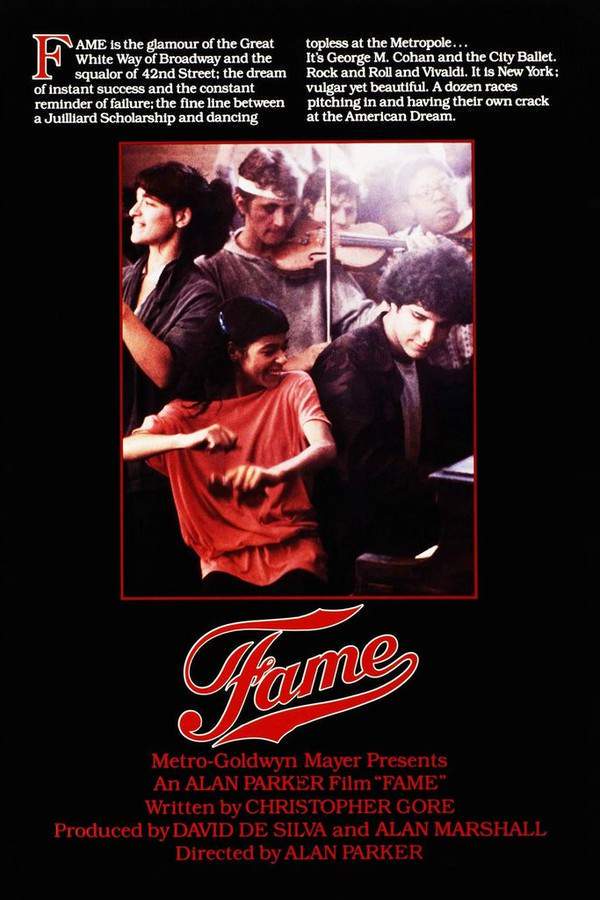
Fame (1980) movie poster

Plot Summary

Fame (1980) Plot Summary Explained

Release, runtime and language
1980 · 134 min · English
Directed by
Alan Parker
Starring
Eddie Barth, Irene Cara

In New York City, a group of ambitious young performers attend the High School of Performing Arts, pursuing their dreams of stardom. Over four years, they balance rigorous training with the challenges of academics, friendships, and romantic relationships. As they strive for excellence, these talented individuals face intense competition and personal struggles in the demanding world of professional performing arts.

On this page (6)
  1. 1 Where to watch
  2. 2 What happens: full plot
  3. 3 Plot questions answered
  4. 4 Movie threads
  5. 5 Movies like Fame
  6. 6 Every angle

Where to watch

Where to Watch Fame (1980)

Where can you watch Fame? Stream, rent or buy it in the US, including on Amazon Video, Apple TV Store and Fandango At Home: current JustWatch availability with up-to-date prices.

Streaming availability powered by JustWatch

Full plot summary · contains spoilers

What Happens in Fame: Full Plot Summary

The whole story of Fame (1980) explained, from the opening scene to the final frame: every key event, every twist and what it all adds up to. Read it as a quick recap before the sequel, to check a scene you missed, or to finally understand what really happened.

At the New York School for Performing Arts, a diverse group of teens and young adults audition with dreams of achieving their ambition to gain fame. Starting with the auditions, seven unique individuals are selected to join the academy: the aspirational drama student Doris Finsecker, who yearns for a career in acting on stage and screen; Raul Garcia, a drama student who goes by the alias Ralph Garcey to conceal his Puerto Rican heritage, hoping for a successful stage career; the talented Coco Hernandez, who pursues a multifaceted career in drama, music, and dance; Leroy Johnson, a dancer from a crime-stricken neighborhood, battling inner demons; Montgomery MacNeil, another drama student aspiring to be a renowned actor; Bruno Martelli, a music student with dreams of making it big; and Lisa Monroe, another enthusiastic dance student.

During the auditions, various teachers evaluate the hopeful candidates, including music instructor Mr. Shorofsky, English teacher Mrs. Sherwood, dance and ballet instructor Miss Berg, drama mentor Mr. Farrel, and former dancer dance instructor Ms. Grant.

Following the auditions, the experience spans over four years, divided into four segments capturing significant moments in both student and teacher lives.

FRESHMAN YEAR

On the initial day of classes, new students quickly discover that academics hold equal weight to performance. Leroy's rebellious attitude leads to conflict with Mrs. Sherwood during English class regarding his disinterest in learning new material. Innocent and naive, Doris feels overwhelmed by the lively lunchroom atmosphere and subsequently flees, where she encounters Montgomery. They forge a friendship, and Doris worries that she lacks the vibrant personality of her peers.

As the year progresses, Coco attempts to persuade Bruno to join her for performance gigs, stating her belief in making every moment spectacular, as she declares, > "doing my last dance on this dark little planet." Meanwhile, Leroy's conflicts with Mrs. Sherwood deepen when she learns of his illiteracy, a source of intense shame for him. Bruno's working-class father, Eddie Barth, tries to motivate him, but their discussions often end in arguments about Bruno's stage fright concerning his music.

In ballet class, Miss Berg cautions Lisa about her lack of effort. Towards the year's end, graduating senior Michael wins a scholarship and shares his good news with Doris, who learns the William Morris Agency is interested in her.

SOPHOMORE YEAR

New student Hilary van Doren enters the school and indirectly competes with Coco for Leroy's affection. Hilary’s seductive charm leads her to discover Leroy's reading struggles. Concurrently, Bruno and Mr. Shorofsky engage in debates about musical styles. Each character gradually unveils painful memories during drama class, touching on themes of loss and identity that deeply resonate with them.

In an inspiring moment, Bruno's father publicly plays his son's music outside the academy, prompting an outburst of joy and dance from the students. However, Lisa faces a crisis after being dropped from the dance program, leading her to contemplate a grim outcome but ultimately deciding to transfer to drama studies instead.

JUNIOR YEAR

As the story unfolds, Ralph and Doris embark on a romantic journey, but their growing closeness inadvertently alienates Montgomery. Hilary’s clash with her family, following her relationship with Leroy, places a strain on their budding romance. An incident involving Ralph’s sister spurs him into a furious confrontation with his mother. Amidst the turmoil, Doris questions her identity, ultimately adopting the name Dominique DuPont.

A pivotal moment occurs during a screening of 'The Rocky Horror Picture Show' where Doris, emboldened, joins the theatrical performance, discovering the transformative power of acting.

SENIOR YEAR

As graduation approaches, Ralph follows in Freddie Prinze's footsteps, gaining initial success in stand-up comedy before falling victim to self-destructive habits that alienate him from Doris. With her tumultuous journey, Hilary faces a dramatic decision concerning her future with the San Francisco Ballet.

A harrowing encounter in a diner reveals the darker side of the industry, deeply affecting Coco. Meanwhile, Leroy battles his illiteracy challenge and lashes out at Mrs. Sherwood during emotional turmoil, but they find a moment of understanding amidst their struggle.

In a poignant finale, the student body unites for the graduation ceremony, performing the moving number "I Sing the Body Electric," capturing the spirit of their shared journey, with heartfelt contributions from Lisa, Coco, and Montgomery.


Last updated: November 02, 2024 at 11:50

Was this helpful?

Plot questions answered

Fame Plot Explained: Your Questions Answered

The questions people ask most about Fame (1980): what happens in the confusing scenes, why the characters do what they do, the twists, hidden details and what the ending means. Each answer contains spoilers.

Q1

Why does Ralph use the name Ralph Garcey instead of his real name?

Ralph Garcia adopts the alias Ralph Garcey to conceal his Puerto Rican heritage, hoping that a less ethnic-sounding name will help him achieve success in the predominantly white American theater industry. This decision reflects the discrimination many performers of color faced in the entertainment business during that era.

Foreshadowing: Ralph's alias is introduced during the initial auditions, hinting at the cultural challenges he will face throughout his career.

  • ralph garcey
  • ralph garcia
  • stage name
  • acting industry
  • discrimination
Q2

Why does Leroy struggle with reading and schoolwork?

Leroy is illiterate, which is a source of intense shame for him throughout his time at the performing arts school. His illiteracy creates ongoing conflicts with Mrs. Sherwood, his English teacher, and contributes to his rebellious attitude in class. Despite his talent as a dancer, this learning challenge makes academic requirements particularly difficult for him.

Foreshadowing: Leroy's rebellious behavior in English class during freshman year hints at his underlying struggles with literacy.

  • leroy johnson
  • illiteracy
  • mrs sherwood
  • reading struggles
  • academic challenges
Q3

Why is Lisa dropped from the dance program?

Lisa is dropped from the dance program due to her lack of effort in ballet class, as warned by Miss Berg. After being dismissed, she contemplates a grim outcome but ultimately decides to transfer to drama studies, seeking a new path within the school.

Foreshadowing: Miss Berg warns Lisa about her lack of dedication in ballet class early in freshman year, foreshadowing her eventual removal from the program.

  • lisa monroe
  • dance program
  • miss berg
  • dropped
  • transferred to drama
Q4

Why does Doris change her name to Dominique DuPont?

During her junior year, Doris undergoes an identity transformation and adopts the name Dominique DuPont. This change represents her artistic growth and her struggle with identity as she navigates her career aspirations in acting. The new name symbolizes her attempt to reinvent herself for the entertainment industry.

Foreshadowing: Doris's feelings of inadequacy compared to her more vibrant peers are established early in freshman year.

  • doris finsecker
  • dominique dupont
  • name change
  • identity
  • acting career
Q5

What happens to Coco at the diner?

Coco experiences a harrowing encounter in a diner that exposes her to the darker realities of the entertainment industry. This critical moment profoundly impacts her worldview and forces her to confront the challenges and dangers that come with pursuing fame in show business.

Foreshadowing: The film gradually reveals the pressures of the industry through Coco's ambitious drive throughout the story.

  • coco hernandez
  • diner
  • entertainment industry
  • dark side
  • industry exploitation
Q6

Why does Ralph's comedy career fall apart after initial success?

After gaining initial success in stand-up comedy, Ralph falls victim to self-destructive habits that alienate him from Doris and threaten his career. The pressures of fame, combined with his underlying personal struggles, lead him down a destructive path, illustrating one of the film's cautionary tales about the cost of sudden success.

Foreshadowing: Ralph's struggles with his identity and cultural background foreshadow the personal conflicts that later contribute to his downfall.

  • ralph garcia
  • stand-up comedy
  • self-destructive
  • fame pressure
  • relationship with doris
Q7

What is the significance of the graduation performance I Sing the Body Electric?

The graduation ceremony features the entire student body performing "I Sing the Body Electric," a moving number that captures the spirit of their shared journey at the performing arts school. The performance includes heartfelt contributions from Lisa, Coco, and Montgomery, symbolizing unity, artistic achievement, and the culmination of their four years of training and friendship.

Foreshadowing: The ensemble nature of the performance reflects the collaborative relationships built throughout all four years of the film.

  • graduation ceremony
  • i sing the body electric
  • finale
  • ensemble performance
  • performing arts
Q8

Why does Hilary's relationship with her family fall apart?

Hilary van Doren's relationship with her family becomes strained due to her relationship with Leroy, a dancer from a crime-stricken background. Her family's disapproval of this relationship creates conflict, and Hilary ultimately faces a dramatic decision concerning her future with the San Francisco Ballet.

Foreshadowing: Hilary's arrival in sophomore year immediately creates tension by competing with Coco for Leroy's affection.

  • hilary van doren
  • leroy
  • family conflict
  • san francisco ballet
  • relationship
Q9

What happens when Bruno's father plays his music outside the school?

In a show of support for his son, Bruno's father publicly plays his son's music outside the academy. The unexpected moment triggers an outburst of joy and dance from the students, celebrating Bruno's growing confidence and the community's passion for the arts.

Foreshadowing: Earlier conflicts between Bruno and his father about stage fright set up this pivotal moment of reconciliation.

  • bruno martelli
  • father
  • music performance
  • school
  • confidence
Q10

Why does Leroy lash out at Mrs. Sherwood during emotional turmoil?

Leroy's emotional turmoil leads him to lash out at Mrs. Sherwood, but they ultimately find a moment of understanding amidst their struggle. This confrontation represents the culmination of years of tension caused by his illiteracy and her attempts to help him, leading to a breakthrough in their relationship.

Foreshadowing: The ongoing conflict between Leroy and Mrs. Sherwood throughout the film builds to this emotional confrontation.

  • leroy johnson
  • mrs sherwood
  • emotional breakdown
  • understanding
  • illiteracy

Movie threads

More Movies Like Fame, by Mood & Story

Curated lists built around what makes Fame tick: the same mood, the same kind of story or the same emotional payoff. Each list explains why these movies belong together.

Aspirational Ensemble Movies Like Fame

Stories of a group chasing dreams, facing intense competition and personal growth. Discover more movies with an ensemble cast on an artistic or competitive journey, similar to Fame. These films share a hopeful but realistic tone, following young talent as they navigate the challenges of ambition, friendship, and self-discovery.

  • aspirational
  • competitive
  • dramatic
  • uplifting
  • introspective
  • energetic
  • Tone: hopeful, bittersweet
  • Pacing: steady, character-driven
Why these movies?

The story pattern: These stories typically unfold over a structured period, tracking the parallel journeys of multiple characters. The central conflict is often the tension between collective ambition and individual struggle, with characters supporting and competing against each other as they strive for a common dream.

Why they belong together: Movies are grouped here for their shared focus on a collective artistic or competitive journey. They blend a hopeful, energetic mood with dramatic, introspective moments, creating a bittersweet yet uplifting experience centered on ambition and the price of success.

Bittersweet Coming-of-Age Stories Similar to Fame

Character-driven stories where youthful ambition meets the complex realities of adulthood. If you liked the journey of self-discovery in Fame, explore these other bittersweet coming-of-age movies. They feature young characters on a path of artistic or personal growth, balancing hopeful dreams with the sobering realities of their ambitions.

  • introspective
  • melancholic
  • aspirational
  • dramatic
  • uplifting
  • identity
  • Tone: hopeful, bittersweet, introspective
  • Pacing: steady, developmental
Why these movies?

The story pattern: The narrative pattern follows characters through a formative period, often set within an educational or training institution. The arc involves discovering one's identity and talent while confronting external pressures and internal doubts. The conclusion is rarely a simple victory, instead offering a nuanced resolution that honors the growth and the sacrifices made.

Why they belong together: These films are connected by their deep exploration of identity formation during youth. They share a medium emotional weight, a steady pacing that allows for character depth, and a tone that is ultimately hopeful yet realistically bittersweet about the path to adulthood.

If you liked this

Movies Like Fame

Similar movies to Fame: the same genre, themes or kind of story. Each one comes with its own plot summary, timeline and ending explained.

Browse all movie summaries

Every angle

Fame (1980) Explained: Plot, Timeline & Characters

Everything about Fame in one place: what happens in the plot summary, the timeline in chronological order, the characters and meaning and a spoiler-free summary. What's After the Movie adds the cast, box office and post-credit scenes.

Coming soon on iOS and Android

The Plot Explained Movie Summary App

Plot summaries, endings explained and timelines on your phone. Catch up on any movie in minutes, save your favorites and never miss a twist again.

Be the first to know when we launch. Your email stays private, always.

Learn more about the app