Plot Explained Spoilers guaranteed!
Plot Explained

Browse by genre

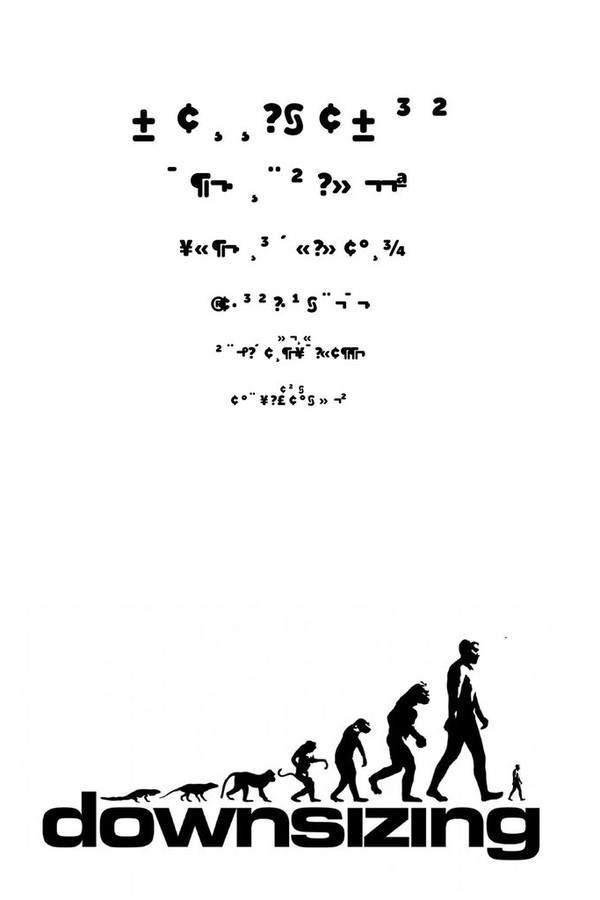
Downsizing (2017) movie poster

Plot Summary

Downsizing (2017) Plot Summary & Ending Explained

Release, runtime and language
2017 · 135 min · English
Echo score 53
JustWatch #8,653 15
Directed by
Alexander Payne
Starring
Matt Damon, Neil Patrick Harris, Kristen Wiig, Laura Dern, Hong Chau, Jayne Houdyshell
Budget
$68M

Seeking a better financial future, Paul Safranek and his wife Audrey decide to undergo a radical process: voluntary downsizing, shrinking themselves to just inches tall. Hoping for a life of luxury in a specially built community for the miniaturized, they soon find that their dreams are complicated by unforeseen consequences and the realities of their new, tiny world. The experience forces them to confront questions about happiness, consumerism, and what truly matters in life.

On this page (7)
  1. 1 Where to watch
  2. 2 What happens: full plot
  3. 3 Plot questions answered
  4. 4 How it ends
  5. 5 Movie threads
  6. 6 Movies like Downsizing
  7. 7 Every angle

Where to watch

Where to Watch Downsizing (2017)

Where can you watch Downsizing? Stream, rent or buy it in the US, including on fuboTV, MGM Plus and Philo: current JustWatch availability with up-to-date prices.

Streaming availability powered by JustWatch

Full plot summary · contains spoilers

What Happens in Downsizing: Full Plot Summary

The whole story of Downsizing (2017) explained, from the opening scene to the final frame: every key event, every twist and what it all adds up to. Read it as a quick recap before the sequel, to check a scene you missed, or to finally understand what really happened.

Searching for solutions to the pressing issues of overpopulation and global warming, Norwegian scientist Dr. Jorgen Asbjornsen from the Edvardsen Institute invents "downsizing" — a groundbreaking process that shrinks organic material irreversibly. Established in the 1950s with the revenue derived from mustard gas production during World War II, the institute aimed to utilize scientific advancements for the betterment of humanity. Recognizing overpopulation as a pivotal threat, they discovered that downsizing could offer an unlikely yet effective solution.

As one of the pioneering test subjects, Jorgen is thrilled to learn that the process reduces humans to a mere height of about five inches (12.9 cm), drastically cutting down on both their resource consumption and waste output. Five years later, the global buzz surrounding the process reaches a climax when the experiment's results are unveiled at a major conference.

Dr. Andreas Jacobsen, who collaborated with Jorgen on this innovative procedure, elaborates that the downsizing process is swift and relatively painless, with only mild discomfort from minor dental adjustments needed during the procedure. Test subjects are lightly sedated and typically recover within a couple of hours.

The test subjects enjoyed their time in a secure 7 by 11 meter gas-permeable habitat, shielding them from the elements, animals, and pests. In a span of four years, only a single garbage bag was filled with their non-compostable waste. The institute envisions a long-term transition spanning 200 to 300 years from a "big" to a "small" society, even marking the birth of the first "small" baby.

Fast forward a decade, and we meet Paul (Matt Damon) and Audrey Safranek (Kristen Wiig), a married couple grappling with financial instability in Omaha. The worldwide economy is in crisis, losing billions due to reduced consumer spending linked to downsizing. Industries like construction, automobiles, and housing are feeling the strain as homes are left empty when individuals downsize.

At a college reunion, they reunite with Dave (Jason Sudeikis) and Carol Johnson (Maribeth Monroe), who have both embraced the irreversible downsizing process. While the inventors promote downsizing as a green solution with less waste, Dave argues that it significantly enhances one's quality of life by increasing the value of money.

Intrigued by the downsizing possibilities, Paul and Audrey attend a promotional event for Leisureland, a community designed for the small. They meet a "small" couple, Jeff and Laura, who enthusiastically share how their entire diamond necklace cost just $83, the same amount they typically spend on food for two months. Their lavish lifestyle in Leisureland offers luxurious 12,000 sq. ft. homes for a fraction of the price they would pay in their previous life. With Paul’s savings translated into a whopping $12.5 million in Leisureland currency, they decide to commit to the downsizing process.

As Audrey's parents bid farewell, the excitement of moving to Leisureland looms. However, they are faced with a 1 in 225,000 chance of complications during the procedure. Paul is ushered into the men's section, anticipating a reunion with Audrey shortly after the treatment.

To his dismay, Paul later receives a heartbreaking call from Audrey, revealing her decision to back out of the procedure at the last minute, leaving him to navigate his new life solo. A year down the line, Paul finalizes his divorce from Audrey and tries to adapt to his new existence, working as a telemarketer for Lands' End after having let his occupational therapist license lapse, believing he wouldn’t need it after downsizing.

While attending a birthday party, Paul expresses his regret about his choice to downsize during a conversation with Dave. Just after, he breaks up with his girlfriend and attends a gathering hosted by his neighbor Dusan.

The next day, Paul encounters Ngoc Lan Tran (Hong Chau), a Vietnamese political activist downsized against her will. She was the only survivor of a human smuggling operation to the U.S. and had undergone a leg amputation due to an infection sustained during transit. Initially intending to assist Lan with her prosthetic, Paul inadvertently damages it, leaving her unable to work.

In return for Lan’s kindness, Paul aids in her cleaning business and helps gather food for the needy in their community. Dusan tries to lure Paul away to Norway, where a significant event awaits, offering them lucrative prospects. Lan, however, insists on joining due to her newfound fame from her past, which even attracted attention from Dr. Asbjornsen.

On their journey to Norway, Paul and his companions encounter Dr. Asbjornsen and his wife while sailing through a fjord. The doctor shares a grim warning about humanity's impending fate due to the feedback loops of Arctic methane emissions that could eventually lead to extinction.

In the first downsizing colony, the doctor reveals his contingency plan: a vast vault built into a mountain meant to cradle humanity's future until conditions on the surface stabilize, potentially thousands of years later. While Dusan and his friend Joris Konrad express skepticism about the catastrophe timeline, Paul feels drawn to enter the vault. Yet, when he reaches the closing door, he has second thoughts and decides to return home with Lan, Dusan, and Konrad.

Back in Leisureland, Paul embraces his role in aiding Lan as they provide essential support to the marginalized individuals living in the surrounding slums, choosing a path of service and community over isolation in a vault.
Last updated: November 04, 2024 at 00:23

Was this helpful?

Plot questions answered

Downsizing Plot Explained: Your Questions Answered

The questions people ask most about Downsizing (2017): what happens in the confusing scenes, why the characters do what they do, the twists, hidden details and what the ending means. Each answer contains spoilers.

Q1

Why does Audrey back out of the downsizing procedure at the last minute?

Audrey decides not to go through with the downsizing process just as Paul is about to undergo it. While the movie doesn't explicitly explain her reasoning, it suggests she experienced a last-minute change of heart about leaving her old life behind entirely. This decision leads to their divorce a year later, as Paul pursues the downsized life alone while Audrey remains in their original world.

  • audrey safranek
  • downsizing procedure
  • divorce
  • last minute decision
Q2

What is the vault in Norway and why was it built?

The vault is a massive underground shelter built into a Norwegian mountain by Dr. Jorgen Asbjornsen as a contingency plan for humanity's future. It was designed to preserve a select group of downsized humans for thousands of years until Earth's conditions stabilize after climate-related catastrophe. The vault represents Dr. Asbjornsen's answer to the feedback loops of Arctic methane emissions that threaten human extinction.

  • vault
  • norway
  • dr asbjornsen
  • climate catastrophe
  • arctic methane
Q3

Why does Paul decide not to enter the vault?

Paul initially feels drawn to enter the vault when he reaches its closing door, but ultimately chooses to turn back. He decides that spending thousands of years in isolation waiting for the world to recover isn't the life he wants. Instead, he returns to Leisureland to be with Ngoc Lan Tran and dedicate himself to helping the marginalized people in their community right now, choosing human connection over survival in isolation.

  • paul safranek
  • vault decision
  • lan tran
  • community service
  • human connection
Q4

Who is Ngoc Lan Tran and why was she forcibly downsized?

Ngoc Lan Tran is a Vietnamese political activist who was downsized against her will as part of a human smuggling operation to the United States. She was the only survivor of this trafficking scheme and suffered a leg amputation due to an infection sustained during transit. Despite her traumatic experience, she remains kind and becomes an important figure in Paul's life, helping him find purpose through community service.

  • ngoc lan tran
  • vietnamese activist
  • forced downsizing
  • human trafficking
  • amputation
Q5

What caused the global financial crisis in the movie?

The global financial crisis is triggered by reduced consumer spending as more people choose to downsize. When individuals shrink themselves, they need far fewer resources and spend significantly less money, which causes massive economic disruption. Industries like construction, automobiles, and housing suffer as homes sit empty when people leave the regular economy for downsized communities.

  • financial crisis
  • consumer spending
  • economy
  • downsizing impact
Q6

What happens to Paul's career after he gets downsized?

After downsizing, Paul discovers that his assumptions about his new life were wrong. He let his occupational therapist license lapse because he didn't think he'd need it in Leisureland, but instead ends up working as a telemarketer for Lands' End. His divorce and the reality of his new life don't match the luxury he was promised, leaving him regretful and struggling to find meaning.

  • paul safranek
  • telemarketer
  • occupational therapist
  • career change
  • leisureland
Q7

How did the Edvardsen Institute get funding for the downsizing research?

The Edvardsen Institute was established in the 1950s using revenue derived from mustard gas production during World War II. The institute used this funding to pursue scientific advancements aimed at benefiting humanity, eventually leading to the development of the downsizing process as a solution to overpopulation and global warming.

  • edvardsen institute
  • mustard gas
  • ww2 funding
  • scientific research
  • norway
Q8

What is Dusan's role in the story and why does he want to go to Norway?

Dusan is Paul's neighbor in Leisureland who hosts gatherings and tries to convince Paul to join him and his friend Joris Konrad in Norway for a significant opportunity. Dusan represents the allure of wealth and privilege even in the downsized world. He is drawn to the vault opportunity, seeing it as a chance for a profitable future, though he ultimately accompanies Paul back to Leisureland.

  • dusan
  • joris konrad
  • norway
  • wealth
  • opportunity
Q9

What is the movie's message about consumerism and happiness?

The movie explores how the promise of greater purchasing power through downsizing initially seems like the path to happiness, but ultimately proves hollow. Paul's journey shows that true fulfillment comes from meaningful connections and helping others rather than material wealth. The film critiques how consumerist solutions to life's problems often miss the deeper needs that only human connection can satisfy.

  • consumerism
  • happiness
  • material wealth
  • fulfillment
  • connection
Q10

How does the movie address climate change and environmental issues?

The film presents climate change as an existential threat to humanity. Dr. Asbjornsen warns that feedback loops from Arctic methane emissions could eventually lead to human extinction. The downsizing process was originally invented as an environmental solution, and the vault represents a backup plan for preserving humanity until the planet recovers. The movie uses this backdrop to question whether technological solutions can address fundamental ecological crises.

  • climate change
  • global warming
  • arctic methane
  • extinction
  • environment

Ending explained

What Happens at the End of Downsizing?

How Downsizing (2017) ends, in short: the final scene, the last twist and what it means for the characters. The full ending explained, with every spoiler, lives on its own page.

Read the full ending explained

In the end, Paul’s decision to rejoin Ngoc Lan rather than follow the contingency plan to stay in an underground vault shows how much he has changed. Initially, he saw the vault as a noble way to help humanity survive the impending planetary disaster, and he was eager to be part of that solution. However, after experiencing life in the downsized world and forming a deep connection with Ngoc Lan, he realizes that true happiness doesn’t come from trying to escape hardships or making grand sacrifices for the future. Instead, it’s about valuing the relationships and the life he already has. Paul’s choice to stay with Ngoc Lan underscores a central message of the film: that happiness and purpose are found not in distant, idealized futures or big sacrifices, but in accepting and cherishing what we have in the present. His journey concludes with him understanding that life’s imperfections are part of what makes it meaningful, and that genuine fulfillment comes from connection and authenticity rather than escape or utopian dreams. Ultimately, the film leaves us with the idea that sometimes, the best choice is to embrace what’s right in front of us, even if it’s messy or imperfect. Paul’s decision to stay reflects his growth and newfound appreciation for the life he’s actively choosing to live.

Downsizing ending explained in full

Movie threads

More Movies Like Downsizing, by Mood & Story

Curated lists built around what makes Downsizing tick: the same mood, the same kind of story or the same emotional payoff. Each list explains why these movies belong together.

Thoughtful Dystopian Satire like Downsizing

High-concept sci-fi worlds that critique society through bittersweet personal journeys. Explore movies like Downsizing that blend sci-fi concepts with social commentary. If you enjoyed the satirical take on consumerism and the search for purpose in a flawed utopia, you'll find similar thoughtful and character-driven speculative stories here.

  • satirical
  • contemplative
  • disillusioned
  • hopeful
  • lonely
  • social critique
  • Tone: bittersweet, satirical, melancholic
  • Pacing: steady, deliberate
Why these movies?

The story pattern: Stories often begin with a character embracing a seemingly perfect technological or social solution, only to discover its hidden costs and ethical compromises. The protagonist's journey shifts from naive optimism to a more nuanced, often bittersweet, understanding of the world and their place within it.

Why they belong together: They share a unique combination: a satirical, high-concept premise executed with a steady, character-focused pace. The tone is consistently bittersweet, balancing critique of large systems with the emotional weight of personal disillusionment and the slow, deliberate search for a new kind of happiness.

Movies about Midlife Reinvention like Downsizing

Stories of personal collapse leading to an unexpected, more meaningful path. Find movies similar to Downsizing that explore themes of midlife crisis and finding new purpose. If you liked Paul's journey from disillusionment to a more authentic life, you'll appreciate these character-driven dramas about starting over and discovering what's truly important.

  • contemplative
  • lonely
  • hopeful
  • disillusioned
  • finding purpose
  • self-discovery
  • Tone: bittersweet, contemplative, hopeful
  • Pacing: steady, character-driven
Why these movies?

The story pattern: The narrative follows a protagonist who, feeling trapped by societal expectations or personal failures, embarks on a drastic life-altering decision. This initially leads to further isolation and disillusionment, but ultimately becomes a catalyst for profound self-discovery and a redefined sense of purpose, often found through service or connection to a community.

Why they belong together: These films are grouped by a shared character arc: the midlife search for authenticity. They blend drama with elements of comedy or other genres, maintain a steady, reflective pace, and deliver a bittersweet-to-hopeful emotional journey centered on personal growth after a crisis.

If you liked this

Movies Like Downsizing

Similar movies to Downsizing: the same genre, themes or kind of story. Each one comes with its own plot summary, timeline and ending explained.

Browse all movie summaries

Every angle

Downsizing (2017) Explained: Plot, Ending, Timeline & Characters

Everything about Downsizing in one place: what happens in the plot summary, the timeline in chronological order, the characters and meaning, the ending explained and a spoiler-free summary. What's After the Movie adds the cast, box office and post-credit scenes.

Coming soon on iOS and Android

The Plot Explained Movie Summary App

Plot summaries, endings explained and timelines on your phone. Catch up on any movie in minutes, save your favorites and never miss a twist again.

Be the first to know when we launch. Your email stays private, always.

Learn more about the app