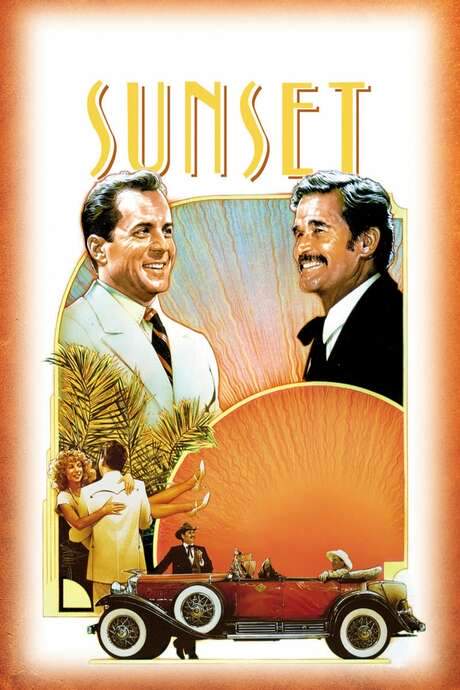
In Hollywood in the late 1920s, as the industry limps through the final days of silent cinema and grapples with the dawn of sound, Alfie Alperin [Malcolm McDowell]—a powerful producer and studio boss—dreams up an epic Western about Wyatt Earp [James Garner]. The film casts Tom Mix, played by Bruce Willis, as the celebrated United States Marshal, and on the set the real Wyatt Earp sits beside him as a technical adviser, blurring the line between studio fiction and real-life legend.
Behind the glossy facade of the production, the backdrop of crime and corruption begins to intrude. A ruthless gangster, Dutch Kieffer [Joe Dallesandro], drags the story into a seedy underworld where murder, prostitution, and power plays threaten to derail the dream project. As Mix and the on-set Earp navigate this dangerous web, they must contend with a series of personal and professional pressures that test their limits and loyalties.
The plot tightens around Michael Alperin [Dermot Mulroney], Alfie’s missing son, whose fate becomes entangled with Christina Alperin [Patricia Hodge], the former girlfriend of Earp who is now Alfie’s wife. Christina’s troubles pull Earp deeper into the studio’s own nightmare, while Alfie’s family ties threaten to pull him away from any sense of justice. Meanwhile, Cheryl King [Mariel Hemingway], a hostess on the lot, enters a charged liaison with Earp, adding a layer of romantic tension to an already combustible situation on the set.
Victoria Alperin [Jennifer Edwards]—Alfie’s sister—is involved with the same dangerous crowd, dating the notorious Dutch Kieffer as all three are tangled at the scene of a shocking murder, the killing of Madam Candice Gerard. As the mystery unfolds, Earp uncovers the darker side of Alfie: a sadistic streak that goes beyond the glamor of the film business. Two loyal yet morally compromised figures—Marvin Dibner, the Chief of Studio Police [M. Emmet Walsh], and Captain Blackworth [Richard Bradford]—edge the story toward a violent confrontation, showing how far people will go to protect wealth, power, and a cinematic illusion.
The tension erupts into a brutal, real gunfight at a remote ranch, where the line between cinema and crime collapses before the audience’s eyes. In a stark moment of irony and danger, Mix remarks, > I wish there was a camera here. < The line underscores the film’s meta-commentary on spectatorship, performance, and the violence that sometimes fuels both worlds.
As the case tightens around Christina’s fate, the conflict becomes intensely personal for Earp, and the trio of Mix, Alfie Alperin, and Earp move toward an explosive climax that refuses to stay on the page. The on-screen heroism of Tom Mix collides with the merciless pragmatism of Alfie Alperin and the calculating intensity of Wyatt Earp, culminating in a confrontation that reveals which legend holds true when the lights go up and the cameras finally stop rolling.
The movie weaves together a glossy Hollywood romance with a grim underbelly—director Jon Van Ness’s framing, the bustling studio life, and the perilous crossover where real crimes echo the fictional battles on screen. It’s a portrait of an era when the industry was reinventing itself, and in doing so, it tests the boundaries between art, ambition, and the messy human costs behind both. The conclusion lingers on the consequences of ambition, trust, and the price paid when myth collides with truth, leaving audiences with a stark reminder that some stories, even when crafted for entertainment, are haunted by real consequences.