Plot Explained Spoilers guaranteed!
Plot Explained

Browse by genre

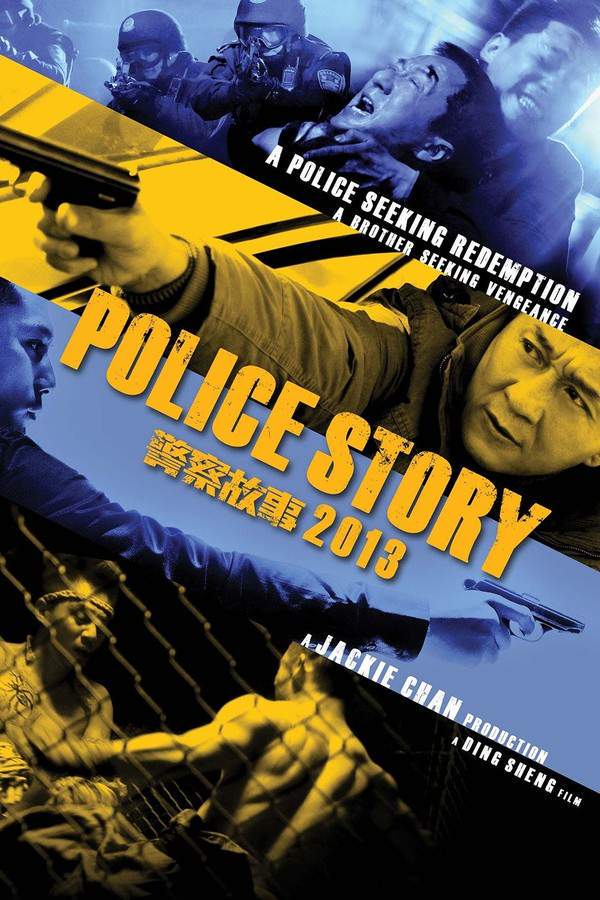
New Police Story (2004) movie poster

Plot Summary

New Police Story (2004) Plot Summary Explained

Release, runtime and language
2004 · 122 mins · Cantonese
Loading streaming availability…
Directed by
Benny Chan Muk-Sing
Starring
Jackie Chan, Tony Ho, Daniel Wu, Charlie Yeung, Wu Bai, Charlene Choi

Failures and suffering forge a true hero. After a gang of thrill‑seeking punks wipes out his entire unit, disgraced Hong Kong police inspector Wing spirals into drunken despair. He teams with a rookie partner haunted by his own troubled past, and together they battle addiction, hunting the ruthless leader. They must also face Wing’s hidden scars.

On this page (5)
  1. 1 Where to watch
  2. 2 What happens: full plot
  3. 3 Plot questions answered
  4. 4 Movie threads
  5. 5 Every angle
Loading streaming availability…

Full plot summary · contains spoilers

What Happens in New Police Story: Full Plot Summary

The whole story of New Police Story (2004) explained, from the opening scene to the final frame: every key event, every twist and what it all adds up to. Read it as a quick recap before the sequel, to check a scene you missed, or to finally understand what really happened.

Senior Inspector Chan Kwok Wing leads a relentless pursuit when five youths rob a bank with the intent to shoot police officers. The operation spirals into tragedy as the entire squad is wiped out, and among the fallen is Hong, the younger brother of Chan’s girlfriend, Ho Yee. Chan survives the melee, but the loss drives him into a year-long spiral of self-doubt and alcohol, stepping away from the force as the case sits cold. The city keeps turning, and the weight of what happened haunts him as he drowns his sorrows in a reckless routine, wondering if he’ll ever see justice served again. Yet the flame of duty flickers back to life when a stubborn, determined voice proposes a chance to reopen the file: Frank Cheng, a new partner who insists they try to right the wrongs of that night and bring the truth to light.

Chan’s stubborn pride clashes with the harsh reality of the case, and at first he resists returning to the streets. A turning point comes when, in a moment of drunken chaos, he somehow helps stop two youths from robbing him, a scene that forces him to confront what he’s walked away from. Alongside him, a wary rival stance forms with Chief Inspector Chiu Chan, who questions Chan’s overconfidence and dares him to prove that the past can be redeemed by solving it before Chiu does. The pair are joined by memories of a former colleague, Sam Wong, who offers a crucial clue from the first bank raid: a watch stolen during the chaos, and the hint that one member of the gang is a woman who relishes their X-game theatrics.

As the investigation heats up, the team threads through a tense chase that culminates at an X-Games event where the gang’s signals grow louder. The pursuit tightens around two key figures: Fire, a ruthless gang member, and Sue Chow, the female robber whose striking presence has helped shape the gang’s reckless rhythm. The rooftop confrontation crystallizes the stakes: Fire fatally wounds Sam and escapes with Sue, while the police close in. Sam uncovers the darker truth behind their audacious raids—blackmail that pressed the gang into action and left them with a chilling license to ambush Chan’s squad. The tension escalates as Chan and Frank race to connect the web of deception, chasing a trail that threads from the rooftop to the gang’s hidden lair. The chase leaves them with a stark, brutal choice: continue the pursuit or risk catastrophic loss.

The truth behind the gang’s operation expands the plot beyond the street-level crime into a battlefield of identity and deception. The investigators learn that the gang’s raids are backed by wealthy families, and their leader Joe—the son of a powerful official—has manipulation and influence at every turn. The online-game conceit that threads through the gang’s actions becomes a chilling sign of how their heists are choreographed as performances, designed to shock and leverage power. The next target is the Bank of Hong Kong, and the plan shifts from a flashy raid to a calculated siege. To minimize casualties and preserve the city’s order, Chan orchestrates a risky strategy: removing the public from the building’s vicinity and bringing in the gang’s parents to confront the consequences of their children’s actions. The tension peaks as Joe takes aim at his opponents, and Tin Tin—one of the gang’s members—enters a brutal sequence that ends with him being fatally misdirected by Joe’s gunfire. On the rooftop, Chan faces Joe in a deadly contest of wits and nerve, culminating in a race to assemble a semi-automatic pistol. Chan wins by loading the bullet directly into the chamber, a moment that underscores his renewed resolve and tactical calm.

The arrival of reinforcements—the police, Joe’s father, and others—shifts the balance of power. A sense of grim inevitability pervades the final confrontations as the gang’s web of manipulation starts to unravel. The climactic showdown reaches its emotional core when Ho Yee, Chan’s partner in life as well as in work, is gravely wounded in a bomb attack meant to terrify the police station. Against the backdrop of danger and desperation, Frank’s own fate is revealed in a startling twist: his apparent false persona begins to crumble, revealing that his path into the force was shaped by a different kind of duty. The two men—Chan and Frank—are briefly detained, then unofficially released to continue the pursuit that could still save Ho Yee and bring the perpetrators to justice.

In the end, the investigation exposes the gang’s structure, their economic backing, and the moral complexity behind their choices. The pursuit closes in on the gang’s hideout, where the truth about Frank—who had long carried the weight of a personal history tied to the force—sparks a turning point in his relationship with Chan. As the authorities close in, the danger culminates in a dramatic rescue effort that unites personal history with professional duty. Ho Yee’s condition stabilizes in the hospital, and she ultimately accepts Chan’s proposal, signaling a fragile but hopeful future. Meanwhile, Frank faces consequences for his earlier missteps—his authority questioned, his future as a police officer tempered by the revelations—and Chan’s memories of childhood support a deeply personal motive that helped steer his path toward the force in the first place. The film closes on a note of difficult reconciliation and renewed purpose, with Chan carrying the weight of the past while stepping into a future where justice and love stand a cautious chance at prevailing.

Last updated: October 09, 2025 at 15:19

Was this helpful?

Plot questions answered

New Police Story Plot Explained: Your Questions Answered

The questions people ask most about New Police Story (2004): what happens in the confusing scenes, why the characters do what they do, the twists, hidden details and what the ending means. Each answer contains spoilers.

Q1

Why does Chan Kwok-wing leave the police force for a year?

After the bank robbery where five youths killed his entire police squad, including Hong, the younger brother of his girlfriend Ho Yee, Chan becomes consumed by guilt and grief. He is the sole survivor of the massacre, and unable to cope with the trauma, he resigns from the force and spends a year drowning his sorrows in alcohol, letting the case go cold.

  • chan kwok-wing
  • police massacre
  • guilt
  • alcoholism
  • resignation
Q2

Who is Frank Cheng really?

Frank Cheng is not a real police officer. He never passed the police exam and was never assigned as Chan's partner. He fabricated his identity, claiming to be the son of a deceased squad member. His true background is revealed when Superintendent Tai confirms no partner was ever assigned to Chan. However, it's later revealed that Frank's father was killed when Frank was a child, and Chan had comforted him as an orphan, explaining why Frank wanted to repay Chan and help him solve the case.

Foreshadowing: Frank's desperate need to prove himself and his unusual dedication to Chan hints at a personal connection beyond their supposed partnership.

  • frank cheng
  • fake identity
  • police impersonator
  • backstory
Q3

How does Sam Wong die?

Sam Wong is fatally wounded during the rooftop confrontation at the X-Games event. While Chan and Frank pursue Fire and Sue, Sam is attacked and killed by Fire, who shoots him before escaping with Sue. Before dying, Sam reveals to Chan that he was blackmailed by the gang into ambushing Chan’s original squad during the bank raid, he had no choice but to participate in the setup that led to the officers' deaths.

  • sam wong
  • fire
  • rooftop
  • murder
  • blackmail
Q4

Why is Joe the gang leader and what drives him?

Joe is the son of the Deputy Commissioner of Police, coming from a wealthy family. Despite his privileged background, he orchestrates the bank raids as a twisted online game, treating violent crimes as performance art. The gang records their heists and turns them into online video games, treating murder and robbery as entertainment. Joe's motivation appears to be a destructive desire for power and thrill-seeking, using his father's influence to operate with impunity.

Foreshadowing: The X-Games pursuit and online-game conceit that threads through the gang's actions hints at Joe's performative, dangerous mentality from the start.

  • joe
  • gang leader
  • deputy commissioner son
  • online games
  • wealthy families
Q5

What happens to Ho Yee at the end of the movie?

Ho Yee is seriously injured when the gang plants a bomb on her and sends her to the police station. The explosion knocks her into a coma, escalating the stakes for Chan. She later recovers in the hospital and accepts Chan's marriage proposal, giving the ending a hopeful but bittersweet tone.

  • ho yee
  • bomb
  • coma
  • hospital
  • marriage proposal
Q6

Why does Joe commit suicide?

After Chan defeats him in the rooftop showdown, winning the pistol assembly race by loading the bullet directly into the chamber, Joe finds himself cornered with no escape. Faced with capture and the exposure of his crimes, including his father's resignation, Joe chooses to commit suicide by cop, firing at Chan and aiming at his own father before being stopped.

  • joe
  • suicide
  • rooftop
  • capture
  • defeat
Q7

What was the blackmail plot behind the police massacre?

Sam Wong reveals that the gang blackmailed him into setting up Chan’s squad during the initial bank raid. The gang forced Sam to help orchestrate the ambush that resulted in the police team's death, using some form of leverage over him. This explains how the gang knew exactly where the police would be and managed to wipe out the entire squad.

Foreshadowing: Sam’s mysterious behavior and his provision of clues about the gang suggest he carries a heavy secret throughout the investigation.

  • blackmail
  • sam wong
  • police massacre
  • ambush
  • gang setup
Q8

How does Chan win the rooftop gun duel with Joe?

The final confrontation between Chan and Joe becomes a race to assemble a semi-automatic pistol. Chan wins by loading the bullet directly into the chamber rather than using the standard magazine loading process, giving him a split-second advantage. This demonstrates his renewed tactical skill and calm under pressure after overcoming his trauma.

  • rooftop duel
  • gun assembly
  • pistol
  • joe
  • final battle
Q9

Why do the gang members turn their crimes into online games?

The gang records their real-life bank raids and transforms them into elaborate online video games, treating violent crimes as thrilling performances. Joe, as the leader and son of a powerful official, uses this online-game conceit to choreograph heists that shock and leverage power. The games serve as both a recruiting tool and a way to mock law enforcement, making the gang's crimes a disturbing form of entertainment.

Foreshadowing: Sam Wong’s clue about the gang enjoying X-game style raids and online games early in the investigation hints at this pattern.

  • online games
  • x-games
  • heists
  • performance
  • video games
Q10

What is Frank's connection to Chan from childhood?

When Frank is a child, his father is killed, leaving him an orphan. Chan, who was then a young police officer, comforted the grieving Frank. This traumatic childhood experience is why Frank is so determined to help Chan and wants to repay him, by assisting in solving the case that has haunted Chan for years. Chan discovers this memory at the end, understanding why Frank was so driven to work with him.

Foreshadowing: Frank's intense loyalty and willingness to risk everything for Chan seems disproportionate to their supposed partnership, hinting at a deeper personal motive.

  • frank
  • childhood
  • chan
  • orphan
  • repayment
Q11

How does Chan stop the Bank of Hong Kong robbery?

Chan learns through the online game that the gang's next target is the Bank of Hong Kong. To prevent another massacre, he orders the public removed from the building's vicinity. More crucially, he brings in the gang members' parents, including Joe's father, the Deputy Commissioner, to confront the consequences of their children's actions. This strategy creates leverage and accountability, helping to break the gang's operation.

  • bank of hong kong
  • siege
  • parents
  • strategy
  • leverage
Q12

What happens to Tin Tin during the bank raid?

Tin Tin, one of the gang members, is shot and killed during the Bank of Hong Kong raid. He becomes a victim of Joe's friendly fire, Joe accidentally shoots Tin Tin while aiming at the police. This moment highlights Joe's willingness to sacrifice his own teammates to achieve his goals, showing the dark reality behind the gang's performative unity.

  • tin tin
  • joe
  • friendly fire
  • bank raid
  • death

Movie threads

More Movies Like New Police Story, by Mood & Story

Curated lists built around what makes New Police Story tick: the same mood, the same kind of story or the same emotional payoff. Each list explains why these movies belong together.

Redemption stories like New Police Story

Damaged protagonists fighting their demons to find a sliver of justice. If you liked the heavy emotional weight and redemptive arc of New Police Story, you'll find similar movies here. These films feature battered heroes overcoming personal demons, offering intense action dramas with bittersweet, character-driven conclusions.

  • redemptive
  • gritty
  • despair
  • determined
  • mournful
  • intense
  • Tone: tense, gritty
  • Pacing: fast, driven
Why these movies?

The story pattern: The narrative typically begins with a catastrophic failure or tragedy that breaks the protagonist. The majority of the plot involves them grappling with their flaws—often addiction or profound grief—while being pulled back into a conflict that forces them to confront their past and fight for a chance at personal salvation.

Why they belong together: Movies in this thread are grouped by their focus on a profoundly broken protagonist's difficult, often violent, journey toward redemption. They share a heavy emotional core, high-stakes action, and a tone that balances gritty despair with determined hope.

Gritty police action movies like New Police Story

Intense police procederals where the emotional trauma is as brutal as the action. Looking for more movies like New Police Story? This collection features similar high-intensity cop thrillers with a fast pace, tense cat-and-mouse investigations, and a focus on the psychological trauma and partnership dynamics within the police force.

  • intense
  • suspenseful
  • gritty
  • action-packed
  • mournful
  • determined
  • Tone: tense, gritty
  • Pacing: fast, relentless
Why these movies?

The story pattern: The plot is driven by a high-stakes investigation against ruthless antagonists, often involving a personal vendetta. The action sequences are explosive and frequent, but the story is equally concerned with the partnership between the leads and the psychological toll the job extracts, leading to a resolution that is victorious but emotionally costly.

Why they belong together: These films are united by their combination of spectacular, fast-paced police action and a serious, character-focused exploration of grief, corruption, and trauma. The tone is consistently tense and gritty, making the action feel consequential and emotionally weighted.

Every angle

New Police Story (2004) Explained: Plot, Timeline & Characters

Everything about New Police Story in one place: what happens in the plot summary, the timeline in chronological order, the characters and meaning and a spoiler-free summary. What's After the Movie adds the cast, box office and post-credit scenes.

Coming soon on iOS and Android

The Plot Explained Movie Summary App

Plot summaries, endings explained and timelines on your phone. Catch up on any movie in minutes, save your favorites and never miss a twist again.

Be the first to know when we launch. Your email stays private, always.

Learn more about the app