Plot Explained Spoilers guaranteed!
Plot Explained

Browse by genre

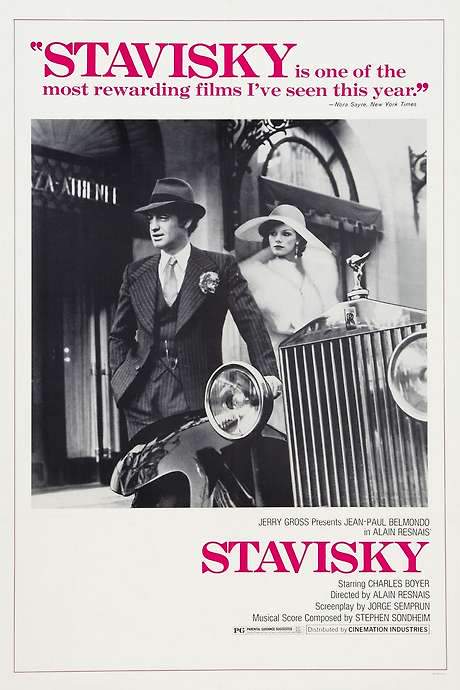
Stavisky… (1974) movie poster

Characters & Themes

Stavisky… (1974) Characters, Setting & Themes Explained

Release, runtime and language
1974 · 120 mins · French
Loading streaming availability…
Directed by
Alain Resnais
Starring
Paul Villé, Michael Lonsdale, François Périer, Niels Arestrup, Charles Boyer, Gérard Depardieu

Biarritz, 1933. With charm and talent, small‑time swindler Serge Alexandre—known as Stavisky—manipulates bribes to infiltrate the heart of French political power. When his massive fraud involving millions is uncovered, his actions destabilize the government, pushing the nation to the edge of collapse and a looming civil war.

On this page (8)
  1. 1 Where to watch
  2. 2 Characters explained (7)
  3. 3 Where & when it takes place
  4. 4 Themes & meaning (3)
  5. 5 Character & meaning questions
  6. 6 Movie threads
  7. 7 Movies like Stavisky…
  8. 8 Every angle
Loading streaming availability…

7 main characters · contains spoilers

Stavisky… Characters Explained: Who Is Who

The main characters of Stavisky… (1974), heroes and villains: what drives them, how they change over the course of the story and what each of them reveals about the film's bigger ideas.

  • Serge Alexandre Stavisky (Jean-Paul Belmondo)

    A flamboyant financier and impresario whose life blends audacious criminality with political charm. He capably weaves a veneer of legitimacy around fraudulent bonds, using wealth and stagecraft to seduce allies and suppress scrutiny. His contradictions—idealism, greed, and dependency on appearance—drive the web of deception until exposure and death.

    • 💼 Fraud
    • 🎭 Manipulation
    • 🏦 Power
  • Arlette (Anny Duperey)

    Stavisky's glamorous wife, whose beauty is weaponized to attract funds from various backers. She moves within elite circles, financing schemes through charm and social influence. Her role probes how personal allure can be entangled with political and financial scheming.

    • 💃 Femme fatale
    • 💍 Glamour
    • 👁️ Insight
  • Docteur Mézy (Michael Lonsdale)

    A doctor within Stavisky's orbit who participates in or witnesses the scheming environment surrounding scams and social circles. He embodies the rational, clinical gaze in a world of glamour and fraud. His presence hints at the normalizing of illicit activity through professional networks.

    • 🩺 Medicine
    • 🕵️‍♂️ Complicity
  • Inspecteur Bonny (Claude Rich)

    A police inspector tracking the Stavisky affair and the cross-currents with Trotsky's movements. He embodies law and investigation, balancing skepticism with political realities. His investigations uncover the depths of deceit and the obstacles to accountability.

    • 🔎 Investigation
    • 🧭 Authority
  • Léon Trotski (Yves Peneau)

    The visiting exiled leader seeking asylum, a figure who brings international political tension into France. His presence intersects with the domestic scandal and exposes how leftist politics intersect with national concerns. His expulsion marks the shifting geopolitical mood of the period.

    • 🌍 Exile
    • 🕊️ Politics
  • Le jeune inventeur (Gérard Depardieu)

    A young inventor character in the Stavisky orbit, representing the era's curiosity, innovation, and possibly opportunistic experimentation. His role hints at the broader industrial and technological milieu touched by the corruption and social change. He embodies the restless, aspiring energy of the time.

    • 🧪 Innovation
    • ⚙️ Ambition
  • L'huissier (Paul Villé)

    A court usher representing the procedural side of the Stavisky world—enforcement and the looming reach of authorities. His presence grounds the legal dimensions of the affair, serving as a reminder of law's shadow in the scheme.

    • 👋 Witness
    • 🧭 Procedure

Last updated: October 04, 2025 at 17:48

Was this helpful?

Setting

Where and When Does Stavisky… Take Place?

The setting of Stavisky… (1974): the year and time period, the places and locations, and how they shape the characters, the mood and the tension of the story.

Time period

Late 1933 – January 1934

The events are set in the last months of 1933 into early 1934, a period of political turbulence in France during the late Third Republic and the Great Depression. The film traces the Stavisky affair as it reaches a parliamentary inquiry and public scandal. Flashbacks span earlier misdeeds, while the end foreshadows shifts in government amid crisis.

Location

Paris, Bayonne, Chamonix

The story unfolds across iconic 1930s France: the cultural hub of Paris, the financial pulse of Bayonne through municipal bonds deals, and the Alpine chalet in Chamonix where Stavisky's fate is sealed. Paris serves as the orbit of media, politics, and spectacle; Bayonne anchors the finance-and-swindle network; Chamonix provides the enigmatic backdrop for the final, murky death. The settings underscore a nation grappling with corruption, luxury, and political scandal.

  • 🇫🇷 France
  • 🏙️ Paris
  • 🗺️ Bayonne
  • 🏔️ Chamonix

Last updated: October 04, 2025 at 17:48

Was this helpful?

3 major themes

Stavisky… Meaning: Themes & Message Explained

What is Stavisky… (1974) really about? The emotional, social and philosophical themes the film keeps returning to, its symbolism and the message beneath the surface.

  • Deception

    Stavisky's operations revolve around fraudulent bonds, money laundering, and manipulating buyers and the press. The narrative threads reveal how appearances are manufactured to obscure his fraud and to keep creditors at bay. Deception permeates his relationships with allies, lovers, and officials, driving the plot toward exposure and downfall.

  • Politics

    The film ties finance, media, and police to the political machinery of France in the 1930s. It shows how influence is traded among politicians, journalists, and investigators, shaping public perception and policy. The Trotsky subplot intersects with shifts in government, ultimately highlighting a fragile 'government of national unity' formed in response to scandal.

  • Wealth & Influence

    Stavisky's extravagant lifestyle—palaces of entertainment, acquisitions of power, and lavish glamour—functions as a tool to attract funds and admiration. Wealth serves as both shield and weapon, financing schemes and buying influence among elites. The narrative ties personal luxury to systemic corruption, questioning wealth's role in political manipulation.

Last updated: October 04, 2025 at 17:48

Was this helpful?

Character & theme questions

Stavisky… Characters & Meaning: Your Questions Answered

The questions people ask about Stavisky… (1974): who the characters really are, their relationships, what the symbols mean, where it takes place and what the movie is really about. Each answer contains spoilers.

Q1

Where is the movie set?

The film takes place in 1930s France, primarily in three locations: Paris serves as the orbit of media, politics, and spectacle; Bayonne anchors the finance-and-swindle network through municipal bonds deals; and Chamonix provides the enigmatic Alpine backdrop where Stavisky's fate is sealed.

  • paris
  • bayonne
  • chamonix
  • france
  • setting
  • locations
Q2

What time period does the story cover?

The events unfold in the last months of 1933 into January 1934, during France's late Third Republic. This period was marked by political turbulence, economic hardship from the Great Depression, and the parliamentary inquiry into the Stavisky affair that sparked public scandal.

  • 1933
  • 1934
  • third republic
  • time period
  • historical context
  • france
Q3

Who is Serge Alexandre Stavisky?

Serge Alexandre Stavisky is a flamboyant financier and impresario played by Jean-Paul Belmondo. A small-time swindler who manipulates bribes to infiltrate French political power, he uses charm and talent to create a veneer of legitimacy around fraudulent bonds. His contradictions, idealism, greed, and dependency on appearance, drive the web of deception until exposure and death.

  • serge alexandre stavisky
  • jean-paul belmondo
  • financier
  • swindler
  • fraud
Q4

What are the main themes of the movie?

The film centers on three interconnected themes: Deception, as Stavisky manufactures appearances to obscure fraud and manipulate allies, lovers, and officials; Politics, showing how influence is traded among politicians, journalists, and investigators to shape public perception; and Wealth & Influence, demonstrating how Stavisky's extravagant lifestyle functions as both shield and weapon to finance schemes and buy elite influence.

  • deception
  • politics
  • wealth
  • influence
  • themes
  • corruption
Q5

Who is Arlette and what is her role?

Arlette is Stavisky's glamorous wife, played by Anny Duperey. Her beauty is weaponized to attract funds from various backers, and she moves within elite circles financing schemes through charm and social influence. Her character probes how personal allure can be entangled with political and financial scheming.

  • arlette
  • anny duperey
  • wife
  • role
  • financial schemes
Q6

How does the movie depict French politics in the 1930s?

The film ties finance, media, and police to the political machinery of 1930s France, showing how influence is traded among politicians, journalists, and investigators. The Trotsky subplot intersects with shifts in government, highlighting the fragile 'government of national unity' formed in response to scandal. The narrative reveals a system where corruption permeates every institution.

  • french politics
  • third republic
  • corruption
  • government
  • 1930s
  • trotsky
Q7

What does the movie say about wealth and corruption?

Stavisky's extravagant lifestyle, palaces of entertainment, acquisitions of power, and lavish glamour, functions as a tool to attract funds and admiration. The narrative ties personal luxury to systemic corruption, questioning wealth's role in political manipulation and showing how money serves as both shield and weapon in a decaying republic.

  • wealth
  • corruption
  • luxury
  • political manipulation
  • systemic decay
Q8

Why does Léon Trotski appear in the film?

Léon Trotski appears as a visiting exiled leader seeking asylum in France, bringing international political tension into the domestic scandal. His presence exposes how leftist politics intersect with national concerns during the period. His eventual expulsion marks the shifting geopolitical mood and adds a layer of political complexity to the Stavisky affair.

  • leon trotsky
  • yves peneau
  • exile
  • asylum
  • political tension
  • 1930s
Q9

What is the overall tone and atmosphere of the film?

The film carries a tense atmosphere stemming from pervasive deception and the impending exposure of fraud. However, it is layered with a melancholic undercurrent from the protagonist's tragic family history and ambiguous death. The tone is reflective and character-driven rather than a constant thriller, creating a politically cynical mood.

  • tone
  • atmosphere
  • melancholy
  • deception
  • political cynicism
  • drama
Q10

Why is Stavisky's death ambiguous?

The ending leaves the nature of Stavisky's death open to interpretation, occurring in the Alpine chalet of Chamonix. This ambiguity complements the film's reflective and politically cynical mood, suggesting that truth remains elusive even as the scandal collapses a government. The murky death reflects the larger theme of manufactured appearances obscuring reality.

  • death
  • ambiguous ending
  • chamonix
  • interpretation
  • mystery
Q11

What is Inspecteur Bonny's role in the story?

Inspecteur Bonny is a police inspector tracking the Stavisky affair and its cross-currents with Trotsky's movements. Played by Claude Rich, he embodies law and investigation, balancing skepticism with political realities. His investigations uncover the depths of deceit and the obstacles to accountability in a corrupted system.

  • inspecteur bonny
  • claude rich
  • police
  • investigation
  • law
Q12

What is the significance of Bayonne in the story?

Bayonne serves as the financial pulse of the story, anchoring the municipal bonds deals that form the core of Stavisky's massive fraud involving millions. This location represents the money-laundering network and the local government corruption that allowed the scheme to operate before exposing the fraud and destabilizing the French government.

  • bayonne
  • municipal bonds
  • fraud
  • finance
  • corruption

Movie threads

More Movies Like Stavisky…, by Mood & Story

Curated lists built around what makes Stavisky… tick: the same mood, the same kind of story or the same emotional payoff. Each list explains why these movies belong together.

Movies about charismatic conmen like Stavisky…

The tragic unraveling of a charming swindler whose ambitions threaten everything. If you liked the story of Serge Stavisky's rise and fall, explore more movies like Stavisky… that follow charismatic swindlers. These films blend crime, drama, and history, focusing on the glamorous but anxious downfall of figures whose deceptive talents lead to catastrophic consequences.

  • glamorous
  • anxious
  • deceptive
  • corrosive
  • ominous
  • reflective
  • Tone: tense, melancholic, deceptive
  • Pacing: variable, reflective
Why these movies?

The story pattern: These narratives typically trace an arc from ambition to implosion. A charming protagonist uses wit and deception to climb social or political ladders, creating a facade of success. The central conflict arises from the threat of exposure, building immense tension as their meticulously constructed world begins to crack and ultimately crumbles.

Why they belong together: They are grouped by their focus on a specific character archetype—the tragic conman—and a shared tone that mixes glamour with deep-seated anxiety. The pacing often involves a slow build towards a catastrophic failure, creating a heavy, reflective mood centered on themes of corruption and the fragility of illusion.


Political corruption dramas with ominous tension like Stavisky…

Stories where personal scandal exposes the rot within a fragile political system. Find more movies like Stavisky… that explore political corruption and historical instability. These complex dramas use a personal story, often a crime or scandal, to illuminate wider societal decay, creating a tense and ominous atmosphere as a nation teeters on the brink of collapse.

  • political
  • ominous
  • corrosive
  • anxious
  • reflective
  • melancholic
  • Tone: ominous, tense, political
  • Pacing: variable, complex
Why these movies?

The story pattern: The narrative structure often weaves a personal story of ambition or crime with a parallel political narrative. The personal downfall of the protagonist directly impacts the fragile political order, revealing how interconnected they are. The plot is complex, requiring viewers to see the links between individual actions and their vast historical repercussions.

Why they belong together: This thread groups films by their shared setting—a politically volatile era—and their central theme: how a personal drama can trigger a systemic crisis. They share a heavy emotional weight, a tense and ominous tone, and a complex narrative that explores the corrosive effects of power and deception on a grand scale.

If you liked this

Movies Like Stavisky…

Similar movies to Stavisky…: the same genre, themes or kind of story. Each one comes with its own plot summary, timeline and ending explained.

Browse all movie summaries

Every angle

Stavisky… (1974) Explained: Plot, Timeline & Characters

Everything about Stavisky… in one place: what happens in the plot summary, the timeline in chronological order, the characters and meaning and a spoiler-free summary. What's After the Movie adds the cast, box office and post-credit scenes.

Coming soon on iOS and Android

The Plot Explained Movie Summary App

Plot summaries, endings explained and timelines on your phone. Catch up on any movie in minutes, save your favorites and never miss a twist again.

Be the first to know when we launch. Your email stays private, always.

Learn more about the app